
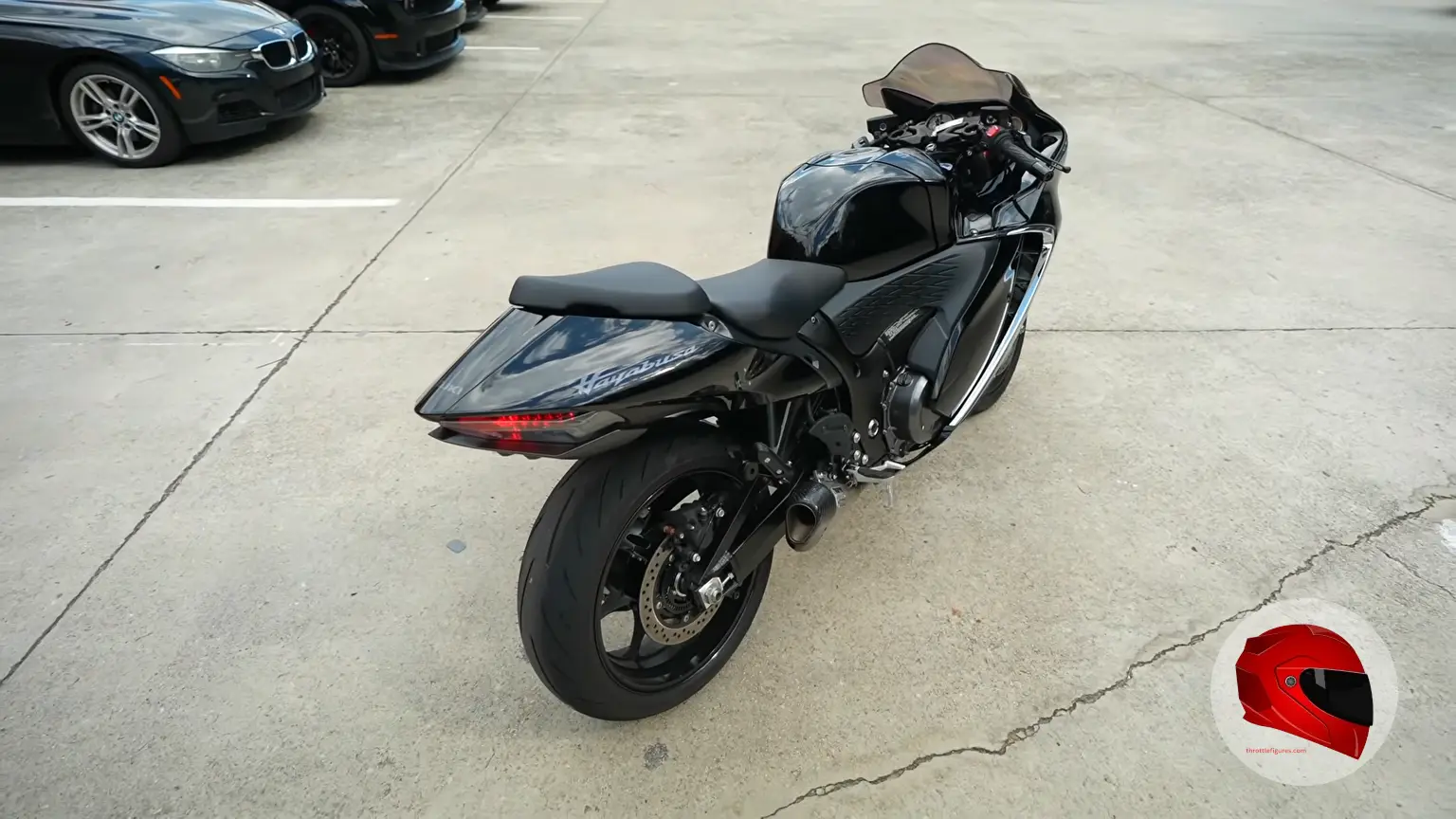
Suzuki Hayabusa: History, Specs, Top Speed & Buying Tips
186 – mph
TOP SPEED
2.6 – sec
0 – 60 MPH
187 – hp
HORSEPOWER
110 – lb-ft
TORQUE
582 – lb
WEIGHT
1,340 – cc
DISPLACEMENT
Disclaimer: Performance figures may vary depending on factors such as rider, road and weather conditions, vehicle condition, and testing methods. Figures are provided for informational purposes only.
The Suzuki Hayabusa remains a distinctive choice for riders who want extreme straight-line performance without giving up stability, wind protection or long-distance usability. The current 2026 model uses a 1,340cc inline-four, has an electronically limited top speed of 186 mph and comes with an extensive rider-aid package. Purchase value depends on the generation, condition, warranty coverage and final out-the-door price.
Suzuki Hayabusa Specifications at a Glance
| Specification | Current Hayabusa | Hayabusa Notes |
|---|---|---|
| Model designation | GSX1300R Hayabusa | Flagship hyperbike |
| Engine | 1,340cc inline-four | Liquid-cooled, DOHC, four-stroke |
| Peak power | 188 PS | 138 kW at 9,700 rpm |
| Peak torque | 149 Nm | At 7,000 rpm |
| Top speed | 186 mph | Approximately 299 km/h, electronically limited |
| 0–60 mph | Approximately 2.6 seconds | Rider, surface and launch dependent |
| Curb weight | 582 lb | 264 kg |
| Wheelbase | 1,480 mm | 58.3 inches |
| Overall dimensions | 2,180 × 735 × 1,165 mm | Length, width, height |
| Seat height | 31.5 inches | 800 mm |
| Transmission | Six-speed constant-mesh | Bi-directional quick shifter |
| Fuel system | 43 mm electronic throttle bodies | Ride-by-Wire, dual injectors |
| Intake system | Suzuki Ram Air Direct | High-speed intake system |
| Front suspension | KYB inverted cartridge fork | Fully adjustable |
| Rear suspension | KYB rear shock | Fully adjustable |
| Front brakes | Brembo Stylema four-piston calipers | Dual 320 mm floating discs |
| Rear brake | Single-piston caliper | 260 mm disc |
| Front tire | 120/70ZR17M/C | Bridgestone Battlax Hypersport S22 |
| Rear tire | 190/50ZR17M/C | Bridgestone Battlax Hypersport S22 |
| Ride system | Suzuki Intelligent Ride System | Three presets, three user settings |
| Cruise control | Smart Cruise Control | Active during quick-shift changes |
| Battery | ELIIY Power lithium-ion | High-capacity auxiliary battery |
What Makes the Hayabusa Different
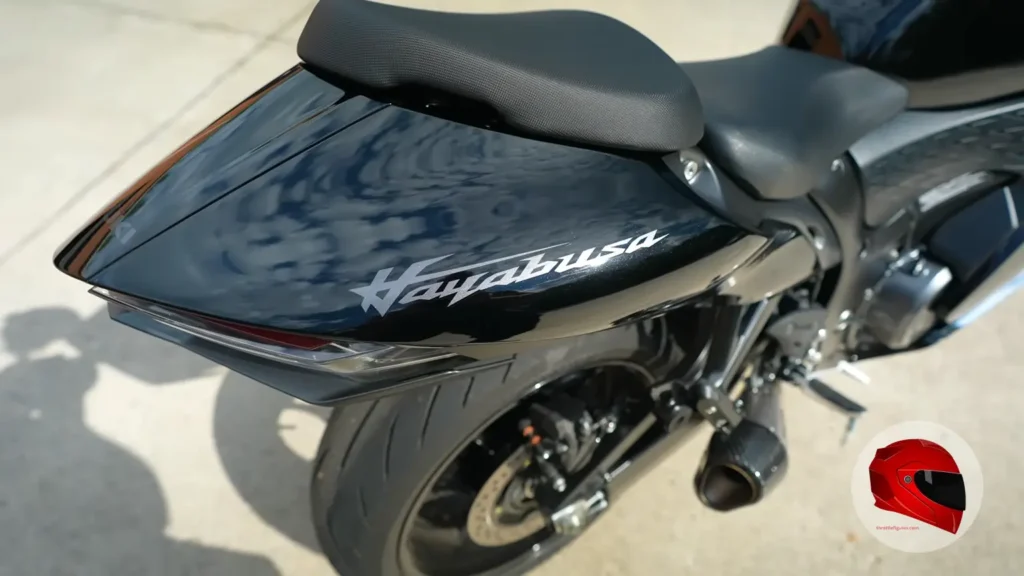
The Hayabusa occupies the hyperbike category with its aerodynamic bodywork, large-displacement engine and composure at high speeds. Its name comes from the peregrine falcon. The motorcycle’s long, enclosed shape was developed to reduce aerodynamic drag while shielding the rider from wind pressure.
The riding position is sporty without being as extreme as a dedicated race replica. Its broad fairing, substantial seat and long wheelbase make highway travel manageable, while the 582-pound curb weight gives the motorcycle a planted feel. That weight is noticeable during slow parking-lot maneuvers but adds stability once the bike is moving.
The official model designation is GSX1300R Hayabusa. “Hayabusa” is the model name, while GSX1300R identifies the platform.
How the Hayabusa Evolved Across Generations
The first-generation Hayabusa launched for the 1999 model year and remained in production through 2007. It used a 1,298cc inline-four producing 175 PS and 138 Nm. Its aerodynamic shape and high-speed capability quickly made it one of the defining performance motorcycles of its era.
The second generation covered 2008 through 2020. It kept the same basic concept but received a larger 1,340cc engine, updated styling, stronger brakes and chassis refinements. A clean, unmodified second-generation motorcycle can deliver substantial performance for less money than a new bike, although age-related maintenance becomes more important.
The third generation arrived in 2021 and continues into the 2026 model year. It retains the 1,340cc displacement while adding Ride-by-Wire throttle control, configurable riding modes, traction control, cornering ABS, cruise control, launch control, engine-braking adjustment, hill-hold assistance and a bi-directional quick shifter.
- First generation: Suits collectors and budget buyers who can verify maintenance and inspect older chassis components.
- Second generation: A strong used-market choice for riders who want substantial power with simpler electronics and a lower purchase price.
- Third generation: Suits buyers who want current safety systems, factory support, modern suspension and warranty availability.
How the Hayabusa Performs on the Road
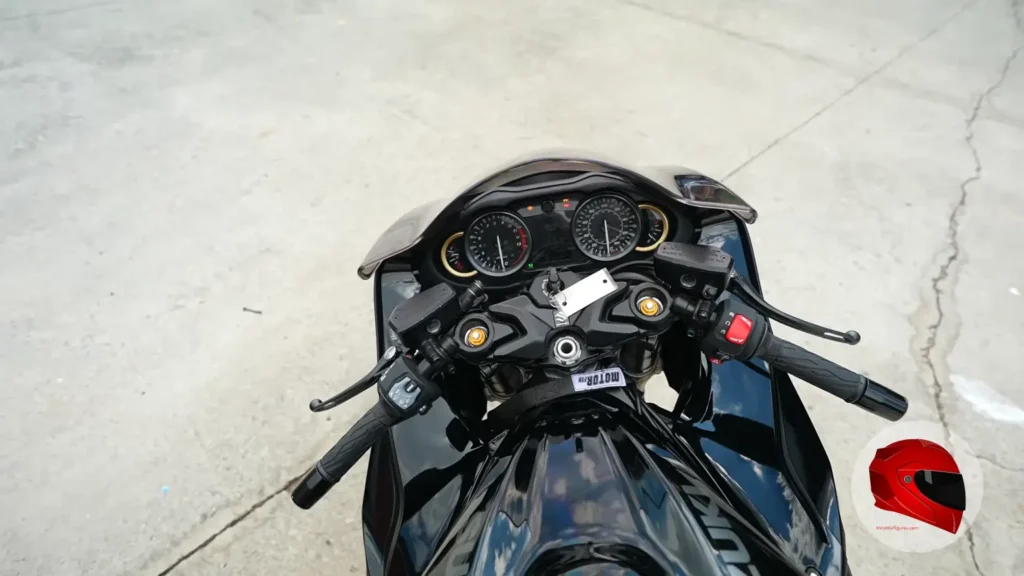
The 1,340cc engine produces strong torque through the middle of the rev range, so the motorcycle accelerates hard without constant downshifting. Its approximately 2.6-second 0-60-mph time depends on launch technique, tire condition, rider weight and surface grip. The electronically limited top speed is approximately 186 mph.
High-speed stability is one of the Hayabusa’s defining traits. The long wheelbase, aerodynamic fairing and compliant but adjustable suspension keep the motorcycle composed on fast roads. The same design provides useful wind protection during touring, although the bike remains physically large in dense urban traffic.
Low-speed handling calls for deliberate inputs. An experienced rider can manage the Hayabusa, but its weight, wide rear tire and strong engine require careful throttle and clutch control in parking areas. Fuel range, tire wear, insurance and service costs also make it more expensive to run than a middleweight sport-touring motorcycle.
The Hayabusa’s large-displacement engine and streamlined fairing make it exceptionally quick, but real-world speed depends on more than horsepower. Gearing, rider position, wind, tire condition, elevation and electronic restrictions can all affect the result, so published figures may vary between tests. These motorcycle top speed factors help explain why a bike’s theoretical capability does not always match what riders experience on the road.
How the Electronic Rider Aids Work
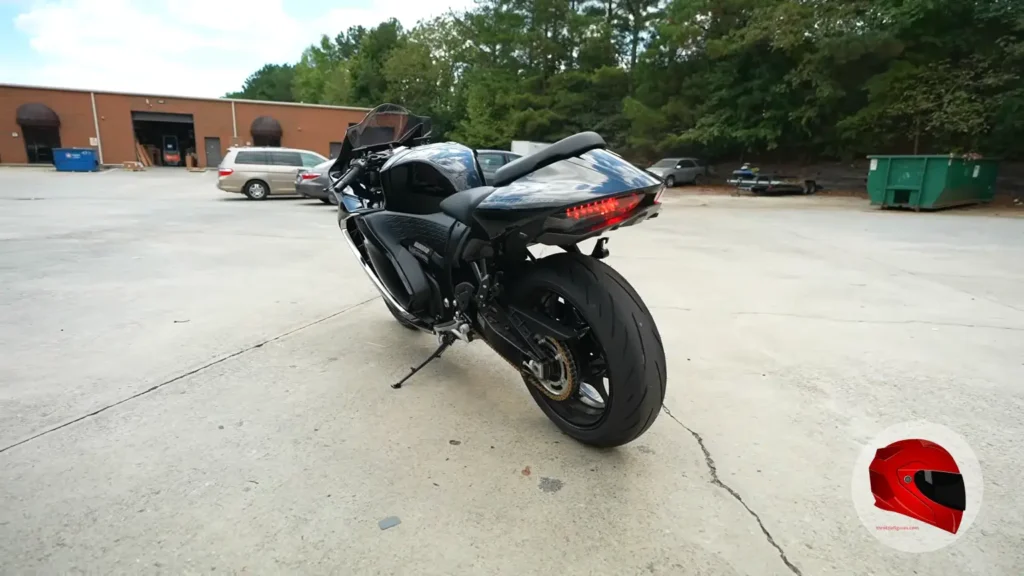
The Suzuki Intelligent Ride System, or S.I.R.S., lets the rider adjust how the engine and chassis systems respond. These settings do not make the motorcycle risk-free, but they can make power delivery and braking behavior easier to manage in changing conditions.
- Power modes: Three factory presets and three user-defined settings alter throttle response.
- Traction control: Limits rear-wheel spin when available grip falls.
- Motion Track ABS: Uses motorcycle motion data to manage braking intervention while leaned over.
- Anti-lift control: Helps limit excessive front-wheel lift during hard acceleration.
- Engine-brake control: Reduces abrupt deceleration when the throttle closes.
- Slope-dependent control: Adjusts system behavior for changes in road grade.
- Hill-hold control: Helps prevent rearward roll during uphill stops.
- Quick shifter: Supports clutchless upshifts and downshifts.
- Cruise control: Maintains speed and can remain active during quick-shift gear changes.
- Launch control: Helps manage hard starts by coordinating throttle and engine response.
The fully adjustable KYB inverted fork and KYB rear shock still matter because electronic aids cannot correct incorrect spring preload, damping, tire pressure or worn suspension components. Correct setup improves braking stability, cornering feedback and highway comfort.
The Hayabusa’s selectable power modes, traction control and other rider aids let you adjust the bike’s response to changing conditions. A softer setting can make wet roads or urban traffic easier to manage, while a more aggressive mode preserves sharper throttle response when grip is consistent. Understanding how motorcycle ride modes work helps you choose the right level of intervention without relying on the electronics instead of riding smoothly.
What a New Hayabusa Costs
For 2026, a standard Hayabusa costs approximately $19,500 before destination charges, dealer documentation fees, sales tax, registration and title costs. New pricing generally falls between $18,499 and $20,129, depending on trim and special-edition positioning. The advertised dealer price is not the same as the amount required to register the motorcycle.
- Authorized Suzuki dealerships: The main route to a new motorcycle, factory warranty coverage, OEM financing promotions, professional setup and dealer service. Pricing generally exceeds $19,000 MSRP before additional charges.
- Suzuki Cycles: The official destination for current specifications, available colors, model information and dealer-location details.
- Cycle Trader: A nationwide source for new and used dealer and private-party listings, with Hayabusa prices ranging from about $10,700 to $19,500 or more.
- Motorcycles on Autotrader: Useful for checking used-market pricing. Listings range from approximately $5,995 to $19,995, with an average of around $14,553.
- Facebook Marketplace: A private-party source where used GSX1300R listings commonly fall between $6,000 and $15,000. Factory backing is generally absent unless a transferable warranty remains.
The 2026 Hayabusa Special Edition includes a 12-month limited factory warranty. Suzuki Extended Protection adds longer coverage options. When comparing financing, look at the total amount financed, interest rate, term, required down payment and insurance cost rather than the monthly payment alone.
Hayabusa Ownership Costs
The purchase price is only the starting point. Insurance, scheduled service, valve inspection, tires, fuel, registration and repairs determine the ongoing cost. Each varies with rider age, location, mileage, riding style and model generation.
| Cost category | What to budget for | Main variables |
|---|---|---|
| Insurance | Annual motorcycle policy | Rider profile, location, coverage and claims history |
| Scheduled service | Oil, filters, fluids, inspections and routine adjustments | Mileage, dealer labor rates and generation |
| Valve inspection | Periodic clearance inspection and any adjustment | Service interval, labor time and engine condition |
| Tires | Replacement of the 120/70ZR17 front and 190/50ZR17 rear tires | Compound, mileage, riding pace and road surface |
| Fuel | Regular refueling for commuting or touring | Fuel prices, annual mileage and throttle use |
| Registration | Recurring title, registration and local taxes | State, county, motorcycle value and model year |
| Other repairs | Battery, brakes, chain, suspension and unexpected wear | Age, storage, modifications and maintenance history |
Include these categories when comparing a 2026 standard Hayabusa with a used GSX1300R or a newer special edition. The out-the-door figure covers purchase charges; ownership costs continue after registration.
The purchase price is only part of owning a Hayabusa. Insurance, premium tires, fuel, scheduled maintenance, registration and depreciation can significantly affect your annual budget, especially if you ride often. Estimating these motorcycle ownership costs before buying gives you a clearer idea of whether the bike fits your long-term budget.
2026 Standard and 2027 Special Edition
The 2026 standard Hayabusa is the current base model discussed here, while the 2027 Hayabusa Special Edition is a separate model-year offering. Treat the comparison as a model-year and trim decision rather than simply replacing the 2026 standard bike with a newer version.
| Comparison point | 2026 standard Hayabusa | 2027 Hayabusa Special Edition |
|---|---|---|
| Model year | 2026 | 2027 |
| Positioning | Standard current-model trim | Special-edition trim |
| Availability | Current 2026 model-year inventory | 2027 model-year availability through the applicable sales channel |
| Warranty | 12-month limited factory warranty | Confirm the applicable factory warranty before purchase |
| Purchase decision | Lower-cost route into the current generation | Compare the premium against its confirmed equipment and styling |
The 2027 Special Edition suits buyers who want the newest model year and its special-edition presentation. The 2026 standard motorcycle offers clearer value when the priority is the current-generation mechanical package at a lower purchase price. Before deciding whether the premium is justified, compare the written equipment list, colors, warranty terms, destination charge, dealer fees, tax and registration.
How to Buy a Hayabusa in the United States
A safer purchase starts with the source, payment, inspection, transport and registration steps. A dealership normally handles much of the paperwork, while a private sale leaves the buyer responsible for every document and verification.
- Choose the source: Use Suzuki Cycles and Authorized Suzuki dealerships for new inventory, or compare Cycle Trader, Facebook Marketplace and Motorcycles on Autotrader for used motorcycles.
- Set the full budget: Add tax, title, registration, destination, dealer fees, insurance, inspection, transportation, tires and immediate service.
- Verify the motorcycle: Match the VIN on the frame, title, registration and sale documents.
- Arrange payment: Confirm financing approval before negotiating, or use a secure payment method that creates a clear transaction record.
- Complete the sale: Obtain the signed title, bill of sale, lien release when applicable, keys, service records and owner’s manuals.
- Transport legally: Use a trailer or motorcycle transport service if the motorcycle is not registered and insured for the ride home.
- Register the motorcycle: Submit the title, proof of insurance, identification, taxes and required state forms to the appropriate motor-vehicle office.
Every U.S. state requires a motorcycle endorsement or separate Class M license for legal operation. The Motorcycle Safety Foundation Basic RiderCourse teaches foundational skills, and completion can satisfy or waive the riding-test portion of endorsement eligibility in some states. Graduates can also qualify for multi-percent insurance discounts, depending on the insurer and state.
What to Check on a Used Hayabusa
Used Hayabusa prices vary widely because the model attracts touring riders, performance enthusiasts, collectors and owners who modify motorcycles for drag racing. A low asking price is not necessarily a bargain if the motorcycle has frame damage, undocumented engine work or expensive deferred maintenance.
- Check the title: Confirm that the VIN is clear, consistent and free of salvage, rebuilt, theft or lien problems.
- Inspect the frame: Look for cracks, dents, fresh paint, bent brackets, uneven steering and evidence of a crash or wheelie impact.
- Examine the engine: Check for oil leaks, overheating signs, abnormal noise, damaged fasteners and poor cold-start behavior.
- Test the transmission: Confirm clean engagement in every gear, including under load. Grinding, jumping out of gear or difficult neutral selection can indicate abuse.
- Review modifications: Investigate stretched swingarms, lowered suspension, turbochargers, nitrous systems, race wiring, aftermarket engine management and drag-racing launches.
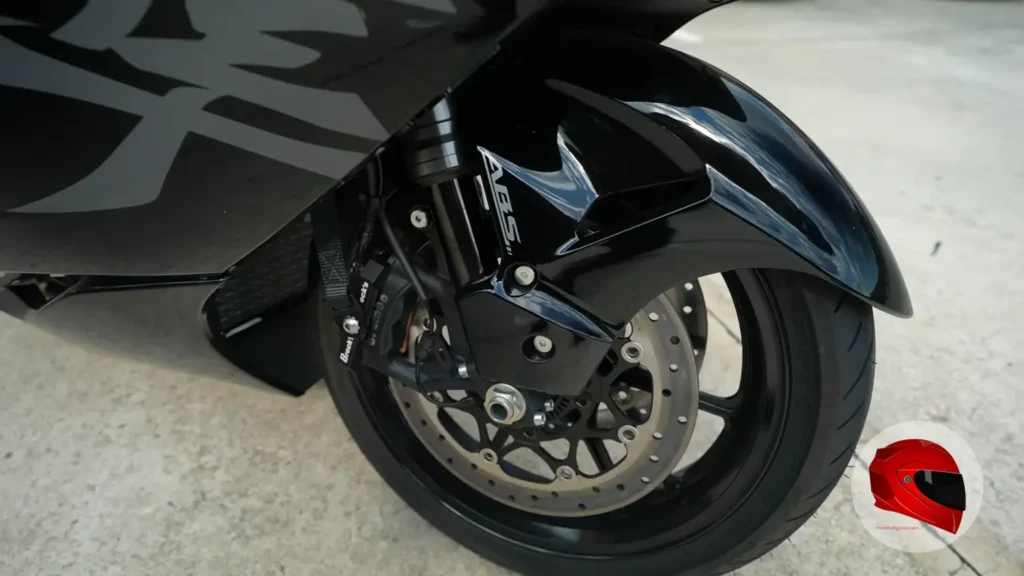
- Inspect suspension and brakes: Check fork tubes, seals, shock leakage, steering-head bearings, rotor condition, calipers and brake-fluid service.
- Measure tire condition: Confirm adequate tread, even wear, correct sizes and recent manufacturing dates. A squared-off rear tire can indicate extensive highway use.
- Request records: Look for oil changes, valve inspections, coolant service, brake-fluid replacement, battery work, tire replacement and recall completion.
- Perform an independent inspection: Have a qualified motorcycle technician inspect the bike before money changes hands, especially for a private-party purchase.
Price a modified Hayabusa as a project unless a qualified motorcycle technician has inspected its wiring, engine management, suspension and replacement parts. Stretched chassis components, forced-induction systems, nitrous hardware and poorly integrated race wiring can significantly increase repair costs.
Is the Hayabusa Right for You
The Hayabusa suits an experienced rider who wants rapid acceleration, high-speed stability and enough comfort for long highway days. It can serve as a daily motorcycle, but its weight and width make slow traffic less convenient than a smaller standard or sport-touring model.
Touring riders get a fairing, cruise control, strong midrange torque and adjustable suspension. Performance riders get sophisticated electronics and powerful brakes, while used-bike buyers can choose among three generations at very different prices.
The Hayabusa is a poor first motorcycle for most beginners. New riders need time to develop throttle, braking, cornering and hazard-management skills, and the bike’s acceleration can quickly exceed a novice’s ability to correct an error. Completing the Motorcycle Safety Foundation Basic RiderCourse and gaining experience on a lighter motorcycle is a more suitable progression.
FAQs
Is the Hayabusa still the fastest bike?
No single production motorcycle holds that title in every measurement, and the Hayabusa is no longer the unrestricted top-speed benchmark it was during the early 2000s. It remains one of the most capable production hyperbikes, with strong acceleration, high-speed stability and a 186-mph electronic limit.
Can a Hayabusa go 300 mph?
A standard street-legal Hayabusa cannot reach 300 mph. Claims near that speed involve heavily modified race motorcycles, specialized aerodynamics and conditions that do not represent a stock 2026 model.
Can a Hayabusa go 200 mph?
A stock current Hayabusa is electronically limited to approximately 186 mph. Reaching 200 mph requires removing the limit and using conditions, gearing, power and tires appropriate for that speed, which is not suitable for public roads.
What does GSX1300R mean?
GSX1300R is part of Suzuki’s official model designation, GSX1300R Hayabusa. Hayabusa is the model name used in consumer and promotional materials.
Is the 2026 Hayabusa still relevant?
Yes. The third-generation motorcycle combines the established 1,340cc engine with modern throttle control, configurable riding modes, cornering ABS, traction control, cruise control, quick shifting and adjustable KYB suspension. Its value depends on whether those features justify the new-bike price over a well-maintained second-generation model.
Conclusion
The Suzuki Hayabusa suits an experienced rider who values speed, stability, electronic control and highway comfort in one motorcycle. For a new purchase, compare Suzuki Cycles and an Authorized Suzuki dealership. For a used purchase, check prices carefully and pay for an independent inspection before completing the sale.

One Comment