Kawasaki Ninja ZX-6R: Performance, Specs, Costs & Street vs Track Fit
155 – mph
TOP SPEED
3.2 – sec
0 – 60 MPH
127 – hp
HORSEPOWER
52.1 – lb-ft
TORQUE
432 – lb
WEIGHT
636 – cc
DISPLACEMENT
Disclaimer: Performance figures may vary depending on factors such as rider, road and weather conditions, vehicle condition, and testing methods. Figures are provided for informational purposes only.
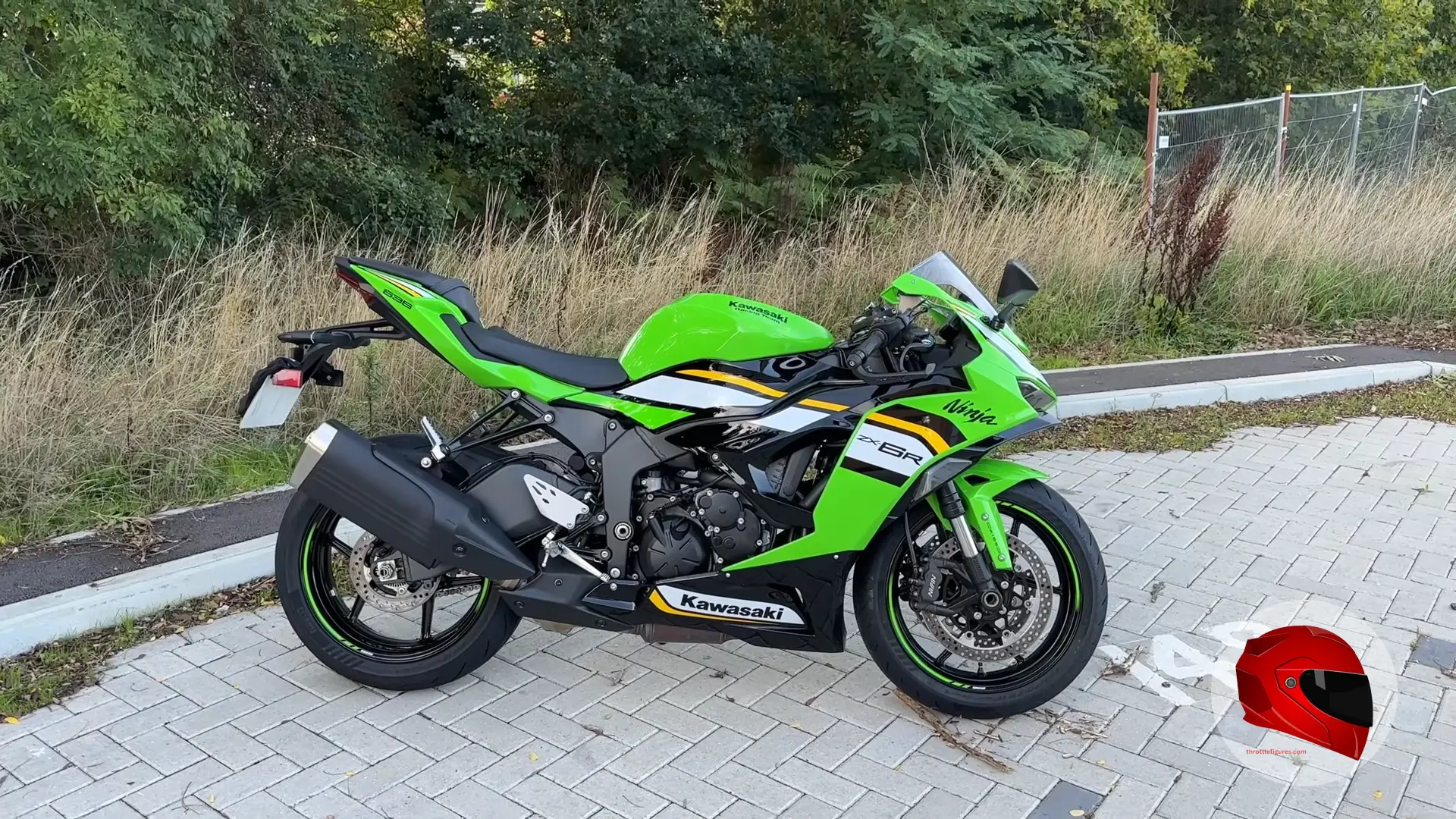
The 2026 Kawasaki Ninja ZX-6R is a street-legal supersport for riders who want the response and sound of a high-revving inline-four without stepping up to a liter-class motorcycle. Its 636cc engine, adjustable chassis, electronic rider aids and two ABS choices make the buying decision more involved than the displacement alone suggests. Price, insurance, ergonomics and riding experience all affect whether it suits street riding, track days or occasional commuting.
2026 Kawasaki Ninja ZX-6R Specifications and Price
Specification | 2026 US detail |
|---|---|
Manufacturer | Kawasaki Motorcycle & Engine Company |
Production | 1995–present |
Class | Sport bike |
Base MSRP, non-ABS | $11,599 |
Base MSRP, ABS | $12,599 |
Destination charge | $685 |
Engine displacement | 636 cc |
Engine configuration | Liquid-cooled inline-four |
Valve train | 16-valve DOHC |
Transmission | 6-speed manual |
Claimed horsepower | 127.0 hp at 13,000 rpm |
Claimed torque | 52.1 lb-ft at 10,800 rpm |
Estimated top speed | Approximately 155 mph |
Estimated 0–60 mph | Approximately 3.2 seconds |
Front brakes | Dual 310 mm discs, four-piston monobloc calipers |
Rear brake | 220 mm petal disc |
Front suspension | Adjustable Showa SFF-BP fork |
Rear suspension | Uni-Trak system |
Frame | Pressed-aluminum perimeter |
Seat height | 32.7 in |
Wheelbase | 55.1 in |
Length | 79.7 in |
Width | 28.0 in |
Height | 43.3 in |
Fuel capacity | 4.5 gal |
Curb weight, non-ABS | 432.2 lb |
Curb weight, ABS | Approximately 437 lb |
Estimated fuel economy | Approximately 38–45 mpg |
Electronics | Three-mode KTRC, Full and Low Power Modes |
Quickshifter | Kawasaki Quick Shifter for upshifts |
Display | 4.3-inch full-color TFT |
Warranty | 12-month limited warranty |
What Makes the 636cc Engine Different
The ZX-6R uses a liquid-cooled, 16-valve DOHC inline-four with a six-speed manual transmission. Its extra 36cc over a traditional 600cc supersport gives the engine more usable midrange, particularly on the street, while preserving the high-rpm character expected from a four-cylinder sport bike.
The engine produces a claimed 127.0 horsepower at 13,000 rpm and 52.1 lb-ft of torque at 10,800 rpm. Those figures support strong acceleration and an estimated 155-mph top speed. An approximately 3.2-second 0-60-mph run depends on rider technique, launch conditions, surface grip and tire temperature.
Power builds with engine speed, so the ZX-6R rewards riders who are comfortable using the upper half of the tachometer. It demands more involvement than a low-revving twin, but its 636cc layout is easier to use on public roads than a highly peaked 600cc tune. It is not a 1000cc motorcycle; the model designation refers to its 636cc displacement.
Handling, Brakes, and Suspension Performance
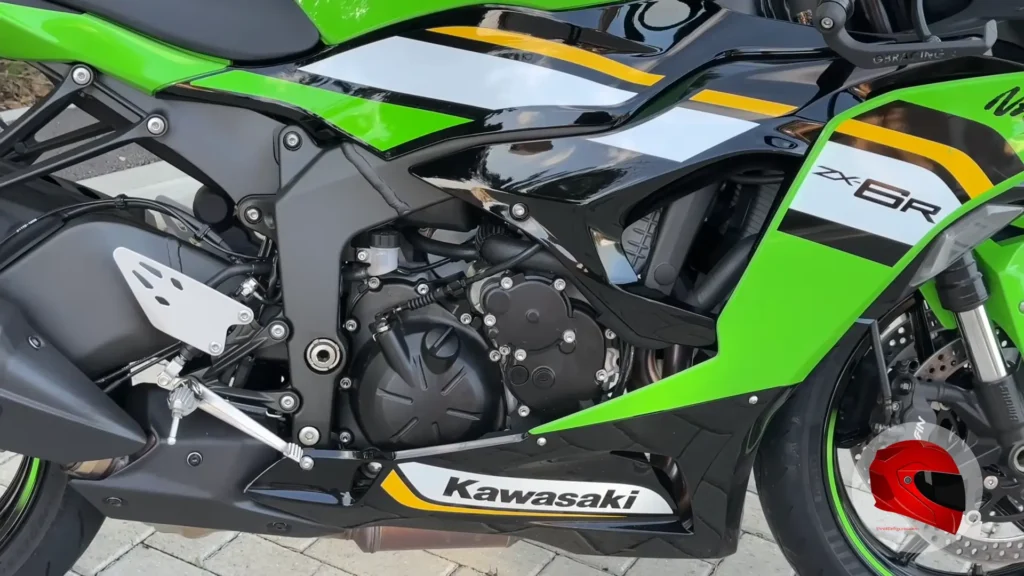
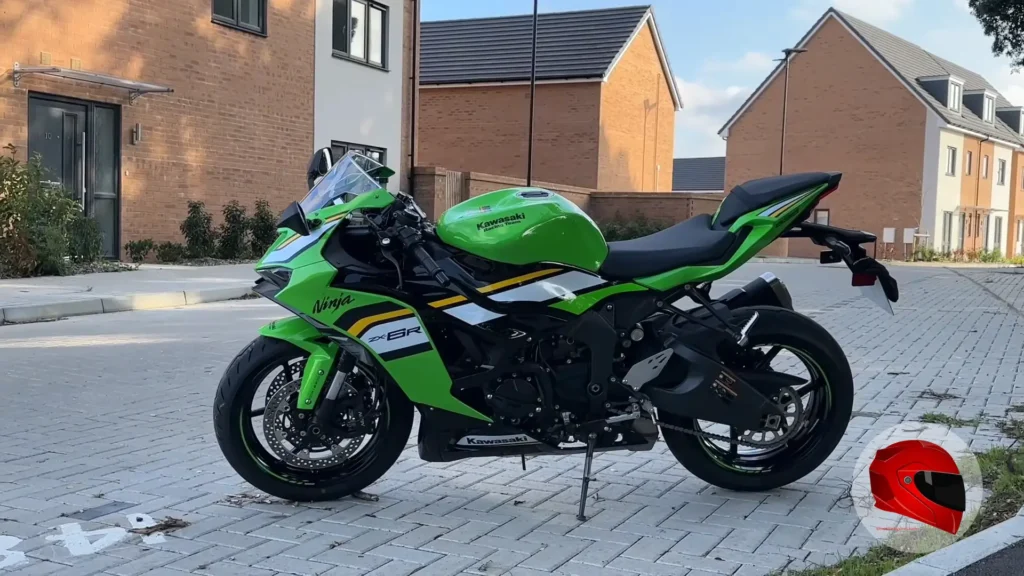
The pressed-aluminum perimeter frame, 55.1-inch wheelbase and sport-bike riding position give the ZX-6R quick direction changes while maintaining stability through fast corner exits. Its compact dimensions suit aggressive pavement riding and track days. They do not provide the relaxed steering or upright posture of a standard or sport-touring motorcycle.
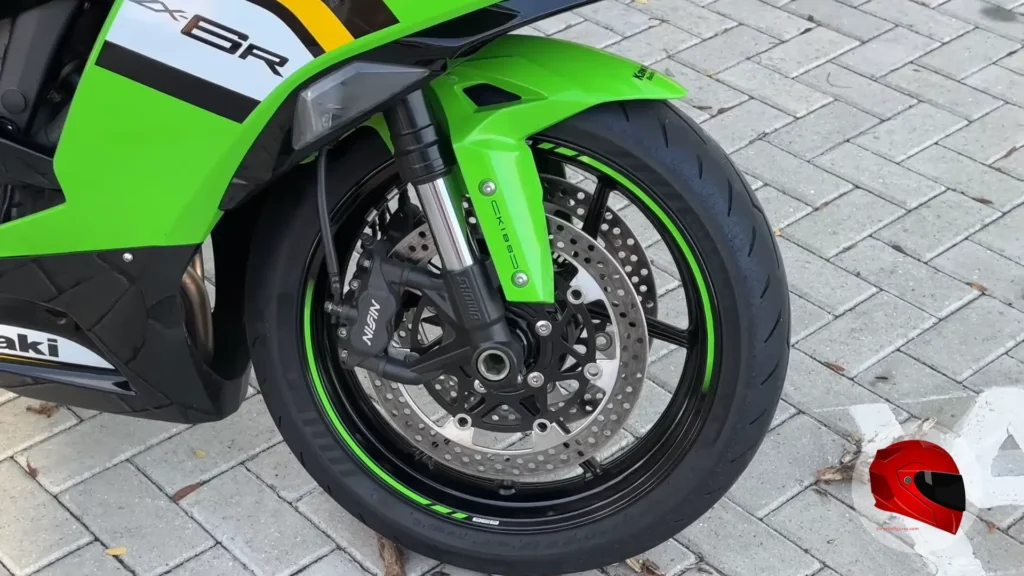
Dual 310 mm front discs work with radial-mounted four-piston monobloc calipers. The 220 mm rear petal disc adds control during low-speed riding and corner entry. The brakes are suited to repeated spirited use, while the ABS version adds electronic intervention on imperfect street surfaces.
The fully adjustable Showa SFF-BP fork can be set for rider weight, pace, tires and road conditions. The rear Uni-Trak system complements it with a rising-rate design.
Electronics and Rider Assistance
The electronic package helps manage the engine’s output without turning the motorcycle into an automatic or passive machine. Riders can adjust the settings for weather, available grip and riding style, while the mechanical chassis remains central to the ZX-6R’s character.
Kawasaki Traction Control provides three selectable modes for managing rear-wheel slip.
Full Power Mode preserves the engine’s complete performance output.
Low Power Mode softens the response for reduced-grip conditions or less aggressive riding.
Kawasaki Quick Shifter supports clutchless upshifts during acceleration.
Optional KIBS ABS adds electronically managed braking assistance.
The 4.3-inch full-color TFT display shows riding and motorcycle information.
Traction control and Low Power Mode add a margin of assistance, but they do not replace throttle control, appropriate corner-entry speed or formal training. Riders still need to match their speed to the road and weather conditions.
The electronic settings are most useful when they help you adapt the bike to the conditions. Softer responses can feel more manageable on wet roads, while sharper throttle settings may suit dry pavement or track riding. Traction control and the other rider aids give you more ways to adjust the bike, so understanding how motorcycle ride modes work can help you choose settings that match the surface and your experience.
Street Comfort and Everyday Practicality
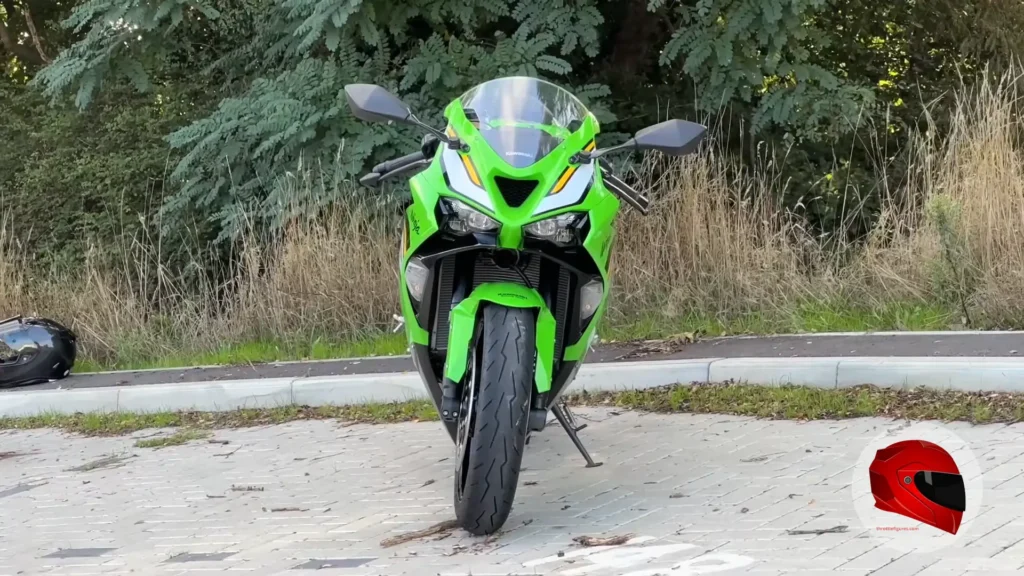
The 32.7-inch seat height is manageable for many riders, but it does not tell the whole story about the ZX-6R’s ergonomics. Clip-on bars, rear-set foot controls and a forward-leaning posture put more weight on the wrists. Low-speed travel and long rides are less comfortable than they are on a naked bike.
With estimated fuel economy of approximately 38-45 mpg and a 4.5-gallon tank, the calculated range is roughly 171-203 miles. That estimate does not account for reserve fuel, traffic, riding style or refueling margin. The inline-four also produces heat in slow traffic, while the fairing, compact seat and limited storage reduce its usefulness as a daily commuter.
The ZX-6R remains street-legal and can handle commuting, weekend rides and highway travel. Its passenger accommodation supports short trips, and luggage usually requires aftermarket equipment. Riders focused on track performance will accept those compromises more readily than people seeking an easygoing all-purpose motorcycle.
ZX-6R Ownership Costs and Requirements
The $11,599 non-ABS and $12,599 ABS prices exclude the $685 destination charge, sales tax, title, registration, dealer documentation charges, setup costs and accessories. The dealer sets the final transaction price, so the amount financed or paid at signing will exceed the advertised base MSRP.
Choose the ABS or non-ABS configuration and request an itemized out-the-door quote.
Compare cash pricing with financing through Kawasaki Motors Finance Corp for eligible purchases.
Arrange motorcycle insurance before taking delivery, including liability and any coverage required by a lender.
Obtain the motorcycle endorsement or Class M license required by your state.
Complete title, registration, taxes and dealer paperwork before riding on public roads.
Budget for protective equipment, fuel, tires, oil, chain service, brake wear and scheduled maintenance.
Insurance can be a major ownership expense because the ZX-6R is a high-performance supersport. Premiums depend on location, age, riding history, coverage limits, deductible, claims history and whether the motorcycle is financed. A lender may require comprehensive and collision coverage even when state law requires only liability insurance.
For a new rider, the Motorcycle Safety Foundation Basic RiderCourse provides foundational instruction and can satisfy or waive the practical licensing test in many states. State rules differ, so the course does not automatically replace every licensing requirement. A motorcycle endorsement, approved helmet and required safety equipment belong in the purchase plan.
The purchase price is only the starting point when budgeting for a ZX-6R. Supersport tires, insurance, scheduled servicing, fuel and occasional track expenses can all raise the monthly cost, especially if you ride aggressively. A realistic motorcycle ownership cost estimate should include these recurring expenses, not just the showroom price.
Ways to Buy a Kawasaki Ninja ZX-6R
A Kawasaki authorized dealer is the primary route to a new motorcycle, factory paperwork, registration assistance, warranty support and an in-person quote. It is also the most direct option when arranging Kawasaki Motors Finance Corp financing.
CycleTrader is useful for finding dealer and private-sale used ZX-6R listings. In a private sale, inspect the title, VIN, lien status, service history, cold-start behavior, crash history, tires, chain, brakes and other consumables before paying and transferring ownership.
RumbleOn can facilitate remote motorcycle purchases and delivery. With a remote purchase, inspection, documentation, transport and return terms deserve particular attention because the motorcycle may arrive before you have seen or ridden it.
Who Should Buy the Ninja ZX-6R?
Experienced street riders: A strong fit for riders who understand sport-bike ergonomics and want a responsive inline-four with usable midrange.
Track-day riders: A capable starting platform with adjustable suspension, powerful brakes, a quickshifter, traction control and a high-rpm engine.
New motorcyclists: A poor first-bike choice for most beginners. The power, riding position, speed and insurance costs leave little room for mistakes.
Relaxed commuters: A limited fit for riders who prioritize upright comfort, low-speed ease, passenger space, storage and low operating costs.
The Honda CBR600RR is the closest Japanese inline-four rival in concept. The Kawasaki Ninja ZX-4R provides a smaller, lighter, high-revving alternative, while the Kawasaki Ninja ZX-6RR sits above the ZX-6R as a more track-focused homologation special. These motorcycles serve different priorities, so the ZX-6R’s value depends on how central supersport performance is to the purchase.
The ZX-6R suits riders who want strong midrange performance without losing the focused feel of a true supersport. Its closest Japanese rival, the Honda, has a similar engine size and track-day focus but differs in ergonomics, electronics and road manners. Comparing the CBR600RR vs ZX6R can help you decide which bike better suits your mix of street riding and circuit use.
FAQs
Can the ZX-6R be used for track days without modifications?
Yes. The stock ZX-6R has the engine, brakes, suspension adjustability, quickshifter and traction control needed for track-day use. Many riders begin with setup, tire-pressure adjustment, fresh fluids and protective equipment before adding performance modifications.
Does the ZX-6R have passenger accommodation?
Yes, it has a passenger seat and foot controls, but its compact supersport ergonomics make two-up riding better suited to shorter trips. A sport-touring motorcycle is more comfortable for frequent passengers or long-distance travel.
Is the ABS model worth the extra cost?
The ABS version adds $1,000 to the base MSRP and approximately five pounds of curb weight. It is a reasonable choice for riders who use the motorcycle on public roads and want braking assistance when pavement, weather or rider inputs are less than ideal.
Is the ZX-6R the fastest 600cc?
The ZX-6R is among the quickest current 600-class supersports, helped by its 636cc engine. A universal fastest ranking depends on model year, test method, gearing, rider and conditions.
Conclusion
The 2026 Kawasaki Ninja ZX-6R suits experienced riders who value high-revving four-cylinder performance, precise handling and track-ready hardware in a street-legal package. Choose the ABS model for added street safety, and include insurance, licensing, protective gear, destination charges and maintenance in the budget before buying.