
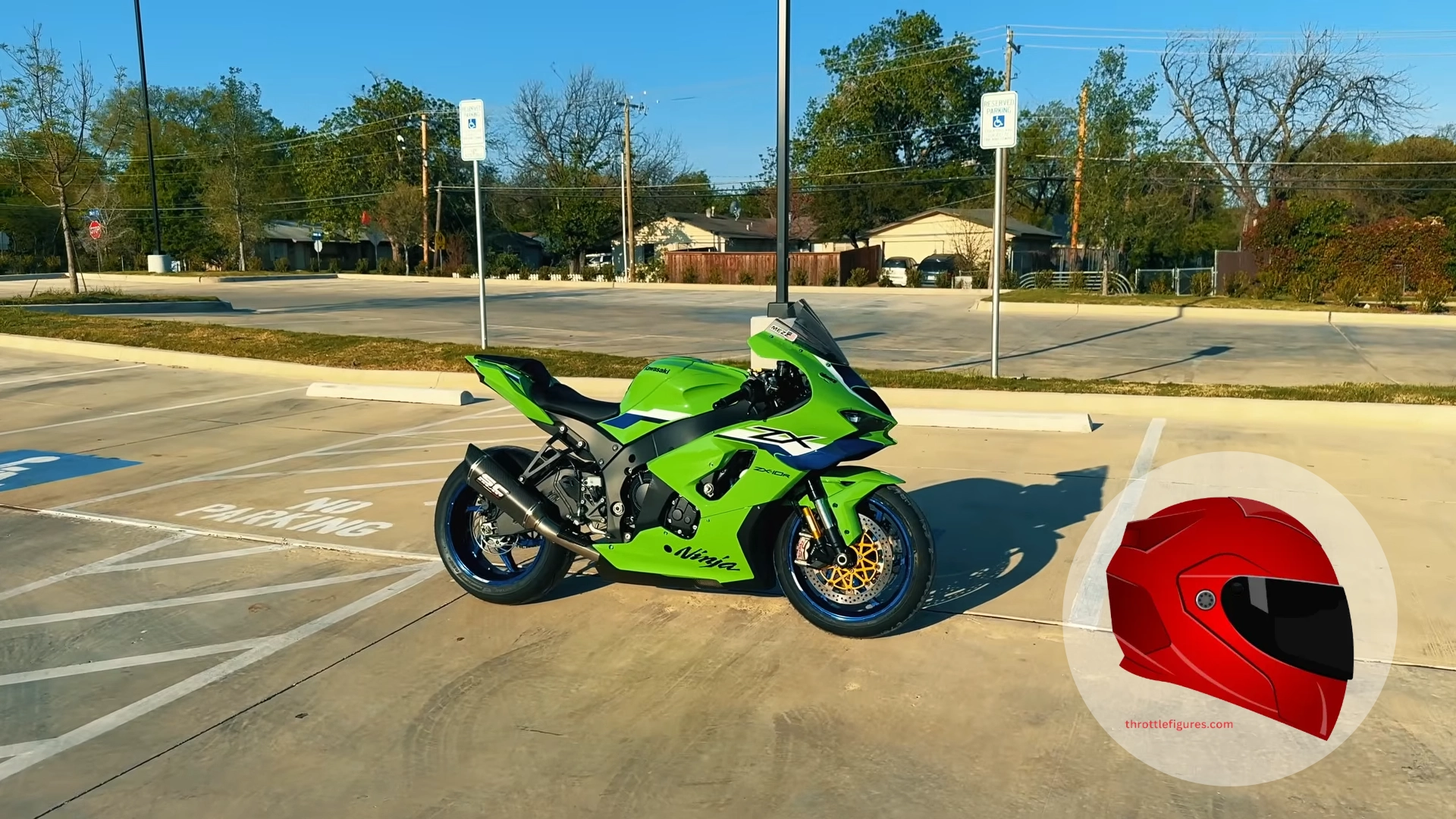
Kawasaki Ninja ZX-10R: US Specs, Price, Performance & Ownership Guide
Disclaimer: Performance figures may vary depending on factors such as rider, road and weather conditions, vehicle condition, and testing methods. Figures are provided for informational purposes only.
The 2026 Kawasaki Ninja ZX-10R is a liter-class supersport for experienced riders who want WorldSBK-influenced hardware and more than 200 horsepower in a street-legal motorcycle. The decision involves more than acceleration: ABS, insurance, rider experience, track use, seat height and the complete out-the-door cost all deserve attention. Its 998cc inline-four and advanced electronics deliver exceptional performance, but poor throttle or braking inputs can have serious consequences.
2026 Kawasaki Ninja ZX-10R Specifications and Price
| Specification | 2026 US value |
|---|---|
| Non-ABS MSRP | $16,999 |
| ABS MSRP | $17,999 |
| Engine | 998cc liquid-cooled inline-four, 4-stroke |
| Valve train | DOHC, 16-valve |
| Bore × stroke | 76.0 × 55.0 mm |
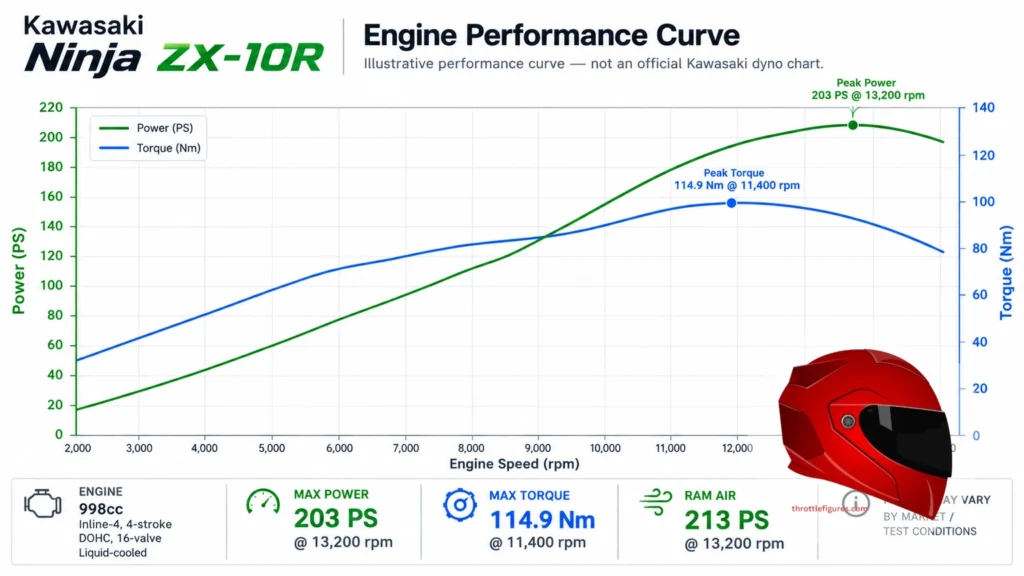
| Maximum power | Approximately 203 hp |
| Ram-air power | Approximately 213 hp |
| Maximum torque | 84.8 lb-ft |
| Peak power speed | 13,200 rpm |
| Peak torque speed | 11,400 rpm |
| Transmission | 6-speed return dog-ring |
| Final drive | Sealed chain |
| ABS curb weight | 463.1 lb |
| Non-ABS curb weight | 458.6 lb |
| Estimated top speed | 186 mph |
| Seat height | 32.9 in |
| Fuel capacity | 4.5 gal |
| Wheelbase | 57.1 in |
| Ground clearance | 5.3 in |
| Front suspension | 43mm Showa Balance Free Fork |
| Rear suspension | Horizontal back-link, BFRC lite shock |
| Front suspension travel | 4.7 in |
| Rear suspension travel | 4.5 in |
| Front brakes | Dual 330mm discs, Brembo calipers |
| Rear brake | 220mm disc |
| Front tire | 120/70 ZR17 |
| Rear tire | 190/55 ZR17 |
| Instrumentation | 5-inch full-color TFT |
| Connectivity | RIDEOLOGY THE APP |
| Lighting | All LED |
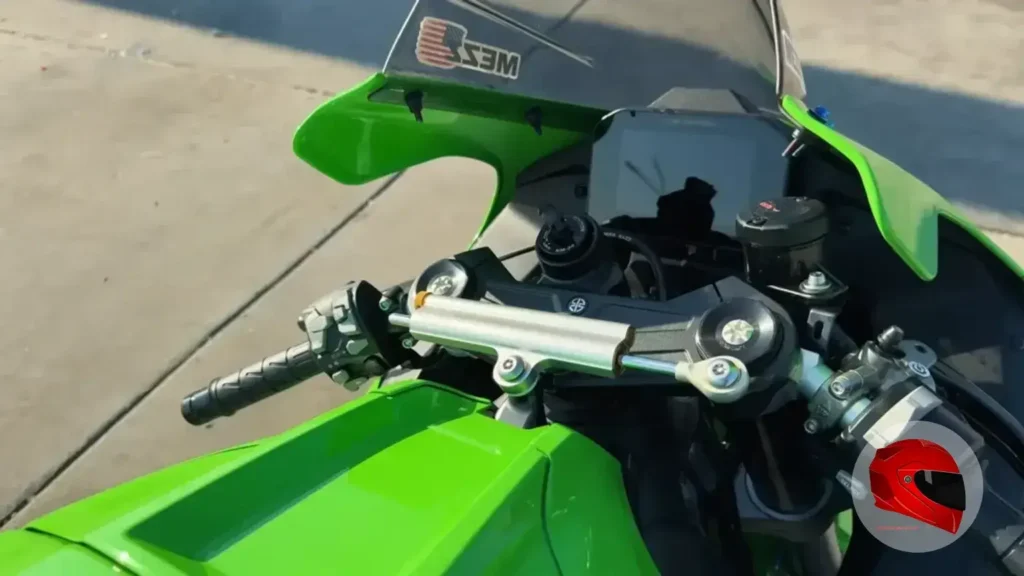
| Steering damper | Electronic Öhlins |
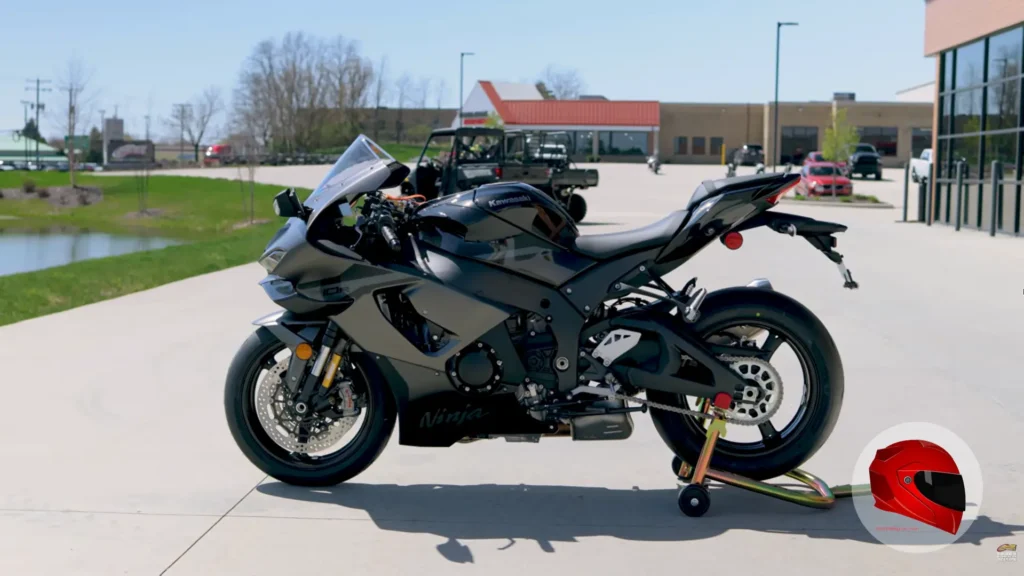
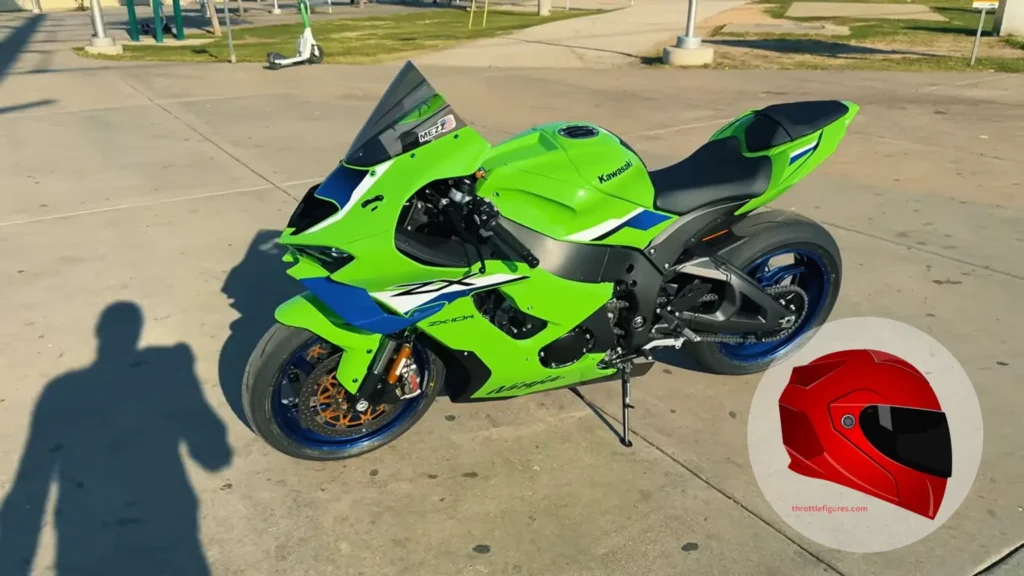
Kawasaki Ninja ZX-10R
The standard ZX-10R is the most affordable model in Kawasaki’s liter-bike range. The non-ABS version starts at $16,999, while the ABS model costs $17,999 before destination charges, dealer setup, taxes, registration and other transaction costs. At 463.1 pounds, the ABS model weighs 4.5 pounds more than the non-ABS version.
Its 998cc inline-four produces approximately 203 horsepower, or about 213 horsepower with ram-air effect, and 84.8 lb-ft of torque. Peak power arrives at 13,200 rpm and peak torque at 11,400 rpm. The 32.9-inch seat and aggressive riding position suit committed street riders and track-day users better than casual commuters.
- Best fit: Experienced riders seeking a street-legal superbike
- Primary strengths: Engine output, electronics, braking hardware and chassis adjustability
- Main limitation: High operating costs and limited comfort for everyday transportation
Kawasaki Ninja ZX-10RR
The ZX-10RR is the track-focused member of the lineup, with a $29,999 ABS MSRP. That price puts it far above the standard ZX-10R, so it makes sense mainly for riders who will use its homologation-oriented hardware and track-focused specification.
The extra cost is difficult to justify for normal commuting or occasional canyon riding. A standard ZX-10R already has the engine performance, electronic rider aids, Öhlins electronic steering damper, Brembo front calipers and aerodynamic bodywork needed for serious track days. The ZX-10RR suits buyers who understand setup, tires, suspension changes and race-oriented maintenance.
Kawasaki Ninja ZX-6R
The ZX-6R is Kawasaki’s more accessible supersport. Its 636cc inline-four is less demanding than the ZX-10R’s 998cc engine, and its 2026 US MSRP is $11,599 without ABS or $12,599 with ABS. The smaller engine reduces acceleration and top-speed potential while retaining serious street and track capability.
The ZX-6R suits riders developing cornering technique, especially on tighter roads and smaller circuits. It still requires a motorcycle license, protective gear and disciplined throttle control. Both Kawasaki models are demanding for regular highway touring or relaxed upright riding, but the ZX-6R is easier to manage at moderate speeds.
BMW S 1000 RR
The BMW S 1000 RR is the closest direct alternative to the ZX-10R in this group. It competes in the same liter-class superbike category and combines high engine output, sophisticated electronics, aerodynamic performance and track capability. Its equipment and options can make the final purchase price substantially different from its advertised starting figure.
The BMW emphasizes its available electronic package, option structure and dealer network. The ZX-10R offers WorldSBK-derived chassis development, strong standard equipment and a $16,999 non-ABS starting MSRP. Both motorcycles demand advanced skills and careful tire, brake and suspension management.
The ZX-10R is best compared with other electronically managed liter bikes, where peak horsepower tells only part of the story. Weight, gearing, engine character and rider aids can make motorcycles with similar output feel very different on the road or track. Comparing it with BMW 1000 specs shows how the ZX-10R measures up against another current superbike.
Honda CBR1000RR-R Fireblade
The Honda CBR1000RR-R Fireblade is another liter-class, track-oriented motorcycle that competes directly with the ZX-10R. It uses a high-revving inline-four, aerodynamic bodywork, advanced chassis design and electronic rider aids. Its intended use is closer to fast road riding and track work than relaxed touring.
The Honda suits riders who prefer its engine character, ergonomics and chassis feel. The ZX-10R brings Kawasaki’s aerodynamic development, electronic control systems and WorldSBK connection. Neither motorcycle is appropriate as a first high-performance motorcycle; traction control and selectable riding modes do not replace riding experience.
Yamaha YZF-R1
The Yamaha YZF-R1 is a direct liter-class rival with a crossplane inline-four and a strong focus on race-derived chassis behavior. Its engine response, intake and exhaust sound, electronics and riding position appeal to riders who prioritize circuit performance and distinctive power delivery.
The R1 and ZX-10R are specialized machines rather than general-purpose motorcycles. The choice depends on fit, dealer support, service access, insurance cost and whether the rider prefers the Yamaha’s engine character or Kawasaki’s high-revving inline-four. Once either bike reaches a racetrack, a professional setup session can matter more than small specification differences.
What makes the ZX-10R a superbike
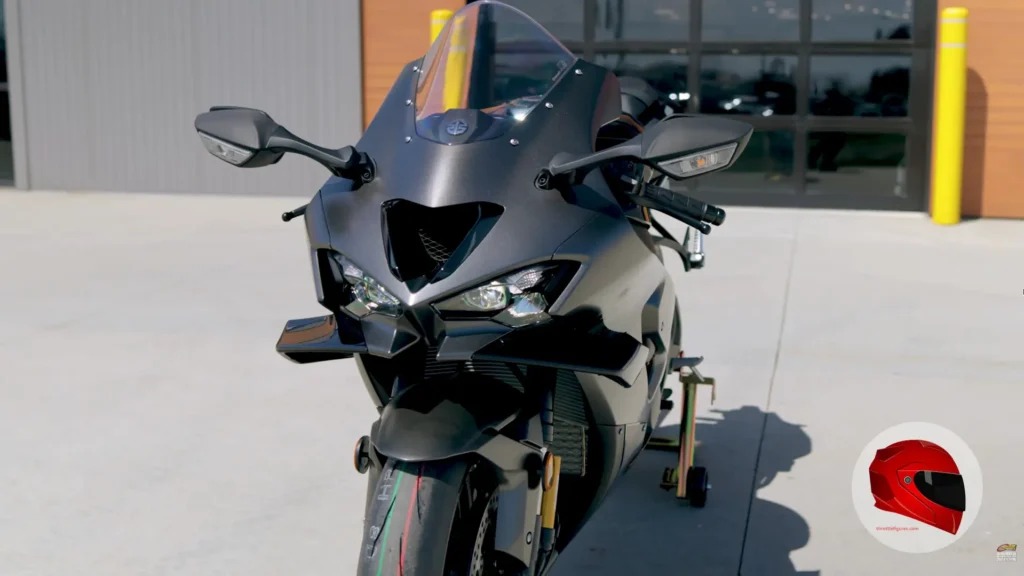
The ZX-10R draws much of its identity from Kawasaki’s WorldSBK program. Its aerodynamic winglets help manage front-end lift during hard acceleration, while the compact chassis, high-revving engine and race-oriented riding position support fast corner entry and exit. The bike is built for performance at speeds and lean angles that are difficult to use legally on public roads.
Suspension hardware includes a 43mm inverted Showa Balance Free Fork with 4.7 inches of travel and a horizontal Back-link system with a BFRC lite gas-charged shock offering 4.5 inches of travel. Dual semi-floating 330mm front discs with Brembo calipers provide the front braking hardware, while a 220mm rear disc handles braking at the back.
The electronics package includes an IMU-enhanced Kawasaki traction-control system, Kawasaki Cornering Management Function, launch control, intelligent anti-lock braking, engine-braking control, riding modes, power modes and electronic cruise control. The 5-inch TFT display connects with RIDEOLOGY THE APP, and all-LED lighting is standard. These systems assist the rider but do not replace smooth inputs, correct braking technique or proper training.
Performance and real-world use
The ZX-10R has an estimated top speed of 186 mph, while its 0-60 mph time is commonly placed in the low-three-second range under favorable conditions. Actual acceleration varies with launch technique, rider weight, surface grip, tire condition, wind and electronic settings. A motorcycle with this level of performance reaches illegal road speeds very quickly.
Power builds toward the upper half of the tachometer, so the bike can feel more manageable at low speed than its output suggests. That impression can be misleading. Engine response becomes increasingly forceful as revs rise, and the short gearing, committed ergonomics and narrow operating window demand concentration.
For street riding, the ABS model adds braking support and weighs 4.5 pounds more than the non-ABS version. ABS does not make the ZX-10R a beginner motorcycle, but it is a sensible choice for riders who may encounter rain, imperfect pavement, emergency braking or changing road conditions.
The ZX-10R’s acceleration and top speed are impressive, but comparisons with other road-legal liter bikes put those figures in perspective. Aerodynamics, gearing, launch technique and electronic intervention can affect the result as much as peak power. Comparing the fastest 1000cc motorcycles gives the ZX-10R’s performance a broader, more realistic context.
Ownership costs and buying requirements
MSRP is only the starting point. The final purchase amount also includes destination charges, dealer preparation, documentation charges, sales tax, title, registration and financing costs. Compare dealers using the complete written out-the-door total.
Insurance is a major recurring expense for a 200-horsepower supersport. Progressive Motorcycle Insurance is one provider to quote, but premiums depend on location, age, riding history, coverage limits, deductible, storage, annual mileage and track use. Standard street motorcycle policies commonly exclude track use, so separate track-day insurance or event coverage is necessary when the street policy does not cover circuit riding.
- A motorcycle endorsement or license class required by the state
- Title, registration and sales-tax completion
- Proof of insurance before legal road use
- A DOT-compliant full-face helmet
- Motorcycle-specific jacket, gloves, pants and over-the-ankle boots
- A secure storage plan and a maintenance budget
Budget for high-performance tires, chain service, brake wear, fluids, scheduled maintenance and possible track-day consumables. Kawasaki dealerships can handle new-bike sales, factory setup, trade-ins, financing applications and warranty work. A private seller requires closer inspection of title status, crash damage, service records and modifications.
The ZX-10R’s purchase price is only part of the cost. Insurance, tires, scheduled servicing, fuel, registration and protective gear can significantly affect your annual budget, especially if aggressive riding means replacing high-performance tires and other wear items more often. A motorcycle ownership cost guide can help you estimate these recurring expenses before you buy.
Is the ZX-10R suitable for beginners?
The ZX-10R is not a sensible beginner motorcycle. Its power, high-speed capability, aggressive ergonomics and rapid response leave little room for mistakes. The ABS version adds anti-lock braking support, while the non-ABS version does not, but neither configuration’s rider aids replace proper training.
New riders should begin with formal motorcycle training and a less powerful motorcycle that makes braking, cornering and throttle control easier to practice. Anyone who eventually moves to the ZX-10R should build experience gradually and use a closed-course training session to learn its performance in a controlled environment.
ZX-10R first-year ownership budget
- Motorcycle price: Start with the $16,999 non-ABS MSRP or $17,999 ABS MSRP.
- Purchase charges: Add destination, dealer preparation, documentation, sales tax, title and registration charges to the advertised price.
- Insurance: Obtain full-coverage quotes before purchase. Premiums vary by location, age, riding history, coverage, deductible, storage, mileage and track use.
- Maintenance and consumables: Reserve money for high-performance tires, chain service, brake wear, fluids, scheduled maintenance and track-day consumables.
- Riding equipment: Include a DOT-approved full-face helmet, motorcycle-specific clothing, gloves and over-the-ankle boots.
- Destination and dealer fees: Budget approximately $1,000 to $2,500.
- Sales tax, title and registration: Budget approximately $500 to $2,500, depending on the state and purchase price.
- Full-coverage insurance: A first-year budget of approximately $1,500 to $4,000 covers a wide range of rider profiles and locations.
- Tires and maintenance: Set aside approximately $1,000 to $2,400 for tires, scheduled service, chain care, fluids and brake wear.
- Protective gear: A complete initial kit can cost approximately $800 to $2,500.
- Estimated first-year total: Including the motorcycle, purchase charges, insurance, gear, maintenance and tires, plan on approximately $21,800 to $31,900 before fuel and financing.
How to buy a ZX-10R safely
- Compare the purchase source: Get written out-the-door quotes from Kawasaki dealerships. For a private sale, verify the seller’s identity, ownership, service records and reason for selling.
- Verify the motorcycle: Match the VIN on the motorcycle with the title and records, then check for reported theft, salvage status, open recalls and outstanding liens.
- Inspect before payment: Examine the frame, fork tubes, wheels, brakes, tires, controls, fasteners, electronics and signs of crash damage. Arrange a qualified inspection for a private-party purchase.
- Arrange financing and insurance: Compare financing terms separately from the motorcycle price. Place the required street coverage with Progressive Motorcycle Insurance, GEICO Motorcycle Insurance or another insurer before riding away.
- Complete payment and paperwork: Use a secure payment method, obtain a signed bill of sale where required, collect both keys and service documents, and confirm that lien paperwork is complete.
- Transport and register: Use a suitable trailer or motorcycle transporter if the bike is uninsured or unregistered. Then complete title, sales-tax, plate and registration steps with the United States DMV or the applicable state DMV.
Licensing, training, and safety equipment
Motorcycle endorsement, permit, insurance, title and registration rules vary by state and are administered through the applicable United States DMV. Complete the required licensing steps before operating the ZX-10R on public roads. The motorcycle’s electronic aids are not a substitute for qualification.
The MSF Basic RiderCourse introduces braking, shifting, cornering and low-speed control. For US road use, a DOT-approved full-face helmet is the minimum helmet standard to look for. A motorcycle-specific jacket, gloves, pants and over-the-ankle boots provide additional protection.
Fuel and emissions considerations
Fuel spending depends on annual mileage, fuel prices, traffic, engine speed and riding style. The ZX-10R’s 4.5-gallon tank limits the cost of each fill-up, but frequent high-rpm riding and track use can raise fuel consumption substantially compared with relaxed street riding.
Mixed street riding returns approximately 35 to 40 mpg, giving the 4.5-gallon tank a practical range of about 158 to 180 miles between fill-ups. Aggressive acceleration, heavy traffic, high-speed riding and track use can reduce both MPG and range.
Before buying, verify the applicable US emissions certification for the 2026 model and the registration rules in the state where the motorcycle will be titled. Emissions and equipment requirements can affect road-registration eligibility, particularly when a private seller has installed a race-only exhaust or other modifications.
Finding a black ZX-10R
Color availability and dealer inventory can change by model year and market. If you want a black Kawasaki Ninja ZX-10R, confirm the current 2026 US color listing and available stock with Kawasaki or a Kawasaki dealership before placing a deposit. Ask the dealer to identify the exact model and paint designation on the buyer’s order because online listings may use generic “black” wording or stock photography.
For a new bike, request recent photographs or inspect it in person before signing if color is important. Used-bike shoppers have a wider search area, but should distinguish factory paint from a wrap, replacement fairings or a repaint. Check panel alignment, fasteners, VIN records and crash evidence rather than treating color as proof of condition. Confirm that any deposit is refundable or transferable if the delivered motorcycle does not match the agreed specification.
FAQs
How much does a 2026 Kawasaki Ninja ZX-10R cost?
The 2026 US MSRP is $16,999 for the non-ABS model and $17,999 for the ABS model. Destination, dealer, tax, title, registration, documentation, financing and insurance costs increase the final ownership price.
Is the ZX-10R faster than the BMW S 1000 RR?
Neither motorcycle is universally faster in every condition. The result depends on gearing, rider, launch, tires, electronics, wind and the road or circuit, while both reach public-road speed limits very quickly.
What does ZX-10R stand for in engine size?
The ZX-10R has a 998cc liquid-cooled, four-stroke inline-four engine. It uses DOHC and 16 valves, with maximum power arriving at 13,200 rpm.
Is the ABS version worth choosing?
The ABS model costs $1,000 more and weighs 4.5 pounds more than the non-ABS version. For street riding, its additional braking support is a practical reason to choose it, particularly where wet pavement and emergency stops are possible.
Can the ZX-10R be used for commuting?
It can be ridden on the street and includes cruise control, smartphone connectivity and a usable fuel capacity. Its low clip-on ergonomics, high operating costs, firm suspension and aggressive engine make it a demanding daily commuter.
Conclusion
The 2026 Kawasaki Ninja ZX-10R suits experienced street riders and track-day users who want liter-bike performance, strong braking hardware, sophisticated electronics and a WorldSBK-influenced chassis. Choose the ABS version for broader street use, price insurance before signing a purchase agreement and include formal training in the motorcycle’s ownership budget.

One Comment