Suzuki GSX-R1000: Specs, Updates & Ownership Considerations
186 – mph
TOP SPEED
2.8 – sec
0 – 60 MPH
199- hp
HORSEPOWER
87 – lb-ft
TORQUE
448 – lb
WEIGHT
999- cc
DISPLACEMENT
Disclaimer: Performance figures may vary depending on factors such as rider, road and weather conditions, vehicle condition, and testing methods. Figures are provided for informational purposes only.
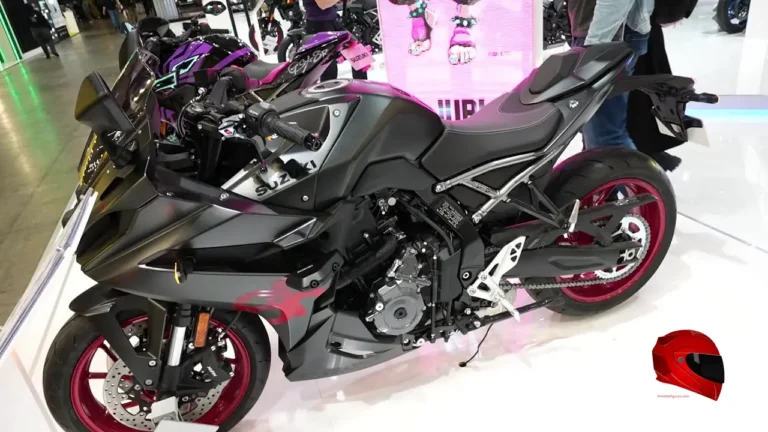
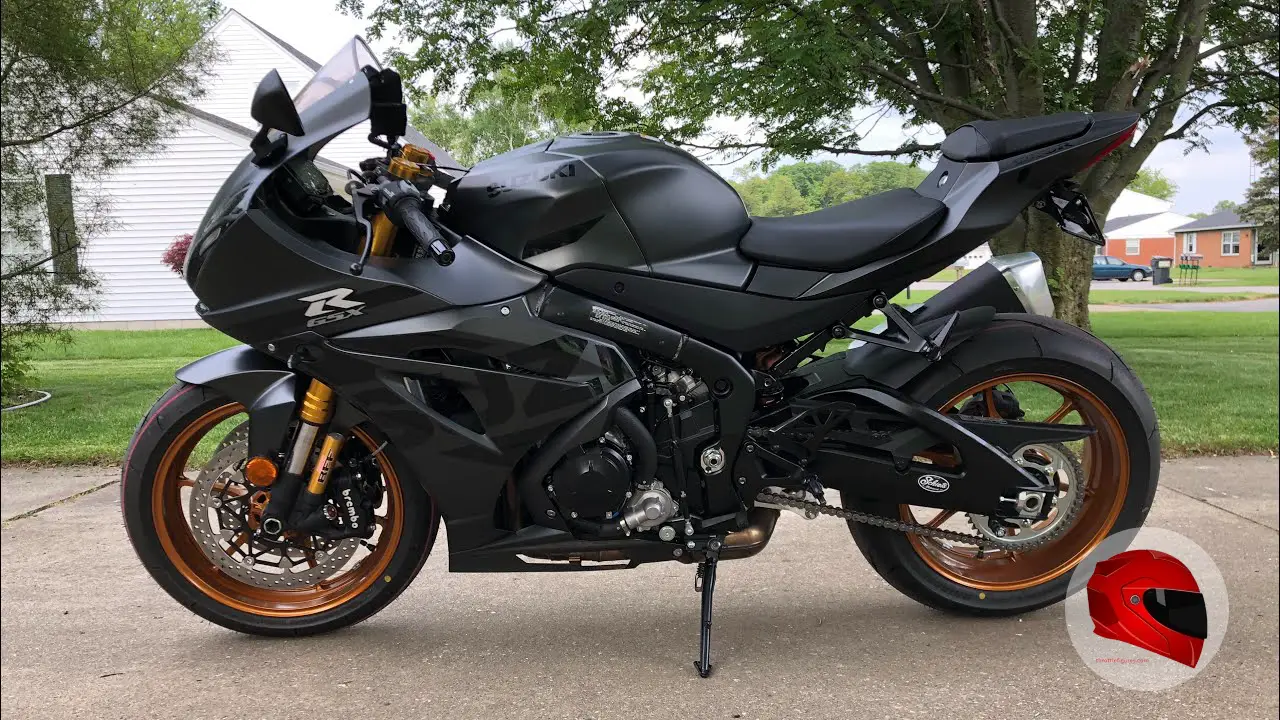
The Suzuki GSX-R1000 pairs a 999.8cc inline-four with the focused riding position of a liter-class sportbike. The 2027 40th Anniversary model revises the engine, frame and rider electronics; the 2025 model offers a reference for dimensions and equipment. The standard GSX-R1000, higher-spec GSX-R1000R and anniversary GSX-R1000RS differ in equipment, so compare trims as well as model years when considering a purchase.
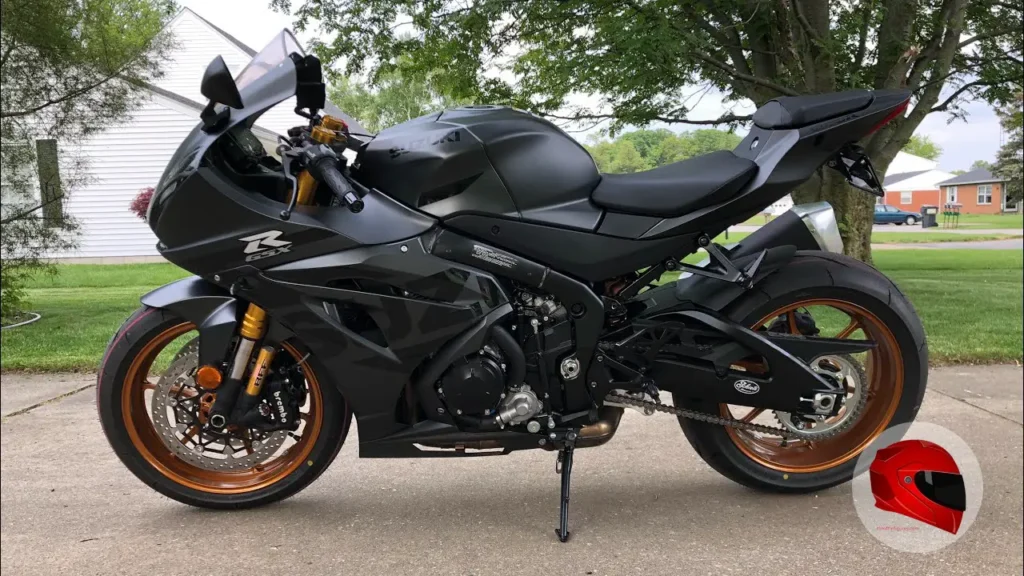
Suzuki GSX-R1000 Specifications by Model Year
| Specification | 2025 GSX-R1000 | 2027 GSX-R1000 |
|---|---|---|
| Engine | 999.8cc liquid-cooled DOHC inline-four | 999.8cc updated liquid-cooled DOHC inline-four |
| Bore × stroke | 76.0 × 55.1 mm | Revised cylinder-head ports |
| Compression ratio | 13.2:1 | 13.8:1 |
| Fuel system | Ride-by-Wire fuel injection | Revised eight-hole top-feed injectors |
| Exhaust | Four-into-two-into-one | Revised four-into-two-into-one; 5.5 L muffler |
| Transmission | Six-speed constant mesh | Six-speed |
| Front suspension | Inverted telescopic, coil-spring, oil-damped | Trim-dependent equipment |
| Front brakes | Twin discs; Brembo four-piston calipers; ABS | Lean-sensitive Motion Track ABS |
| Rear brakes | Single disc; Nissin one-piston caliper; ABS | ABS |
| Rider aids | 3-mode drive selector; 10-mode traction control | IMU-informed traction control; Smart TLR Control |
| Frame | Aluminum twin-spar | Aluminum twin-spar; 10% lighter than prior generation |
| Seat height | 825 mm (32.5 in.) | Unpublished |
| Curb weight | 201 kg (443 lb.) | Unpublished |
| Fuel capacity | 16.0 L (4.2 US gal.) | Unpublished |
| Tires | 120/70 front; 190/55 rear; Bridgestone Racing Street RS11 | Trim-dependent |
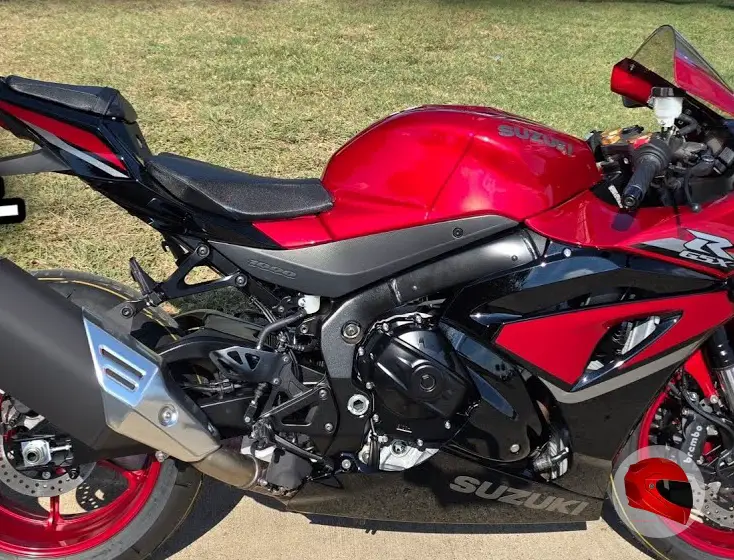
How the GSX-R1000 Engine Delivers Power
Both model years use a 999.8cc, four-stroke, liquid-cooled inline-four with double overhead camshafts. The 2025 engine has a 13.2:1 compression ratio, a 76.0 mm bore and a 55.1 mm stroke. Its Ride-by-Wire fuel-injection system works with variable valve timing to deliver power across a broad rev range.
For 2027, Suzuki revised the crankcases, enlarged the crankshaft journals, reshaped the cylinder-head ports and changed the combustion design. The compression ratio increases to 13.8:1, and the top-feed injectors switch from a ten-hole to an eight-hole design. The revised 4-2-1 exhaust has a 5.5-liter muffler, down from 8.3 liters.
Suzuki does not publish U.S. horsepower, torque, 0-60 mph or top-speed figures for these model years. Independent test results vary with the method, conditions and motorcycle setup, so they cannot be treated as directly comparable factory ratings.
Peak horsepower alone doesn’t show how hard the GSX-R1000 accelerates. Its weight matters too. Comparing power and weight through motorcycle power-to-weight ratios shows how it stacks up against other liter-class superbikes.
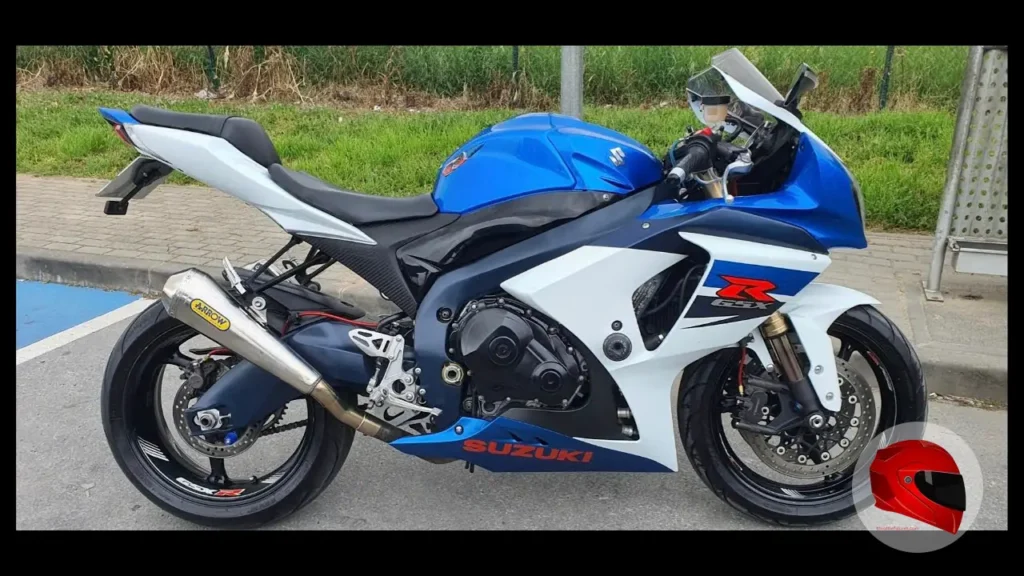
Chassis, Suspension, and Braking
The 2025 GSX-R1000 has an aluminum twin-spar frame, a 1,420 mm wheelbase and 130 mm of ground clearance. Its inverted front suspension uses coil springs and oil damping. Twin front discs work with Brembo Monobloc four-piston calipers, while a single rear disc has a Nissin one-piston caliper. ABS is fitted at both ends.
For 2027, the frame is 10% lighter than the previous generation, and its spars sit 20 mm closer together. The lineup adds lean-sensitive Motion Track ABS. Equipment varies by trim: the GSX-R1000R has higher-spec Showa Balance Free Front Fork suspension and adjustable swingarm pivots. The GSX-R1000RS is a performance-oriented anniversary variant with upgraded suspension and chassis features.
The 2025 standard model comes with Bridgestone Racing Street RS11 tires: 120/70ZR17 at the front and 190/55ZR17 at the rear. These sport-focused tires should be included in the replacement budget, with their condition and intended use in mind. Tire choice, wear and pressure also affect grip and handling, particularly on track.
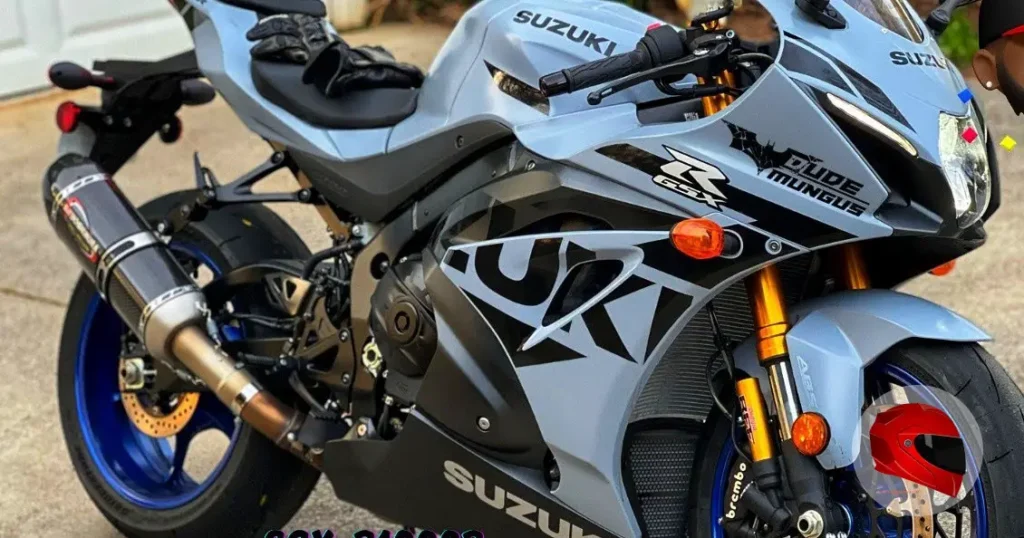
Rider Aids and Everyday Ergonomics
The 2025 model has a three-mode Suzuki Drive Mode Selector, a ten-mode Motion Track Traction Control System and a bi-directional quick shifter. These systems let riders adjust throttle response and traction intervention. They do not replace smooth inputs, appropriate speed or experience.
- 2027 Smart TLR Control: Combines Traction Control, Lift Limiter and Roll Torque Control.
- 2027 ABS: Motion Track ABS uses lean information to adjust braking intervention.
- Riding position: The low, forward stance is intended for active riding, not relaxed, upright commuting.
- Seat height: The 2025 seat is 825 mm (32.5 inches) high. Shorter riders should assess the reach in person.
Electronics can help manage rider inputs, but they cannot prevent every loss of traction or make up for limited experience. Sit on the bike to check your reach and posture. If a controlled test ride is available, it can show whether the riding position suits regular use.
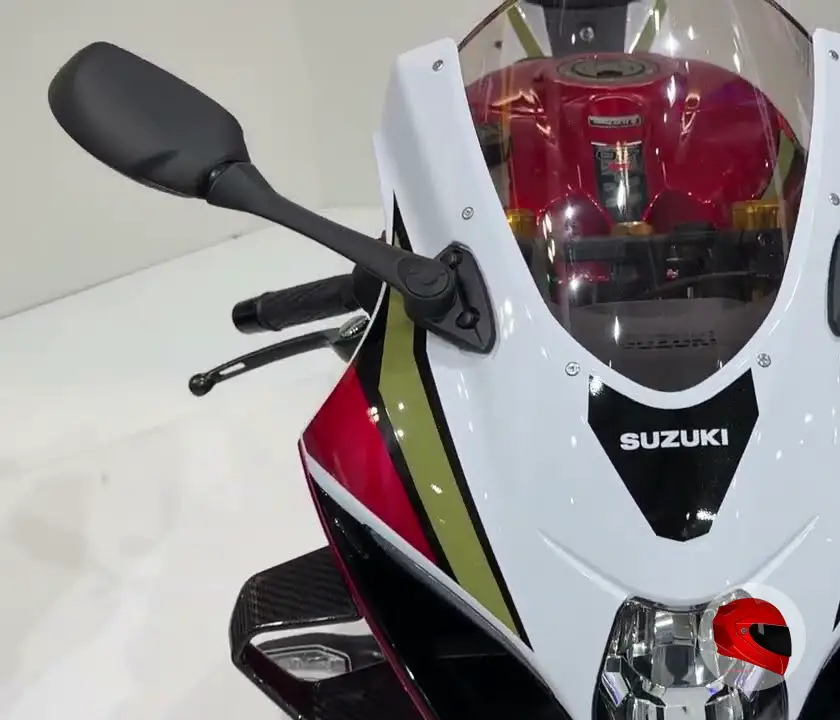
GSX-R1000 Model History and Variants
Suzuki introduced the GSX-R1000 in 2001 as the successor to the GSX-R1100. The first model displaced 988cc and had a claimed crankshaft output of 160 bhp at 9,500 rpm, maximum torque of 80 ft-lb at 8,000 rpm and a 12,000-rpm redline. “Gixxer” is a common nickname for the GSX-R family.
A major redesign arrived in 2017 with an IMU-based electronics suite, traction control and drive-by-wire throttle. The GSX-R1000R sits above the standard model, adding upgraded suspension and chassis adjustment. The GSX-R1000RS is a separate anniversary-focused variant; its equipment and availability depend on market and model year.
The Honda CBR1000RR and Yamaha YZF-R1 are direct liter-class alternatives. The Suzuki GSX-R750 is a smaller-displacement option in the same sportbike family. Compare the specific trim, intended use and local pricing, not just engine size. The 2027 U.S. GSX-R1000R has an MSRP of $17,939; the standard GSX-R1000 MSRP and dealer charges vary by sale.
Compared with the GSX-R1000, the Suzuki GSX-R750 specs has less displacement; the 1000 delivers more power and more demanding performance.
GSX-R1000 vs. Yamaha YZF-R1
The factory figures listed here do not support a like-for-like top-speed or acceleration comparison between the GSX-R1000 and Yamaha YZF-R1. Suzuki does not publish an official GSX-R1000 top speed, and a direct comparison would require performance measurements for both bikes taken under comparable conditions.
The 2027 GSX-R1000 has a 999.8cc inline-four, IMU-informed traction control, Smart TLR Control and lean-sensitive Motion Track ABS. Both bikes are liter-class sportbikes. Compare the model year and trim equipment, then consider whether you plan to ride mainly on the road or track.
What to Check Before Buying Used
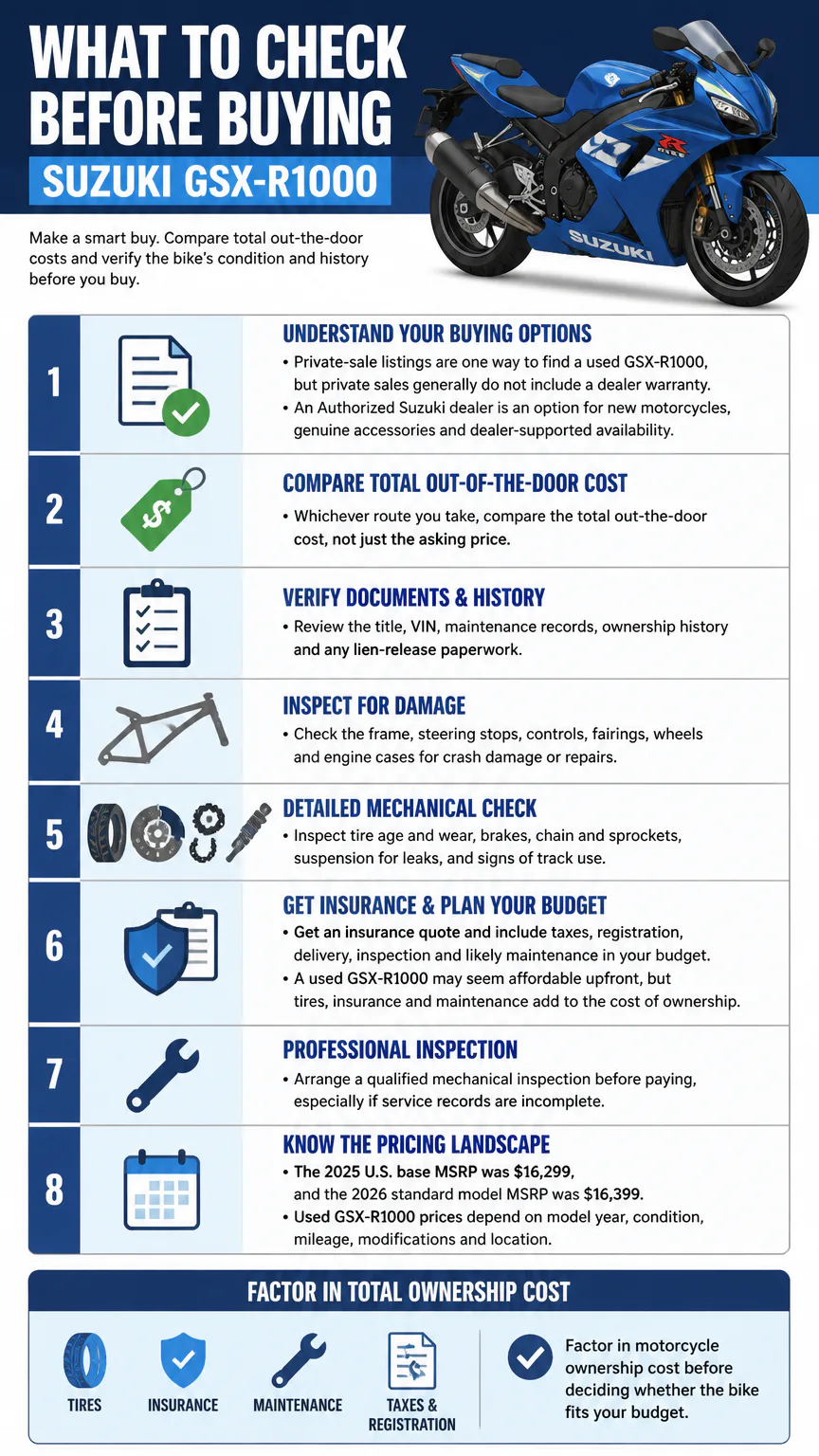
Private-sale listings are one way to find a used GSX-R1000, but private sales generally do not include a dealer warranty. An Authorized Suzuki dealer is an option for new motorcycles, genuine accessories and dealer-supported availability. Whichever route you take, compare the total out-the-door cost, not just the asking price.
- Review the title, VIN, maintenance records, ownership history and any lien-release paperwork.
- Check the frame, steering stops, controls, fairings, wheels and engine cases for crash damage or repairs.
- Inspect tire age and wear, brakes, chain and sprockets, suspension for leaks, and signs of track use.
- Get an insurance quote and include taxes, registration, delivery, inspection and likely maintenance in your budget.
- Arrange a qualified mechanical inspection before paying, especially if service records are incomplete.
The 2025 U.S. base MSRP was $16,299, and the 2026 standard model MSRP was $16,399. Used GSX-R1000 prices depend on model year, condition, mileage, modifications and location.
A used GSX-R1000 may seem affordable upfront, but tires, insurance and maintenance add to the cost of ownership. Factor in motorcycle ownership cost before deciding whether the bike fits your budget.
Who the GSX-R1000 Suits Best
The GSX-R1000 is suited to experienced riders who can handle a high-powered supersport motorcycle and want a focused road or track bike. Its aggressive posture, limited everyday practicality and performance-oriented tires are worth considering, particularly if you plan to commute or take long trips.
For most new riders, it is not a sensible first motorcycle. A Motorcycle Safety Foundation Basic RiderCourse can build foundational skills and may satisfy a motorcycle skills-test requirement in some states, though licensing rules vary. Training does not replace gaining experience on lower-powered motorcycles over time.
FAQs
Is a GSX-R1000 faster than a Dodge Hellcat?
There is no universal answer: acceleration and top speed depend on the Hellcat and GSX-R1000 versions, the rider, launch and traction, road and weather conditions, gearing, aerodynamics and any speed limiter. The motorcycle’s power-to-weight ratio matters for acceleration, but it does not determine the result on its own.
Does the GSX-R1000 have a factory-published 0-60 time?
Suzuki does not publish an official 0-60 mph time for the GSX-R1000. Independent test results vary with rider technique, surface, weather and measurement method.
Conclusion
The GSX-R1000 is a liter-class sportbike, and the 2027 model brings changes to its engine, frame and electronics. Choose a trim and price that suit your experience and intended use, and have any used bike inspected before you buy.