Yamaha YZF-R1: 2026 Specs, Performance, Price, and Buying Guide
186 – mph
TOP SPEED
2.9 – sec
0 – 60 MPH (claimed)
200 – hp
HORSEPOWER
83 – lb-ft
TORQUE
448 – lb
WEIGHT
998 – cc
DISPLACEMENT
Disclaimer: Performance figures below are manufacturer-claimed unless noted, and may vary depending on factors such as rider, road and weather conditions, vehicle condition, and testing methods. Independent test results can differ. Figures are provided for informational purposes only.
The 2026 Yamaha YZF-R1 is a track-focused liter-class sport bike for experienced riders who want a 998cc crossplane engine, advanced electronics and a race-derived chassis. The standard R1 starts at $19,199 in the United States, while the electronically suspended R1M costs $27,899. The right buying route depends on whether you want a new motorcycle, premium suspension, dealer support or the lower price of a used listing.
2026 Yamaha YZF-R1 Specifications and Price
| Option | Price or market position | Engine and performance | Weight | Best fit | Key upgrades |
|---|---|---|---|---|---|
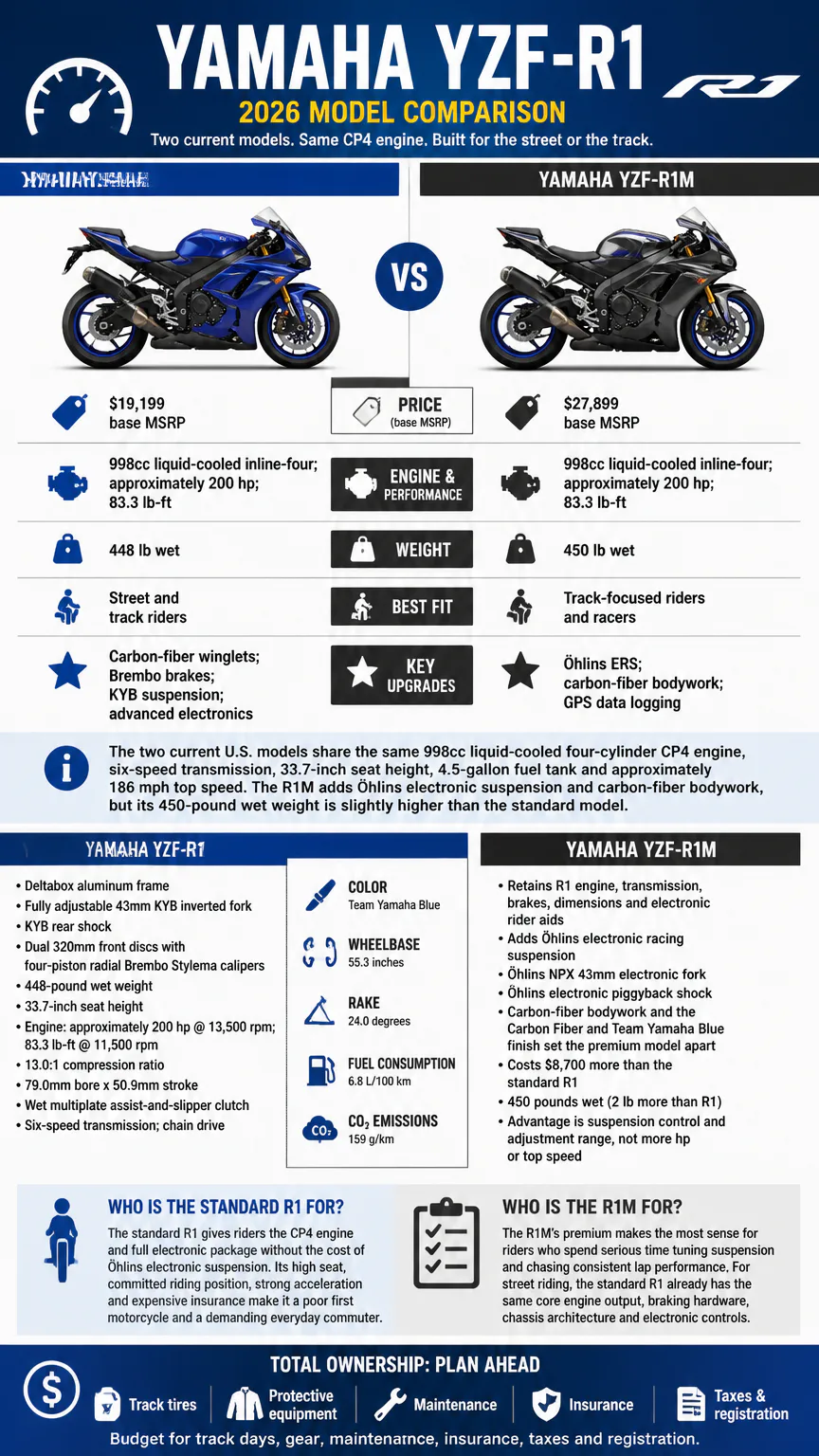
| Yamaha YZF-R1 | $19,199 base MSRP | 998cc liquid-cooled inline-four; approximately 200 hp; 83.3 lb-ft | 448 lb wet | Street and track riders | Carbon-fiber winglets; Brembo brakes; KYB suspension; advanced electronics |
| Yamaha YZF-R1M | $27,899 base MSRP | 998cc liquid-cooled inline-four; approximately 200 hp; 83.3 lb-ft | 450 lb wet | Track-focused riders and racers | Öhlins ERS; carbon-fiber bodywork; GPS data logging |
The two current U.S. models share the same 998cc liquid-cooled four-cylinder CP4 engine, six-speed transmission, 33.7-inch seat height, 4.5-gallon fuel tank and approximately 186 mph top speed. The R1M adds Öhlins electronic suspension and carbon-fiber bodywork, but its 450-pound wet weight is slightly higher than the standard model.
Yamaha YZF-R1
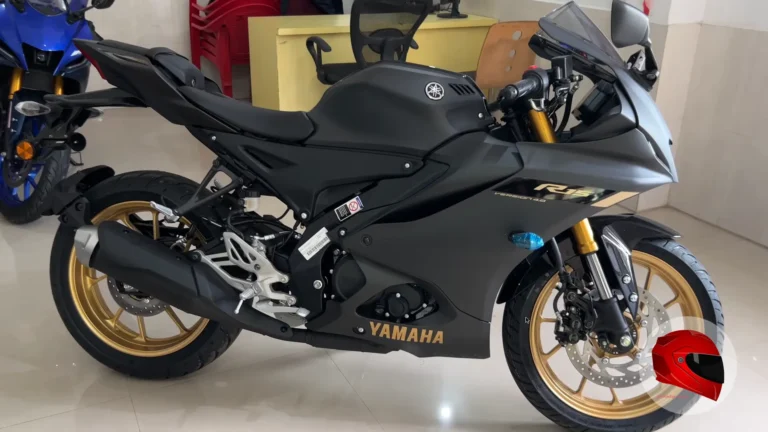
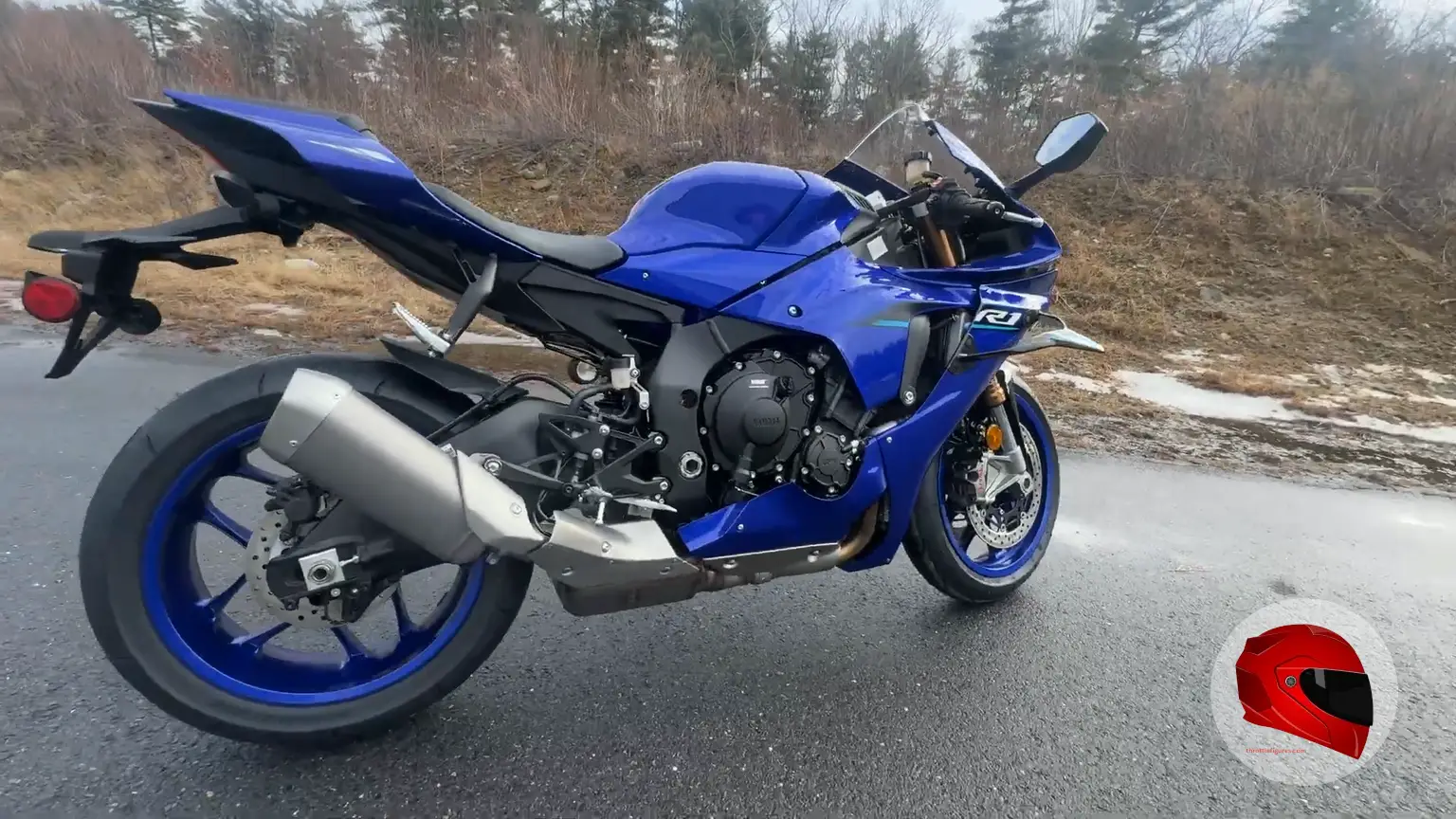
The standard R1 uses a Deltabox aluminum frame, a fully adjustable 43mm KYB inverted fork, a KYB rear shock and dual 320mm front discs with four-piston radial Brembo Stylema calipers. Its 448-pound wet weight and 33.7-inch seat height put it firmly in the superbike category. The riding position favors precise control rather than relaxed commuting.
The engine produces approximately 200 horsepower at 13,500 rpm, while peak torque reaches 83.3 lb-ft at 11,500 rpm. It has a 13.0:1 compression ratio, a 79.0mm bore and a 50.9mm stroke. A wet multiplate assist-and-slipper clutch works with the six-speed transmission, and chain drive sends power to the rear wheel.
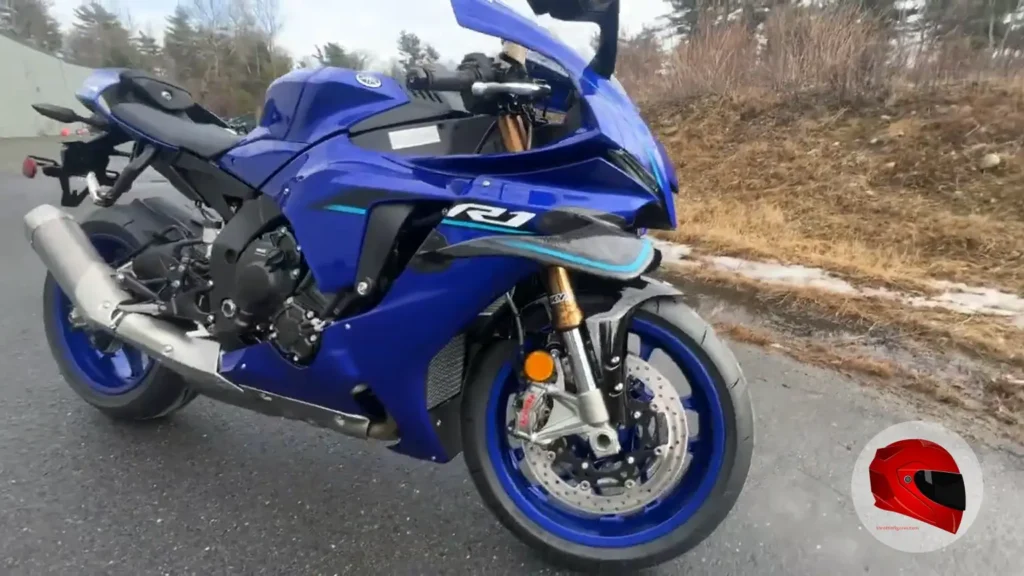
- Color: Team Yamaha Blue
- Tires: 120/70ZR17 front, 190/55ZR17 rear (Bridgestone Battlax RS11)
- Quickshifter: Yamaha Quick Shift System (QSS), up and down
- Warranty: 1-year limited factory warranty
- Also offered: 70th Anniversary Edition with retro speed-block livery — cosmetic package only, no mechanical changes
- Wheelbase: 55.3 inches
- Rake: 24.0 degrees
- Fuel consumption: 6.8 L/100 km (EU test cycle; Yamaha USA lists 33 mpg)
- CO2 emissions: 159 g/km (EU figure)
The standard R1 gives riders the CP4 engine and full electronic package without the cost of Öhlins electronic suspension. Its high seat, committed riding position, strong acceleration and expensive insurance make it a poor choice as a first motorcycle and a demanding everyday commuter.
Yamaha YZF-R1M
The R1M retains the R1’s engine, transmission, brakes, dimensions and electronic rider aids, then adds Öhlins electronic racing suspension. Up front, it uses an Öhlins NPX 43mm electronic fork. The rear has an Öhlins electronic piggyback shock. Carbon-fiber bodywork and the Carbon Fiber and Team Yamaha Blue finish set the premium model apart.
At $27,899, the R1M costs $8,700 more than the standard R1. That premium makes the most sense for riders who spend serious time tuning suspension and chasing consistent lap performance. For street riding, the standard R1 already has the same core engine output, braking hardware, chassis architecture and electronic controls.
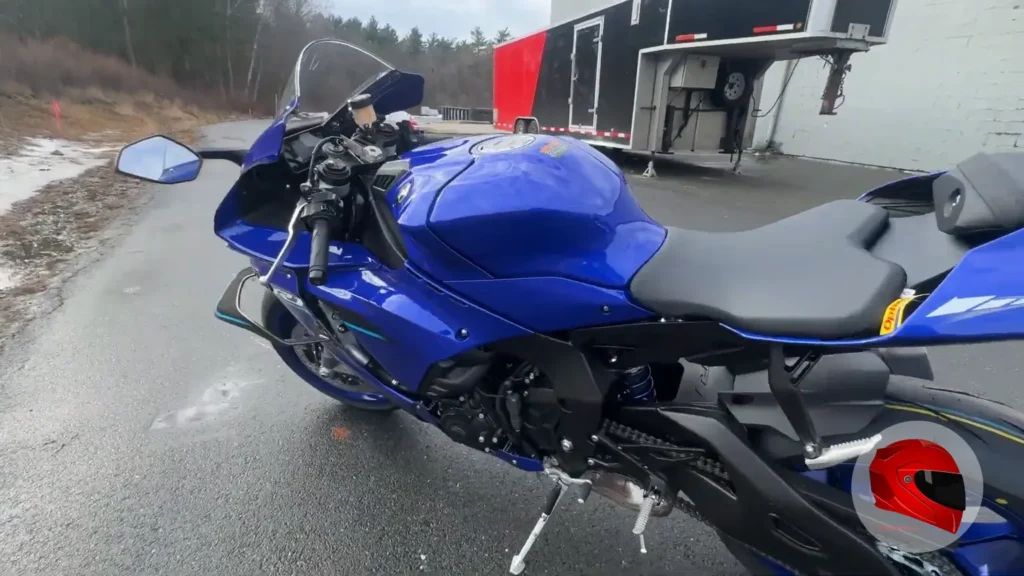
The R1M weighs 450 pounds wet, two pounds more than the standard model. Its advantage is suspension control and adjustment range, not a higher published horsepower figure or top speed. Buyers should also budget for track tires, protective equipment, maintenance, insurance, taxes and registration.
Financing, licensing, and registration
Yamaha Financial Services can finance eligible motorcycle purchases. Approval depends on credit profile, income, loan amount, term, down payment and the motorcycle being financed. A longer term can lower the monthly payment while increasing the total interest paid.
The Department of Motor Vehicles handles title transfer, registration, taxes, plates and motorcycle endorsement or licensing requirements in the state where the bike is registered.
- Bring the signed title or manufacturer’s certificate of origin
- Keep the bill of sale and purchase agreement
- Provide proof of insurance when required
- Complete the state’s title and registration application
- Resolve any lien documentation before title transfer
Requirements and deadlines vary by state. A financed motorcycle generally has a recorded lien, and the lender remains involved in the title process until the balance is paid.
Payment and eligibility
Budget for more than the motorcycle’s advertised price. A new R1 with a $19,199 base MSRP can also incur freight, preparation, documentation, tax, title, registration, insurance and finance costs. Ownership costs include riding gear, scheduled maintenance, tires, chain service and storage.
Before applying for financing, calculate the full monthly ownership cost rather than looking only at the loan payment. Liter-class sport-bike insurance can be expensive — often far more than coverage for a middleweight — and a lender may require comprehensive and collision coverage for the length of the loan. Get quotes for the exact R1 or R1M and your rider profile before committing, since the premium can materially change your monthly ownership cost.
- Set a maximum out-the-door budget.
- Obtain insurance quotes for the exact model and rider profile.
- Compare financing terms using total repayment, not only the monthly payment.
- Confirm that the motorcycle has a clear title or documented lien before completing the purchase.
- Complete the state title, registration and endorsement requirements.
A written out-the-door worksheet should list the selling price, freight, documentation charge, taxes, registration, down payment, interest rate and total finance cost separately.
Riders should have the required motorcycle license or endorsement before riding on public roads. Track use adds separate costs and safety requirements, including transport, protective equipment and event fees.
What makes the CP4 engine different
The R1’s CP4 engine uses a crossplane crankshaft derived from Yamaha’s YZR-M1 MotoGP racing program. Its 270-180-90-180-degree firing order changes the spacing of combustion pulses compared with a conventional inline-four. That layout affects the engine’s sound, throttle response and traction behavior under acceleration.
The 998cc liquid-cooled engine has four cylinders, double overhead camshafts, four valves per cylinder, electronic fuel injection and Yamaha Chip Controlled Throttle cableless ride-by-wire. It produces approximately 200 hp at 13,500 rpm and 83.3 lb-ft of torque at 11,500 rpm.
The engine is built to operate at high rpm, so its strongest performance arrives deep in the rev range. The six-speed transmission and assist-and-slipper clutch help manage aggressive downshifts. Engine-brake management lets the rider adjust how much deceleration reaches the rear tire during corner entry.
R1 electronics and aerodynamic technology
A six-axis inertial measurement unit feeds the R1’s rider-aid system. The electronics monitor the motorcycle’s movement and support lean-sensitive control of acceleration, braking, wheel lift, sliding, launching and engine braking.
- Power mode adjustment
- Lean-sensitive traction control
- Slide control
- Lift control
- Launch control
- Engine-brake management
- Brake control and ABS
- Yamaha Chip Controlled Throttle ride-by-wire
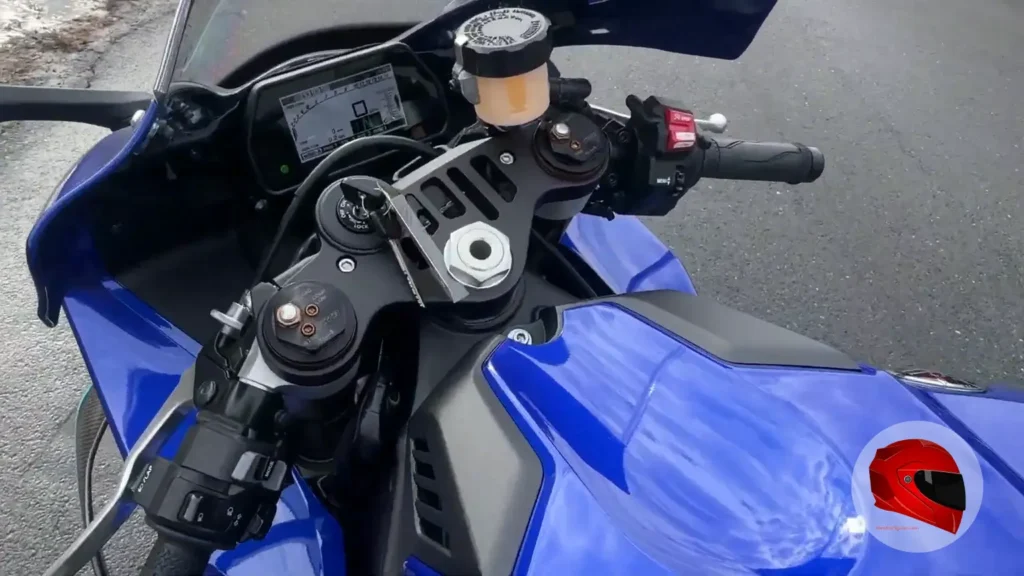
MotoGP-inspired carbon-fiber winglets are integrated into the bodywork to add downforce and improve front-end stability at speed. The aerodynamic package suits the R1’s track role, but it does not change the basic ownership needs: tires, brakes, suspension setup and rider skill remain central to safe performance.
The standard R1 uses fully adjustable KYB suspension, with settings for rider weight, road conditions and track use. The R1M’s Öhlins electronic suspension offers more sophisticated adjustment, but it still needs correct setup and regular service.
Where to buy Yamaha YZF-R1
Yamaha Motorsports dealerships handle new and certified pre-owned inventory, financing, inspections and manufacturer support. Cycle Trader lists dealer and private-party motorcycles for nationwide comparison, while Facebook Marketplace focuses on local used-bike listings and direct negotiation.
eBay Motors lists new-old-stock and used motorcycles, parts and related items. For an R1 purchase through eBay Motors, the listing and transaction records should identify the vehicle identification number, title, mileage, condition, shipping terms and applicable return or dispute rules before payment.
Compare the complete delivered cost with a local dealer or private-party purchase. Shipping, taxes, registration, inspection and an independent mechanical inspection can materially change the apparent bargain.
FAQs
Is a Yamaha R1 a beginner bike?
No. The R1 is an advanced liter-class sport bike with approximately 200 hp, a high-revving engine, a 33.7-inch seat and aggressive ergonomics. New riders should build experience on a smaller, less powerful motorcycle before considering an R1.
Can an R1 go 200 mph?
The Yamaha YZF-R1 has an approximate top speed of 186 mph, or 299 km/h, in standard form. Reaching 200 mph would require conditions and modifications outside the normal factory specification, and public-road riding should remain within posted speed limits.
Does the R1M have more horsepower than the R1?
No published engine-power difference separates the two 2026 models. The R1M’s additional cost goes primarily toward Öhlins electronic suspension and carbon-fiber equipment, not a higher stated horsepower or top-speed figure.
What should I inspect on a used Yamaha R1?
Check the title, VIN, maintenance records, cold-start behavior, warning lights, frame, fork tubes, wheels, engine cases, chain, brakes and evidence of crash or track damage. Run the VIN through the NHTSA recall lookup to check for open safety recalls. An independent inspection is also worthwhile because cosmetic repairs can conceal expensive chassis or engine problems.
How much does R1 insurance cost?
It varies widely by rider age, record, location and coverage, but expect liter-class superbike premiums to run far higher than a middleweight sport bike. Get quotes for the exact R1 or R1M and your rider profile before you buy — the premium can change the real monthly cost of ownership.
What warranty comes with a new R1?
Yamaha USA covers the 2026 YZF-R1 and R1M with a 1-year limited factory warranty. Dealers can also quote Yamaha extended service plans if you want longer coverage.
Conclusion
Verdict: most experienced buyers should get the standard R1 — it has the same 200-hp CP4 engine, brakes and electronics as the R1M for $8,700 less. Choose the R1M only if you ride track days regularly and will use the Öhlins electronic suspension to chase lap times. Buying used can save thousands, but only with a clean title, service history and an independent inspection. Yamaha Motorsports dealerships provide the most structured purchase process, while Cycle Trader and Facebook Marketplace add used-bike listings.