KTM Duke 390
Disclaimer: Performance figures may vary depending on factors such as rider, road and weather conditions, vehicle condition, and testing methods. Figures are provided for informational purposes only.
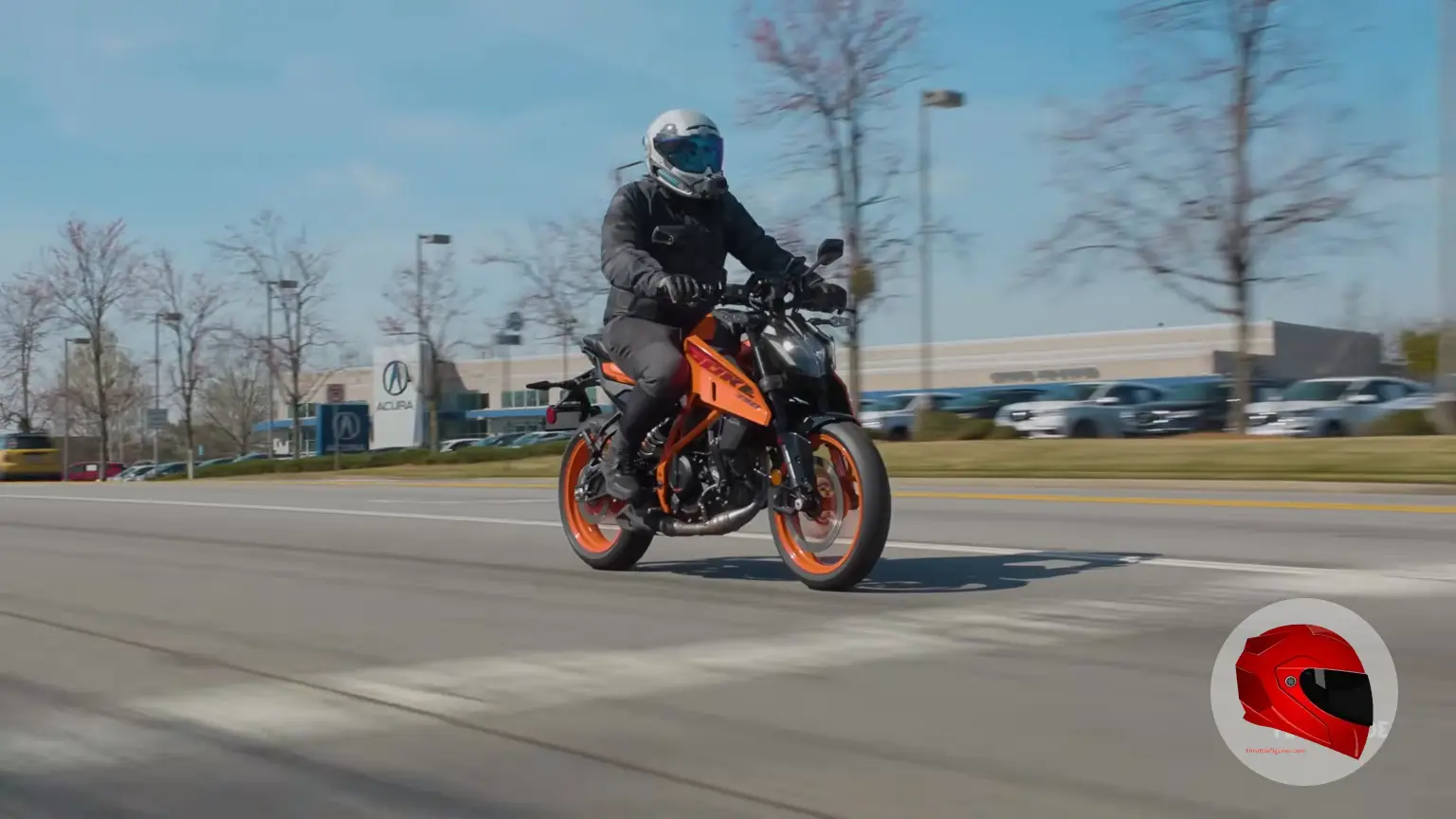
The 2026 KTM Duke 390 is a lightweight street motorcycle with sharp cornering ability, modern electronics and enough power for highway use. Its 398.7 cm³ single-cylinder engine produces 45 PS, while the 165 kg fueled weight keeps low-speed handling manageable. Price, seat height, service history and the differences between the current LC4c generation and older 373.2cc models all matter when buying one.
2026 KTM Duke 390 Specifications and Price
| Specification | Value |
|---|---|
| Model year | 2026 |
| Manufacturing | KTM and Bajaj Auto, Pune, India |
| US base MSRP | $5,499 |
| Freight charge | $600 |
| Engine | 1-cylinder, 4-stroke |
| Displacement | 398.7 cc |
| Power | 45 PS (44.3 hp) |
| Torque | 39 Nm (28.8 lb-ft) |
| Transmission | 6-speed |
| Top speed | 106 mph |
| 0–60 mph | Approximately 4.3 seconds |
| Cooling | Liquid cooled |
| Engine management | Bosch EMS with ride-by-wire |
| Frame | Powder-coated steel trellis |
| Front suspension | WP APEX 43, 150 mm travel |
| Rear suspension | 150 mm travel |
| Suspension adjustment | Front compression/rebound; rear rebound/preload |
| Front brake | 320 mm disc, 4-piston radial fixed caliper |
| Rear brake | 240 mm disc |
| Wheelbase | 1,357 mm |
| Seat height | 820 mm standard; 800 mm lowered |
| Fully fueled weight | 165 kg (364 lb) |
| Fuel capacity | 15 L (4.0 gal) |
| Display | 5-inch color TFT |
| Ride modes | Street and Rain |
| Safety electronics | Lean-angle traction control and cornering ABS |
| Lighting | Full LED with daytime running lights |
| Final drive | 520 X-ring chain |
| CO2 emissions | 79 g/km |
| Engine oil | Motorex Formula 4T 15W/50 |
| Street-legal warranty | Up to 4 years for eligible motorcycles |
| Break-in service | 620 miles (1,000 km) |
| Routine service | 6,200 miles (10,000 km) or 12 months |
| 2024 and newer | Applies to routine-service interval |

How the Duke 390 Performs on the Street
The Duke 390 feels quick because its 398.7 cm³ engine works against a relatively low fueled weight. Its approximately 44.3 hp output, short gearing and responsive ride-by-wire throttle produce an estimated 0-60 mph time of about 4.3 seconds. The single-cylinder engine delivers useful drive in urban traffic and brisk acceleration through the middle gears.
Published top-speed figures reach about 106 mph, giving the motorcycle enough capability for interstate travel. At sustained highway speeds, the upright naked-bike layout leaves the rider exposed to wind, and the single-cylinder engine produces more vibration than a twin-cylinder alternative. Passing performance remains useful, but the Duke 390 is primarily a lightweight standard motorcycle rather than a long-distance touring machine.
Cornering is the Duke’s strongest dynamic trait. The compact 1,357 mm wheelbase, 150 mm suspension travel, low overall weight and adjustable WP APEX 43 fork make direction changes easy. The 320 mm front disc and four-piston radial caliper provide strong braking power, while cornering ABS adds control when braking pressure and lean angle overlap.
The Duke 390’s upright riding position and exposed design give you good visibility, easy low-speed control and the flexibility needed for everyday riding. Its single-cylinder engine still delivers lively acceleration. Riders who want similar mechanical character with more wind protection and a sportier stance may accept less comfort in traffic. The KTM RC 390 shows that trade-off by putting similar performance ideas into a fully faired package.

Dyno test recorded 43.5 hp at the rear wheel, compared with 38.9 hp for the stock bike. Peak wheel torque increased from 33.3 Nm to 39.8 Nm after fitting a FuelX Pro+, DNA air filter and Powertronic ECU.
Features That Matter in Daily Riding
- Ride modes: Street and Rain settings change engine response and electronic intervention.
- Traction control: Lean-angle-sensitive intervention helps manage rear-wheel slip while the motorcycle is leaned over.
- Cornering ABS: The system accounts for lean angle instead of treating every braking event as upright.
- Adjustable suspension: The fork offers compression and rebound adjustment; the rear unit adds rebound and preload adjustment.
- Five-inch TFT: The color display shows speed, engine information, ride settings and warning messages in a clear layout.
- LED lighting: Full LED equipment and daytime running lights improve visibility and reduce bulb maintenance.
Smartphone functions run through KTMconnect, which supports navigation, calls and audio functions. The system suits commuting and city riding, but it does not add weather protection or a large luggage system.
Cruise control is not part of the listed core specification, so buyers should not assume it is included. The electronics package is extensive for a motorcycle in this displacement class, but riders still need to understand how each mode behaves before riding aggressively.
Comfort, Heat, and Practicality
The standard 820 mm seat is manageable for many riders but can feel tall for shorter buyers, especially with the motorcycle’s narrow, sporty layout and firm suspension. The 800 mm lowered setting improves reach to the ground. A lower seat helps at stops, but it does not remove the need to balance the motorcycle confidently at low speed.
The upright riding position suits commuting and urban maneuvering. The 15-liter tank gives useful range between fuel stops, although actual distance depends on speed, traffic and riding style. Passenger space is limited compared with a touring motorcycle, and the compact rear section favors solo riding.
Liquid cooling controls operating temperature, but engine heat can still be noticeable in slow traffic. Vibration from the single-cylinder engine increases during sustained high-speed riding. These traits do not make the Duke impractical, but they make it better suited to city streets, back roads and moderate highway trips than extended motorway travel.

KTM Duke 390 Problems and Maintenance
Ownership concerns center on maintenance discipline and the condition of early-generation motorcycles rather than one universal mechanical failure. Stalling, inconsistent fueling, gearbox complaints, excessive heat, coolant issues and chain wear are all worth checking during a purchase. None of these issues proves that every Duke 390 has the same defect.
- Stalling and fueling: Check cold starts, idle quality, throttle response and engine behavior after warm-up.
- Gearbox: Test every gear under acceleration and deceleration. Check for false neutrals, difficult shifts and clutch engagement problems.
- Cooling system: Inspect coolant level, hoses, radiator condition and evidence of leaks after a full warm-up.
- Chain and sprockets: Examine slack, lubrication, hooked teeth, rust and uneven adjustment across the rear wheel.
- Break-in service: The first scheduled service is due at 620 miles (1,000 km) and should be documented.
- Routine service: 2024-and-newer motorcycles use a 6,200-mile (10,000 km) or 12-month interval. Models from 2013 through 2023 use an approximately 4,650-mile interval.
- Warranty: Eligible US street-legal models can receive up to four years of coverage, subject to KTM terms and maintenance requirements.
The 2013-2023 motorcycles use the older 373.2cc engine generation. The 2024 model transition introduced the approximately 398.7cc LC4c platform, so service records and model year matter more than a low purchase price alone.
The Duke 390’s chain final drive affects throttle response, noise and drivetrain wear. Clean and lubricate the chain regularly, and check its slack carefully, especially if you commute, ride in the rain or ride hard. A consistent motorcycle chain maintenance routine can prevent minor drivetrain problems from turning into expensive repairs.

Is the Duke 390 Good for Beginners?
The Duke 390 can be a strong first motorcycle for a disciplined beginner who completes formal training and respects its immediate throttle response. Its 165 kg fueled weight is easier to manage than that of many larger motorcycles, and the riding position provides good visibility in traffic. The motorcycle is also narrow and maneuverable at parking-lot speeds.
Its performance requires judgment. Approximately 44.3 hp is enough to reach highway speeds quickly, and the short gearing can make throttle inputs feel sharp to a new rider. The 820 mm seat may also challenge shorter beginners. The 800 mm setting, Rain mode, traction control and cornering ABS help, but electronic aids do not replace braking, clutch and cornering practice.
A United States motorcycle endorsement is required for public-road riding, with exact licensing steps determined by the rider’s state. New riders should budget for approved protective gear, insurance, registration and a safety course before treating the motorcycle’s purchase price as the complete cost.
The Duke 390 can suit a disciplined beginner, but its sharp throttle response and strong performance leave less room for mistakes than a smaller learner bike. A new motorcycle offers predictable condition and warranty support, while a used one can lower the cost of your first ownership experience but needs a careful inspection. That trade-off matters when deciding whether new or used motorcycle is the right choice for a beginner.
New Versus Used KTM Duke 390
| Purchase path | Price basis | Warranty position | Main advantage | Main risk |
|---|---|---|---|---|
| New 2026 Duke 390 | $5,499 MSRP plus $600 freight | Up to 4 years if eligible | Latest LC4c platform and equipment | Dealer fees and depreciation |
| Used 2024–2025 Duke 390 | Seller-set market price | Remaining factory coverage | Current-generation features at lower cost | Incomplete service records |
| Used 2013–2023 Duke 390 | Seller-set market price | Age-dependent coverage | Lower entry price | Older 373.2cc platform and wear |
New KTM Duke 390
A new motorcycle provides the clearest maintenance baseline. The buyer can confirm the model year, receive the current equipment package, establish the break-in schedule and potentially use the full eligible warranty period. The $5,499 MSRP does not represent the final amount due because the $600 freight charge is separate. Dealer setup, documentation, tax, registration and other fees can raise the out-the-door total.
Buying new also reduces the chance of hidden crash damage, neglected fluids, bent controls or an abused clutch. The trade-off is immediate depreciation and a higher initial cash requirement.

Used KTM Duke 390
Used listings can make the Duke 390 more accessible, particularly for a first motorcycle that could be dropped during low-speed practice. A 2024-or-newer used motorcycle retains the larger LC4c generation and newer electronics. A 2013-2023 model may cost less, but it needs closer inspection because of age and the approximately 4,650-mile service schedule.
Ask for the title, service invoices, VIN history, spare keys, owner’s manual and proof of the 620-mile break-in service. Inspect fork seals, steering bearings, frame welds, wheels, brake discs, chain adjustment, radiator fins and cold-start behavior before agreeing to a price.
Where to Buy a KTM Duke 390
Use the KTM Dealer Locator to find authorized KTM dealerships in the United States. A dealer can provide a new motorcycle, arrange a test ride where available, explain current fees, handle financing and support warranty or scheduled service.
- Set an out-the-door budget that includes MSRP, freight, setup, documentation, sales tax, registration, insurance and riding gear.
- Use the KTM Dealer Locator to identify nearby authorized stores and request an itemized written quote.
- Compare new and used listings on CycleTrader, including mileage, model year, location, title status and dealer or private-party seller.
- Inspect a used motorcycle in daylight with the engine cold. Complete a test ride only after confirming licensing and insurance requirements.
- Match the VIN on the motorcycle to the title and purchase documents, and check for liens before payment.
- Complete the bill of sale, title transfer, tax, registration, financing and insurance paperwork before taking delivery.
Private-party purchases can reduce dealer charges, but they place more responsibility on the buyer. Cash, a bank-approved loan or dealer financing each changes the total cost, so compare the amount financed and total repayment rather than focusing only on the monthly payment.
KTM Duke 390 Verdict
The Duke 390 suits riders who want sharp handling, useful highway performance, low weight and advanced rider aids in one compact motorcycle. Its 398.7 cm³ engine gives it more urgency than a small beginner standard, while the adjustable suspension and braking hardware support experienced riders on winding roads.
Buyers who prefer a softer engine response or a less demanding first step should also compare the Kawasaki Z400 and Yamaha MT-03. The Z400 offers a smooth parallel-twin character, while the MT-03 uses a smaller-displacement twin-cylinder engine with approachable performance. The Duke remains the more equipment-focused and aggressive option, but its service history, seat height and throttle behavior deserve close attention.
FAQs
Does the KTM Duke 390 have an automatic transmission?
No. The Duke 390 uses a six-speed manual transmission and a chain final drive. Riders operate the clutch and shift gears themselves.
How much does the 2026 Duke 390 cost in the United States?
The 2026 base MSRP is $5,499, with a separate $600 freight charge. Dealer setup, documentation, taxes, registration, financing costs and insurance can increase the final out-the-door amount.
What engine oil does the Duke 390 use?
The listed engine oil is Motorex Formula 4T 15W/50. Oil changes and other service work should follow the motorcycle’s maintenance schedule and applicable warranty requirements.
Conclusion
The 2026 KTM Duke 390 suits riders who value light weight, strong acceleration, cornering agility and modern electronics more than touring comfort. Calculate the full out-the-door cost, and choose a used example only after confirming its generation, title, cold-start behavior and maintenance records.