How Motorcycle Ride Modes Actually Work: A Complete Guide
Motorcycle ride modes are software profiles that coordinate several rider aids at once. Selecting Rain, Road, Sport, Track, Off-Road, or Rally can change throttle response, available power, traction control, wheelie control, braking behavior, engine braking, and electronic suspension settings. Understanding how motorcycle ride modes actually work helps you choose a setting that matches the available grip, riding surface, rider skill, and whether you are on a public road or closed course.
Ride Mode Settings at a Glance
| Mode | Throttle and power | Traction and wheelie control | ABS and suspension behavior | Best-use condition |
|---|---|---|---|---|
| Rain | Soft throttle; reduced peak output | Maximum traction and wheelie intervention | Early cornering ABS; soft damping | Wet roads and low-grip pavement |
| Road or Street | Linear throttle; full output available | Moderate traction and wheelie intervention | Road ABS; balanced damping | Daily paved-road riding |
| Sport | Quick throttle; full output | Reduced intervention; more wheel slip | Performance ABS; firm damping | Dry roads and spirited riding |
| Track or Race | Aggressive throttle; maximum output | Minimal intervention; maximum rider control | Race ABS; stiff damping | Closed-course riding |
| Off-Road or Enduro | Soft dirt throttle; moderated output | Controlled rear-wheel slip; reduced intervention | Rear ABS reduced or disabled; compliant damping | Dirt, gravel, and unpaved trails |
| Rally | Sharp throttle; high output | Adjustable slip; low wheelie intervention | Minimum-intervention ABS; aggressive damping | Fast expert off-road riding |
What Ride Modes Control
A ride mode is more than an engine-power switch. The Engine Control Unit processes grip position, engine speed, gear, wheel speeds, braking inputs, and motion data. It then applies the selected calibration to several systems at the same time.
- Throttle mapping: Changes how quickly engine output responds to grip movement.
- Power delivery: Sets available torque, peak output, or the rate at which power arrives.
- Traction control: Limits rear-wheel spin by reducing torque.
- Wheelie control: Manages front-wheel lift during acceleration.
- Cornering ABS: Adjusts brake pressure with lean-angle information.
- Engine braking control: Changes rear-wheel deceleration during throttle closure and downshifts.
- Electronic suspension: Alters damping, preload, or ride-height behavior on equipped motorcycles.
These settings form one coordinated profile. Rain mode can soften the throttle, increase traction-control intervention, select more cautious cornering ABS, and use softer damping with one command. Track mode can make nearly the opposite adjustments.
How Ride-by-Wire Changes Power
Ride-by-Wire replaces the direct mechanical connection between the grip and throttle bodies with electronic sensing and control. A grip-position sensor sends the rider’s request to the ECU. The ECU then decides how far to open the throttle bodies after considering the selected mode and other operating conditions.
This separation lets the motorcycle reshape the same grip movement. In Rain mode, a large grip movement can produce a gradual engine response with a reduced power ceiling. In Sport or Track mode, the same movement produces faster torque delivery and a more direct connection between rider input and acceleration.
The ECU also manages fuel-injection timing, ignition timing, and torque reduction. Traction control can request less torque by changing ignition, fuel, or electronic throttle position. A ride mode can therefore change acceleration without altering the motorcycle’s basic engine hardware.
How Traction Control Detects Wheelspin
Wheel-speed sensors compare the rotational behavior of the front and rear wheels. When the rear wheel accelerates faster than the available grip allows, the ECU identifies wheelspin and reduces engine torque through ignition, fuel, or throttle intervention.
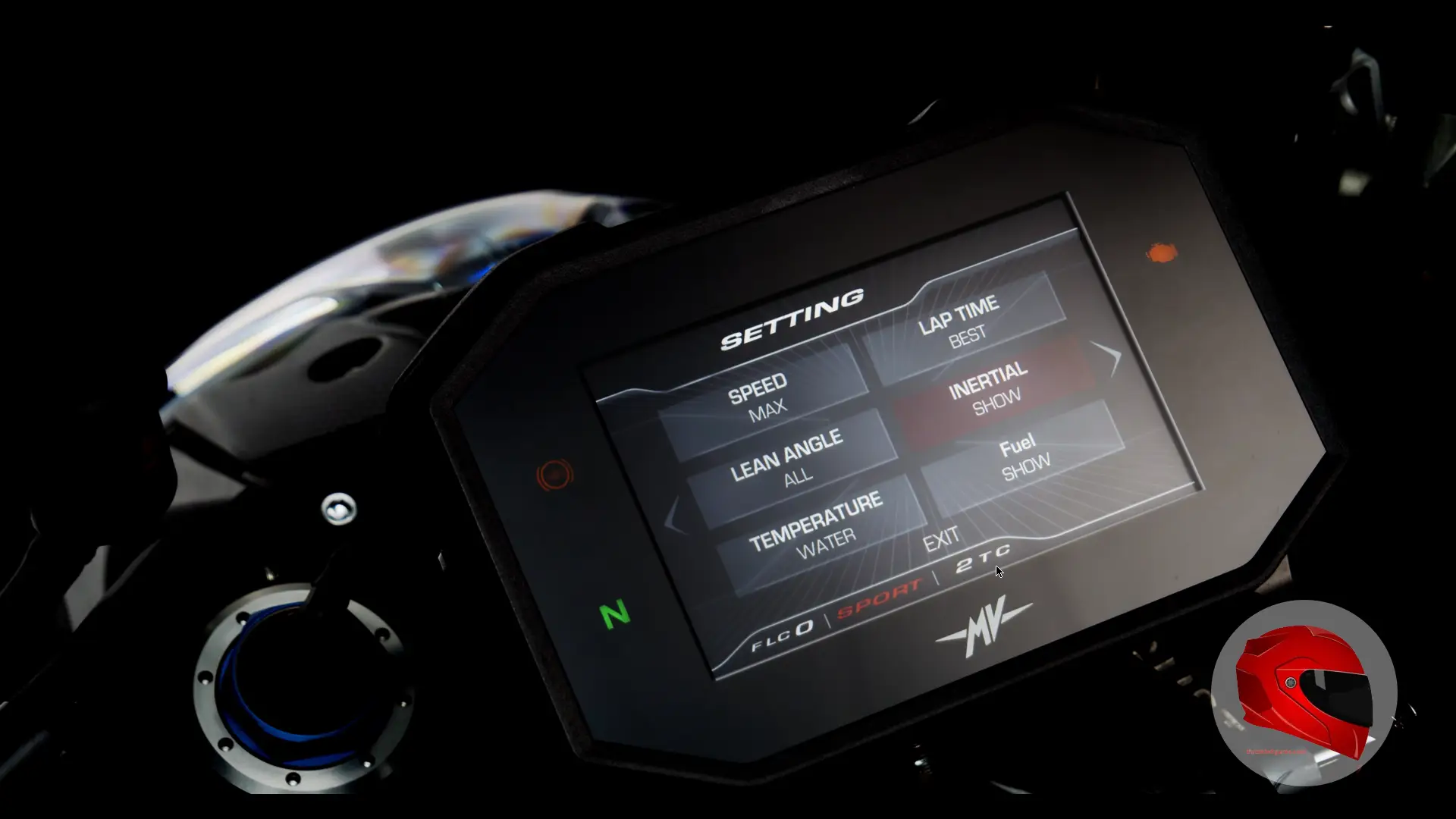
Motorcycles equipped with an Inertial Measurement Unit also track pitch, roll, yaw, and lean angle. The system can use that information to apply different traction- and wheelie-control thresholds while the motorcycle is upright, accelerating through a corner, or cresting a rise.
Rain mode uses earlier and stronger intervention. Sport mode allows more slip before reducing torque, while Rally mode can let an experienced dirt rider select a controlled amount of rear-wheel spin for corner exits. The system cannot distinguish every intentional slide from a loss of control, so its behavior still depends on calibration, surface changes, tires, and rider inputs.
How ABS and Engine Braking Change
ABS monitors wheel speed and pulses hydraulic brake pressure when a wheel approaches lockup. Cornering ABS adds IMU data, allowing the system to adjust braking pressure for lean angle, pitch, and motorcycle movement during a turn.
- Rain settings: Use high-sensitivity ABS calibration and strong rear-wheel lock prevention.
- Road settings: Use balanced braking intervention for ordinary pavement.
- Sport settings: Allow more performance-oriented braking behavior while retaining road-focused assistance.
- Track settings: Use race calibration and can reduce or disable rear ABS on some motorcycles.
- Off-road settings: Permit dirt-focused rear-wheel behavior and, on some motorcycles, rear ABS deactivation.
Engine-braking control determines how strongly the rear wheel slows when the rider closes the throttle or makes an aggressive downshift. Less engine braking can reduce rear-wheel disturbance during corner entry. More engine braking produces a stronger deceleration effect but can make changes in traction more noticeable.
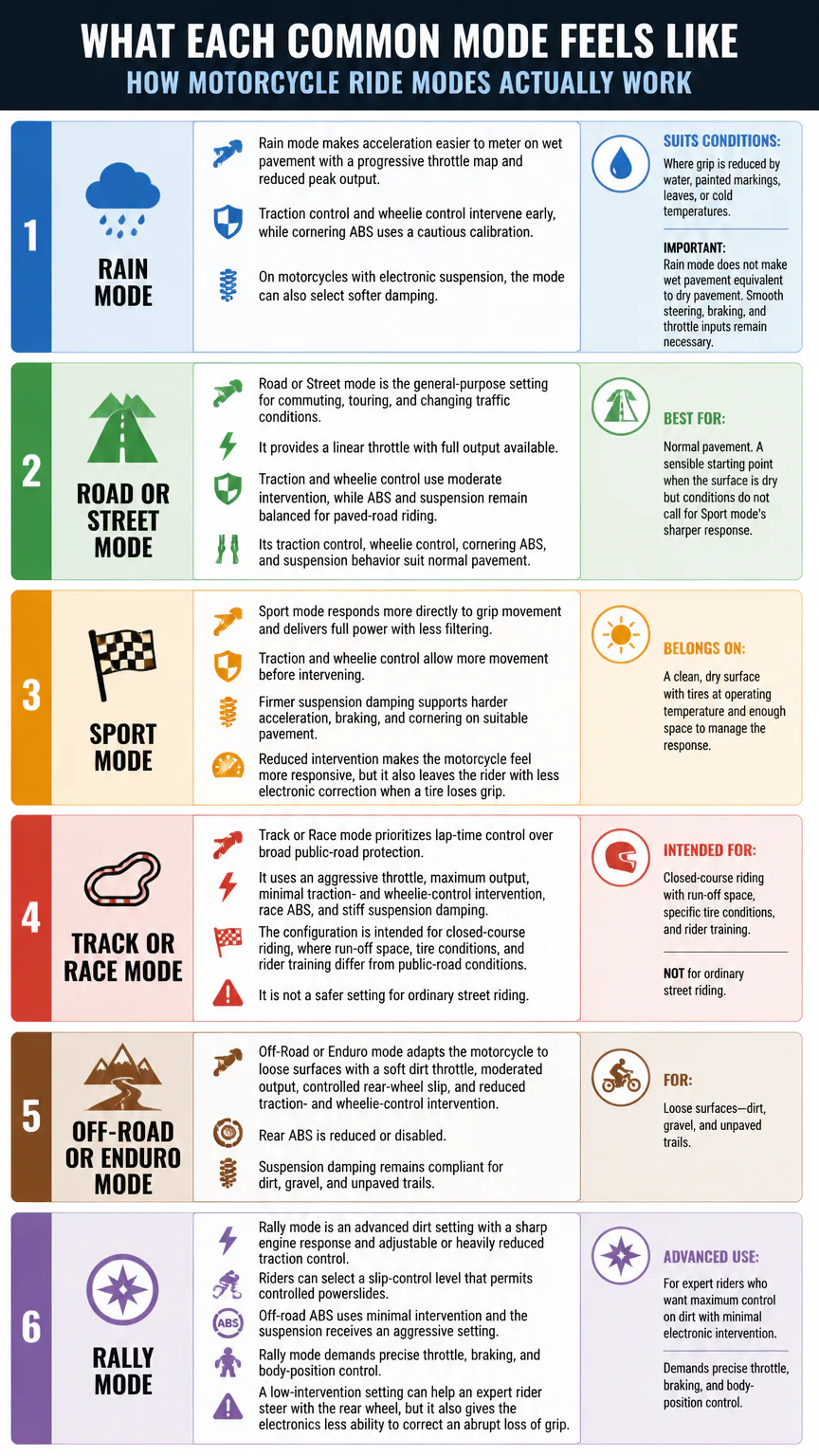
What Each Common Mode Feels Like
Rain mode
Rain mode makes acceleration easier to meter on wet pavement with a progressive throttle map and reduced peak output. Traction control and wheelie control intervene early, while cornering ABS uses a cautious calibration. On motorcycles with electronic suspension, the mode can also select softer damping.
Rain mode does not make wet pavement equivalent to dry pavement. It suits conditions where grip is reduced by water, painted markings, leaves, or cold temperatures, but smooth steering, braking, and throttle inputs remain necessary.
Road or Street mode
Road or Street mode is the general-purpose setting for commuting, touring, and changing traffic conditions. It provides a linear throttle with full output available. Traction and wheelie control use moderate intervention, while ABS and suspension remain balanced for paved-road riding.
Its traction control, wheelie control, cornering ABS, and suspension behavior suit normal pavement. It is a sensible starting point when the surface is dry but conditions do not call for Sport mode’s sharper response.
Sport mode
Sport mode responds more directly to grip movement and delivers full power with less filtering. Traction and wheelie control allow more movement before intervening, while firmer suspension damping supports harder acceleration, braking, and cornering on suitable pavement.
Reduced intervention makes the motorcycle feel more responsive, but it also leaves the rider with less electronic correction when a tire loses grip. Sport mode belongs on a clean, dry surface with tires at operating temperature and enough space to manage the response.
Track or Race mode
Track or Race mode prioritizes lap-time control over broad public-road protection. It uses an aggressive throttle, maximum output, minimal traction- and wheelie-control intervention, race ABS, and stiff suspension damping. The configuration is intended for closed-course riding, where run-off space, tire conditions, and rider training differ from public-road conditions. It is not a safer setting for ordinary street riding.
Off-Road or Enduro mode
Off-Road or Enduro mode adapts the motorcycle to loose surfaces with a soft dirt throttle, moderated output, controlled rear-wheel slip, and reduced traction- and wheelie-control intervention. Rear ABS is reduced or disabled, while suspension damping remains compliant for dirt, gravel, and unpaved trails.
Rally mode
Rally mode is an advanced dirt setting with a sharp engine response and adjustable or heavily reduced traction control. Riders can select a slip-control level that permits controlled powerslides, while off-road ABS uses minimal intervention and the suspension receives an aggressive setting.
Rally mode demands precise throttle, braking, and body-position control. A low-intervention setting can help an expert rider steer with the rear wheel, but it also gives the electronics less ability to correct an abrupt loss of grip.
How Manufacturers Configure Modes
Manufacturers use different names and calibration strategies, so a mode label is not a universal specification. BMW motorcycles can use Rain, Road, Dynamic, Enduro, and Enduro Pro profiles, with earlier ASC intervention in Rain and dirt-specific behavior in Enduro settings. BMW’s electronic suspension can also change with the selected mode.
KTM commonly separates Rain, Street, Sport, Offroad, and Rally behavior. KTM Rain mode uses the smoothest throttle response, reduced power, and maximum traction control. Offroad mode permits controlled wheelspin and rear-wheel sliding with dirt-oriented ABS behavior.
Ducati, Honda, Yamaha, Kawasaki, and Suzuki use their own combinations of power modes, traction-control levels, wheelie control, engine-braking adjustment, and cornering ABS. Harley-Davidson motorcycles equipped with the relevant electronics can use Off-Road Plus to alter power delivery and permit more dirt-focused traction and rear-ABS behavior.
The same name can produce different results on two motorcycles. A manufacturer can retain full torque in Rain mode while softening response, or reduce the power ceiling as well. The motorcycle’s owner’s manual and mode-adjustment screen define the actual settings.
How to Change Modes Safely
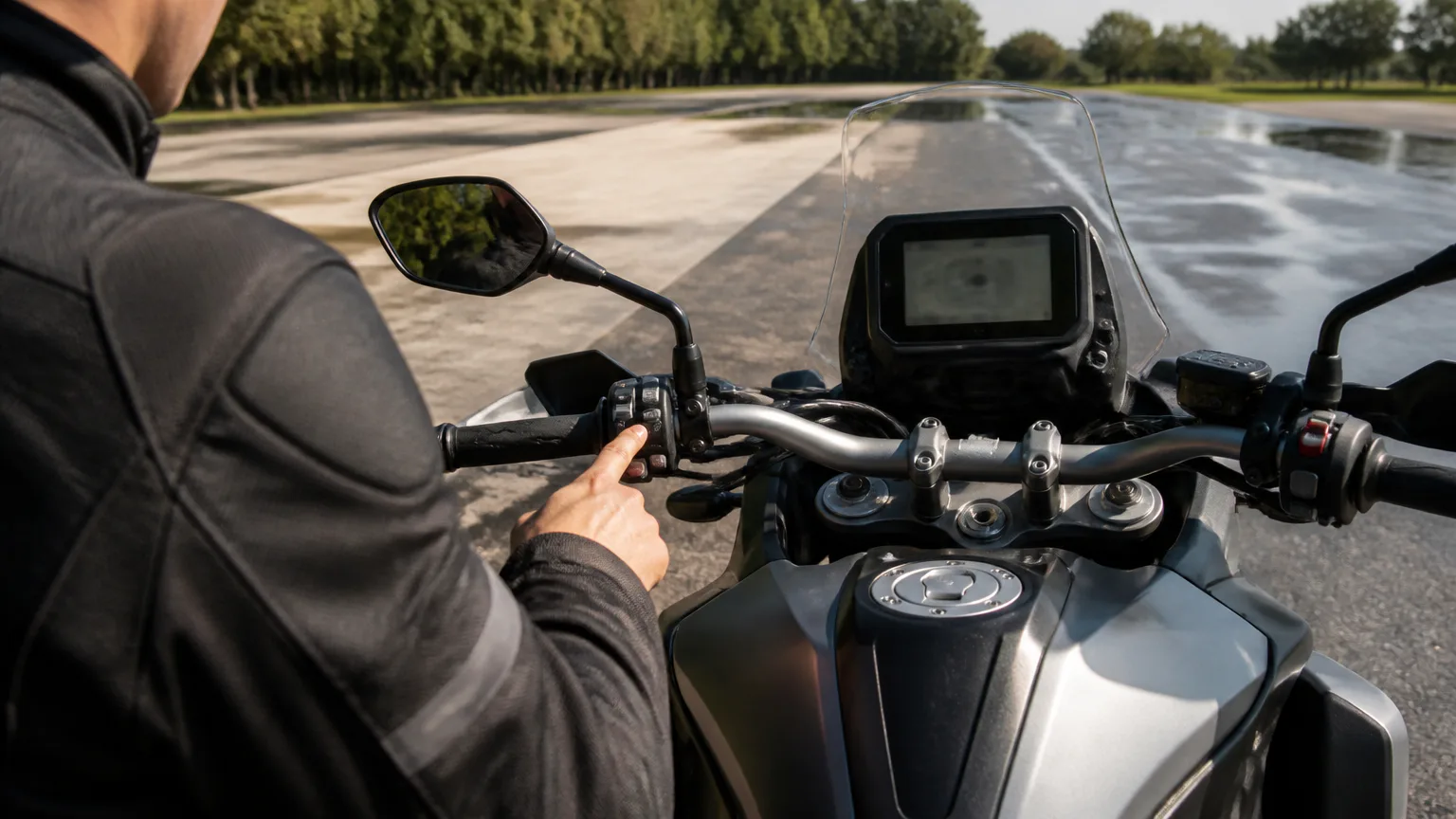
Most motorcycles accept a mode change only after the rider fully closes the throttle. The button sequence differs by switchgear and dashboard, but the basic process is similar.
- Roll the throttle completely closed.
- Press the ride-mode or mode-selection control.
- Cycle to the desired profile on the instrument display.
- Confirm the selection if the motorcycle requests confirmation.
- Wait for the new mode indicator to appear before applying strong acceleration.
Change modes while stopped if the motorcycle is unfamiliar, the road is rough, or a custom setting needs several adjustments. Never use a mode change instead of reducing speed when a hazard develops. The owner’s manual takes priority because some motorcycles require the clutch, a stationary motorcycle, a separate confirmation button, or a specific menu path.
How Custom Modes Work
A Custom mode starts with a preset profile and lets the rider alter individual systems. Depending on the motorcycle, the adjustment menu can include throttle response, engine braking, traction-control level, wheelie control, ABS behavior, and electronic suspension damping.
- Copy a road-oriented profile for commuting and wet-weather flexibility.
- Copy a sport-oriented profile for direct throttle response with moderate assistance.
- Copy an off-road profile when controlled wheelspin and dirt ABS are required.
- Save separate settings for road tires, loose surfaces, or track use.
Change custom settings one parameter at a time in a controlled environment. Reducing traction control, rear ABS, and engine-braking intervention together can make the motorcycle behave very differently from the factory preset.
What Ride Modes Cannot Do
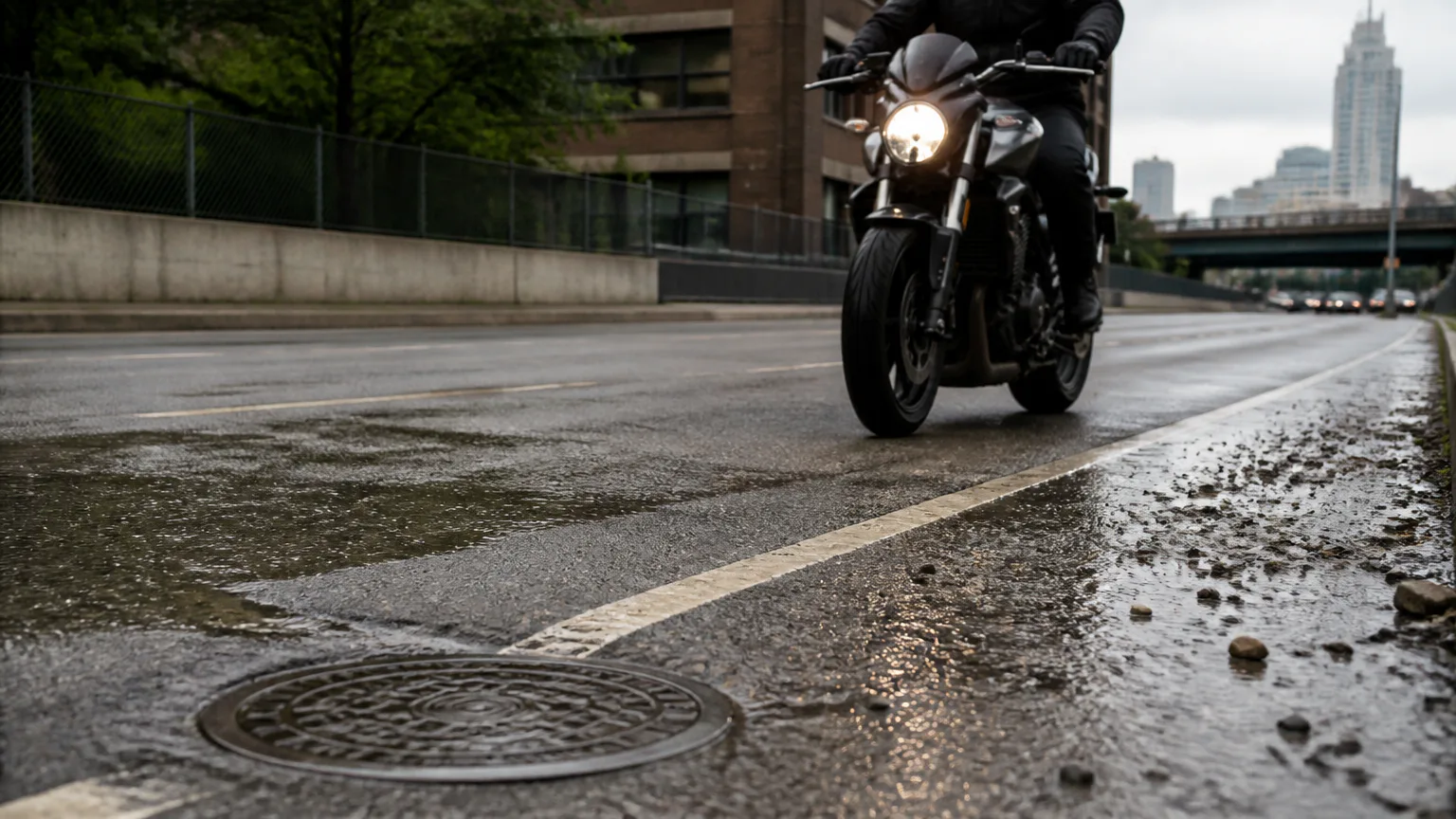
Ride modes manage available grip; they do not create additional friction. A tire that exceeds the road’s available traction can slide in Rain, Road, or any other mode. Electronic intervention cannot guarantee recovery after excessive speed or an abrupt control input.
- Wet pavement still reduces tire grip.
- Worn, cold, or unsuitable tires still limit braking and cornering.
- Paint, metal covers, gravel, sand, and oil can defeat normal expectations.
- Cornering grip and braking or acceleration share the same traction reserve.
- ABS cannot shorten every stop when speed or surface conditions are unfavorable.
- Traction control cannot correct every slide, wheel lift, or steering error.
The friction circle describes this limit: using more available grip for cornering leaves less for braking or acceleration. A less aggressive mode can provide a larger electronic safety margin, but speed, following distance, smooth inputs, and tire condition remain fundamental.
Conclusion
Choose the least aggressive mode that fits the surface and riding task. Road is the dependable default, Rain adds intervention for reduced grip, Sport suits dry pavement, Track belongs on a closed course, and Off-Road or Rally settings are for controlled dirt riding with the appropriate skill and equipment.