
What to Check Before Buying a Used Motorcycle: Complete Inspection Checklist
Buying a used motorcycle safely involves more than checking the mileage and listening to the engine. The bike must have transferable paperwork, a sound frame, reliable mechanical systems, and a price that still makes sense after immediate repairs. Inspect it cold, match the vehicle records, and arrange an independent shop inspection before paying.
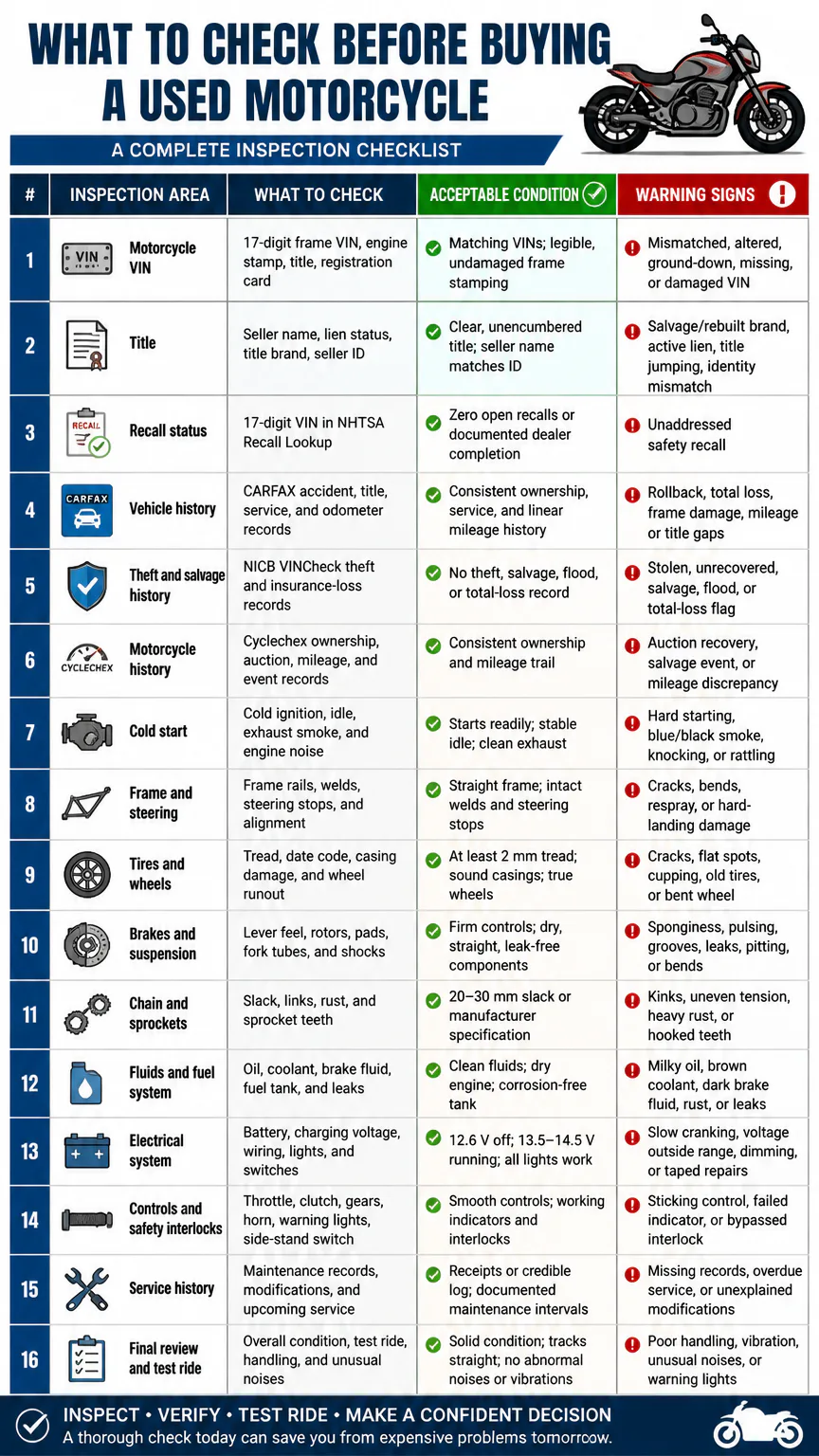
Used Motorcycle Inspection Checklist
| Inspection area | What to check | Acceptable condition | Warning signs |
|---|---|---|---|
| Motorcycle VIN | 17-digit frame VIN, engine stamp, title, registration card | Matching VINs; legible, undamaged frame stamping | Mismatched, altered, ground-down, missing, or damaged VIN |
| Title | Seller name, lien status, title brand, seller ID | Clear, unencumbered title; seller name matches ID | Salvage/rebuilt brand, active lien, title jumping, identity mismatch |
| Recall status | 17-digit VIN in NHTSA Recall Lookup | Zero open recalls or documented dealer completion | Unaddressed safety recall |
| Vehicle history | CARFAX accident, title, service, and odometer records | Consistent ownership, service, and linear mileage history | Rollback, total loss, frame damage, mileage or title gaps |
| Theft and salvage history | NICB VINCheck theft and insurance-loss records | No theft, salvage, flood, or total-loss record | Stolen, unrecovered, salvage, flood, or total-loss flag |
| Motorcycle history | Cyclechex ownership, auction, mileage, and event records | Consistent ownership and mileage trail | Auction recovery, salvage event, or mileage discrepancy |
| Cold start | Cold ignition, idle, exhaust smoke, and engine noise | Starts readily; stable idle; clean exhaust | Hard starting, blue/black smoke, knocking, or rattling |
| Frame and steering | Frame rails, welds, steering stops, and alignment | Straight frame; intact welds and steering stops | Cracks, bends, respray, or hard-landing damage |
| Tires and wheels | Tread, date code, casing damage, and wheel runout | At least 2 mm tread; sound casings; true wheels | Cracks, flat spots, cupping, old tires, or bent wheel |
| Brakes and suspension | Lever feel, rotors, pads, fork tubes, and shocks | Firm controls; dry, straight, leak-free components | Sponginess, pulsing, grooves, leaks, pitting, or bends |
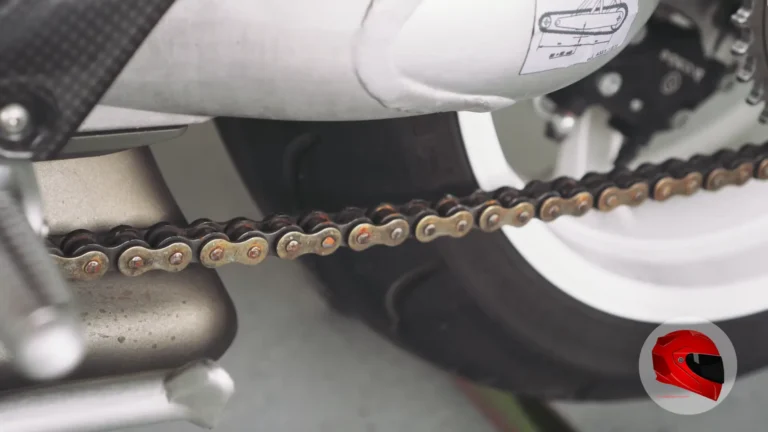
| Chain and sprockets | Slack, links, rust, and sprocket teeth | 20–30 mm slack or manufacturer specification | Kinks, uneven tension, heavy rust, or hooked teeth |
| Fluids and fuel system | Oil, coolant, brake fluid, fuel tank, and leaks | Clean fluids; dry engine; corrosion-free tank | Milky oil, brown coolant, dark brake fluid, rust, or leaks |
| Electrical system | Battery, charging voltage, wiring, lights, and switches | 12.6 V off; 13.5–14.5 V running; all lights work | Slow cranking, voltage outside range, dimming, or taped repairs |
| Controls and safety interlocks | Throttle, clutch, gears, horn, warning lights, side-stand switch | Smooth controls; working indicators and interlocks | Sticking control, failed indicator, or bypassed interlock |
| Service history | Maintenance records, modifications, and upcoming service | Receipts or credible log; documented maintenance intervals | Missing records, overdue service, or unexplained modifications |
Verify the VIN and title first
Handle the legal and history checks before negotiating. A clean-looking motorcycle is still a poor purchase if the seller cannot transfer ownership or the bike’s identity does not match its paperwork.
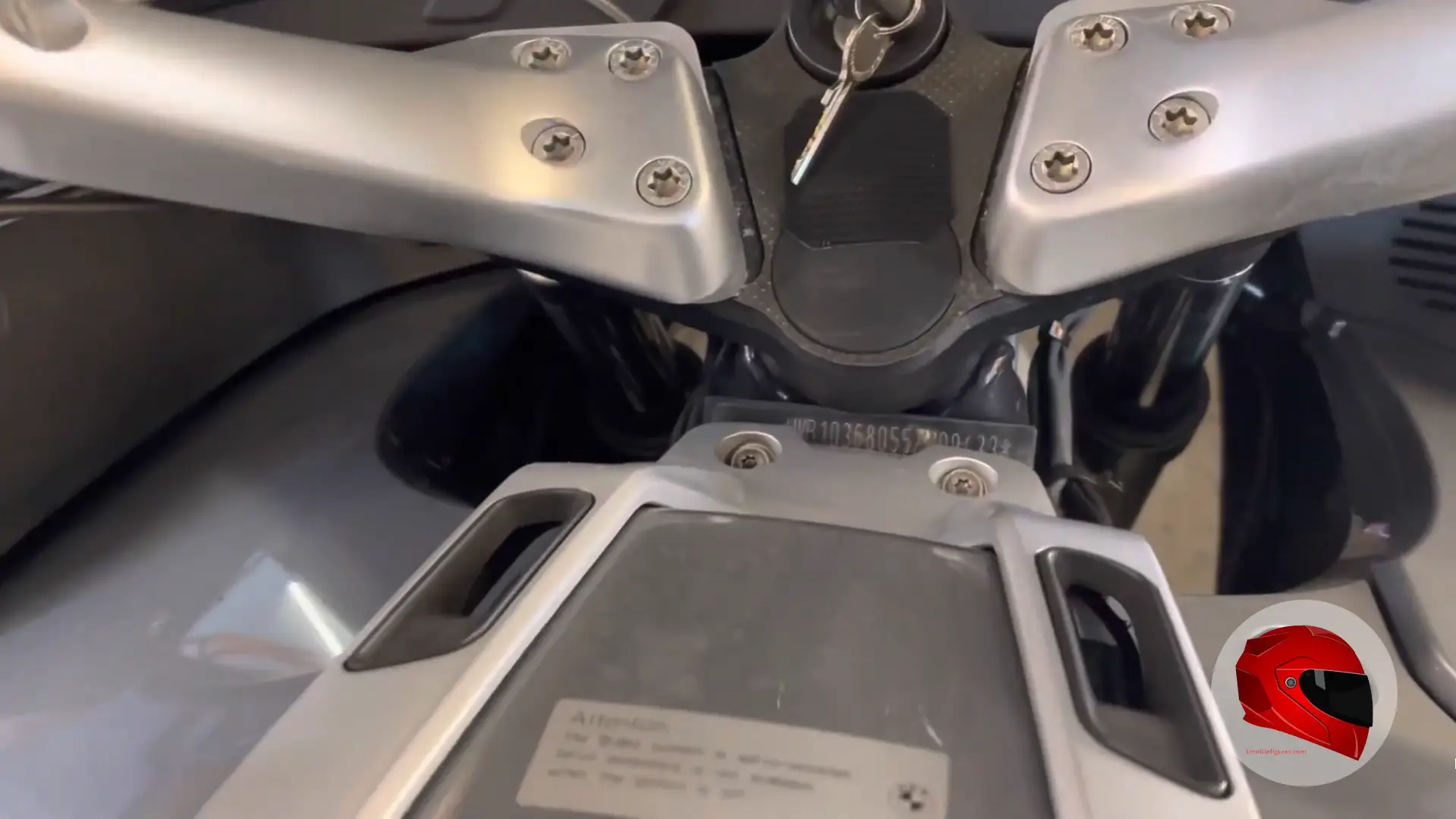
- Copy the 17-digit frame VIN yourself instead of relying on a seller-provided photo.
- Match the frame VIN with the engine stamp, title, and registration card.
- Confirm that the seller’s government identification matches the name on the title.
- Check for active liens, salvage or rebuilt branding, and signs of title jumping.
- Run the VIN through the NHTSA Recall Lookup Tool, CARFAX, NICB VINCheck, and Cyclechex.
- Resolve every mismatch before discussing payment or signing a bill of sale.
Authorized dealers generally repair open safety recalls at no charge, but get proof of completion before ownership changes. A history report cannot replace a physical inspection, and a clean report does not prove that every accident or repair was recorded.
Ask the seller these questions
The answers should match the paperwork, service records, visible wear, and cold-start behavior. Direct questions also show whether the owner knows the motorcycle’s maintenance history.
- How long have you owned it, and why are you selling it?
- Has it been crashed, dropped, raced, used on a track, or taken off-road?
- When were the oil, coolant, brake fluid, air filter, and spark plugs last replaced?
- When were the tires, chain, sprockets, battery, and brake components replaced?
- Are there any current leaks, warning lights, starting problems, or electrical faults?
- Which modifications were installed, and are the original parts included?
- Does the motorcycle have a loan, lien, salvage history, or insurance total-loss record?
- Will you allow a cold start, VIN inspection, test ride, and independent shop inspection?
The listing itself can reveal problems. Cycle Trader listings should show the VIN and explain dealer fees. A Facebook Marketplace seller should have a credible local profile and provide the VIN. Vague listings, stock photos, refusal to speak by phone, and requests for an upfront Zelle or Venmo deposit are serious warning signs.
Inspect the motorcycle while cold
Arrange to see the motorcycle before it has been started. A warm engine can hide hard starting, smoke, rattling, or an unstable idle. Place a hand near the engine without touching hot components, or agree on a cold-start appointment before traveling to inspect the bike.
- Turn on the ignition and note which warning lights appear before starting.
- Start the engine without throttle unless the owner’s manual calls for a different procedure.
- Listen for knocking, persistent rattling, cam-chain noise, or an irregular idle.
- Watch the exhaust during startup and again after the engine reaches operating temperature.
- Look for oil, coolant, fuel, or fork-fluid leaks while the engine runs.
- Check that the engine settles into a stable idle and responds cleanly to light throttle.
Persistent blue smoke can indicate oil consumption. Thick black smoke points to an overly rich mixture or another fuel-system problem. Milky engine oil may indicate water or coolant contamination, while brown coolant can point to rust, oil, or other contamination in the cooling system.
Check for crash and theft damage
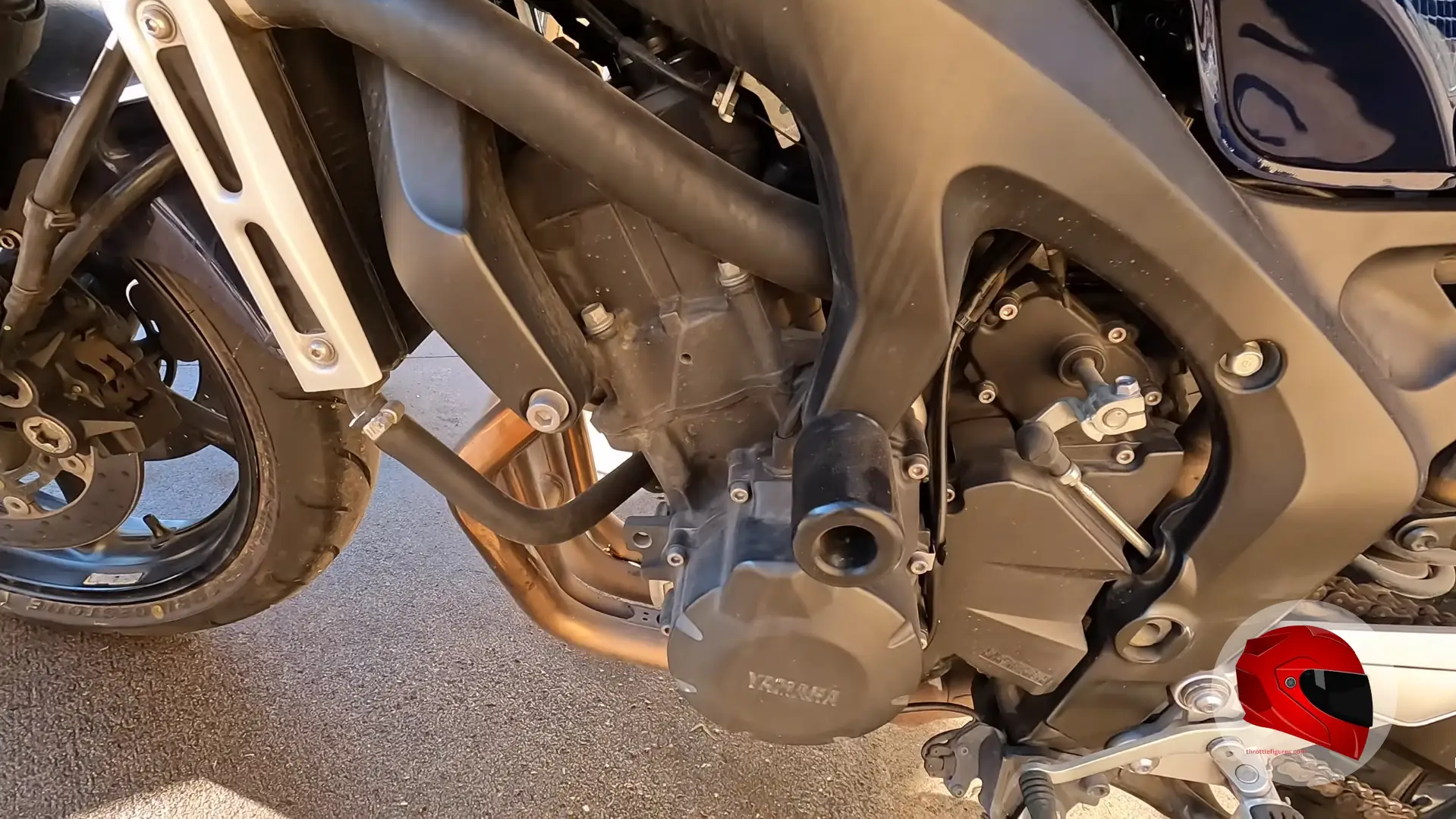
Crash damage can remain after broken fairings have been replaced. Inspect both sides of the motorcycle in good light for a bent frame, damaged steering stop, misaligned fork, or stressed engine case. Compare wear patterns between components rather than judging the bike by its appearance alone.
- Inspect the frame, welds, steering stops, subframe, and engine cases for cracks, bends, fresh paint, or respray edges.
- Check bar ends, levers, foot controls, mirrors, axle ends, and exhaust covers for scrape marks.
- Look for mismatched fasteners, uneven panel gaps, replacement fairings, and overspray.
- Examine the ignition, steering, seat, and storage locks for damage or signs of forced entry.
- Compare the VIN plate and stamping with the title and registration documents.
- Check that the handlebars, front wheel, and rear wheel appear aligned from several angles.
A minor parking-lot drop does not automatically make a motorcycle a bad purchase. Structural damage, altered identification, and theft-recovery repairs require professional evaluation. A low price does not make an unresolved legal or frame problem acceptable.
Examine tires, brakes, and suspension
Tires, brakes, and suspension control how the motorcycle stops and turns. Inspect these systems before riding because worn safety components can make a test ride unsafe and add substantially to the purchase price.
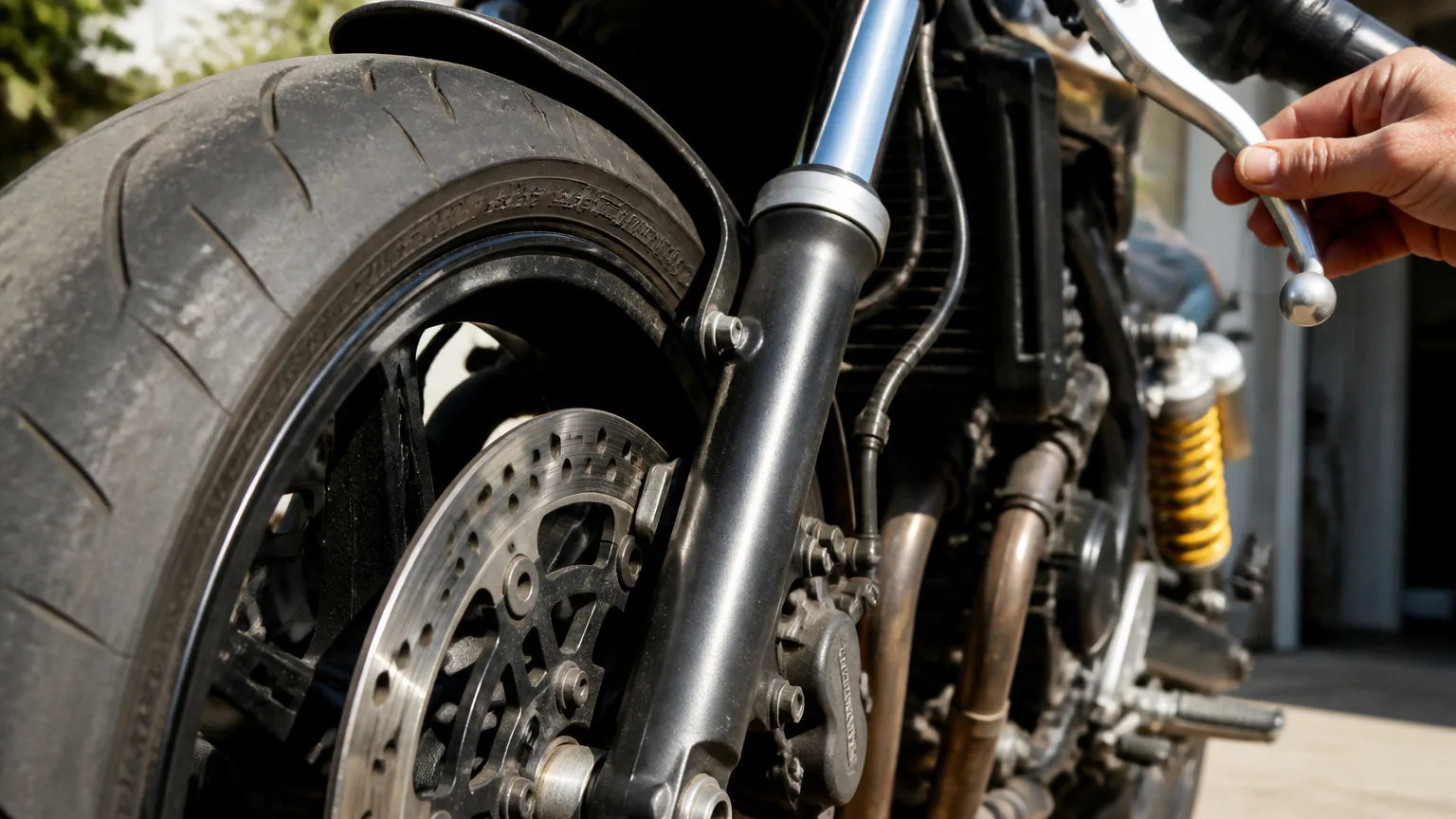
- Measure tire tread and inspect the sidewalls for cracking, punctures, plugs, bulges, and uneven wear.
- Read the four-digit DOT date code: the first two digits identify the manufacturing week and the last two identify the year.
- Budget for replacement when tires approach six years old, even if they still have tread.
- Squeeze the front brake lever and press the rear pedal to check for firm, consistent resistance.
- Inspect rotors for deep grooves, blue discoloration, excessive lip, pulsing, or warping.
- Check fork tubes for oil, pitting, rust, and bends, then inspect the rear shock for leaks.
- Compress the suspension and check for smooth movement without binding or clunking.
Healthy brake fluid is generally pale yellow. Dark brown or black fluid suggests overdue maintenance. A fresh set of tires commonly costs about $300, $600 installed, so include that amount in the offer when the tires are old or damaged.
Inspect the chain, fluids, and fuel tank
Drivetrain and fluid problems can involve routine maintenance or major repairs. A neglected chain can wear the sprockets and output shaft, while contaminated oil or coolant may indicate internal engine trouble.
- Check chain slack at the manufacturer’s specified point; about 20-30 mm is common.
- Rotate the rear wheel and look for tight spots, kinked links, excessive rust, or uneven tension.
- Inspect sprocket teeth for hooking, sharp points, and uneven wear.
- Check the engine oil level and appearance, coolant level and color, and brake-fluid condition.
- Look inside the fuel tank for rust, sediment, varnish, and signs of a leaking liner.
- Inspect fuel lines, radiator hoses, crankcase seams, water-pump areas, and drain plugs for leaks.
A recent fluid change does not prove that the motorcycle was properly maintained. Ask for service dates and receipts, then compare the claimed work with the condition of the filters, fasteners, chain adjustment, and fluid levels.
A neglected chain, dirty oil or contaminated fuel can indicate that the motorcycle has missed other routine maintenance. Compare the seller’s claims with the condition of these consumable parts, and ask for records of lubrication, fluid changes and filter replacements. These checks also form part of motorcycle maintenance tasks, helping you estimate the work and expense you may face after purchase.
Test controls, electronics, and lights
Electrical faults often follow modifications, corrosion, or poor storage. Test every switch and indicator with the engine off and running because a freshly charged battery can temporarily hide a charging problem.
- Test the starter, engine-stop switch, horn, turn signals, high and low beams, brake lights, and license-plate light.
- Confirm that the instrument cluster shows no persistent warning light after startup.
- Turn the handlebars fully left and right while checking for cable binding or changes in throttle response.
- Release the throttle and confirm that it snaps closed smoothly from both steering positions.
- Test clutch engagement, gear selection, the neutral light, and the side-stand safety switch.
- Measure approximately 12.6 volts with the engine off and 13.5-14.5 volts while running.
- Inspect battery terminals, connectors, fuse boxes, accessory wiring, wire taps, and electrical tape.
A replacement motorcycle battery commonly costs about $80, $150. Slow cranking can result from a weak battery, poor connections, a failing starter system, or a charging fault, so do not assume that replacing the battery will solve the problem.
Take a safe test ride
Ride only after the documents and stationary inspection check out. You need a valid motorcycle endorsement, appropriate protective gear, insurance, and the seller’s agreement. If one of those requirements is missing, have an independent motorcycle shop perform the road evaluation instead.
- Start in a low-traffic area and check that the motorcycle tracks straight at low speed.
- Apply the front and rear brakes separately, then together, while checking for pulsing or pulling.
- Accelerate through the gears and check for clutch slip, missed shifts, false neutrals, and drivetrain noise.
- Release the handlebars only when appropriate for the road and conditions, watching for steering shake or drift.
- Evaluate throttle response, vibration, suspension movement, and engine temperature.
- Return slowly and check for fresh leaks, unusual smells, or new warning lights.
A test ride does not replace a shop inspection. Do not use high speed to investigate a suspected problem, and do not let seller pressure override safety or legal requirements.
During the test ride, check that the throttle responds smoothly, acceleration stays controllable and the motorcycle feels manageable at low and moderate speeds. Weight matters as much as engine output, so a lighter bike may feel quicker or easier to handle than its horsepower figure suggests. Comparing motorcycle power-to-weight ratios can add useful context without requiring unsafe high-speed testing.
Calculate immediate ownership costs
Evaluate the asking price after adding the first costs of ownership. Tires, a battery, fluids, filters, insurance, taxes, registration, title-transfer fees, and transport can change the cost of an apparently inexpensive motorcycle.
| Cost item | Common amount | When to include it |
|---|---|---|
| Independent shop inspection | $100–$200 | Before completing a private sale |
| Tire replacement | $300–$600 installed | Old, cracked, worn, or mismatched tires |
| Battery replacement | $80–$150 | Weak starting or failed load test |
| Remote motorcycle shipping | $600–$1,500 | Long-distance online purchase |
| Registration period | 10–30 days | Many state registration windows |
Dealer purchases can include documentation, preparation, freight, and accessory fees, so request the complete out-the-door price. Private sales may cost less but require you to handle the title, bill of sale, payment security, insurance, and registration. A paid inspection costs far less than one major engine, frame, or transmission repair.
A low purchase price can quickly rise after you add insurance, protective gear, registration, tires and repairs found during the inspection. Engine size, riding position and intended use affect those costs too, so the cheapest used bike is not always the best fit. Factor them in when you choose your first motorcycle and set a realistic ownership budget.
Know when to walk away
Some defects support renegotiation; others should end the transaction. A low price does not solve an untransferable title, altered VIN, unsafe frame, or seller who refuses a basic inspection.
- Walk away from a mismatched, altered, or missing VIN.
- Reject an undocumented lien, title jumping, undisclosed salvage status, or seller identity mismatch.
- Stop the deal for frame cracks, bent steering components, damaged stops, or evidence of a hard landing.
- Reject severe engine symptoms such as persistent smoke, knocking, contaminated oil, or heavy abnormal rattling.
- Pause when the seller refuses a cold start, VIN disclosure, independent inspection, or reasonable payment process.
- Avoid upfront Zelle or Venmo deposits when the motorcycle and seller have not been verified in person.
- Do not buy when the repair estimate exceeds the discount and leaves no reserve for unknown faults.
Online listings change how the inspection must be arranged. Cycle Trader is useful for dealer inventory, while Facebook Marketplace and Craigslist connect local private sellers. Bring a Trailer provides detailed photo galleries, community comments, seller engagement, and inspection history. For a remote purchase, require clear records, arrange an independent inspection, and budget $600, $1,500 for long-distance shipping.
FAQs
What is the 12-second rule on a motorcycle?
The 12-second rule means scanning the road about 12 seconds ahead at your current speed. This gives you more time to adjust your speed, lane position, or following distance when you spot a hazard.
What is rule 5 motorcycle?
“Rule 5” is not a universal motorcycle inspection or riding standard in the United States. Its meaning depends on the training course, video, or state material using the phrase, so it should not replace the manufacturer’s instructions or formal rider training.
How much mileage is high for a used motorcycle?
Mileage depends on the motorcycle type, maintenance, and service history. Around 25,000 miles can be high for a sportbike, while 40,000-50,000 miles may not be high for a large cruiser with consistent maintenance.
Should a motorcycle be cold before inspection?
Yes. A completely cold engine makes hard starting, smoke, abnormal rattling, and unstable idle easier to detect. Arrange the appointment so the seller does not start or warm the motorcycle before you arrive.
Conclusion
Check the paperwork and VIN before becoming attached to the motorcycle. Then require a cold start, complete safety inspection, and independent shop review when the purchase is serious. Add immediate repairs, registration, insurance, and transport to the asking price so the decision reflects the real cost of ownership.

4 Comments
Comments are closed.