2003 Suzuki SV650: Specs, Riding Impressions & Used-buying Tips
Disclaimer: Performance figures may vary depending on factors such as rider, road and weather conditions, vehicle condition, and testing methods. Figures are provided for informational purposes only.
The 2003 Suzuki SV650 marked the start of the redesigned, fuel-injected second generation. Its compact V-twin and relatively light chassis appeal to used-bike shoppers, but the right choice depends on riding position, condition, maintenance history and price. At this age, check the electrical system and paperwork carefully.
2003 Suzuki SV650 Specifications
| Specification | 2003 Suzuki SV650 | Additional details |
|---|---|---|
| Model year | 2003 | First year of second generation |
| Engine | 645cc liquid-cooled DOHC 90° V-twin, 8 valves | Four-stroke |
| Fuel delivery | Electronic fuel injection | Secondary throttle valves |
| Bore and stroke | 81.0 × 62.6 mm | Bore × stroke |
| Compression ratio | 11.5:1 | Factory specification |
| Power | 73.4 hp | Peak at 8,800 rpm |
| Torque | ≈45–47.2 lb-ft | Peak at ≈7,000–7,500 rpm |
| Acceleration | 0–60 mph: 3.61 sec | Quarter-mile: 11.63 sec |
| Top speed | ≈130 mph | Reported figure |
| Transmission | 6-speed constant-mesh | Six forward gears |
| Frame | High-vacuum die-cast aluminum truss | Redesigned for 2003 |
| Front suspension | 41 mm conventional fork | Spring preload adjustable |
| Rear suspension | Link-type shock | 7-position spring preload |
| Brakes | Front: dual 290 mm discs; rear: 220 mm disc | Two-piston front and single-piston rear calipers |
| Tire sizes | Front: 120/60-17; rear: 160/60-17 | Front and rear fitments |
| Seat height | ≈31.5 in | ≈800 mm |
| Fuel capacity | 4.5 US gal (17 L) | Nominal tank capacity |
| Dry weight | SV650: 364 lb; SV650S: 370 lb | Model variant affects weight |
| Wet weight | ≈425 lb | Road-test figure |
Published performance figures vary by measurement method and specification, so treat the horsepower, torque and speed figures as approximate. Condition-based estimates may also exceed the usual asking range, but a high valuation does not establish what a particular motorcycle is worth. Service records, modifications, mileage and local demand all affect its price.
What changed for the 2003 model
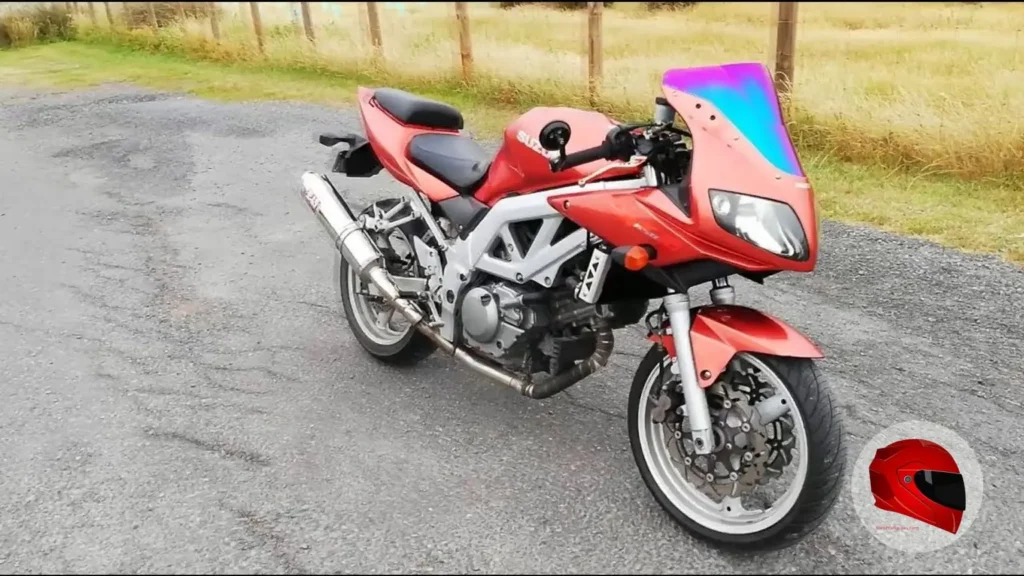
The 2003 model introduced the second-generation “pointy” frame and replaced carburetors with electronic fuel injection. Its 645cc V-twin retained the SV’s basic character, with engine revisions that included lighter pistons and a changed profile. The injection system uses 39 mm throttle bodies and secondary throttle valves to manage airflow.
Suzuki also redesigned the chassis as a high-vacuum die-cast aluminum truss frame. The new design gave the bike a sharper, more angular look and was used for both the naked standard and the SV650S. Since 2003 was a transition year, check the motorcycle and its paperwork to confirm its generation and equipment. Don’t assume every SV650 with the same engine displacement has the same frame or fuel system.
How the SV650 rides
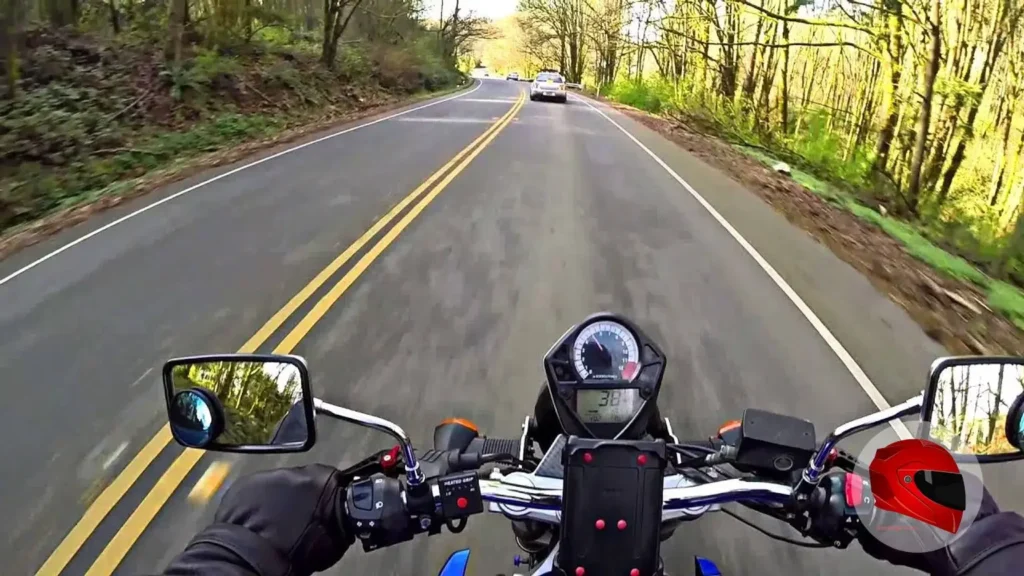
The V-twin delivers power across a broad rev range, with its strongest output in the upper-middle part of the tachometer. The six-speed gearbox gives you room to keep the engine in that range on faster roads. Reported 0-60 and quarter-mile times point to brisk acceleration for a middleweight street bike, but they don’t guarantee the performance of an aged or modified example.
The aluminum chassis, 17-inch wheels and relatively low dry weight contribute to an agile feel. The front fork and link-type rear shock have basic preload adjustment, but neither end of the suspension offers extensive tuning. Dual front discs provide the main braking force, with a single rear disc for additional control. The standard’s upright handlebars are more comfortable around town than the SV650S clip-ons, which put more weight on the rider’s wrists at low speeds.
The SV650 uses Dunlop D220 sport-touring radial tires in 120/60-17 front and 160/60-17 rear sizes. On a used bike, check the tires’ age, tread and condition. Old rubber can compromise grip even when the tread looks adequate.
The SV650 feels at home on ordinary roads, with accessible torque and predictable handling taking priority over peak power. The newer, more sport-focused Suzuki in Suzuki GSX-8R review takes a different approach to middleweight performance.
SV650 and SV650S differences
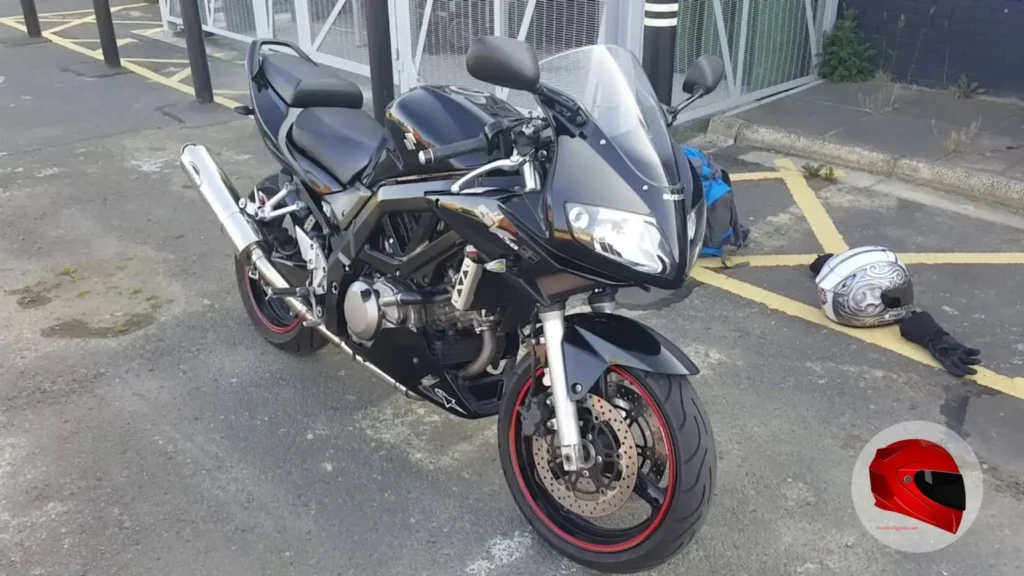
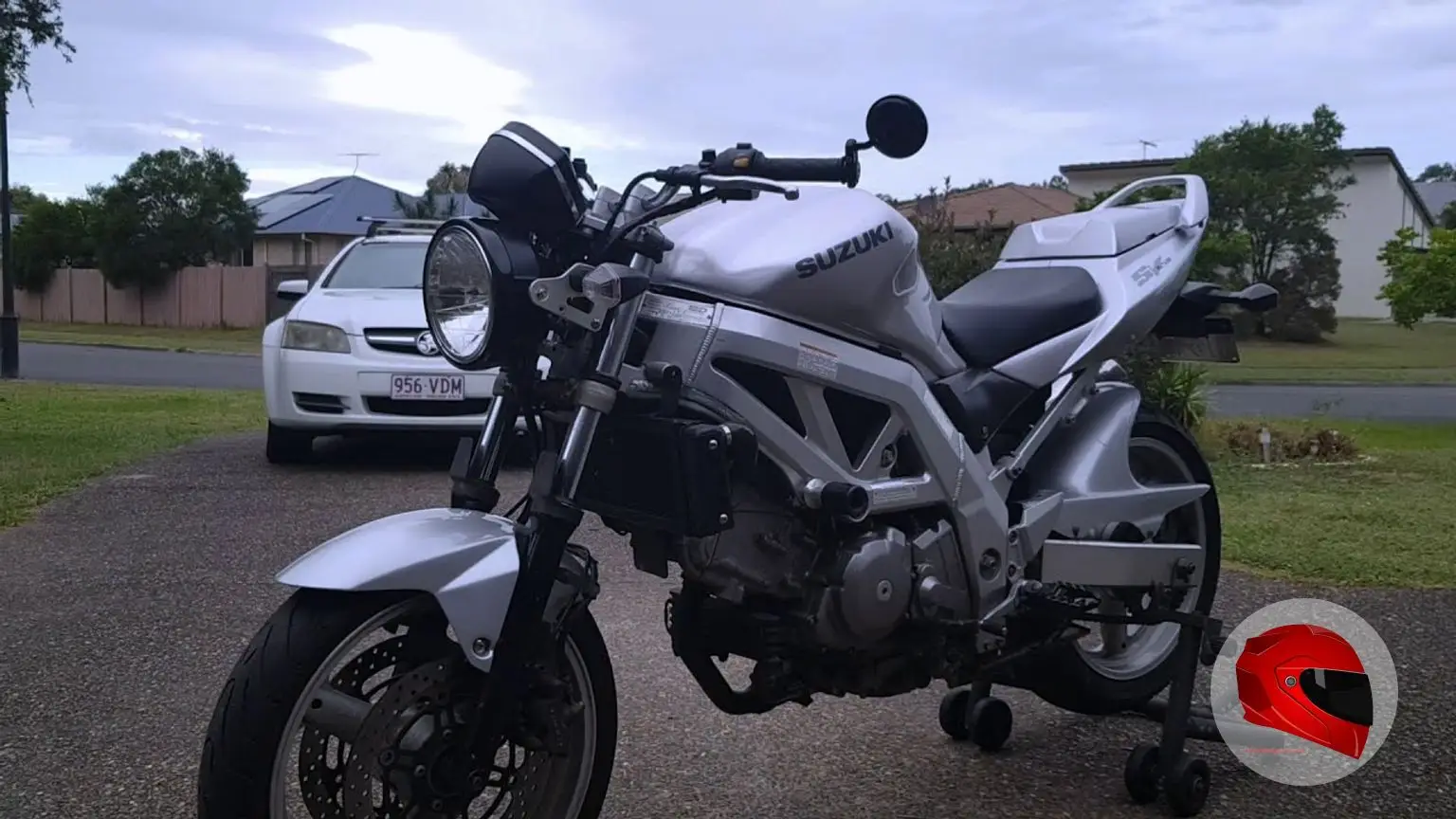
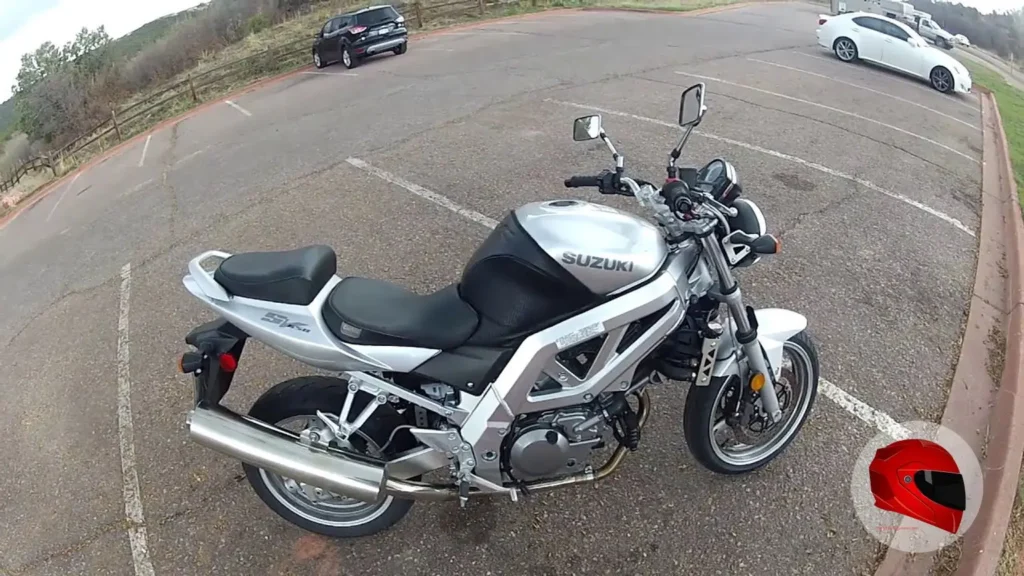
The naked Suzuki SV650 has an upright handlebar and an exposed front end. Its riding position suits commuting and frequent low-speed riding, with less forward lean and pressure on the wrists. The lack of a half-fairing also makes the engine and front of the frame easier to inspect visually.
The Suzuki SV650S has a half fairing and clip-on handlebars, which create a more forward, sport-oriented riding position. Its published dry weight is 370 pounds, compared with 364 pounds for the standard. If possible, sit on both versions before choosing. The fairing and riding posture affect comfort more than the modest weight difference, especially on longer trips or in stop-and-go traffic.
The SV650S adds wind protection and a more forward riding position. Its V-twin delivers a different low-speed feel from the parallel-twin layout of the Kawasaki Ninja 650, though both bikes are approachable middleweight all-rounders.
Used prices and where to look
In the 2026 U.S. market, asking prices generally range from about $2,000 to $3,800. Mileage, condition, location and variant all affect the price. A general used-value estimate is $1,500, $3,000. Higher condition-based estimates are a separate valuation reference; they don’t guarantee that a seller can get that amount.
- Private sellers list 2003 SV650s within the broader asking-price range of approximately $2,000, $3,800. A direct sale may cost less, but check the title, motorcycle and seller’s ownership carefully.
- Motorcycle dealerships also list 2003 SV650s within the broader asking-price range of approximately $2,000, $3,800. A dealer may inspect or prepare the bike, but fees can raise the final cost. Ask for the out-the-door price and a written list of work performed.
Compare bikes with similar mileage, equipment and service histories; the lowest listing isn’t necessarily the best value. A neglected motorcycle may need tires, battery work or other maintenance that quickly erases its lower purchase price.
Common problems and checks
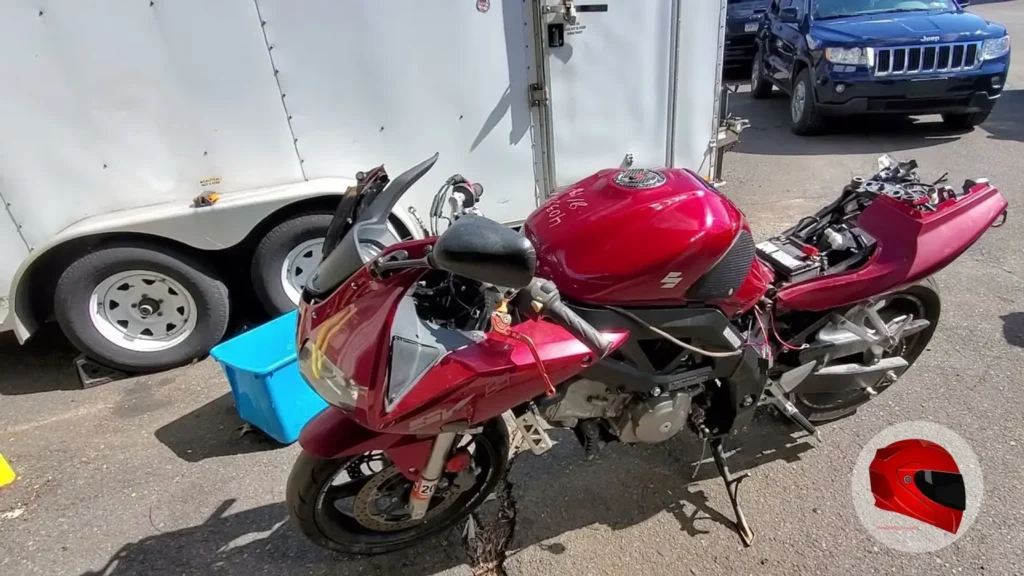
Pay close attention to the front-cylinder spark-plug well and charging system on an older SV650. The small drain hole beside the front cylinder can clog with dirt, allowing water to collect around the plug after heavy rain or washing. A failed factory regulator/rectifier or charging-voltage spikes can also cause electrical problems.
Some owners replace the factory unit with an aftermarket MOSFET regulator/rectifier, but an upgrade alone doesn’t prove that the charging system works properly. Check the wiring and connectors for heat damage or corrosion, and have the battery and charging output tested. Look around the front plug for signs of water-related misfiring, corrosion or a recent repair the seller can’t explain.
How to inspect a used SV650
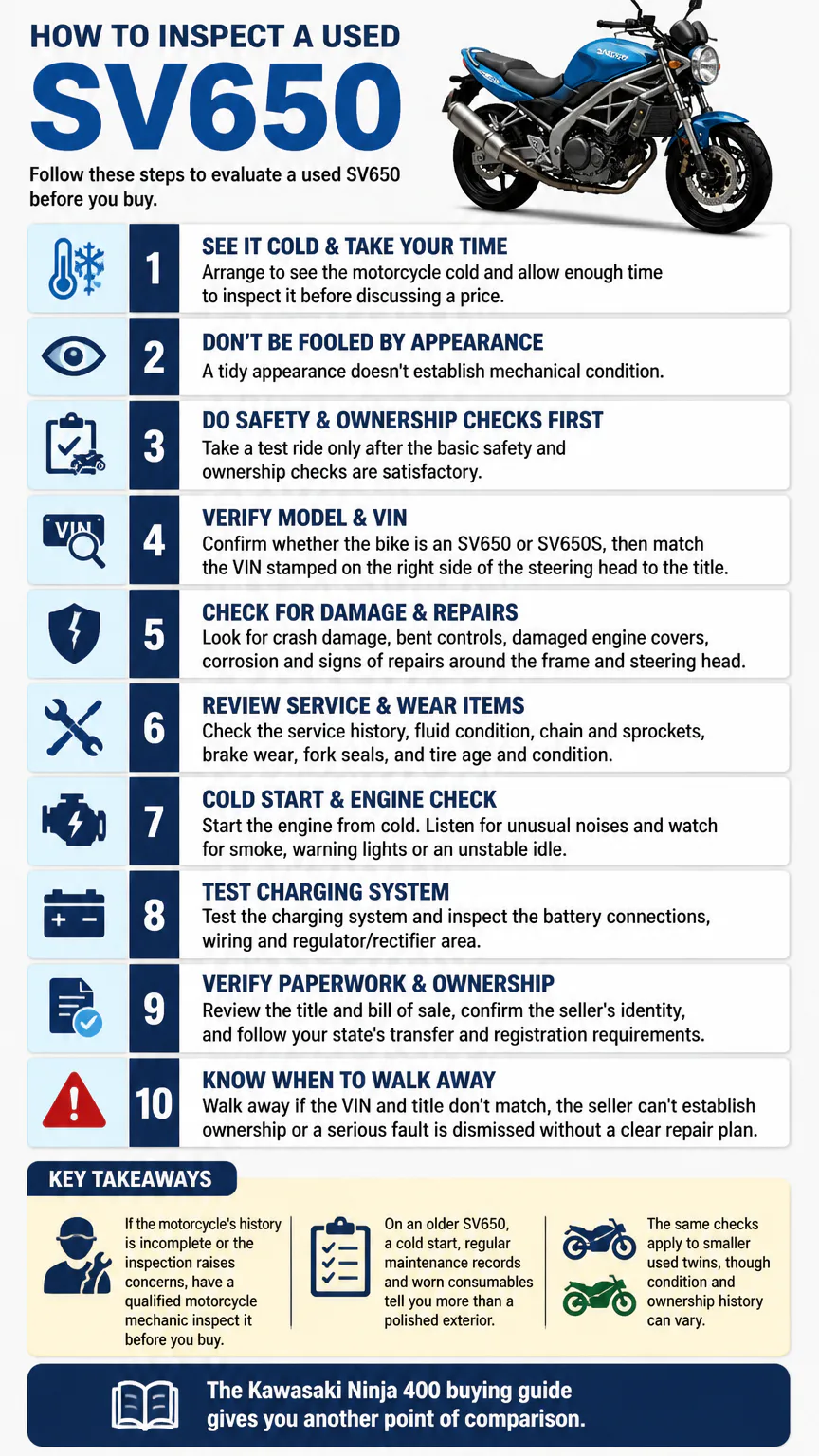
Arrange to see the motorcycle cold and allow enough time to inspect it before discussing a price. A tidy appearance doesn’t establish mechanical condition. Take a test ride only after the basic safety and ownership checks are satisfactory.
- Confirm whether the bike is an SV650 or SV650S, then match the VIN stamped on the right side of the steering head to the title.
- Look for crash damage, bent controls, damaged engine covers, corrosion and signs of repairs around the frame and steering head.
- Check the service history, fluid condition, chain and sprockets, brake wear, fork seals, and tire age and condition.
- Start the engine from cold. Listen for unusual noises and watch for smoke, warning lights or an unstable idle.
- Test the charging system and inspect the battery connections, wiring and regulator/rectifier area.
- Review the title and bill of sale, confirm the seller’s identity, and follow your state’s transfer and registration requirements.
Walk away if the VIN and title don’t match, the seller can’t establish ownership or a serious fault is dismissed without a clear repair plan. If the motorcycle’s history is incomplete or the inspection raises concerns, have a qualified motorcycle mechanic inspect it before you buy.
On an older SV650, a cold start, regular maintenance records and worn consumables tell you more than a polished exterior. The same checks apply to smaller used twins, though condition and ownership history can vary. The Kawasaki Ninja 400 buying guide gives you another point of comparison.
Is the 2003 SV650 worth buying?
The 2003 SV650 can suit riders looking for a responsive middleweight with fuel injection and an upright standard version. The SV650S has a more forward sport-bike position for riders who find its clip-ons comfortable. Both versions are old enough that condition and maintenance matter more than the model’s reputation.
Buy based on verified condition, not a low asking price or an optimistic valuation. A well-maintained motorcycle with matching paperwork and a functioning charging system is a stronger choice than a cheaper example that needs immediate electrical, tire or mechanical work.
FAQs
What is the difference between the 2003 Suzuki SV650 and the SV650S?
The SV650 is the naked version, and the SV650S is the half-faired version. Both use the same 645 cc V-twin. Dry weight is 364 lb for the SV650 and 370 lb for the SV650S.
How much power does the 2003 SV650 make?
It makes 73.4 hp at 8,800 rpm, with 45-47.2 lb-ft of torque.
How fast is the 2003 SV650?
Its top speed is about 130 mph, a reported figure. It reaches 0-60 mph in 3.61 seconds and covers the quarter-mile in 11.63 seconds.
Is the 2003 SV650 fuel-injected?
Yes. It uses electronic fuel injection with secondary throttle valves. The 2003 model is the first year of the second generation, with a redesigned aluminum truss fram.
What are the 2003 SV650’s fuel capacity and seat height?
The fuel tank holds 4.5 US gal (17 L), and seat height is about 31.5 in (800 mm).
Conclusion
The 2003 SV650 remains an appealing V-twin when its maintenance history and condition justify the price. Choose the standard or SV650S based on riding position, then make your decision after inspecting the motorcycle and checking its title.