How Motorcycle Top Speed Is Measured: Methods and Accuracy
Reliable motorcycle top-speed testing measures actual ground speed rather than relying only on the dashboard. The right method depends on whether you need a low-cost road reference, detailed telemetry, an independent trackside check, or a controlled wheel-speed result. Wind, gearing, tire circumference, aerodynamic drag and equipment refresh rate all affect the final number.
Motorcycle top-speed measurement methods
| Method | How It Measures Speed | Update Rate / Frequency | Typical Accuracy | Best For | Main Limitation |
|---|---|---|---|---|---|
| Smartphone GPS app | 1 Hz GPS position change | 1 Hz | ±1–2 mph | Low-cost road logging | 1-second update interval |
| Dedicated GPS logger | 10–25 Hz multi-constellation GNSS position data | 10–25 Hz | ±0.1–0.2 mph | Track performance and acceleration testing | Higher hardware cost |
| Radar gun | Microwave Doppler frequency shift | Continuous beam | ±1 mph | Independent trackside checks | Targeting-angle errors |
| Laser speed gun | Infrared time-of-flight pulses | Triggered measurement | ±0.1–1 mph | Targeted speed verification | Requires steady line of sight |
| Rolling-road dynamometer | Rear-wheel roller encoder speed | Continuous encoder | ±0.5% | Controlled wheel-speed testing | Excludes aerodynamic drag |
| Gearing calculation | RPM, gear ratio, and tire circumference | Mathematical formula | Input-dependent | Theoretical top-speed estimates | Assumes sufficient engine power |
| Timed speed trap | Measured distance ÷ elapsed time | Photogate or manual clock | ±0.01 mph | Formal speed verification | Requires a measured course |
Measure real-world speed with GPS
GPS is the most practical way to measure motorcycle ground speed because it records movement independently of the motorcycle’s speedometer. A smartphone GPS app records position at 1 Hz, while a dedicated logger records 10-25 Hz multi-constellation GNSS data. The higher refresh rate shows acceleration, deceleration and peak-speed changes in greater detail.
- Choose a closed course or an authorized test facility with sufficient run-off.
- Charge the device, enable high-accuracy location and wait for a stable satellite lock.
- Secure the phone or logger so vibration cannot interrupt the recording or change its orientation.
- Start recording before the launch and keep the device running through the complete run.
- Build speed progressively, hold the motorcycle steady briefly at terminal speed, and brake only in the planned braking zone.
- Review the speed trace and discard readings affected by signal loss, sharp steering, wheelspin or an incomplete satellite lock.
- RaceChrono: a smartphone GPS and lap-timing app that can use 10-20 Hz or faster external GPS/GNSS data.
- RaceBox: a dedicated high-refresh-rate GNSS logger for performance testing, with data rates from 10 to 25 Hz and accuracy near ±0.1-0.2 mph under suitable conditions.
A phone is enough for a general speed reference when the run is straight and the sky view is clear. Use a dedicated logger when the peak number matters or when you need a detailed trace to compare runs.
Verify speed with radar
A radar gun provides an independent measurement from the roadside or trackside. It sends radio waves toward the motorcycle and calculates speed from the microwave Doppler frequency shift in the reflected signal. Before recording a pass, the operator must identify the target, understand the direction of travel and account for the aiming angle.
- Place the radar operator outside the riding line with a clear view of the motorcycle.
- Aim along the motorcycle’s direction of travel as closely as possible.
- Set the device to the correct measurement mode and confirm that it is reading the intended motorcycle.
- Record several passes and retain a peak value only when the signal is stable and the target is clear.
- Compare the radar reading with the GPS trace from the same pass.
- Radar accuracy: ±1 mph.
- Required conditions: clear line of sight and a stable target lock.
- Common error: an oblique aiming angle makes the measured speed lower than the motorcycle’s actual path speed.
Radar is useful as a second instrument because it does not depend on wheel circumference, gearing calibration or the dashboard sensor. Traffic, nearby reflective objects and multiple moving targets can make the result uncertain.
Use a dyno for wheel speed
A rolling-road dynamometer places the motorcycle’s driven wheel on a roller bed. The dyno measures roller speed and engine output under controlled load, producing repeatable rear-wheel speed and power data. A well-calibrated rolling-road dyno can measure speed to about ±0.5%.
- Inspect the motorcycle, tire condition, chain tension, fluid levels and cooling system before the test.
- Secure the motorcycle to the dyno according to the facility’s operating procedure.
- Enter the correct tire, gear and engine information when required by the dyno software.
- Select the intended gear and perform a controlled run through the usable RPM range.
- Save the rear-wheel speed, engine RPM and power traces together.
- Measured directly: roller speed, rear-wheel RPM and wheel power.
- Useful for: testing gearing changes, rev limits, tire sizes and power delivery.
- Important limitation: a conventional dyno excludes the aerodynamic drag created by the rider and motorcycle at road speed.
A dyno can therefore show a wheel-speed equivalent that the motorcycle cannot reach on the road. Air resistance, cooling airflow, tire growth and rider position must be evaluated separately before treating the dyno figure as true top speed.
A dyno shows how much power reaches the wheel, but the motorcycle’s weight still matters. Two bikes with similar wheel horsepower can accelerate very differently if one is much lighter, so motorcycle power-to-weight ratios also help explain why dyno figures do not always match real-world results.
Calculate theoretical speed from gearing
Gearing calculations estimate how fast the motorcycle would travel at a given engine speed if the tire maintained its assumed rolling circumference. They help identify theoretical redline speed and show whether the motorcycle is gearing-limited. They do not prove that the engine can overcome aerodynamic drag at that speed.
- Combined gearing ratio: primary drive ratio × gearbox ratio × final drive ratio.
- Ground speed: engine RPM ÷ combined gearing ratio × wheel circumference × 0.06 = km/h.
- Reverse calculation: engine RPM = ground speed in km/h × gearing ratio ÷ wheel circumference ÷ 0.06.
- Unit conversion: divide kilometers per hour by 1.609344 to obtain miles per hour.
For example, a 200/60-17 tire has an approximate circumference of 2.11 meters. Use the tire’s loaded rolling circumference when precision matters because the effective radius changes under the motorcycle’s weight and at speed. The calculation also assumes that the motorcycle can reach redline in top gear without an electronic limiter or insufficient power.
Account for aerodynamic drag
Actual top speed occurs when power at the rear wheel balances aerodynamic drag, rolling resistance, drivetrain losses and any gradient. Air drag rises rapidly with speed, so rider posture and frontal area can affect the result more than a small difference in motorcycle weight. A tucked sport bike and an upright naked motorcycle with the same engine output will not necessarily reach the same speed.
Air density also changes the result. At sea level, air density is approximately 1.225 kg/m³, while altitude, temperature and weather change the amount of air the motorcycle must push aside. Chain-driven motorcycles commonly lose about 5-20% of crankshaft power before it reaches the rear wheel, with drivetrain efficiency around 85-95% depending on the motorcycle and test setup.
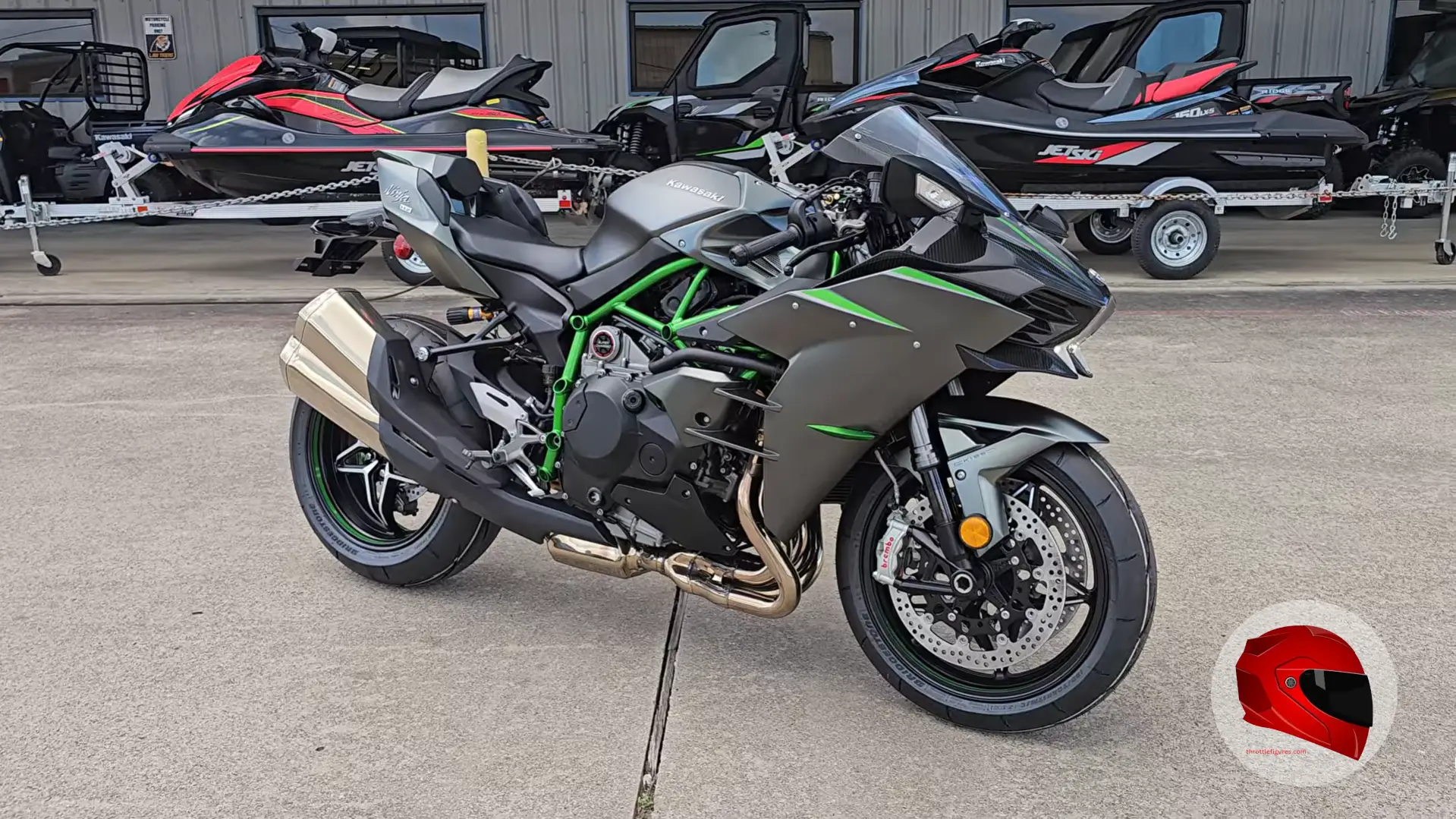
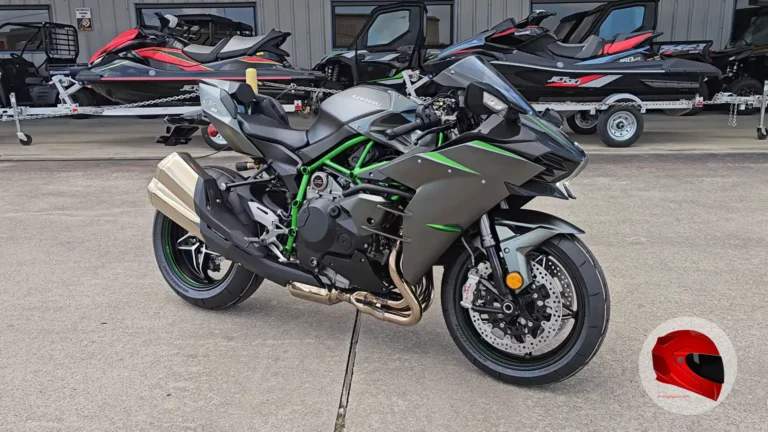
The Kawasaki Ninja H2R shows why engine output and bodywork must be considered together. Its 998 cc supercharged inline-four produces 310 hp, or 326 hp with ram air, at 14,000 rpm. Its stated top speed is approximately 250 mph, a figure that cannot be predicted from displacement alone.
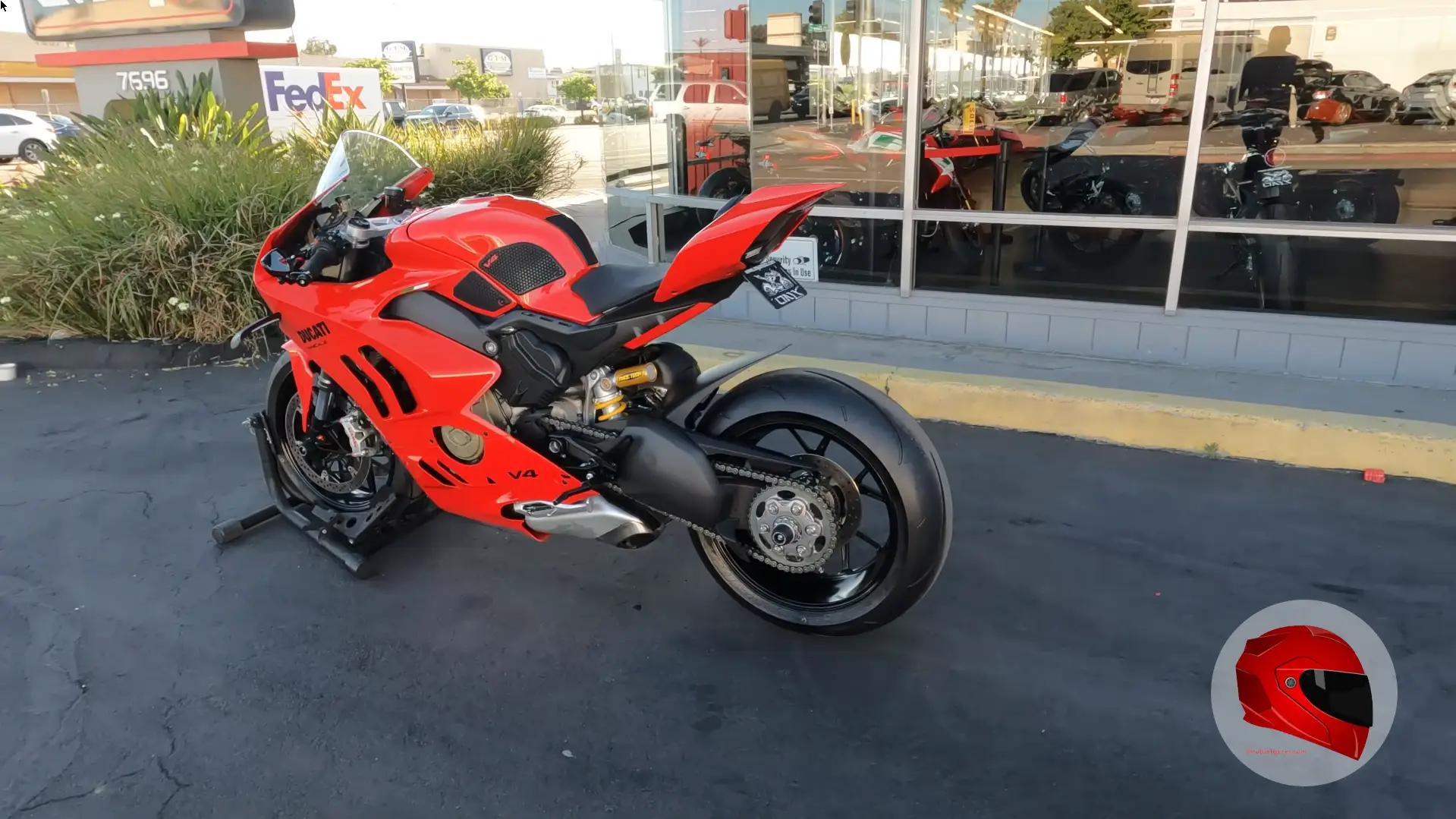
At high speed, aerodynamic drag matters more than small differences in engine output. Fairing shape, rider position, frontal area, gearing and available power all affect the result, so Ducati Panigale specs, including engine performance and bodywork design, can help put a claimed top speed in context.
Apply test conditions and safety rules
High-speed testing should take place only at a closed course, sanctioned venue or another location where the activity is legal and controlled. Public roads introduce traffic, enforcement, surface hazards and unpredictable escape paths. A measurement is not reliable if obtaining it creates unacceptable risk.
- Run in both directions when possible and average the results: (run 1 speed + run 2 speed) / 2.
- Use a measured straight course with a clear start area, finish area and long braking zone.
- Check tire speed ratings, pressures, age, condition, wheel balance, chain adjustment and fastener security.
- Mount GPS equipment firmly and keep radar or laser operators outside the riding line.
- Record wind direction, temperature, altitude, surface condition, rider position, fuel load and motorcycle configuration.
- Allow enough braking tarmac for the tested speed. Stopping from above 300 km/h can require approximately 800-1,100 meters.
Official land-speed procedures provide a useful model: a precisely measured course and two-way timing reduce the effects of wind and small gradients. Bonneville uses measured-distance speed traps, such as a one-mile course, while Fédération Internationale de Motocyclisme procedures use certified dual timing traps over a measured distance.
Read the result correctly
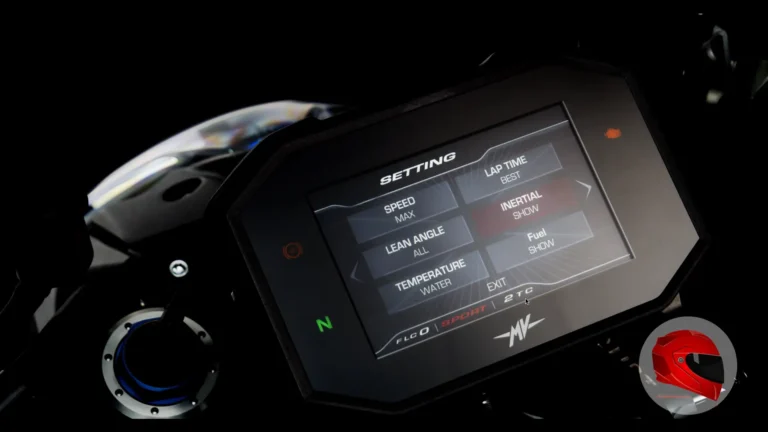
The dashboard speedometer is a reference, not a final authority. Factory speedometers commonly read approximately 2-10% higher than actual speed because they are calibrated with a deliberate positive bias and depend on wheel or transmission speed. Compare the dashboard with an independent GPS, radar or timed-course result.
A dyno’s roller speed does not prove the motorcycle’s road top speed, and a gearing calculator does not prove that the engine can reach redline in top gear. A limiter, aerodynamic drag, tire growth, wind and available power can all keep the theoretical number from becoming a measured one.
For a defensible result, save the raw GPS file or timing record, repeat the pass and report the conditions with the speed. Several clean runs that agree closely provide stronger evidence than one unexplained peak.
A motorcycle with a high top speed is not always the quickest over a short distance. Launch traction, gearing and shift times all affect acceleration. Quarter-mile results provide that extra context by showing how effectively a bike turns its power into forward motion, making the fastest quarter-mile motorcycles useful alongside top-speed testing.
FAQs
How many cc does a motorcycle need to reach 100 mph?
There is no fixed displacement threshold because aerodynamics, gearing, power and rider position matter. A well-designed 600 cc sport bike can reach approximately 100 mph, while a heavier or less aerodynamic motorcycle with more displacement can be slower.
What is the 12-second rule on a motorcycle?
The 12-second rule is a visual safety practice: keep scanning at least 12 seconds of travel distance ahead for hazards, traffic changes and escape paths. It is a road-riding technique, not a method for measuring top speed.
How fast is 25 mph on a bike?
Twenty-five miles per hour equals approximately 40.2 km/h. On a motorcycle, it is a low urban speed, although road surface, traffic and rider experience still determine whether it is appropriate.
Is 70 mph fast for a motorcycle?
Seventy miles per hour is a normal highway speed in many United States settings, but it is still high enough for wind, braking distance, tire condition and road hazards to matter. Treat it as a serious operating speed even though many motorcycles can travel substantially faster.
Conclusion
Knowing how motorcycle top speed is measured makes published figures easier to judge.
Use a dedicated GPS logger for the clearest real-world peak-speed record, add radar when you need an independent check, and use a dyno or gearing calculation to study wheel speed and theoretical limits. Repeat clean runs in both directions on a controlled course, then report the measured speed with its conditions and equipment.

One Comment
Comments are closed.