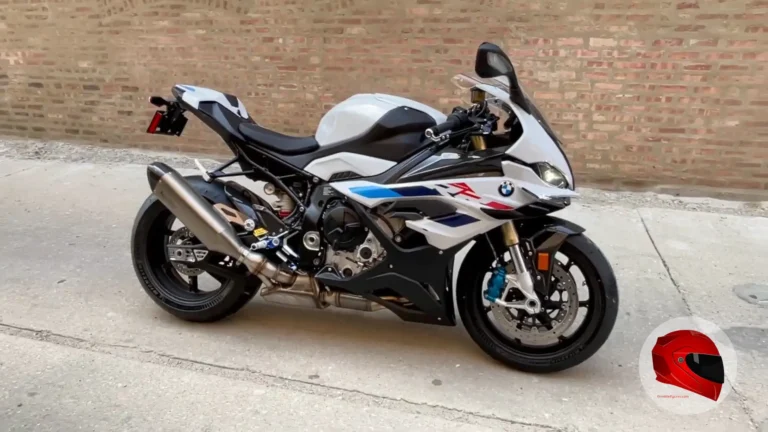
Motorcycle Quickshifters Explained: How Clutchless Shifting Works
A motorcycle quickshifter lets you make many gear changes without pulling the clutch. When you move the shift lever, a sensor signals the ECU or control module to briefly reduce engine torque, unloading the transmission so the next gear can engage. The main choice is between an upshift-only system and a bi-directional system that also blips the throttle for downshifts. Compatibility with the motorcycle’s ECU, throttle, shift pattern and intended riding conditions matters just as much.
How a Quickshifter Changes Gears
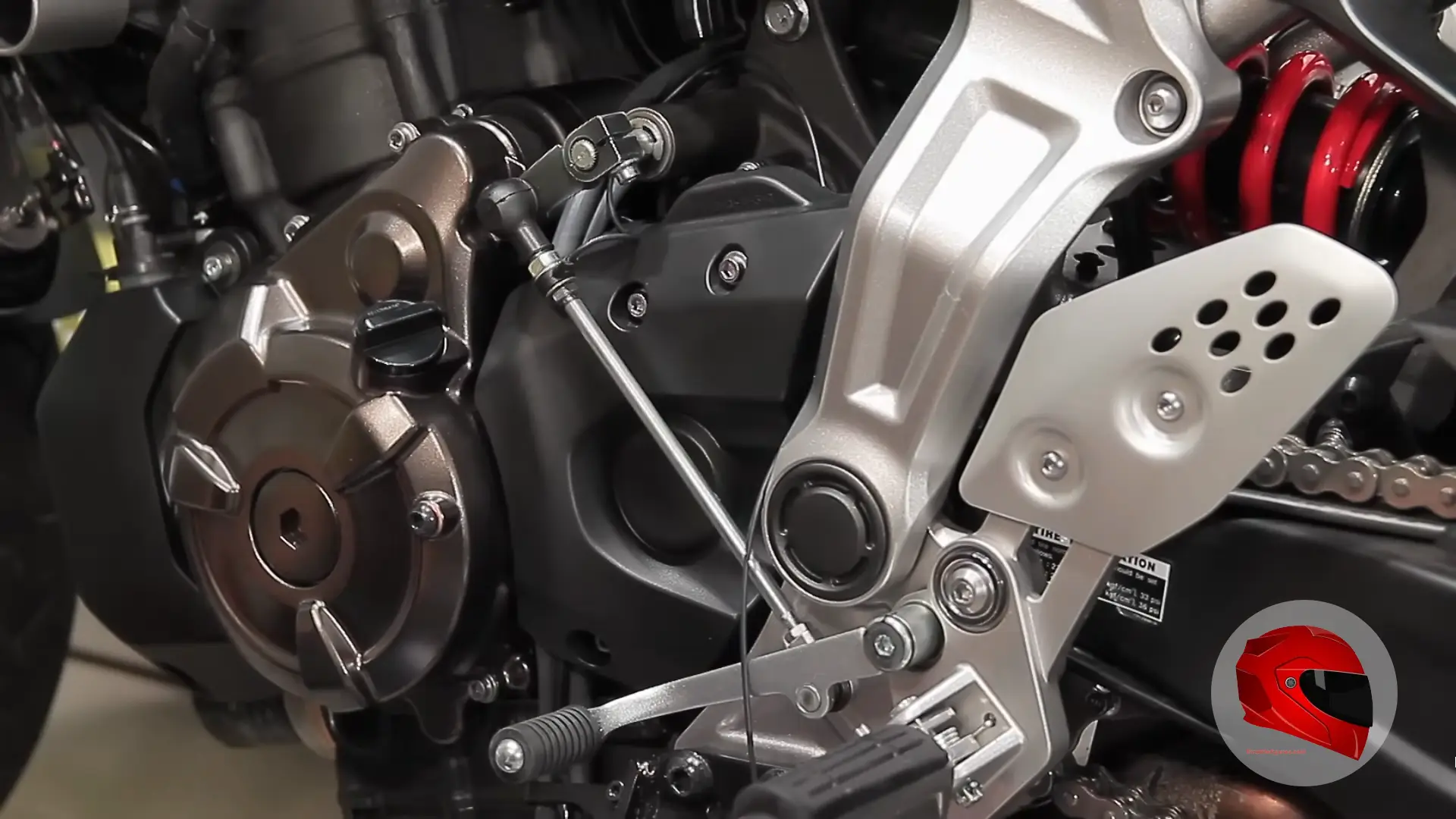
- Move the gear selector. While the motorcycle is accelerating, you apply upward pressure to the gear selector. The shift linkage transfers that force to the transmission shift shaft.
- Measure the shift force. A strain-gauge sensor in or beside the shift linkage detects bending load or microscopic distortion and converts it into an electrical signal.
- Send the shift request. The ECU-integrated quickshifter or standalone aftermarket unit receives the signal and identifies the start of an upshift.
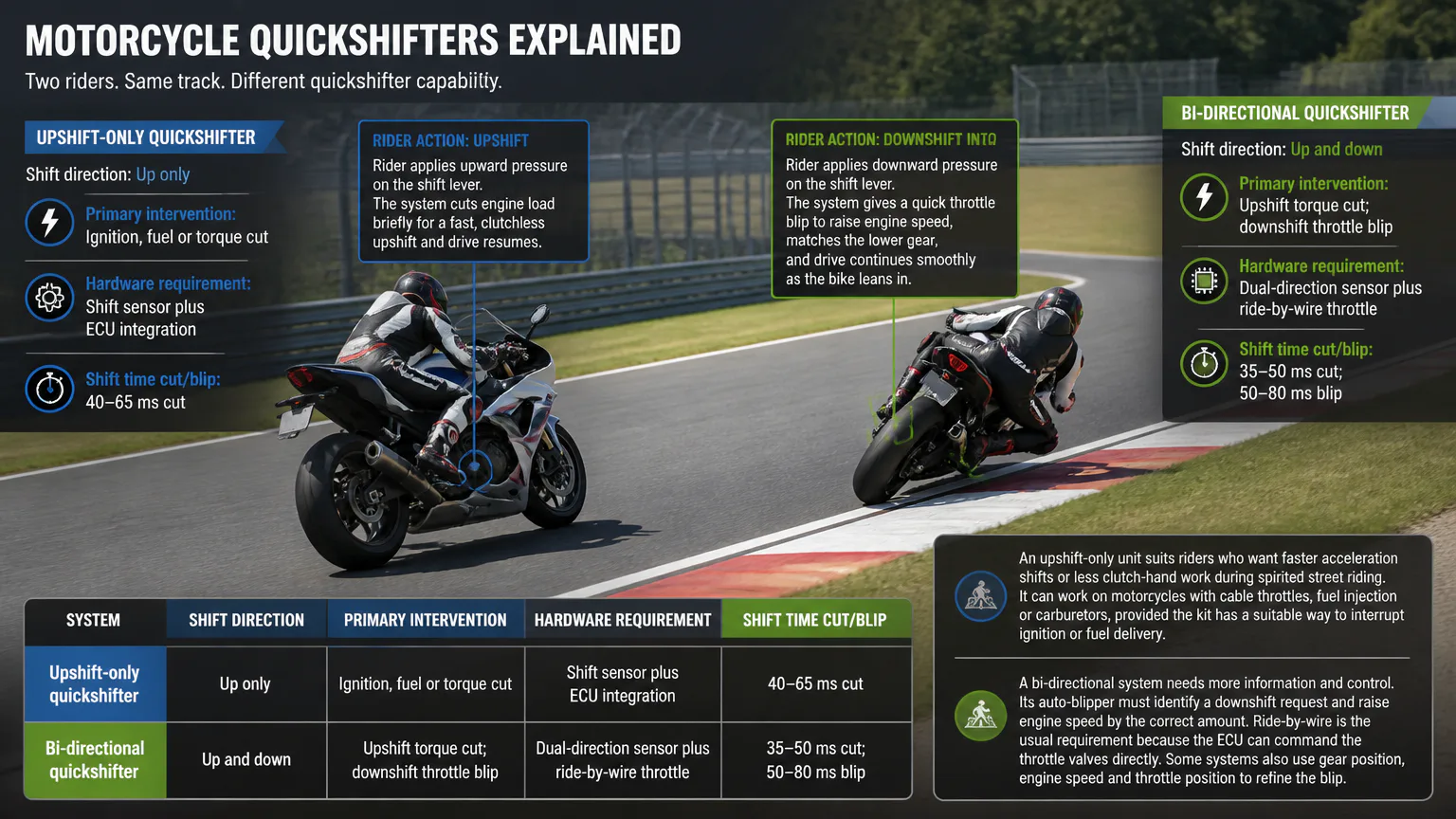
- Cut engine torque. An upshift-only system briefly interrupts ignition, fuel or torque for about 40-65 milliseconds. A bi-directional system typically uses a 35-50 millisecond upshift cut and a 50-80 millisecond downshift throttle blip.
- Unload the transmission. The temporary torque reduction allows the transmission’s shift dogs to disengage from the current gear without clutch separation.
- Engage the next ratio. The transmission moves into the next gear while you maintain pressure on the lever.
- Restore power. The ECU or control module ends the intervention, allowing the engine to drive the new gear as you continue accelerating.
What Does a Motorcycle Quickshifter Do?
A quickshifter automates the brief reduction in engine load needed for a clutchless gear change. It does not select gears by itself. You still choose the gear, move the shift lever, control the throttle and decide when to change. The system handles only the short interruption that lets the transmission move between ratios.
An upshift-only quickshifter is the simpler setup. It assists upward shifts under acceleration by cutting engine torque. You still use the clutch for takeoff, stopping and shifts that fall outside the system’s operating conditions. A clutchless upshift also requires the rider to select the next gear and apply suitable pressure to the lever.
A bi-directional quickshifter adds clutchless downshifts through an auto-blipper. During a downshift, the system raises engine speed to match the lower gear, usually by opening the electronic throttle briefly. This can make aggressive corner-entry shifts smoother, but it requires more precise calibration and compatible motorcycle electronics.
Upshift-Only vs Bi-Directional Systems
| System | Shift direction | Primary intervention | Hardware requirement | Shift time cut/blip |
|---|---|---|---|---|
| Upshift-only quickshifter | Up only | Ignition, fuel or torque cut | Shift sensor plus ECU integration | 40–65 ms cut |
| Bi-directional quickshifter | Up and down | Upshift torque cut; downshift throttle blip | Dual-direction sensor plus ride-by-wire throttle | 35–50 ms cut; 50–80 ms blip |
An upshift-only unit suits riders who want faster acceleration shifts or less clutch-hand work during spirited street riding. It can work on motorcycles with cable throttles, fuel injection or carburetors, provided the kit has a suitable way to interrupt ignition or fuel delivery.
A bi-directional system needs more information and control. Its auto-blipper must identify a downshift request and raise engine speed by the correct amount. Ride-by-wire is the usual requirement because the ECU can command the throttle valves directly. Some systems also use gear position, engine speed and throttle position to refine the blip.
What Happens Inside the Gearbox?
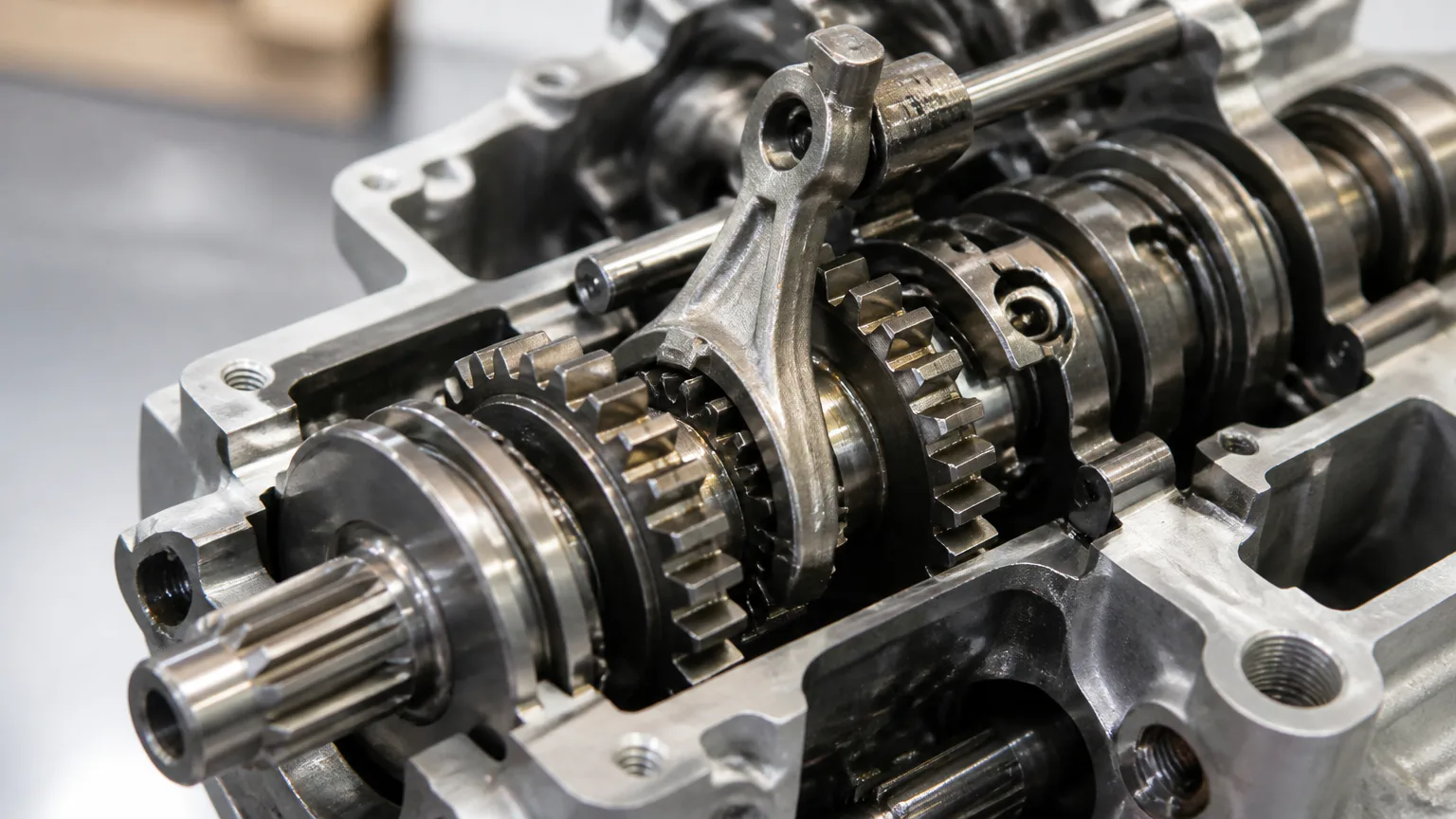
Motorcycle transmissions use sliding gears and engagement dogs rather than the synchronizers found in many passenger-car manual transmissions. The dogs lock one gear to a shaft, while the shift mechanism moves a selector fork when you operate the lever. Heavy engine torque keeps those dogs loaded and makes them resist disengagement.
A quickshifter reduces that load for a fraction of a second. The transmission enters a low-torque state, allowing the dogs to separate and the next set to engage. The mechanical parts still perform the shift; the electronics create the timing window that makes a clutchless change possible.
Correct lever adjustment matters because the sensor must detect a deliberate shift without reacting to vibration or accidental contact. Worn shift linkage, bent components, damaged dogs or poor shift-drum operation can cause bad shifts regardless of the electronics.
When Should You Use a Quickshifter?
- Accelerating at moderate or high RPM: Keep the throttle open and make one deliberate shift input. This is when an upshift-only system usually works most cleanly.
- Low-speed riding: Use the clutch when maneuvering, filtering through traffic or changing gear near idle speed. A quickshifter can feel abrupt when the engine is lugging.
- Track riding: A quickshifter shortens the time the rear wheel is unpowered during acceleration and can make repeated high-load shifts more consistent.
- Street and touring use: The main gains are less clutch-hand effort and smoother acceleration during suitable upshifts. It does not replace the clutch in every situation.
- Off-road riding: Terrain, traction and suspension movement can make abrupt torque changes undesirable. Use the clutch when precise rear-wheel control matters.
- Stopping and pulling away: Use the clutch. A quickshifter does not replace it for launching, coming to a complete stop or recovering from an incorrect gear.
Briefly rolling off the throttle can make a clutchless shift smoother on some motorcycles, but many modern systems are calibrated for an open throttle under acceleration. Follow the kit’s operating range instead of forcing a shift below its activation threshold.
Can Quickshifters Damage Gearboxes?
A correctly installed and calibrated quickshifter does not inherently damage a healthy gearbox. It reduces torque when the shift dogs need to disengage, creating the mechanical conditions for a clean clutchless upshift. Problems are more likely when the cut is too short, the sensor direction is wrong, the linkage is misaligned or the rider forces the lever through a failed shift.
Low-RPM use commonly causes harshness. The engine may not produce enough smooth drive for the brief torque cut to feel natural, which can make the motorcycle jerk or produce a loud shift. Pressing harder on the lever does not solve an unsuitable RPM or throttle position.
- Inspect the shift rod, rod ends, lever pivot and transmission linkage before installation.
- Use a cut time that matches the motorcycle, gear, RPM range and manufacturer calibration.
- Stop using the system if it produces repeated false shifts, missed gears or unusual transmission noise.
- Keep the clutch available for low-speed, emergency and mechanically abnormal situations.
Do You Need Ride-by-Wire?
You do not need ride-by-wire for every quickshifter. An upshift-only system can use ignition interruption on a carbureted motorcycle, and it can use ignition or fuel control on many fuel-injected motorcycles. Carbureted engines generally favor ignition interruption because they do not have electronically controlled fuel delivery.
Fuel-injected motorcycles offer more intervention choices, including fuel cuts and electronic throttle control where equipped. Fuel and throttle intervention can reduce some unburned-fuel issues associated with spark-only cuts, but compatibility depends on the motorcycle’s ECU, ignition system, injection hardware and available control signals.
Ride-by-wire becomes especially important for a bi-directional quickshifter. The electronic throttle can open briefly during a downshift, raising engine speed to match the lower ratio. A cable-throttle motorcycle can still use an upshift quickshifter, but a reliable automatic blipper requires a separate mechanical or electronic solution with model-specific support.
How to Choose a Quickshifter Kit
Start with the motorcycle’s exact make, model, year, engine configuration and shift pattern. A sensor may be configured for push or pull operation and for a standard or reverse pattern. A kit can fit the motorcycle mechanically and still behave incorrectly if its direction is wrong.
- ECU-integrated quickshifter: Uses the factory engine-management system to process the sensor signal and control ignition, fuel or torque cuts. Its map can optimize timing by gear and RPM.
- Standalone aftermarket quickshifter: Adds a sensor and independent control box or Power Commander to motorcycles without factory quickshifter support. It is the usual option for older motorcycles and some cable-throttle models.
- Factory or OEM accessory: Usually provides the cleanest integration when the motorcycle manufacturer supports the feature. Accessory pricing commonly ranges from $200 to $600.
Dynojet Quickshifter is standalone aftermarket hardware that uses a pressure sensor and independently interrupts ignition or fuel signals. Listed kit pricing ranges from approximately $390 to $530. HM Quickshifter uses strain-gauge technology for road and race applications. Its systems interrupt ignition or fuel delivery to unload the drivetrain during a clutchless shift.
Standalone systems commonly cost approximately $450 to $800 or more before professional labor. Other listed kit prices include about $216 for a FlashTune sensor kit, approximately $185 for a Yamaha R7 GYTR kit and approximately $488 for a Honda Africa Twin kit. These figures cover hardware, not installation or later tuning.
How to Install and Set Up a Kit
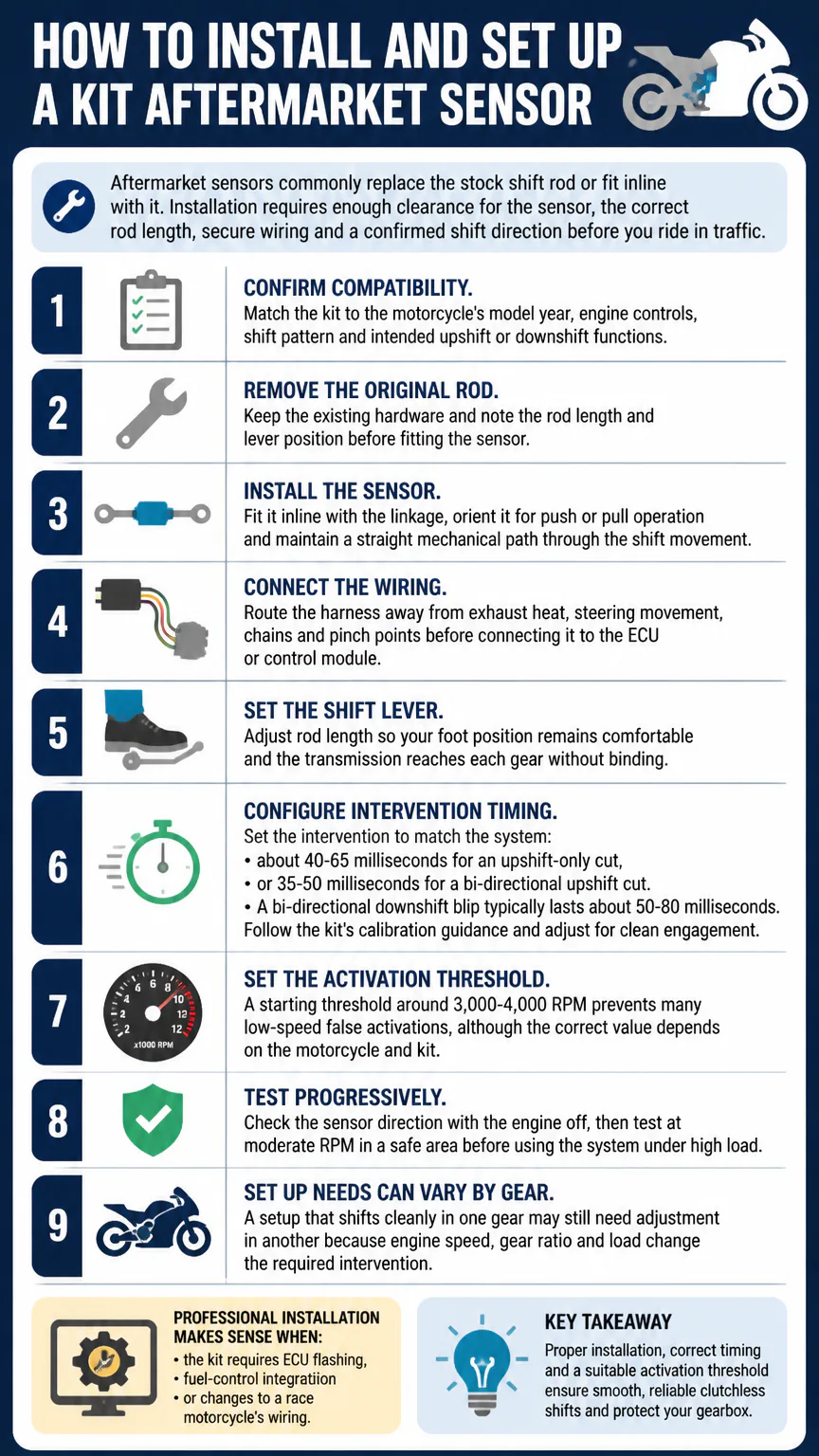
Aftermarket sensors commonly replace the stock shift rod or fit inline with it. Installation requires enough clearance for the sensor, the correct rod length, secure wiring and a confirmed shift direction before you ride in traffic.
- Confirm compatibility. Match the kit to the motorcycle’s model year, engine controls, shift pattern and intended upshift or downshift functions.
- Remove the original rod. Keep the existing hardware and note the rod length and lever position before fitting the sensor.
- Install the sensor. Fit it inline with the linkage, orient it for push or pull operation and maintain a straight mechanical path through the shift movement.
- Connect the wiring. Route the harness away from exhaust heat, steering movement, chains and pinch points before connecting it to the ECU or control module.
- Set the shift lever. Adjust rod length so your foot position remains comfortable and the transmission reaches each gear without binding.
- Configure intervention timing. Set the intervention to match the system: about 40-65 milliseconds for an upshift-only cut, or 35-50 milliseconds for a bi-directional upshift cut. A bi-directional downshift blip typically lasts about 50-80 milliseconds. Follow the kit’s calibration guidance and adjust for clean engagement.
- Set the activation threshold. A starting threshold around 3,000-4,000 RPM prevents many low-speed false activations, although the correct value depends on the motorcycle and kit.
- Test progressively. Check the sensor direction with the engine off, then test at moderate RPM in a safe area before using the system under high load.
Professional installation makes sense when the kit requires ECU flashing, fuel-control integration or changes to a race motorcycle’s wiring. A setup that shifts cleanly in one gear may still need adjustment in another because engine speed, gear ratio and load change the required intervention.
Quickshifter Benefits and Drawbacks
The main performance benefit is less interruption of rear-wheel drive during acceleration. On a track, that can improve acceleration consistency and reduce time lost during repeated shifts. On the street, the feature mainly reduces clutch-hand effort and helps keep the motorcycle settled during suitable acceleration shifts.
- Benefits: faster clutchless upshifts, less rear-wheel unloading, reduced clutch use and more consistent acceleration under load.
- Drawbacks: added cost, installation complexity, low-RPM jerkiness, sensor or wiring maintenance and limited usefulness during stops or slow maneuvering.
- Best fit: motorcycles used for spirited road riding or track days, and riders who regularly make high-load upshifts.
- Less suitable: motorcycles used mainly in crawling traffic, for technical off-road control or for relaxed low-RPM riding.
Aftermarket reliability depends on the sensor, wiring, mounting and calibration. HM Quickshifter equipment has an approximately 0.01 percent failure rate, with most failures attributed to crashes or installation problems. Inspect the sensor and linkage after a fall or transmission fault even when the system has worked reliably.
FAQs
Is a motorcycle quickshifter automatic?
No. You still choose the gear and operate the shift lever. The quickshifter detects the shift request and manages the brief engine or throttle intervention.
Can you add a quickshifter to any motorcycle?
No. Compatibility depends on the motorcycle’s ignition, fuel system, ECU, throttle, linkage, shift pattern and available mounting space. A standalone aftermarket quickshifter expands compatibility, but it does not make every motorcycle suitable for an auto-blipper or factory-style integration.
Are motorcycle quickshifters street legal in the United States?
A quickshifter has no blanket federal prohibition in the United States, but the motorcycle must still comply with applicable state and local equipment, noise, emissions and road-use rules. An installation that changes emissions controls or creates an unsafe shift condition can create a separate compliance problem.
How much does a motorcycle quickshifter cost?
OEM accessory systems commonly cost $200 to $600, while standalone systems commonly range from $450 to $800 or more before labor. Pricing varies by motorcycle and by whether the kit includes ECU integration, an auto-blipper or additional tuning.
What is the difference between a quickshifter and an electronic clutch?
A quickshifter automates the torque interruption needed for selected clutchless shifts while you still operate the gear lever. An electronic or automated clutch controls clutch engagement and can support launching, stopping and broader low-speed operation.
Conclusion
A quickshifter works best when its sensor, torque intervention and shift linkage match the motorcycle and the system is used at an appropriate RPM under load. Choose an upshift-only system for straightforward clutchless acceleration shifts, or choose a bi-directional system when the motorcycle supports ride-by-wire and you want an auto-blipper for downshifts.