
Honda CBR650R: Price, Specs, Performance & Buying Advice
Disclaimer: Performance figures may vary depending on factors such as rider, road and weather conditions, vehicle condition, and testing methods. Figures are provided for informational purposes only.
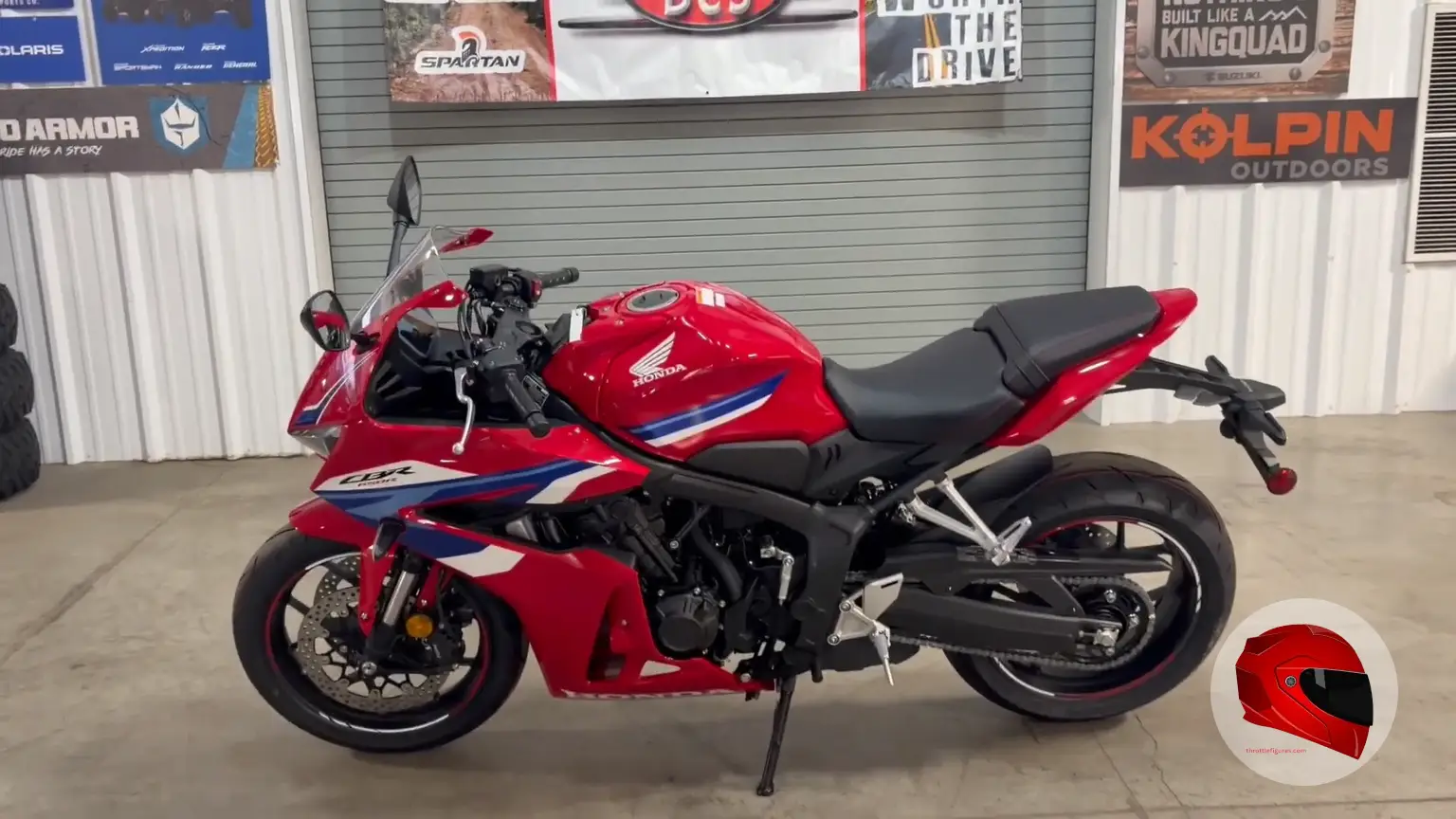
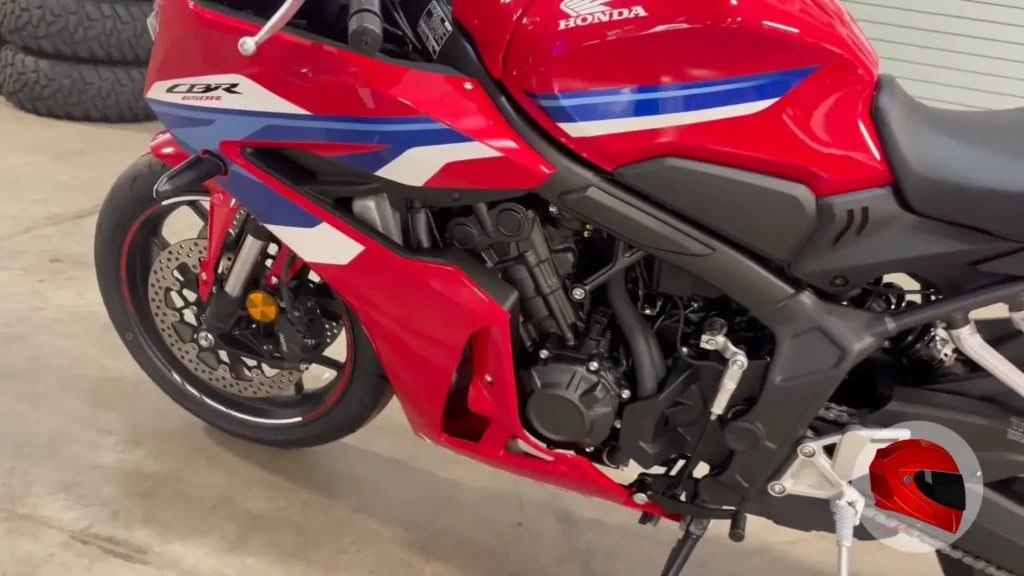
The Honda CBR650R sits between approachable street motorcycles and focused supersport machines. Its 649cc inline-four produces approximately 94 horsepower, while the standard E-Clutch reduces clutch work in traffic without removing the manual gearbox. For 2026, the main questions are price, riding position, engine character, curb weight, and whether the Honda’s convenience outweighs the lighter feel of a twin-cylinder rival.
Honda CBR650R 2026 Specs and Price
| Specification | 2026 Honda CBR650R E-Clutch |
|---|---|
| Base MSRP | $9,199 |
| Destination charge | $600 |
| Total MSRP before taxes and dealer fees | $9,799 |
| Engine displacement | 649cc |
| Engine configuration | Liquid-cooled DOHC inline-four |
| Valves | 4 per cylinder |
| Compression ratio | 11.6:1 |
| Power | Approximately 94 hp |
| Torque | Approximately 46 lb-ft |
| Maximum engine speed | Approximately 12,000 rpm |
| Top speed | Approximately 150 mph |
| 0–60 mph | Approximately 3.3 seconds |
| Transmission | 6-speed manual |
| Clutch technology | Honda E-Clutch |
| Front suspension | 41mm inverted Showa SFF-BP fork |
| Rear suspension | Adjustable Showa shock |
| Front brakes | Dual 310mm discs with ABS |
| Rear brake | Single 240mm disc |
| Front tire | 120/70-17 |
| Rear tire | 180/55-17 |
| Wheelbase | 57.0 inches |
| Seat height | 31.9 inches |
| Curb weight | 466 lb |
| Fuel capacity | 4.1 gallons |
| Equipment | 5-inch TFT, Honda RoadSync, ABS |
| Available colors | Grand Prix Red; Matte Black Metallic |
| Warranty | 1-year unlimited-mileage transferable limited warranty |
How the Honda E-Clutch works
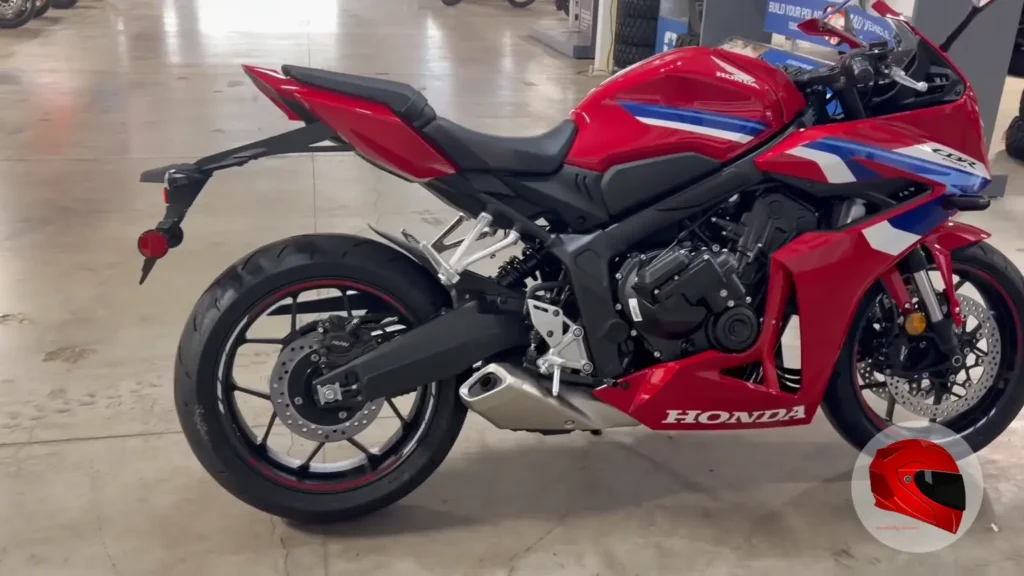
The Honda E-Clutch operates the clutch electronically while retaining a conventional six-speed manual transmission. You can pull away, stop, upshift and downshift without using the clutch lever. The system also allows manual clutch operation, so you can override it when a particular launch or maneuver calls for direct lever control.
The E-Clutch does more than a conventional quick-shifter. A quick-shifter generally cuts ignition or manages engine torque during selected gear changes. The E-Clutch also controls clutch engagement at low speed, which makes stop-and-go riding easier and reduces the chance of stalling during starts. You still select the gear and control the motorcycle with the normal foot shifter.
Honda makes the E-Clutch standard on the 2026 CBR650R rather than offering it as a separate transmission option. It adds convenience for commuting and urban riding while preserving the involvement of a manual gearbox on open roads.
The E-Clutch reduces the need to use the clutch lever, but it is not a quickshifter. The E-Clutch manages clutch engagement, while a quickshifter usually enables faster gear changes under acceleration. Understanding how motorcycle quickshifters work makes it easier to choose the right system for commuting, spirited road riding or track use.
What the CBR650R is like to ride
The inline-four is smooth at low and medium engine speeds, then becomes more urgent as the tachometer approaches its approximately 12,000-rpm limit. With approximately 94 horsepower, it has plenty of performance for public-road riding and delivers predictable throttle response. The engine rewards riders who use the upper part of the rev range instead of short-shifting like they might on a larger-torque twin.
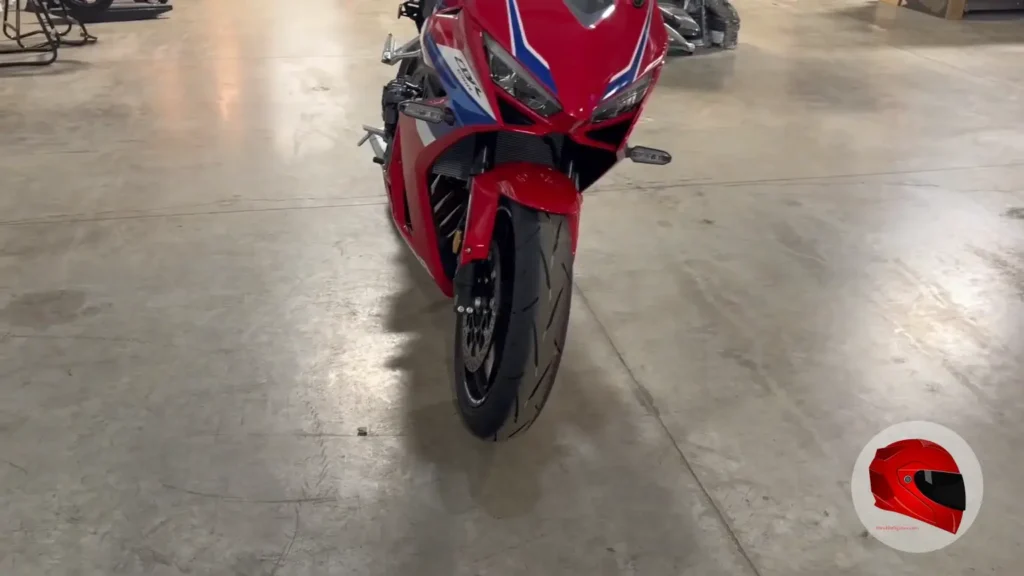
At 466 pounds with fuel, the CBR650R is not the lightest motorcycle in its class. That weight gives it a planted feel on faster roads, but you notice it during low-speed U-turns and parking-lot maneuvers. The 31.9-inch seat height suits many riders, although the fairing, clip-ons and 57.0-inch wheelbase create a more committed stance than a standard motorcycle.
The 41mm Showa SFF-BP fork, adjustable Showa rear shock, dual 310mm front discs and ABS give the chassis equipment for spirited street riding and occasional track use. The clip-on handlebars sit approximately 30mm lower and 30mm farther forward than those on the older CBR650F, so pay attention to wrist, back and neck comfort during a test ride.
CBR650R versus R7 and Ninja 650
| Motorcycle | Engine | Power character | Curb weight | Riding position | Notable technology |
|---|---|---|---|---|---|
| Honda CBR650R | 649cc inline-four | High-revving, linear | 466 lb | Sport-forward | E-Clutch, TFT, ABS |
| Yamaha YZF-R7 | 689cc parallel twin | Strong midrange, punchy | Approximately 414 lb | Aggressive | Assist and slipper clutch, ABS |
| Kawasaki Ninja 650 | 649cc parallel twin | Flexible, torque-focused | Approximately 421 lb | Upright sport | Assist and slipper clutch, ABS |
Honda CBR650R
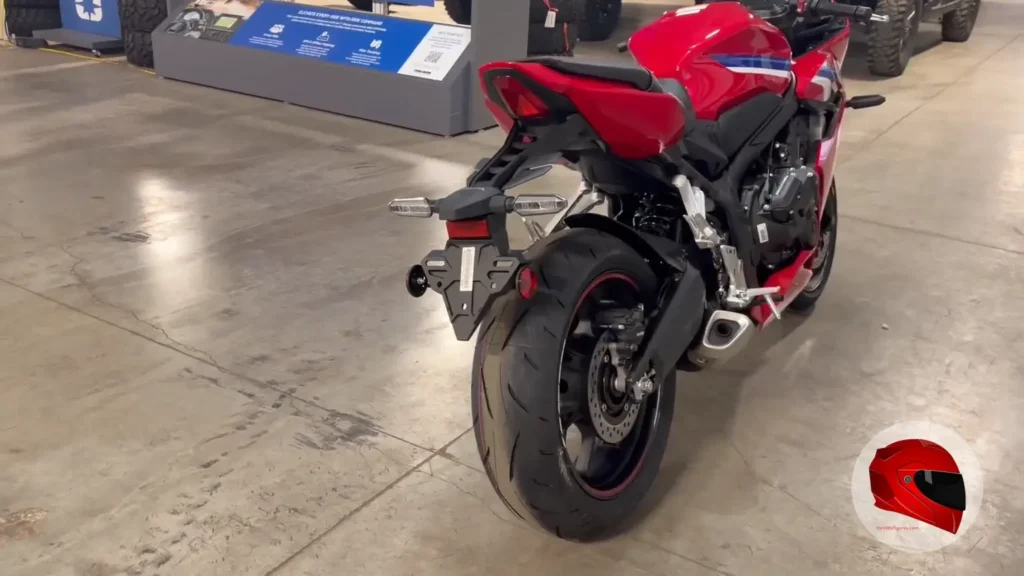
The CBR650R suits riders who want four-cylinder refinement and a rising rush toward redline. Its $9,199 base MSRP puts it above the Kawasaki Ninja 650 ABS, which starts at $8,199, but the Honda includes the E-Clutch, TFT display and a more sophisticated front suspension package. The trade-offs are higher weight and a more demanding riding position.
Yamaha YZF-R7
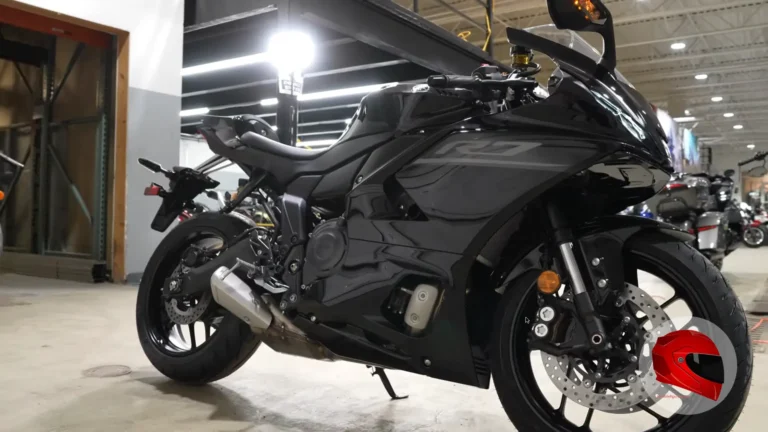
The Yamaha YZF-R7 is considerably lighter and uses a 689cc parallel twin with a crossplane-style firing character. Its lower mass makes direction changes and slow-speed corrections easier, while its aggressive ergonomics suit riders who want a focused sportbike feel. The R7 produces less peak power than the Honda but delivers useful midrange response and a sharper connection to the road.
Kawasaki Ninja 650
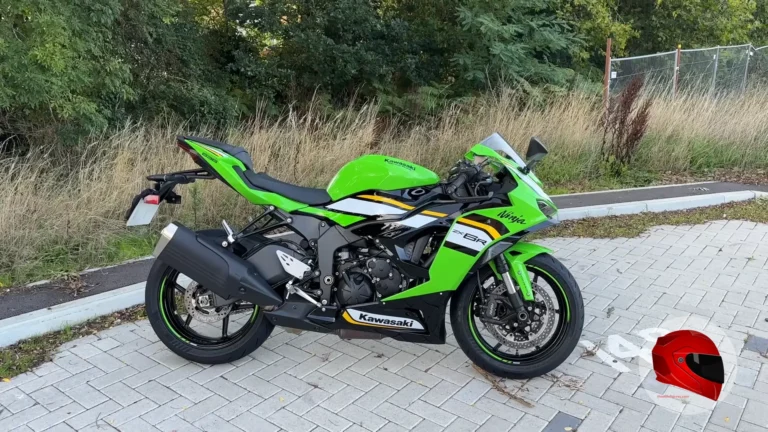
The Kawasaki Ninja 650 is the more relaxed choice for commuting and general road use. Its parallel-twin engine emphasizes usable torque, and its lower starting price leaves more room for insurance, riding gear or accessories. It gives up the Honda’s inline-four top-end performance and E-Clutch system.
CBR650R strengths and weaknesses
- Strength: Smooth, distinctive inline-four engine with approximately 94 horsepower.
- Strength: Honda E-Clutch simplifies starts, stops and gear changes.
- Strength: Inverted Showa fork, dual front discs, ABS and TFT instrumentation.
- Strength: Full fairing and sportbike chassis for spirited street riding.
- Weakness: The 466-pound curb weight is high beside the Yamaha YZF-R7.
- Weakness: Clip-on handlebars create more upper-body load than the Ninja 650.
- Weakness: The engine feels less forceful at low rpm than a torque-focused twin.
- Weakness: Taxes, setup, documentation, registration and dealer fees raise the out-the-door price above $9,799.
Is the CBR650R good for beginners?
The CBR650R can suit a disciplined beginner, but it is not a lightweight starter motorcycle. Its throttle response is smooth and the E-Clutch can reduce stalling and clutch fatigue. Even so, approximately 94 horsepower and a 466-pound curb weight call for careful throttle, braking and low-speed practice.
New riders should complete a recognized motorcycle training course, obtain the motorcycle endorsement required by their state and practice emergency braking, cornering, slow-speed turns and clutch override techniques. The E-Clutch is an aid, not a replacement for training. A lighter motorcycle such as the Ninja 650 or a lower-powered model may be easier during the first months of learning.
The CBR650R can suit a disciplined beginner, but its price and full-size performance mean mistakes cost more than they would on a smaller learner bike. Comparing a new motorcycle for beginners with a carefully inspected used option can help you weigh warranty protection against lower depreciation and a cheaper purchase price.
Honda CBR650R ownership costs
- Purchase cost: Start with the $9,799 MSRP including destination, then add sales tax, title, registration, dealer documentation, setup and possible accessories.
- Insurance: Premiums depend on age, location, riding history, coverage limits, deductible and the motorcycle’s sportbike classification.
- Fuel: The 4.1-gallon tank provides practical street range, but fuel use rises during sustained high-rpm riding.
- Break-in service: Follow the initial inspection and fluid requirements in the owner’s manual.
- Routine service: Budget for engine oil, filter changes, brake-fluid service, air-filter checks and general inspections.
- Chain care: Clean, lubricate and adjust the drive chain at the specified intervals, especially after riding in rain or on dirty roads.
- Valve inspection: Include periodic valve-clearance checks in long-term maintenance planning.
- Consumables: Tires, brake pads, chain-and-sprocket components and batteries are normal replacement expenses.
The E-Clutch can reduce clutch-lever wear from repeated starts, but it does not remove normal drivetrain maintenance. Check insurance and tire costs before comparing monthly payments.
The CBR650R’s purchase price is only part of the budget. Insurance, fuel, tires, scheduled servicing, registration and depreciation can all affect its yearly cost. Looking at motorcycle ownership costs as a complete package makes it easier to compare with smaller twins and other middleweight sport bikes.
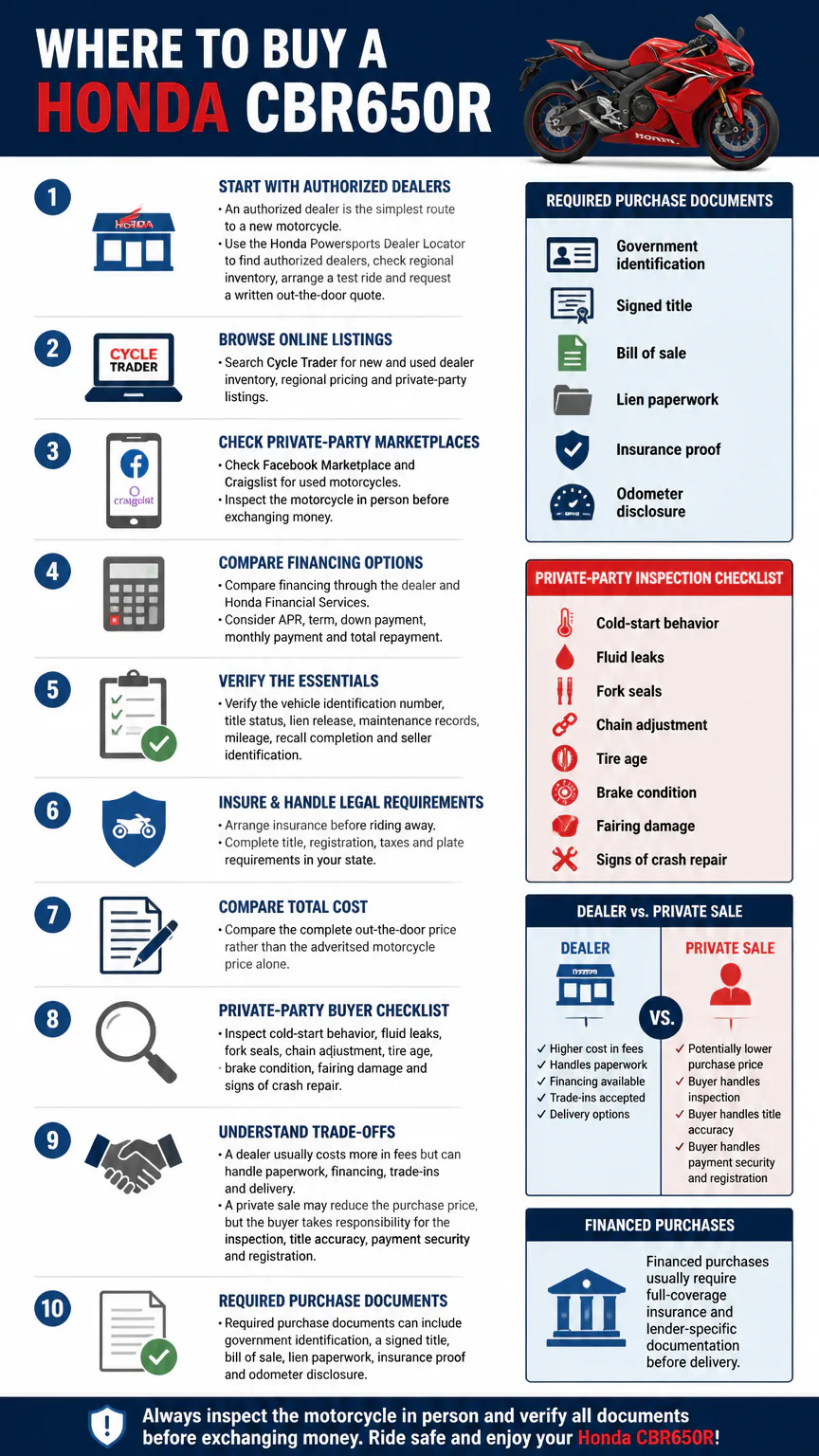
Where to buy a Honda CBR650R
An authorized dealer is the simplest route to a new motorcycle. Used CBR650R inventory is available through nationwide listings and private-party marketplaces. Compare the complete out-the-door price rather than the advertised motorcycle price alone.
- Use the Honda Powersports Dealer Locator to find authorized dealers, check regional inventory, arrange a test ride and request a written out-the-door quote.
- Search Cycle Trader for new and used dealer inventory, regional pricing and private-party listings.
- Check Facebook Marketplace and Craigslist for used motorcycles, then inspect the motorcycle in person before exchanging money.
- Compare financing through the dealer and Honda Financial Services, including APR, term, down payment, monthly payment and total repayment.
- Verify the vehicle identification number, title status, lien release, maintenance records, mileage, recall completion and seller identification.
- Arrange insurance before riding away, then complete title, registration, taxes and plate requirements in your state.
- Required purchase documents can include government identification, a signed title, bill of sale, lien paperwork, insurance proof and odometer disclosure.
- Private-party buyers should inspect cold-start behavior, fluid leaks, fork seals, chain adjustment, tire age, brake condition, fairing damage and signs of crash repair.
- Financed purchases usually require full-coverage insurance and lender-specific documentation before delivery.
A dealer usually costs more in fees but can handle paperwork, financing, trade-ins and delivery. A private sale may reduce the purchase price, but the buyer takes responsibility for the inspection, title accuracy, payment security and registration.
Why Honda replaced the CBR650F
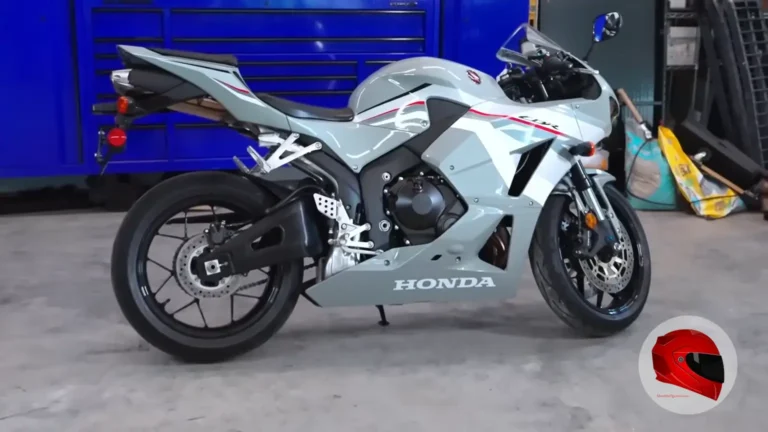
Honda produced the CBR650F from 2014 through 2018 as a more relaxed street-sport motorcycle. The CBR650R followed it with fuller race-inspired bodywork, a more committed clip-on position, stronger power-to-weight performance, updated electronics and a higher-revving sportbike character.
The CBR650R was not discontinued for 2026. It remains available as the CBR650R E-Clutch, while the CBR650F name refers to the previous generation rather than a current alternative.
Honda CBR650R final verdict
The 2026 CBR650R suits riders who value a smooth inline-four, full fairing, serious chassis hardware and clutchless starts and shifts. Its $9,199 base MSRP is reasonable for the equipment, although destination, dealer charges, tax, insurance and maintenance increase the total ownership cost.
Choose the Yamaha YZF-R7 if low weight and aggressive handling matter most. Choose the Kawasaki Ninja 650 if upright comfort, accessible torque and a lower starting price come first. The Honda is the better fit when the sound and character of a four-cylinder engine are central to the decision.
FAQs
Is the Honda CBR650R fast?
Yes. Approximately 94 horsepower, a 12,000-rpm engine speed and an estimated top speed near 150 mph give the CBR650R strong performance for public-road riding. Acceleration depends on rider technique, launch conditions, gearing and surface grip.
Is the R7 or CBR650R faster?
The CBR650R has more peak horsepower and a higher-revving inline-four, so it generally delivers stronger top-end performance. The lighter Yamaha YZF-R7 can feel quicker through corners and during rapid direction changes because it carries less weight.
Does the Honda CBR650R have a quick-shifter?
The standard Honda E-Clutch supports clutchless upshifts and downshifts while also managing clutch engagement during starts and stops. It provides quick-shifter-style gear changes but retains the conventional clutch lever and manual gearbox.
Is the Honda CBR650R available as a naked motorcycle?
The CBR650R is the fully faired sport model. Honda’s related naked configuration is the CB650R, which uses the same basic inline-four engine family with different bodywork and ergonomics.
What colors are available for the 2026 CBR650R?
The 2026 model is available in Grand Prix Red and Matte Black Metallic. Color availability can depend on dealer inventory and regional allocation.
Conclusion
The 2026 Honda CBR650R is worth considering when its inline-four character and E-Clutch convenience matter more than minimum weight or the lowest entry price. Compare the complete out-the-door quote with the Yamaha YZF-R7 and Kawasaki Ninja 650, then choose the motorcycle whose riding position and engine behavior suit your daily use.

One Comment