
What Does Traction Control Do on a Motorcycle? A Practical Guide
Motorcycle traction control limits rear-wheel spin when engine power exceeds the grip available from the tire. It matters most during hard acceleration or sudden changes in surface grip, such as wet lane markings, gravel, sand, leaves and metal covers. The system’s response depends on the difference in wheel speed, lean angle, riding mode, throttle type and the amount of slip the motorcycle is programmed to allow.
How Motorcycle Traction Control Works
- Compare front- and rear-wheel rotation to detect a sudden increase in rear-wheel speed, which indicates acceleration slip.
- Measure the motorcycle’s movement, including lean, pitch, yaw and acceleration, so the system can adjust its response while cornering.
- Calculate the appropriate response using wheel-speed, motion, throttle and engine data.
- Reduce engine torque through electronic throttle closure, ignition retard, fuel interruption or brief braking intervention.
- Restore synchronized rear-wheel rotation as torque falls and the tire regains the grip available from the surface.
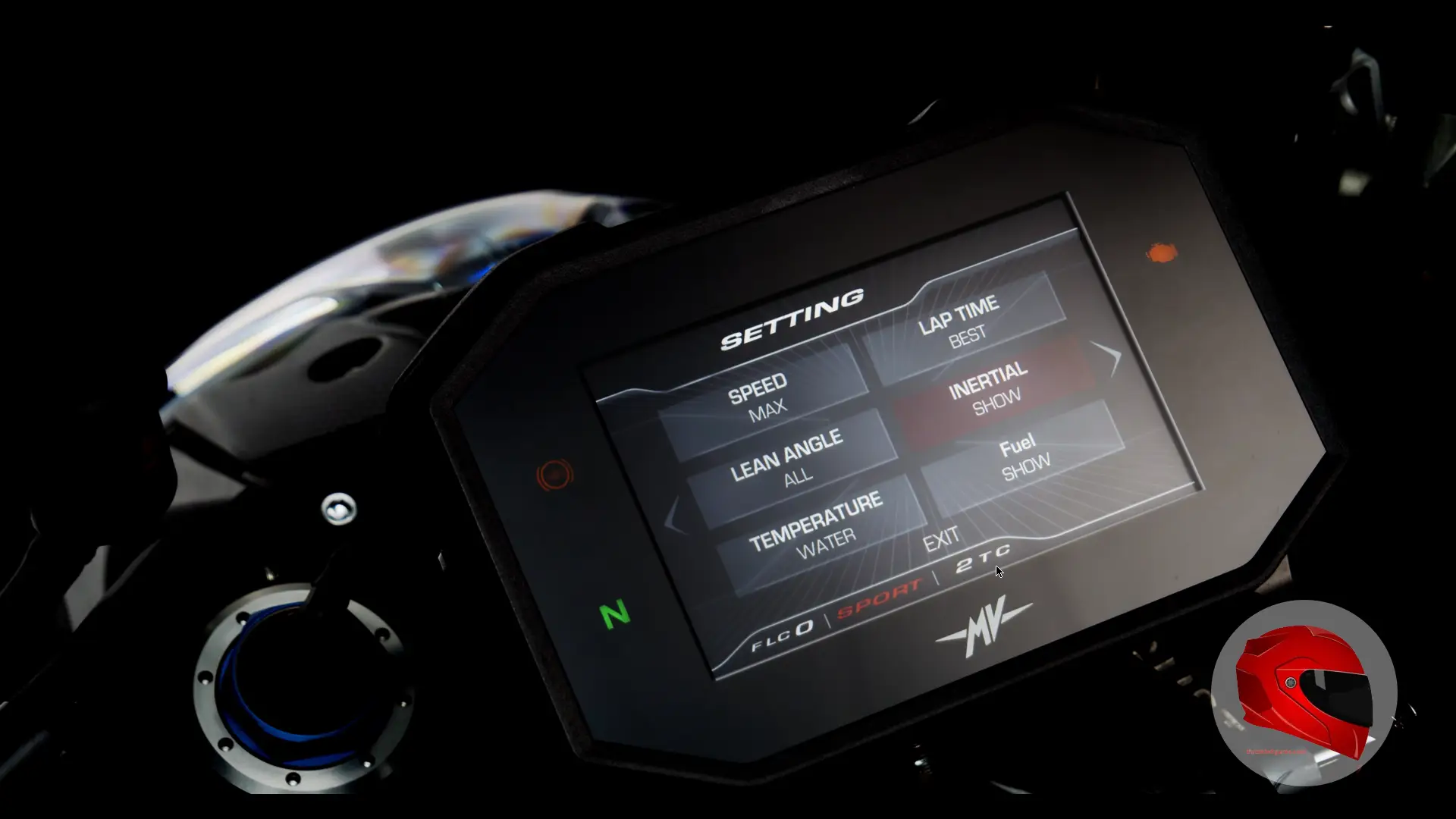
What Does Traction Control Do?
Traction control detects when the rear tire is spinning faster than the front tire during acceleration, then reduces the force reaching the rear wheel. This can stop a small slide from becoming a larger loss of control, especially when the rider opens the throttle on a surface with uneven or limited grip.
Wheel-speed sensors provide the basic comparison. The engine control unit processes that information and commands a reduction in torque. On a motorcycle with a ride-by-wire throttle, it can also close the throttle bodies electronically even when the rider’s hand has not moved.
More advanced motorcycles add an inertial measurement unit, which measures lean angle, pitch, yaw rate and acceleration at approximately 100 times per second. A cornering-aware system can then respond differently to a motorcycle traveling upright in a straight line and one leaned over in a turn.
Motorcycle stability control, sometimes called electronic stability control or motorcycle stability control, combines motion data with throttle and braking control when a slide or unexpected yaw threatens stability. It does not create more tire grip. It manages engine force and, on systems equipped for it, braking action within the grip that remains.
Traction control riding modes
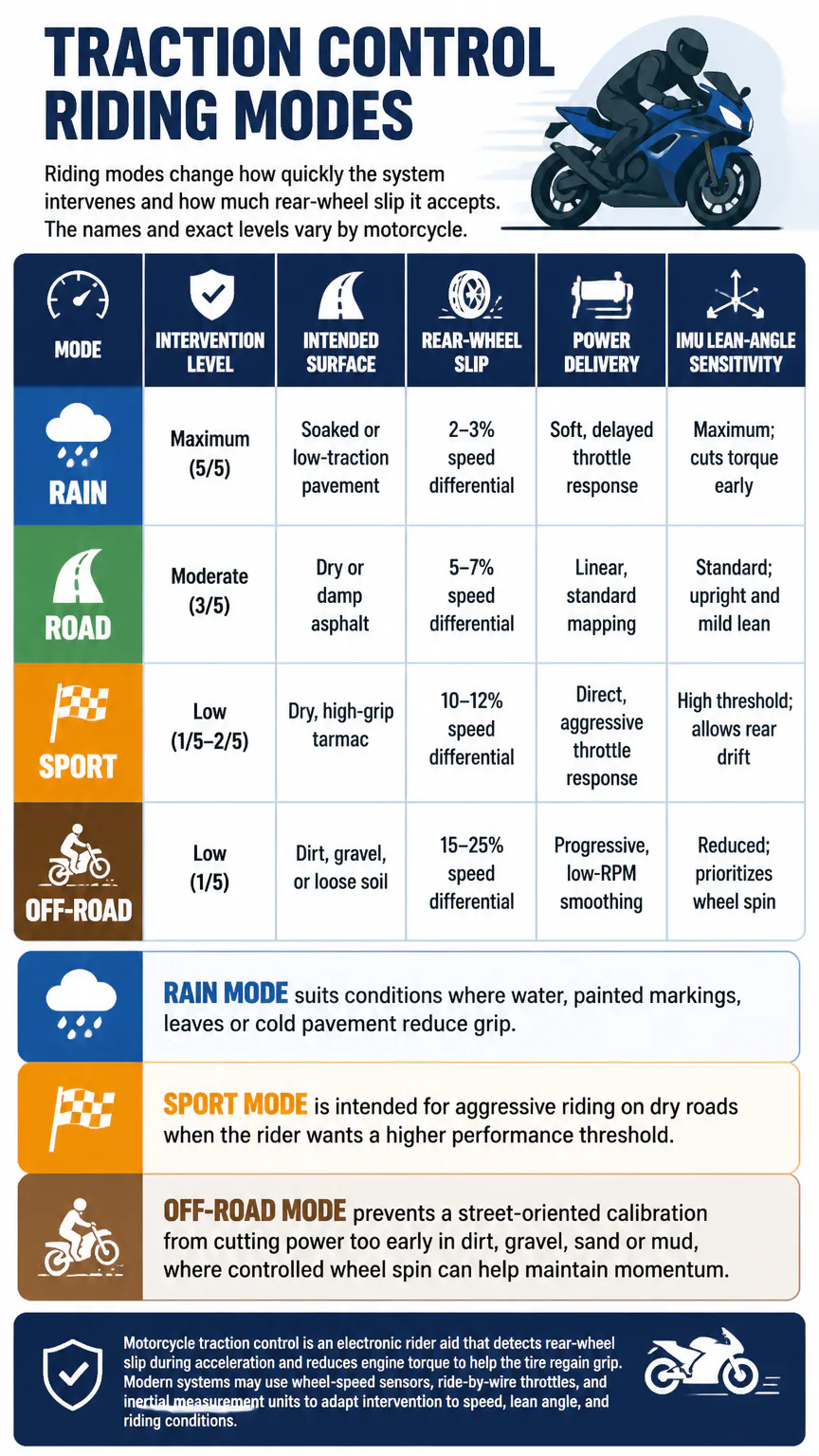
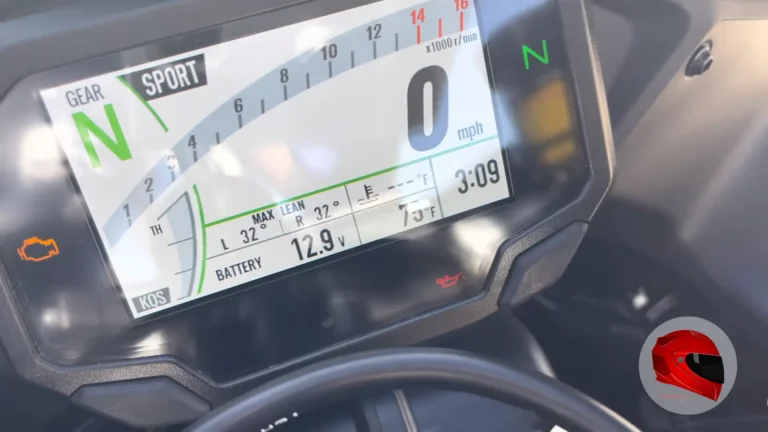
Riding modes change how quickly the system intervenes and how much rear-wheel slip it accepts. The names and exact levels vary by motorcycle. Rain mode generally intervenes early and reduces power, while Sport and Off-Road settings allow more movement before cutting torque.
| Mode | Intervention level | Intended surface | Rear-wheel slip | Power delivery | IMU lean-angle sensitivity |
|---|---|---|---|---|---|
| Rain | Maximum (5/5) | Soaked or low-traction pavement | 2–3% speed differential | Soft, delayed throttle response | Maximum; cuts torque early |
| Road | Moderate (3/5) | Dry or damp asphalt | 5–7% speed differential | Linear, standard mapping | Standard; upright and mild lean |
| Sport | Low (1/5–2/5) | Dry, high-grip tarmac | 10–12% speed differential | Direct, aggressive throttle response | High threshold; allows rear drift |
| Off-Road | Low (1/5) | Dirt, gravel, or loose soil | 15–25% speed differential | Progressive, low-RPM smoothing | Reduced; prioritizes wheel spin |
Rain mode suits conditions where water, painted markings, leaves or cold pavement reduce grip. Sport mode is intended for aggressive riding on dry roads when the rider wants a higher performance threshold. Off-Road mode prevents a street-oriented calibration from cutting power too early in dirt, gravel, sand or mud, where controlled wheel spin can help maintain momentum.
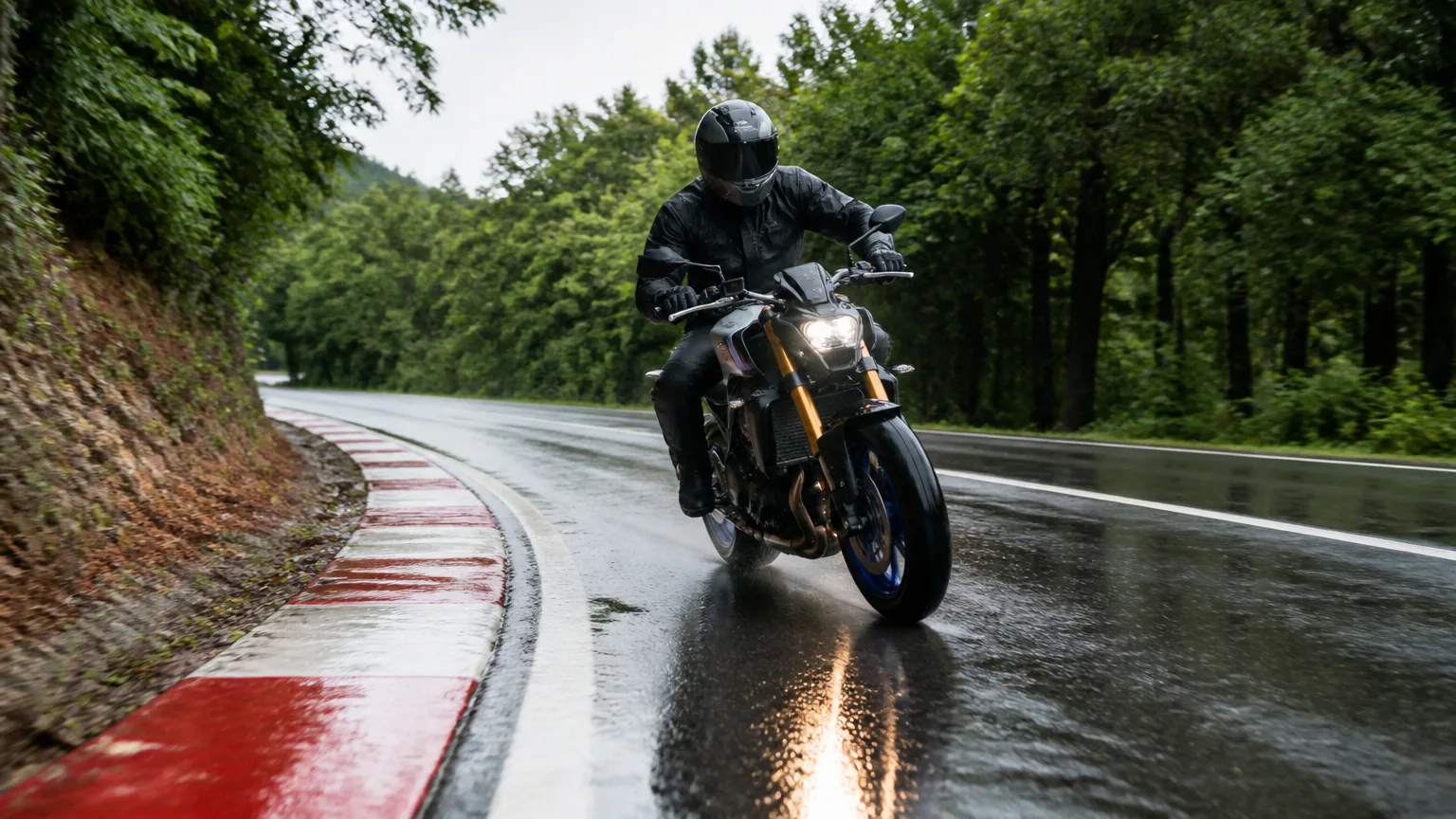
When traction control helps
Traction control works best when the tire loses grip because engine torque arrives faster than the surface can accept it. The system can react faster than a rider who must recognize the slide, close the throttle and reopen it smoothly.
- Wet pavement: Reduces rear-wheel spin during acceleration after rain or in standing water.
- Lane markings: Limits a slide when painted lines are slick.
- Gravel and sand: Controls sudden spin as the tire crosses loose material.
- Streetcar tracks and manhole covers: Helps manage the abrupt loss of grip on smooth metal surfaces.
- Wet leaves: Reduces the torque that can break the rear tire loose.
- Corner exits: A lean-sensitive system can reduce torque more carefully when acceleration begins before the motorcycle is upright.
Reducing rear-wheel spin can also lower the risk of conditions associated with a high-side crash. Traction control cannot correct every slide or compensate for excessive speed, poor tire condition, incorrect tire pressure or a line that takes the motorcycle beyond the available grip.
Traction control works best alongside smooth throttle inputs, a relaxed body position and a good line through the turn, not as a substitute for them. New riders can treat it as a safety net while building those habits, but abrupt steering or a poor line can still cause problems even when the system limits wheelspin. The guidance in riding tips for new riders offers a useful foundation for using electronic aids without relying on them too heavily.
What traction control cannot do
Traction control cannot increase the friction available between the tire and the road. If both tires have already exceeded their grip limits, reducing engine torque will not restore control instantly. The system does not replace smooth throttle use, appropriate speed, good tires or sound cornering technique.
- It does not prevent every crash on wet, icy, oily or contaminated pavement.
- It does not stop the front tire from washing out because of braking or cornering forces.
- It does not make worn, damaged or incorrectly inflated tires safe.
- It does not guarantee that the motorcycle will remain stable after a large steering input or abrupt evasive maneuver.
- It does not perform the same function as braking control.
Some systems display a flashing slip indicator when they intervene. Frequent or heavy intervention is a reason to reduce speed and check the surface, tire condition and selected mode. It is not a signal to add more throttle.
Traction control cannot fix inconsistent power delivery caused by excessive chain slack, tight spots or poor lubrication. A worn or poorly adjusted chain can make the throttle feel jerky and make it harder for the system to manage rear-wheel grip. Regular motorcycle chain maintenance is still essential, even on motorcycles with sophisticated traction control.
Should You Turn It Off?
For ordinary street riding, leaving traction control enabled is generally the safer choice. It is especially useful when grip changes without warning, but the setting should still match the surface rather than asking the rider to manage avoidable wheel spin manually.
Lower intervention can make sense in controlled conditions. Off-Road mode suits a motorcycle calibrated for dirt when the rider needs predictable rear-wheel movement. Experienced track riders may choose a low setting or disable the system for controlled sliding, but that requires a closed course, suitable tires and the skill to manage a developing slide.
Turning traction control off on public roads removes a layer of assistance without adding grip. A setting that works on a dry circuit may be unsuitable after a rain shower, on painted pavement or during a cold-tire street ride.
Traction control versus ABS
Anti-lock braking system control and traction control use related wheel-speed information, but they address different problems. ABS primarily prevents a wheel from locking during braking, while traction control manages rear-wheel spin during acceleration.
On many motorcycles, ABS sensors supply the wheel-speed data used by traction control. Some systems can also apply brief rear-braking pressure to help control severe wheel spin, but the two systems are not interchangeable. A motorcycle can have ABS without traction control, and not every motorcycle includes either feature as standard equipment.
Traction control is not standard on every motorcycle. It may be absent, limited to certain trims or identified by labels such as TCS, MTC, KTRC, DTC, ESC or MSC.
How to adjust the setting
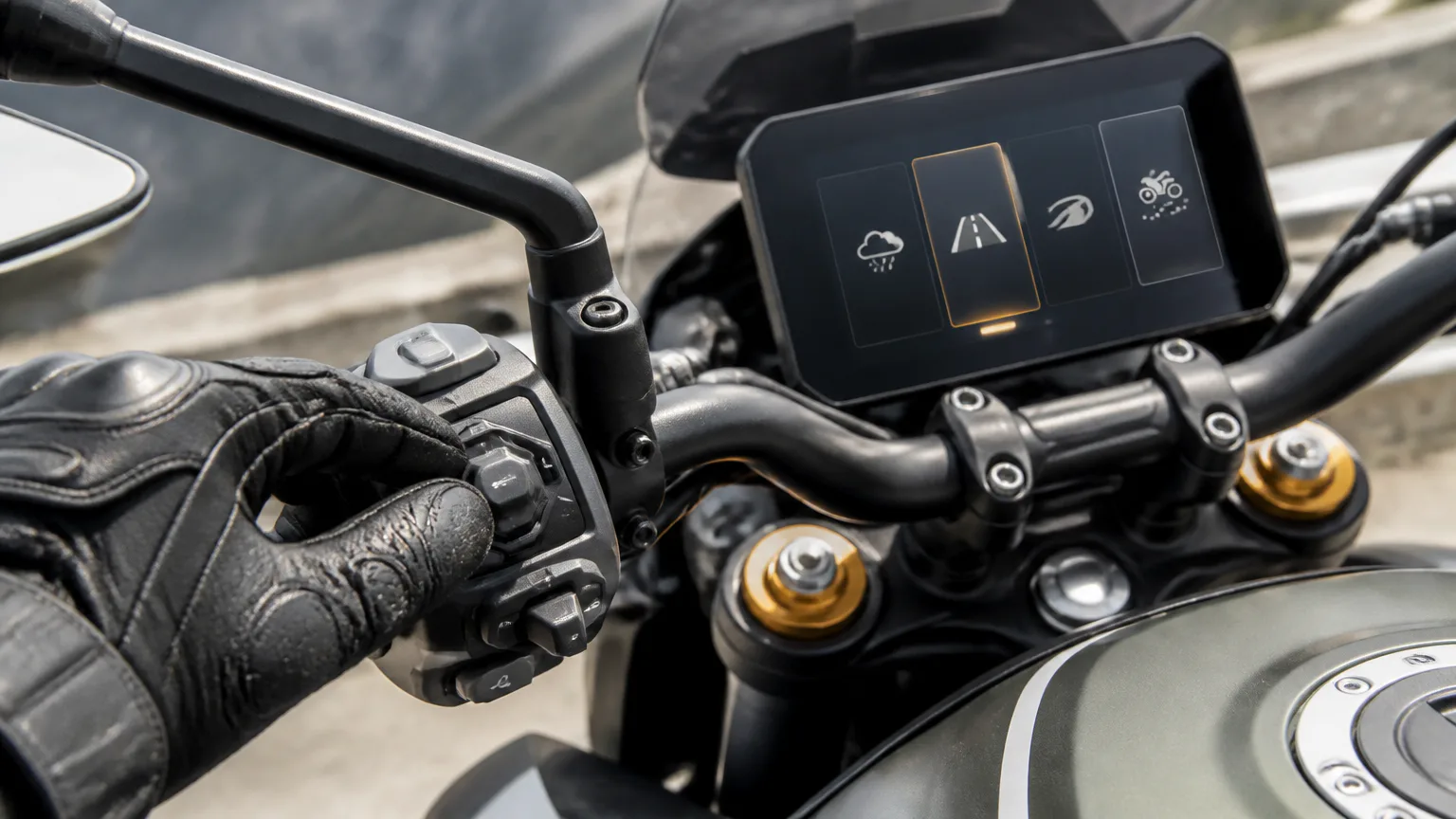
Controls differ by make and model, but most motorcycles use handlebar switches and an instrument-cluster menu. Many require the throttle to be fully closed before changing the traction-control level.
- Switch the ignition on while keeping the engine off or idling as the owner’s manual specifies.
- Close the throttle completely before selecting a different intervention level.
- Open the riding-mode or traction-control menu with the handlebar selector.
- Select Rain, Road, Sport, Off-Road or a numbered intervention level available on the motorcycle.
- Confirm the setting and wait for the instrument cluster to show that the change is active.
- Restore the street setting before returning to public roads if you used a lower level off-road or on a track.
Some motorcycles use a long press of the select or action button to reduce the level or disable the feature. Do not assume that a setting changed while stationary will remain active after the next ignition cycle; motorcycles differ in whether they retain or reset the selected mode.
FAQs
Does every motorcycle have traction control?
No. Some motorcycles do not offer traction control, while others include it only on certain trims or as an option. The feature may have a manufacturer-specific name, so check the motorcycle’s equipment list and dashboard symbols.
Because not every motorcycle has traction control, its availability may affect your buying decision, especially when you compare newer models with older or simpler machines. It should complement manageable power, comfortable ergonomics and a forgiving riding position, not replace riding experience. Consider all of these factors when you choose a first motorcycle for steady skill development.
Can traction control work without ride-by-wire?
Yes. A basic system can reduce torque through ignition timing, fuel interruption or other engine-control methods. Ride-by-wire adds electronic throttle adjustment for smoother, faster changes in torque.
What happens if the traction-control light flashes?
A flashing indicator usually means the system is actively reducing wheel spin. If it flashes repeatedly during normal acceleration, slow down and check the surface, tire condition and selected riding mode.
Conclusion
Motorcycle traction control detects rear-wheel slip and reduces engine torque before a loss of grip becomes a larger slide. Keep it enabled for normal street riding, choose a mode that matches the surface and treat intervention as assistance rather than a substitute for speed control and tire grip.

One Comment
Comments are closed.