Yamaha R9: 890cc Supersport Specs, Price and Riding
Disclaimer: Performance figures may vary depending on factors such as rider, road and weather conditions, vehicle condition, and testing methods. Figures are provided for informational purposes only.
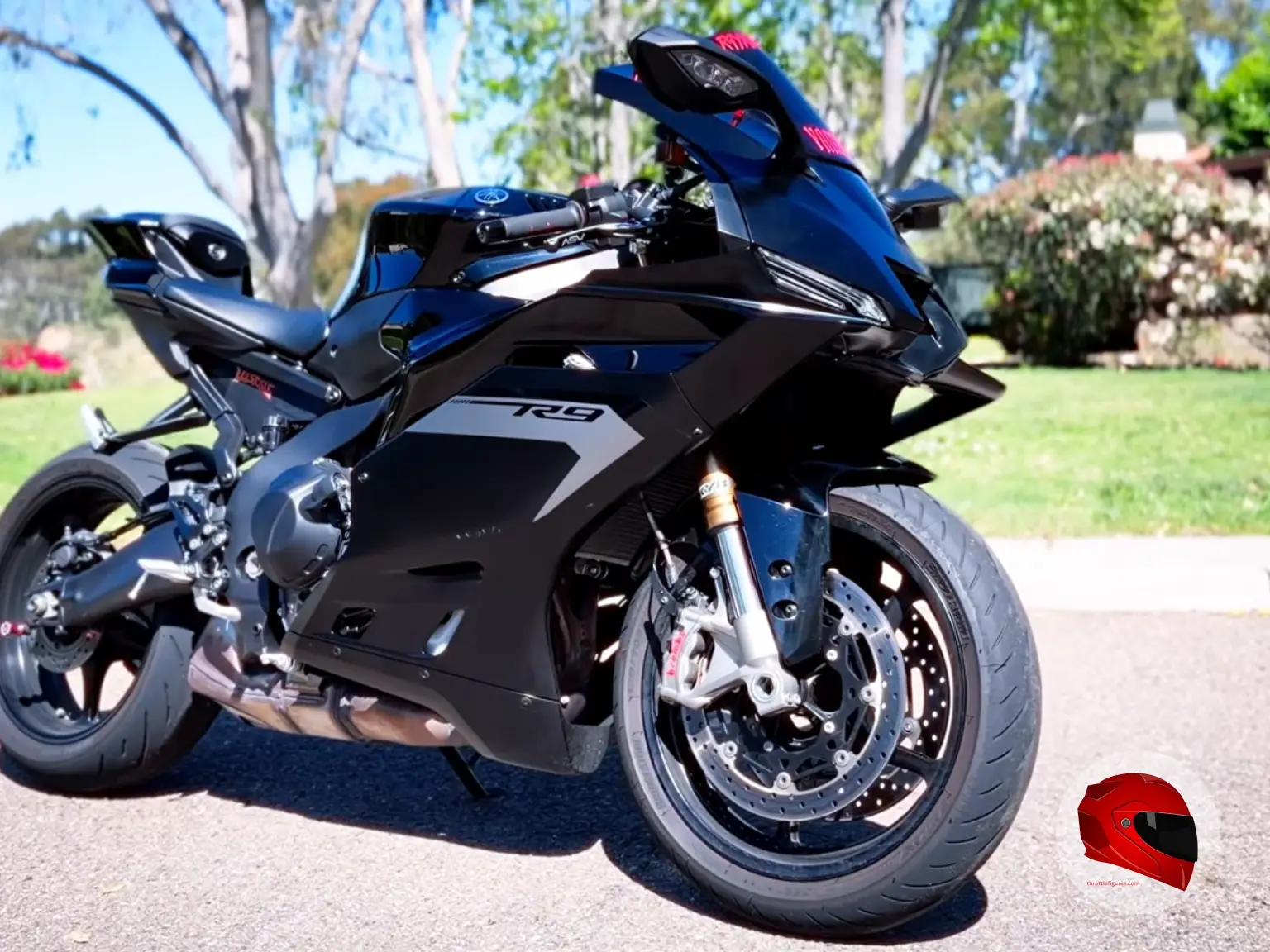
The Yamaha YZF-R9 brings an 890cc inline-three engine, a dedicated aluminum chassis and a full suite of electronic rider aids to the middleweight supersport class. Its 117.3 horsepower and 93 Nm of torque give it stronger road performance than the numbers alone suggest. Price, riding experience and intended use will determine whether it makes more sense than an R7, a used R6 or a larger R1.
Yamaha R9 Specifications and Price
|
Category |
Attribute |
Specification |
|---|---|---|
|
General |
Manufacturer |
Yamaha Motor Company |
|
General |
Production |
2025–present |
|
General |
Class |
Sport bike |
|
Engine & Powertrain |
Engine |
890cc liquid-cooled DOHC inline-three (CP3) |
|
Engine & Powertrain |
Bore × stroke |
78 × 62.1 mm |
|
Engine & Powertrain |
Compression ratio |
11.5:1 |
|
Engine & Powertrain |
Power |
117.3 hp at 10,000 rpm |
|
Engine & Powertrain |
Torque |
93 Nm (69 lb-ft) at 7,000 rpm |
|
Engine & Powertrain |
Transmission |
Six-speed constant-mesh |
|
Engine & Powertrain |
Clutch |
Assist-and-slipper wet multiplate |
|
Engine & Powertrain |
Final drive |
Chain |
|
Chassis & Suspension |
Frame |
Deltabox aluminum alloy |
|
Chassis & Suspension |
Front suspension |
43mm fully adjustable KYB inverted fork |
|
Chassis & Suspension |
Rear suspension |
KYB monoshock |
|
Brakes |
Front brakes |
ABS: Dual 320mm discs, Brembo Stylema calipers |
|
Brakes |
Rear brake |
ABS: 220mm hydraulic disc |
|
Geometry & Dimensions |
Rake |
22.6° |
|
Geometry & Dimensions |
Trail |
94 mm (3.7 in) |
|
Geometry & Dimensions |
Wheelbase |
1,420 mm (55.9 in) |
|
Geometry & Dimensions |
Length × width |
2,070 × 705 × 1,180 mm (81.5 × 27.8 × 46.5 in) |
|
Geometry & Dimensions |
Seat height |
32.7 in / 830 mm) |
|
Geometry & Dimensions |
Wet weight |
195 kg (430 lb) |
|
Capacities |
Fuel capacity |
14 L (3.7 US gal) |
|
Tires |
Front tire |
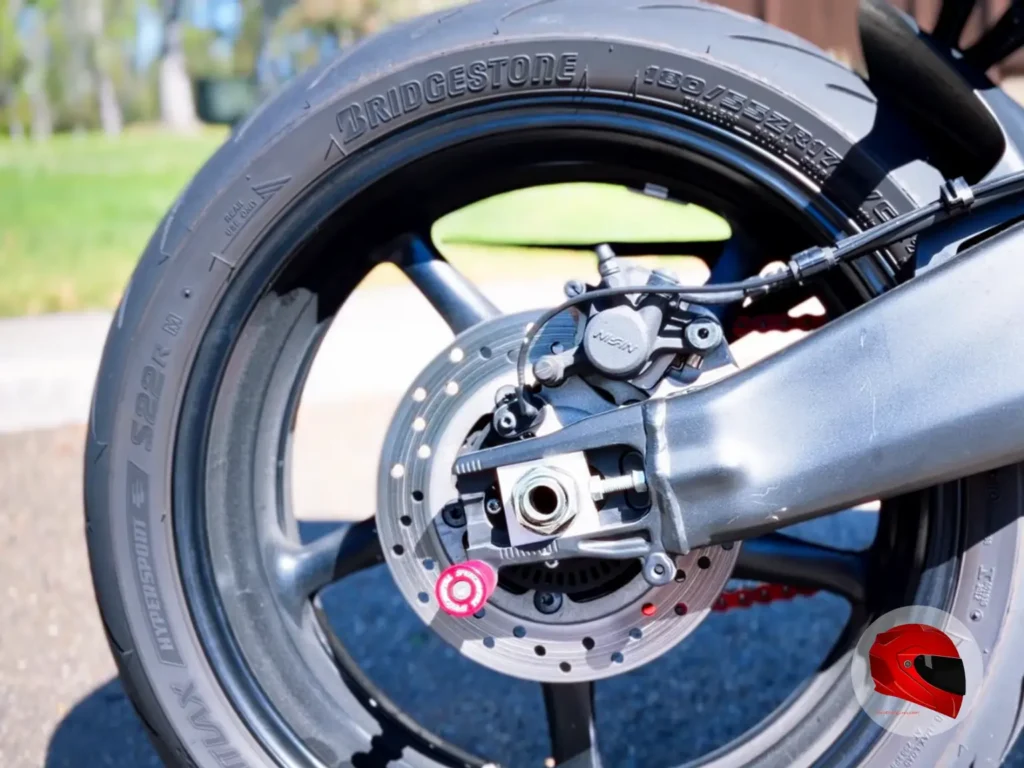
120/70ZR17 Bridgestone Battlax Hypersport S22F |
|
Tires |
Rear tire |
180/55ZR17 Bridgestone Battlax Hypersport S22R |
|
Pricing & Warranty |
Starting MSRP |
$12,499 |
|
Pricing & Warranty |
Destination charge |
$700 |
|
Pricing & Warranty |
70th Anniversary Edition MSRP |
$12,899 |
|
Pricing & Warranty |
Factory warranty |
1 year, unlimited miles |
What Makes the CP3 Engine Different
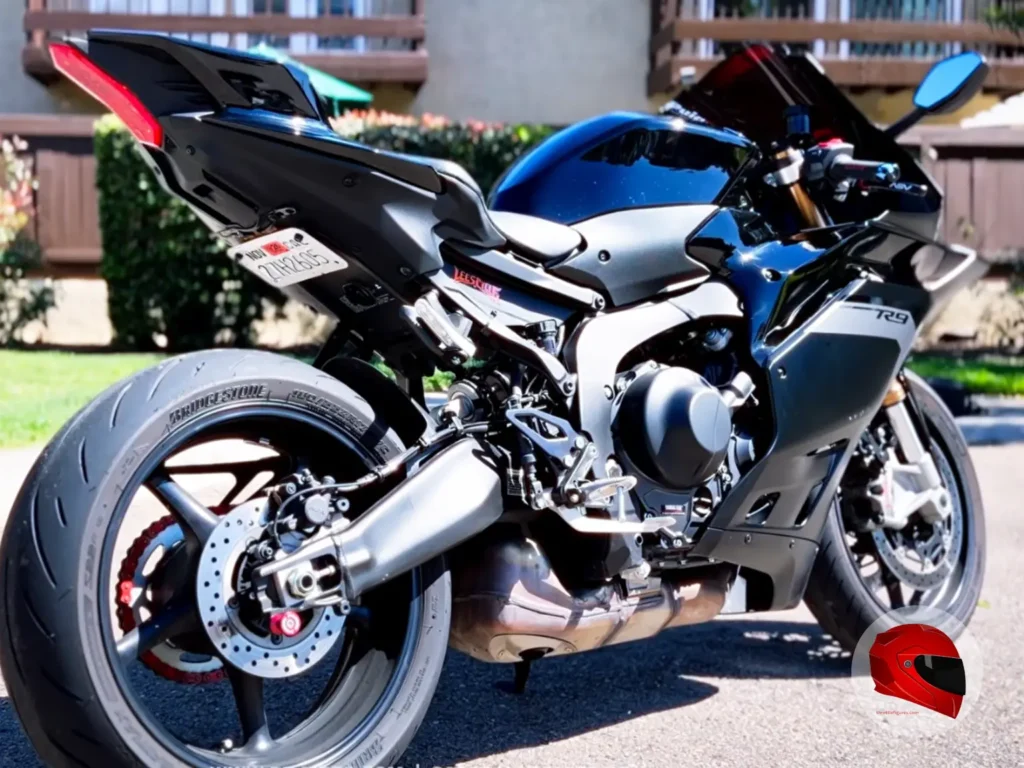
The R9 uses Yamaha’s CP3 890cc liquid-cooled inline-three, the same basic engine family found in the Yamaha MT-09. Its 78mm bore, 62.1mm stroke and 11.5:1 compression ratio produce 117.3 horsepower at 10,000 rpm and 93 Nm of torque at 7,000 rpm. With estimated fuel economy of 48 mpg.
An inline-three has a broader, more flexible character than a small parallel twin while taking up less space than a four-cylinder liter-bike engine. Because peak torque arrives well below peak horsepower, the R9 feels strong on public roads without requiring constant high-rpm riding.
The six-speed constant-mesh transmission uses an assist-and-slipper wet clutch. The slipper mechanism helps control rear-wheel chatter during aggressive downshifts, while the CP3 engine delivers usable drive in urban traffic and on the highway.
Handling, Brakes, and Suspension
The R9 is more than an MT-09 with fairings. Yamaha gives it a dedicated Deltabox aluminum alloy frame, supersport geometry, R-Series aerodynamics and a forward riding position. Its 22.6-degree rake, 94mm trail and 1,420mm wheelbase support quick direction changes without making fast road riding feel nervous. Both wheels have ABS brakes.
Suspension hardware consists of a fully adjustable 43mm KYB inverted fork and a KYB rear monoshock. Rider weight, tire choice, luggage and track use can all call for different settings. Set the suspension sag before making damping adjustments.
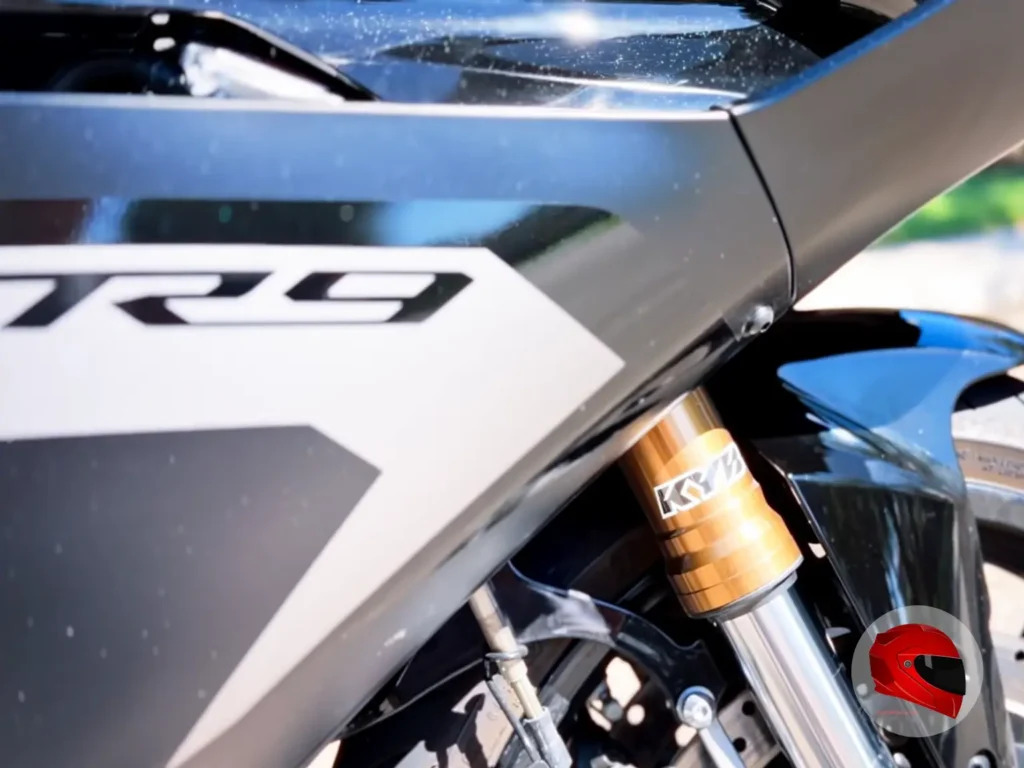
Braking hardware is substantial for a middleweight motorcycle. Dual 320mm front discs use Brembo Stylema calipers, a Brembo radial master cylinder and stainless steel brake lines. A 220mm hydraulic rear disc controls the rear wheel during braking and low-speed maneuvering.
Electronic Rider Aids and Display
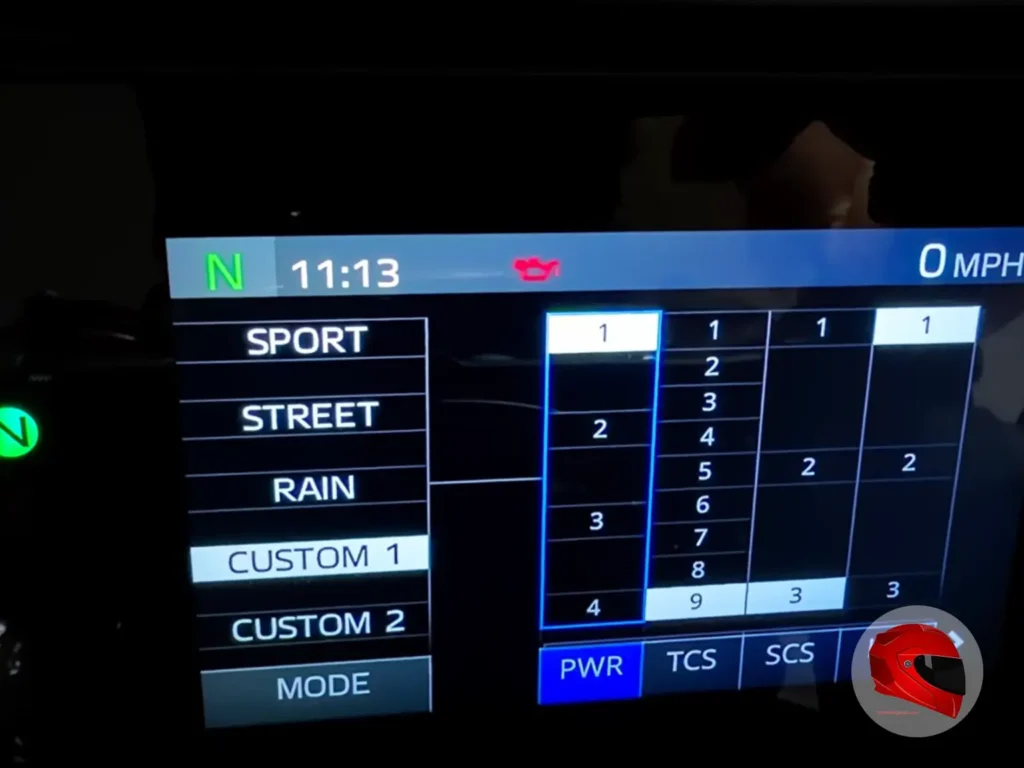
An IMU-based electronics package manages the R9’s power during acceleration, cornering and braking. Riders can adjust the level of intervention for conditions such as wet roads, or reduce it as their skills and tire grip improve.
Traction Control System: nine modes
- 6-axis IMU
- Lean-sensitive traction control
- Slide control
- Lift control
- Brake control
- Engine-brake management
- Yamaha Ride Control
- Riding modes
- Quickshifter
- Cruise control
- Cornering ABS
Slide Control System: three modes
Lift Control System: three modes
Brake Control System: IMU-based electronic braking control
Riding modes: engine and intervention settings for different conditions
Display: color TFT instrumentation
Connectivity: smartphone-linked functions and navigation support
These systems can reduce the effects of abrupt throttle inputs, wheel lift, rear-tire slip and braking mistakes. They cannot replace traction, judgment or training. Learn the settings in a controlled environment rather than treating maximum intervention as protection against excessive speed.
Street and Track Performance
The R9’s road manners come from the CP3 engine’s torque delivery and the motorcycle’s manageable 195kg wet weight. Its full fairing and R-Series aerodynamic treatment reduce wind exposure at speed. The 831mm seat and committed riding position still require the physical fit associated with a supersport.
For track days, the adjustable KYB suspension, Brembo front brakes, slipper clutch and corner-sensitive electronics provide a capable starting point. The R9 can run at a serious pace without the constant high-rpm commitment of the R6. Track use still calls for suspension setup, tire checks, brake inspections and proper protective equipment.
Acceleration and top speed depend on gearing, rider position, conditions, elevation and testing method. No single official production-bike top-speed figure is established for the R9. Compared with the R7, the R9 has a larger engine and higher output. The R6 remains a high-revving supersport with a different power delivery.
Is the R9 Suitable for Beginners?
The R9 is not a suitable first motorcycle for most new riders. Its 117.3 horsepower, 93 Nm of torque, responsive geometry and forward riding position can overwhelm someone who is still learning clutch control, emergency braking, corner entry and throttle discipline.
Traction control, slide control, lift control and brake control add a margin for error, but they cannot prevent every crash. New riders should build their skills on a smaller, lighter motorcycle and complete a recognized rider-training course before considering an R9.
Experienced riders moving up from a smaller motorcycle should consider their time on bikes with comparable power, their ability to manage the high seat and their control at low speeds. Smooth riding should come from technique, not from relying on electronic intervention to correct mistakes.
Yamaha R9 Price and Ownership Costs
|
Cost item |
Amount |
|---|---|
|
Estimated out-the-door range |
$14,000–$15,500 |
|
Factory warranty |
1 year, unlimited miles |
Dealer documentation, preparation, freight adjustments, sales tax, registration, title charges and local government fees can raise the final transaction above the advertised price. Include those costs when budgeting for insurance, financing, equipment, maintenance and tires.
Insurance rates vary with age, location, riding history, coverage limits, deductible, storage and claim history. Financing adds interest and lender charges, so compare the annual percentage rate and total repayment instead of looking only at the monthly payment.
Set aside money for a certified helmet, motorcycle jacket, gloves, riding pants, boots, security equipment, scheduled maintenance and replacement tires.
Where to Buy a Yamaha R9
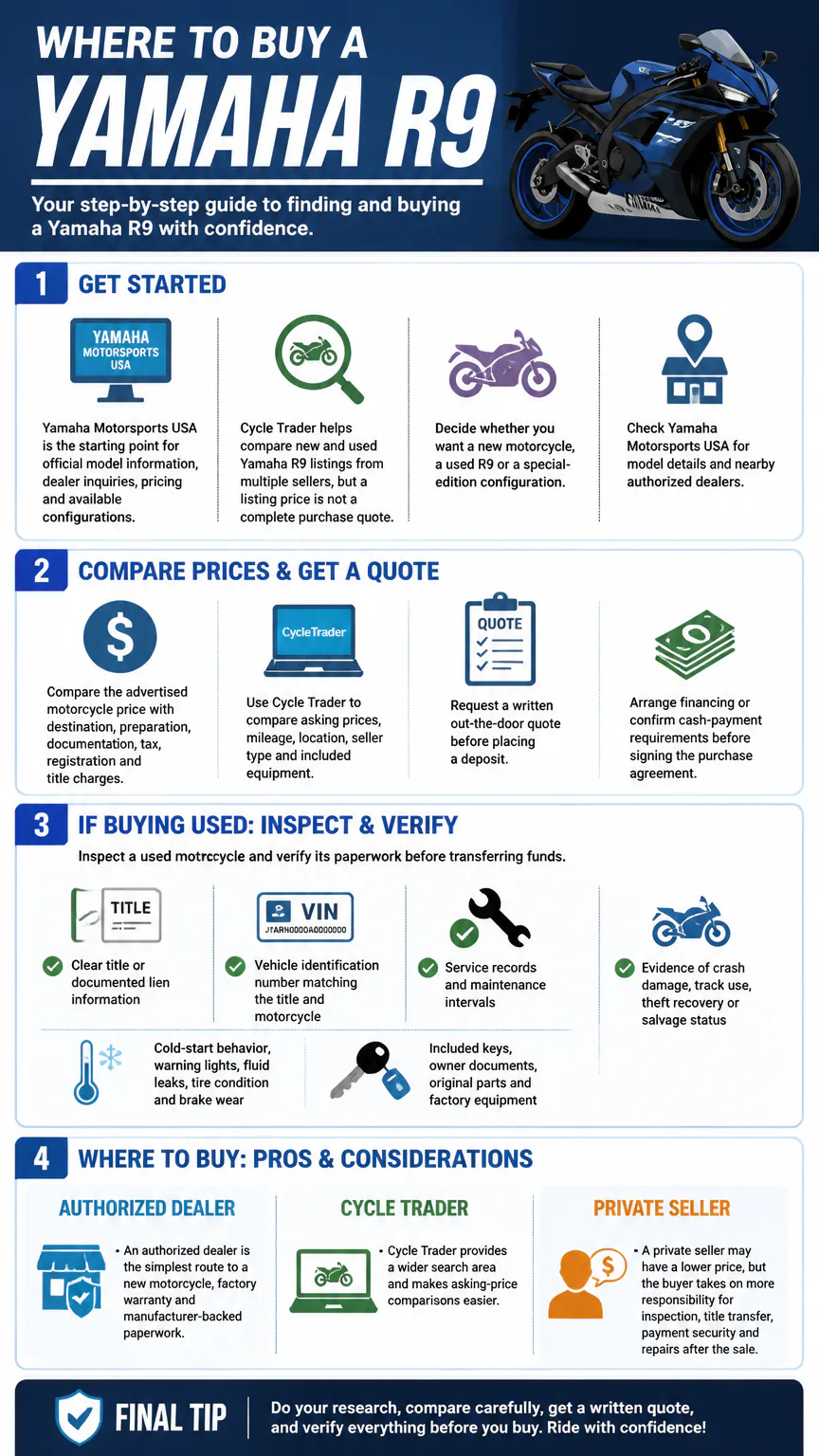
Yamaha Motorsports USA is the starting point for official model information, dealer inquiries, pricing and available configurations. Cycle Trader helps compare new and used Yamaha R9 listings from multiple sellers, but a listing price is not a complete purchase quote.
Decide whether you want a new motorcycle, a used R9 or a special-edition configuration.
Check Yamaha Motorsports USA for model details and nearby authorized dealers.
Compare the advertised motorcycle price with destination, preparation, documentation, tax, registration and title charges.
Use Cycle Trader to compare asking prices, mileage, location, seller type and included equipment.
Request a written out-the-door quote before placing a deposit.
Arrange financing or confirm cash-payment requirements before signing the purchase agreement.
Inspect a used motorcycle and verify its paperwork before transferring funds.
Clear title or documented lien information
Vehicle identification number matching the title and motorcycle
Service records and maintenance intervals
Evidence of crash damage, track use, theft recovery or salvage status
Cold-start behavior, warning lights, fluid leaks, tire condition and brake wear
Included keys, owner documents, original parts and factory equipment
An authorized dealer is the simplest route to a new motorcycle, factory warranty and manufacturer-backed paperwork. Cycle Trader provides a wider search area and makes asking-price comparisons easier. A private seller may have a lower price, but the buyer takes on more responsibility for inspection, title transfer, payment security and repairs after the sale.
Yamaha R9 Versus R6 and R7
The R9 occupies the middleweight supersport position previously associated with Yamaha’s YZF-R6, but its engine does not reproduce the R6’s high-revving four-cylinder character. The R9 reaches peak torque at 7,000 rpm and produces 117.3 horsepower at 10,000 rpm, giving it a more accessible powerband for street riding. The R6 suits riders who enjoy carrying revs and working the gearbox.
The Yamaha YZF-R7 is the more approachable entry into Yamaha’s fully faired sport-bike range. Its smaller-displacement twin-cylinder engine produces less performance than the R9, which can make it less demanding for developing riders and less expensive to operate. The R9 adds stronger acceleration, a more advanced chassis and a broader electronics package.
The Yamaha YZF-R1 remains Yamaha’s liter-class performance benchmark. Its speed and track capability come with higher purchase, insurance, tire and operating costs. The R9 is a better fit for riders who want serious performance without moving directly to a liter bike.
Yamaha R9 Buying Verdict
The R9 suits experienced street riders who want supersport ergonomics, strong middleweight performance, modern electronics and credible track-day hardware. Its CP3 engine is more flexible than the R6’s high-rpm approach, while the dedicated Deltabox chassis gives it a sharper foundation than a basic naked-bike conversion.
Choose the R7 if you are still developing road skills or want a less powerful motorcycle. Choose an R6 if high-revving four-cylinder character and used-bike availability matter most. Consider the R1 only when liter-class performance is an intentional requirement rather than simply the next step above the R9.
Include destination, preparation, documentation, tax, registration, title charges, insurance, financing and riding gear in the budget. Sit on the motorcycle in your intended riding gear to check the 831mm seat height and forward riding position. Before paying for a used R9, match the VIN to the title and motorcycle, review the service history, inspect for crash damage and confirm that any lien has been released.
FAQs
Is the R9 faster than the R6?
The R9 has a small peak-horsepower advantage at 117.3 hp and substantially stronger usable torque. The R6’s high-revving engine can remain highly competitive at the top end, so outright speed depends on gearing, conditions, rider position and whether the comparison takes place on the street or track.
How fast does the Yamaha R9 go?
No single official production-bike top-speed figure is established for the R9. Actual speed varies with rider size, aerodynamic tuck, gearing, wind, elevation, tires and electronic settings.
Is the R9 faster than the R7?
Yes. The R9’s 890cc inline-three produces 117.3 horsepower and 93 Nm of torque, giving it a clear performance advantage over the smaller-displacement R7. The R7 remains less demanding for riders who prefer manageable power and a lower entry point.
What is the Yamaha R9 0-60 time?
About 3.0 to 3.2 seconds based on Independent/tested figures. 0 – 60 depends on Launch technique, rider weight, traction, tire condition, surface, wind, temperature, gearing and testing method all affect the result.
What is the Yamaha R9 price in 2026?
The 2026 Yamaha R9 starts at $12,499 in the United States, before the $700 destination charge and local taxes and fees. The 70th Anniversary Edition starts at $12,899, while the estimated out-the-door range is $14,000 to $15,500.
Has Yamaha announced a 2027 R9?
Check Yamaha Motorsports USA or an authorized Yamaha dealer for 2027 Yamaha R9 availability, specifications and pricing when the model is officially announced.
Conclusion
The Yamaha R9 is a strong choice for experienced riders who want a street-usable supersport with serious track potential. Price the complete transaction, check the fit and compare the R9 with the R7, R6 and R1 based on your skill level and intended use before signing a purchase agreement.

3 Comments
Comments are closed.