
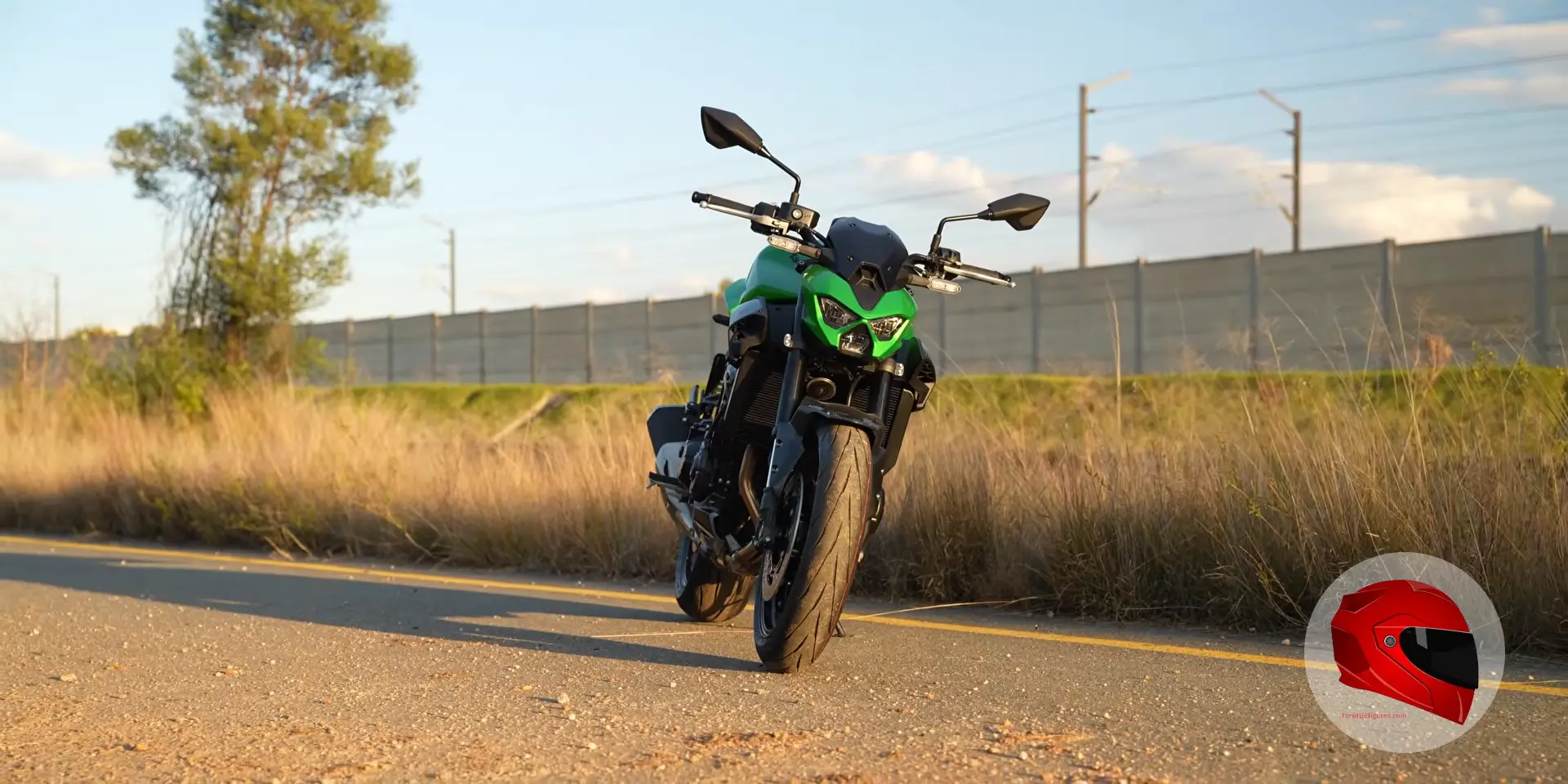
Kawasaki Z900: 2026 Specs, Price, Performance & SE Comparison
Disclaimer: Performance figures may vary depending on factors such as rider, road and weather conditions, vehicle condition, and testing methods. Figures are provided for informational purposes only.
The 2026 Kawasaki Z900 gives riders liter-class character in a manageable naked-bike package. Both U.S. trims use the same 948cc inline-four and produce the same output, so the main buying decision is whether the Z900 SE’s upgraded suspension and braking justify its higher price. Price, curb weight, seat height, riding position and ownership costs will determine which version fits your garage.
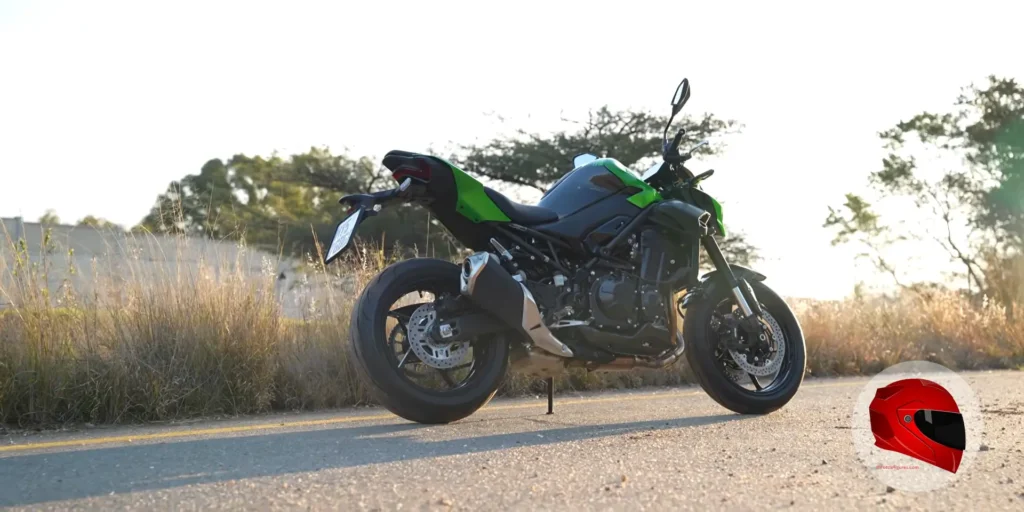
Kawasaki Z900 Specs and Pricing
| Specification | Kawasaki Z900 ABS | Kawasaki Z900 SE ABS |
|---|---|---|
| 2026 U.S. MSRP | $9,999 | $11,999 |
| Destination charge | $840 | $840 |
| Engine | 948cc liquid-cooled DOHC inline-four | 948cc liquid-cooled DOHC inline-four |
| Power | 123.0 hp at 9,500 rpm | 123.0 hp at 9,500 rpm |
| Torque | 98.6 Nm at 7,700 rpm | 98.6 Nm at 7,700 rpm |
| Transmission | 6-speed manual; assist-and-slipper clutch | 6-speed manual; assist-and-slipper clutch |
| Top speed | 157 mph | 157 mph |
| Front brakes | Dual 300mm discs | Brembo M4.32 radial monobloc calipers |
| Rear shock | Adjustable gas-charged shock | Öhlins S46 gas-charged shock |
| Seat height | 31.9 in | 31.9 in |
| Fuel capacity | 4.5 U.S. gal | 4.5 U.S. gal |
| Quickshifter | Dual-direction | Dual-direction |
| Electronic rider aids | IMU ABS, KTRC, KCMF, power modes, ride modes, cruise control | IMU ABS, KTRC, KCMF, power modes, ride modes, cruise control |
Kawasaki Z900 ABS
The Kawasaki Z900 ABS costs $9,999 before the $840 destination charge, taxes, registration, assembly and dealer fees. Its 948cc liquid-cooled, four-stroke, 16-valve DOHC inline-four produces 123.0 horsepower at 9,500 rpm and 98.6 Nm of torque at 7,700 rpm.
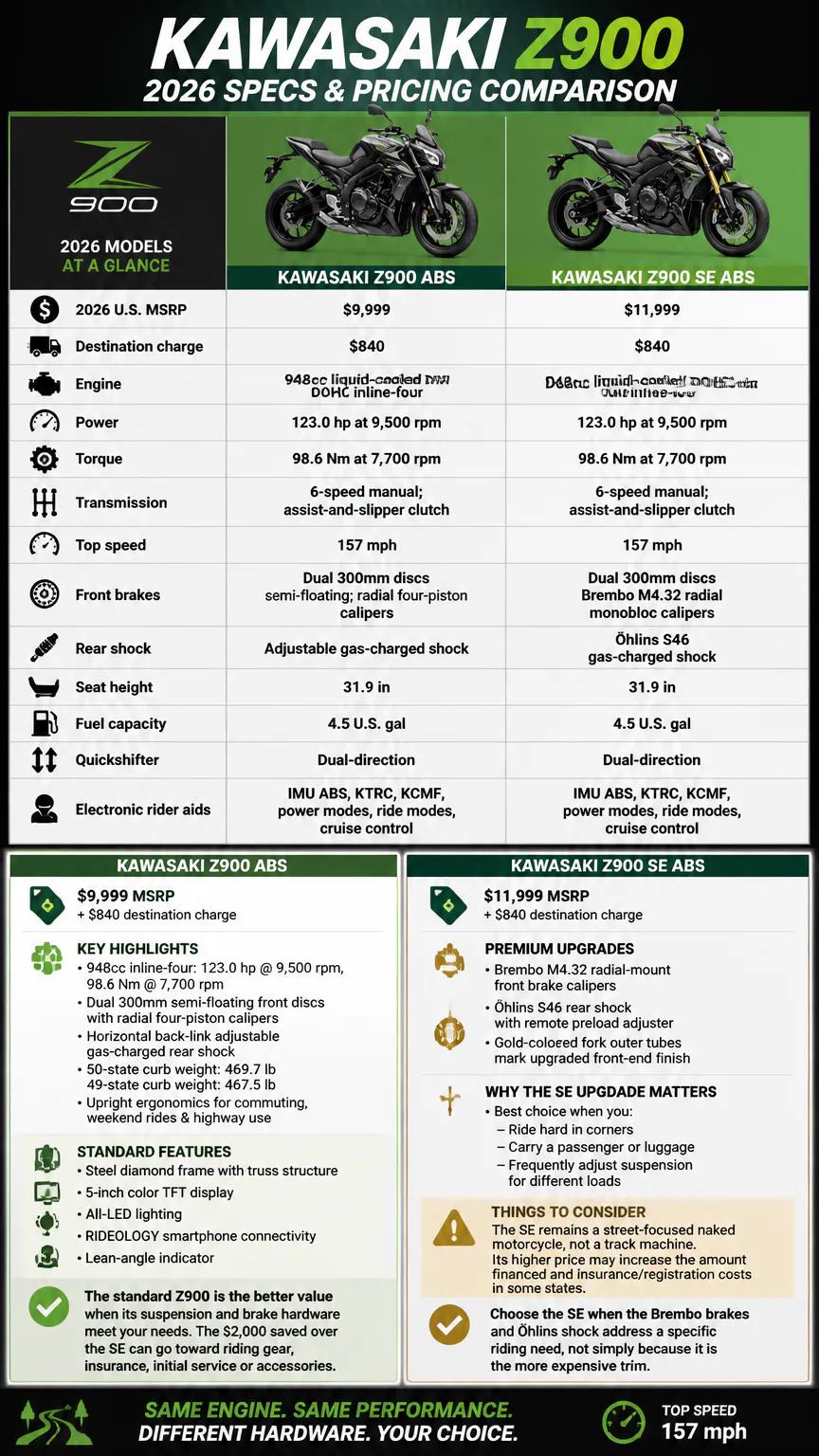
The standard model uses dual 300mm semi-floating front discs with radial four-piston calipers and a horizontal back-link adjustable gas-charged rear shock. Its 50-state curb weight is 469.7 pounds; the 49-state specification is 467.5 pounds. With a 31.9-inch seat and upright ergonomics, the Z900 suits commuting, weekend rides and regular highway use.
- Steel diamond frame with truss structure
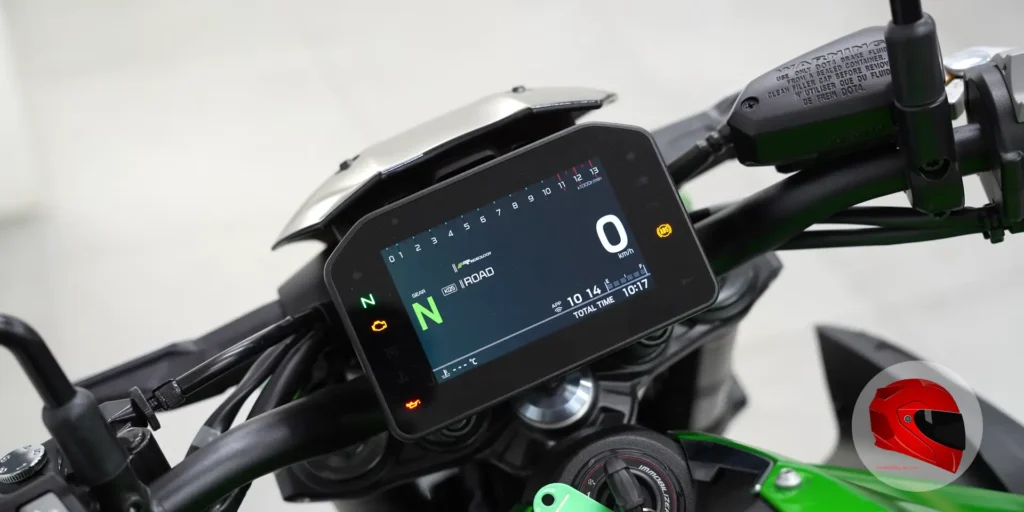
- 5-inch color TFT display
- All-LED lighting
- RIDEOLOGY smartphone connectivity
- Lean-angle indicator
The standard Z900 is the better value when its suspension and brake hardware meet your needs. The $2,000 saved over the SE can go toward riding gear, insurance, initial service or accessories.
Kawasaki Z900 SE ABS
The Kawasaki Z900 SE ABS costs $11,999 before the same $840 destination charge and local purchase costs. It shares the standard model’s engine, output, transmission, electronic rider aids, seat height and fuel capacity. The premium pays for upgraded chassis equipment rather than more horsepower.
The SE replaces the standard front calipers with Brembo M4.32 radial-mount units and adds an Öhlins S46 rear shock with a remote preload adjuster. Gold-colored fork outer tubes mark the upgraded front-end finish. These changes matter most when you ride hard in corners, carry a passenger or luggage, or frequently adjust the suspension for different loads.
The SE remains a street-focused naked motorcycle rather than a dedicated track machine. Its higher price also increases the amount financed and may raise insurance and registration costs in some states. Choose it when the Brembo brakes and Öhlins shock address a specific riding need, not simply because it is the more expensive trim.
Kawasaki Z900RS and Yamaha MT-09 essentials
The Kawasaki Z900 sits between traditional middleweight naked bikes and larger performance motorcycles. The Kawasaki Z900RS uses the same broad engine family but has different styling, bodywork, riding position and suspension character. It is a separate choice for buyers who prefer classic Z1-inspired design.
The Yamaha MT-09 is a close alternative with an 890cc inline-three engine, while the KTM 990 Duke uses a 990cc parallel-twin. Those engine layouts produce different throttle response, sound, vibration and corner-exit behavior. Compare seat reach, dealer support, insurance quotes and test-ride comfort rather than judging the bikes by displacement alone.
For a new Z900, an authorized Kawasaki dealership is the most direct route to factory warranty support, financing, trade-ins and registration assistance. Cycle Trader can help locate dealer and private listings across the United States. Facebook Marketplace may turn up local used bikes, but private purchases require careful checks of title status, liens, service records and mechanical condition.
How the Z900 performs on the street
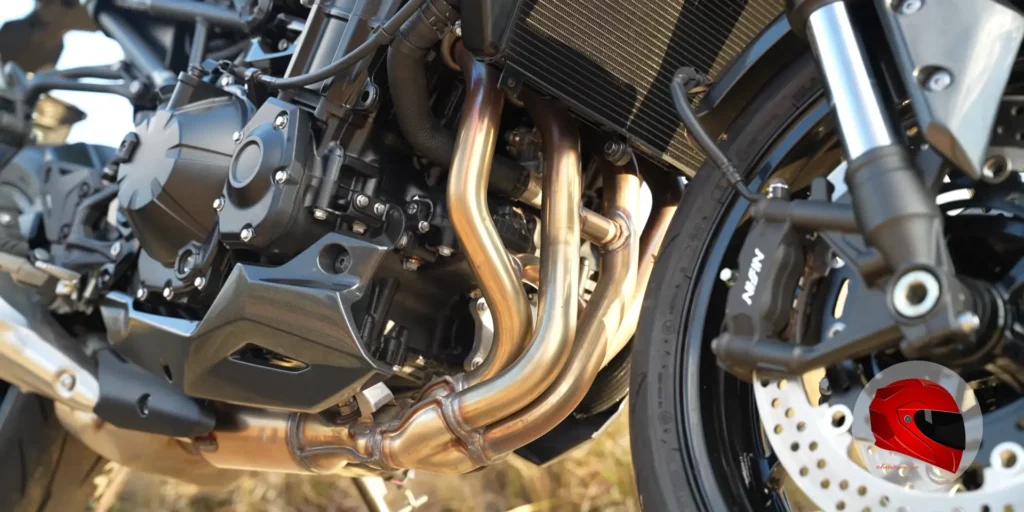
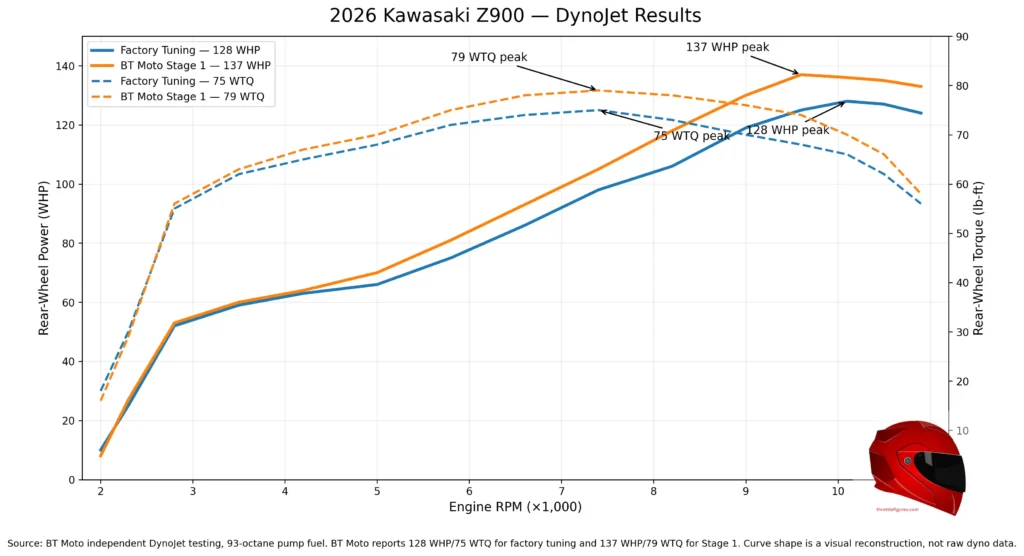
The 948cc inline-four defines the Z900’s character. It delivers smooth low- and midrange response in traffic, then builds stronger acceleration as engine speed rises. With 123.0 horsepower, the bike has substantial passing power without the abrupt response that some larger high-performance motorcycles can deliver.
The stated 157-mph top speed puts the Z900 firmly in the fast-bike category, although public-road riding should never approach that figure. Its useful performance is the acceleration available at normal highway speeds, stable cruising and quick direction changes on winding roads. Exact 0-60 mph times vary with the rider, surface, temperature, launch technique and testing equipment.
Electronic support includes IMU-enhanced ABS, Kawasaki Cornering Management Function, Kawasaki Traction Control, integrated riding modes, power modes and electronic cruise control. The dual-direction quickshifter reduces clutch use during acceleration and downshifts. The SE’s Brembo front brakes and Öhlins rear shock provide the clearest hardware advantage during repeated hard braking and aggressive cornering.
The Z900 feels especially strong during everyday overtakes and out of corners, where throttle response matters more than a single launch figure. Still, 0-60 times offer a consistent way to compare how street bikes turn power, gearing and traction into acceleration when tested under similar conditions. motorcycle 0-60 rankings adds useful context to the Z900’s individual performance figures.
Z900 comfort and everyday usability
The 31.9-inch seat height is accessible for a performance-oriented naked motorcycle, although seat width and suspension sag also affect how easily a rider reaches the ground. The upright riding position keeps the torso forward enough for control without creating a supersport-style crouch. A 17-liter, or 4.5-gallon, tank supports commuting and longer rides between fuel stops.
- City riding: The inline-four runs smoothly, and the upright bars provide good low-speed control.
- Highway riding: Cruise control reduces fatigue, but the naked design leaves the rider exposed to wind.
- Two-up use: The engine has adequate performance for a passenger, while rear preload adjustment helps accommodate the added weight.
- Longer trips: A touring screen, luggage and a more supportive seat can improve comfort.
- Low-speed handling: The 469.7-pound 50-state curb weight is manageable once moving but noticeable during parking maneuvers.
The standard rear shock is sufficient for everyday riding when correctly adjusted. The SE suits riders who regularly change loads or want more precise control over rear suspension behavior.
What it costs to own a Z900
The $9,999 standard MSRP is not the full purchase price. Adding the $840 destination charge brings the pre-tax base to $10,839. A new-bike out-the-door total commonly reaches $12,000 to $13,500 before regional variation, dealer charges, sales tax, title and registration.
- Insurance: Premiums depend on location, age, riding history, coverage limits, deductible and motorcycle experience.
- Registration: State title and registration charges vary by jurisdiction and may depend on vehicle value or engine size.
- Service: Plan for scheduled oil and filter changes, inspections, fluid replacement and valve-clearance service at the intervals in the owner’s manual.
- Chain care: Clean, lubricate and adjust the chain regularly, especially after rain or dirty-road riding.
- Tires and brakes: Replacement timing depends on mileage, riding style, load, road surfaces and compound.
- Gear: A helmet, riding jacket, gloves, pants and boots are separate costs that belong in the purchase budget.
Financing lowers the immediate payment but increases total spending through interest. Compare the amount financed after the down payment, annual percentage rate, loan term and optional products instead of comparing monthly payments alone.
The purchase price is only the start of a Z900 budget. Insurance, fuel, tires, servicing, registration, and occasional chain or brake work all add to the annual cost. Looking at these recurring expenses gives a clearer picture than the MSRP alone, while a broader breakdown of motorcycle ownership costs puts the Z900’s running costs in context.
Where to buy a Kawasaki Z900
A Kawasaki dealership is the most direct option for a new 2026 motorcycle. The dealer can arrange financing, accept a trade-in, complete state paperwork and provide factory warranty service. Ask for an itemized buyer’s order that separates MSRP, destination, assembly, documentation, accessories, taxes and registration.
- Decide whether the standard ABS or SE ABS equipment matches your riding and budget.
- Obtain insurance quotes before signing a purchase agreement.
- Compare the complete out-the-door price, not just the advertised MSRP.
- Review the financing rate, term, down payment and total repayment amount.
- Confirm the vehicle identification number, warranty documents, title process and delivery condition.
Cycle Trader is useful for comparing dealer inventory and finding new or used Z900 motorcycles outside your immediate area. Facebook Marketplace may offer lower asking prices, but inspect the motorcycle in daylight, verify that the seller’s identification matches the title, check for an outstanding lien and arrange a motorcycle-specific inspection before exchanging funds.
- Signed title without unexplained alterations
- Vehicle identification number matching the title and motorcycle
- Service records and ownership history
- Cold-start inspection and test ride
- Written bill of sale and confirmed payment method
Every state requires a motorcycle endorsement or Class M license to ride a Z900 legally on public roads. Permit rules, approved training courses, skills tests, insurance filings and registration procedures vary by state, so complete the applicable requirements before riding away.
A new Z900 comes with a factory warranty, a known service history and the latest equipment. A used bike may cost less after depreciation, leaving more room in the budget for riding gear or accessories, but check its mileage, accident history, tires and maintenance records carefully. These are the main points to weigh in a new versus used motorcycle decision, especially when comparing dealer inventory with private-sale listings.
Is the Kawasaki Z900 worth buying?
The Z900 suits riders who want an inline-four engine, upright ergonomics, modern electronics and enough performance for spirited street riding. The standard ABS model offers the clearest value because it retains the full engine and electronics package at a lower initial price.
The SE earns its premium when braking feel, suspension adjustment, passenger-load control or aggressive cornering are regular parts of your riding. It is less compelling as a city commuter and weekend highway bike, where the standard equipment already covers those needs.
New riders should approach the Z900 with respect. It is physically manageable and electronically supported, but 123 horsepower and a 157-mph top-speed rating exceed what many beginners need while they develop throttle, braking and cornering skills. Formal motorcycle training and a conservative riding environment matter more than choosing the cheaper trim.
FAQs
How much fuel economy does the Z900 get?
Fuel economy varies with speed, traffic, rider weight, throttle use, tire condition and maintenance. The 4.5-gallon tank provides practical range, but no single mileage figure applies to every U.S. riding situation.
Does the Kawasaki Z900 have cruise control?
Yes. The 2026 U.S. Z900 ABS and Z900 SE ABS include electronic cruise control as part of their rider-aid package.
What license is required to ride a Z900?
A motorcycle endorsement or standalone Class M license is required for legal public-road operation in every U.S. state. Each state sets its own training options, permit rules and testing requirements.
Is the Z900 a good first motorcycle?
The Z900 is manageable in size but powerful for a beginner motorcycle. New riders are better served by completing formal training and gaining experience on a lower-powered motorcycle before moving to a 123-horsepower naked bike.
Conclusion
Choose the 2026 Kawasaki Z900 ABS for the best balance of price, performance and equipment. Choose the Z900 SE ABS when Brembo brakes and Öhlins suspension offer a clear benefit for your riding; both trims share the same engine and electronic performance package.

2 Comments