Honda Gold Wing: Guide & Key Facts
Disclaimer: Performance figures may vary depending on factors such as rider, road and weather conditions, vehicle condition, and testing methods. Figures are provided for informational purposes only.
The 2026 Honda Gold Wing is a full-size luxury touring motorcycle built for two-up comfort, substantial luggage, highway stability and modern electronics. Choosing the right version depends less on engine output than on luggage capacity, transmission, passenger equipment, purchase condition and financing. Its 1,833 cc flat-six produces about 125 horsepower and 125 lb-ft of torque, while its size makes low-speed handling and ownership costs important considerations.
Honda Gold Wing Profile and Specifications
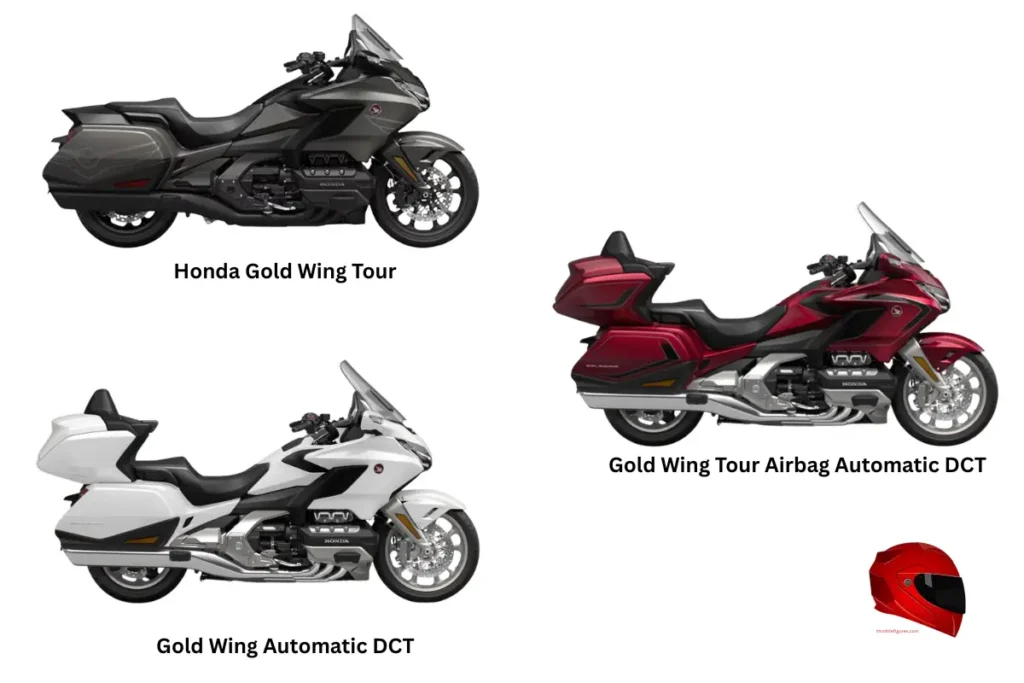
The current Gold Wing range differs mainly in body style, transmission, luggage and passenger equipment. Dealer, marketplace and financing resources are covered in the buying section below.
| Model | Transmission | Luggage and equipment | Best fit |
|---|---|---|---|
| Gold Wing | 6-speed manual | Bagger-style body with integrated side luggage | Solo riders and buyers who prefer manual control |
| Gold Wing Tour | 6-speed manual | Touring body with passenger top trunk and expanded luggage | Two-up touring with manual shifting |
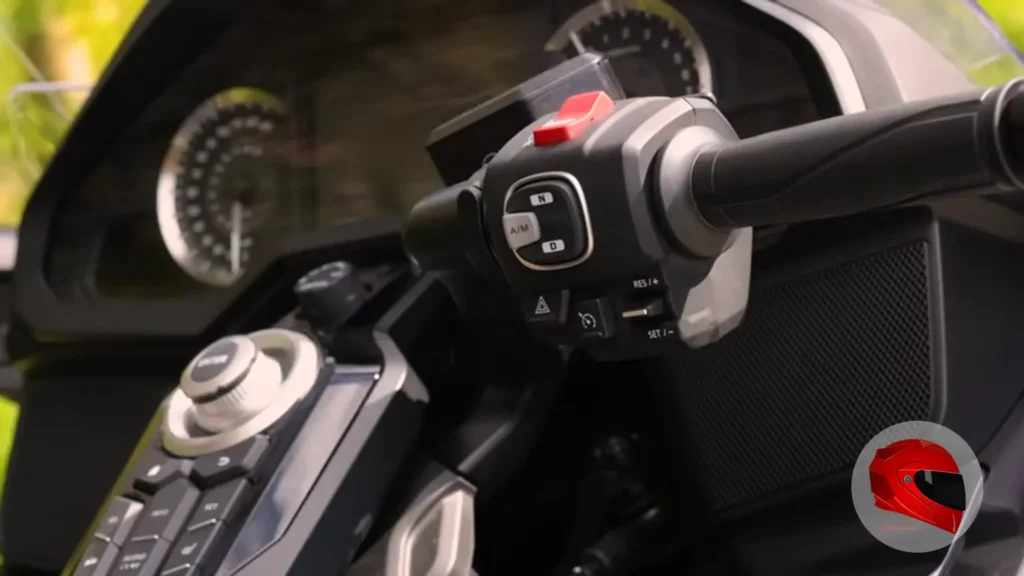
| Gold Wing Tour DCT | 7-speed automatic DCT | Tour luggage, reverse and walking mode | Two-up touring with automatic shifting |
| Gold Wing Tour Airbag DCT | 7-speed automatic DCT | Tour equipment and airbag configuration where offered | Buyers prioritizing the available airbag configuration |
Requirements and context
Every current Gold Wing uses the same basic 1,833 cc liquid-cooled horizontally opposed six-cylinder engine, shaft final drive, 5.5-gallon fuel tank and electronic touring platform. The main differences are the body style, passenger equipment, luggage and transmission.
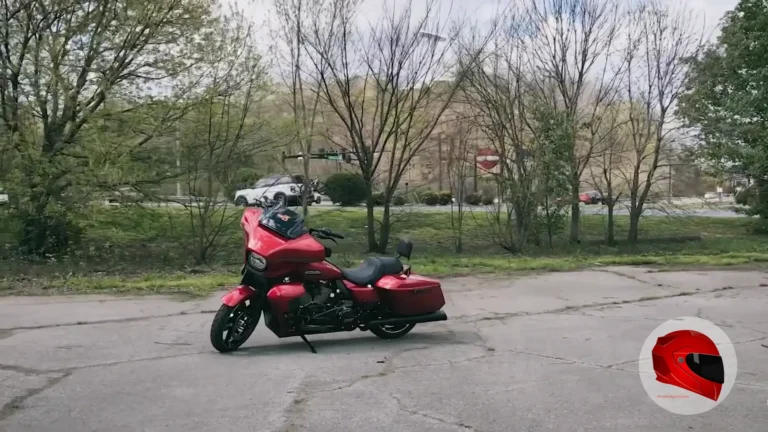
- Gold Wing: The bagger-style version has integrated side luggage and a lower, cleaner rear profile.
- Gold Wing Tour: It adds a large passenger top trunk and more long-distance carrying capacity.
- Gold Wing Tour DCT: It combines the Tour body and luggage with Honda’s seven-speed automatic Dual-Clutch Transmission.
- Gold Wing Tour Airbag DCT: Where offered, this version adds the airbag-equipped configuration to the Tour luggage and DCT system.
All versions are large motorcycles. The 29.3-inch seat height suits many riders, but the roughly 800-pound curb weight calls for deliberate foot placement and careful parking. A motorcycle endorsement, compliant helmet, protective equipment, insurance, registration and suitable storage are all part of ownership.
Honda Powersports dealers sell new and inspected used motorcycles. Facebook Marketplace supports local private-party purchases, while Cycle Trader provides a nationwide inventory search. Honda Financial Services offers Honda motorcycle financing over 36-60 months, with the APR based on credit tier
2026 Gold Wing models and prices
The 2026 US range starts with the streamlined Gold Wing and extends to the better-equipped Tour models. The manual Gold Wing starts at $25,500, before the typical $775 destination charge. The Gold Wing DCT starts at $26,800, the Gold Wing Tour manual costs approximately $28,500, and the Gold Wing Tour DCT costs approximately $30,500, all before destination and other charges.
- Gold Wing manual: Six-speed transmission with overdrive and electric reverse; $25,500 starting MSRP.
- Gold Wing DCT: Seven-speed automatic transmission with reverse and walking mode; $26,800 starting MSRP.
- Gold Wing Tour manual: Adds the large top trunk and passenger-oriented touring equipment; approximately $28,500 starting MSRP.
- Gold Wing Tour DCT: Combines the Tour luggage package with automatic shifting; approximately $30,500 starting MSRP.
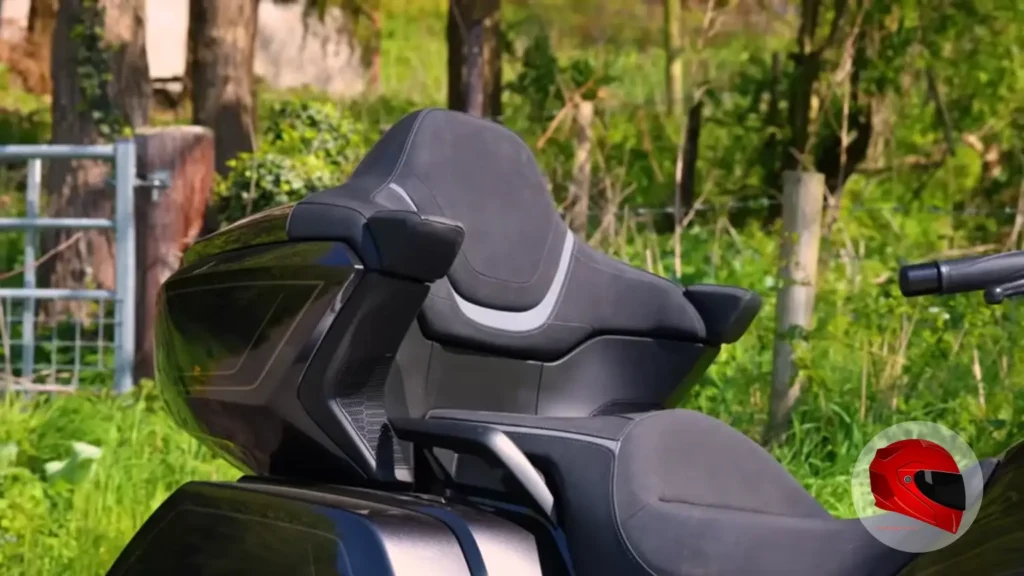
The Tour’s trunk is the clearest reason to spend more. It creates a more useful two-up touring layout and adds storage, while the bagger has a lighter visual profile for solo riders or couples who pack carefully. Anniversary editions and accessories can push the price above the standard trim.
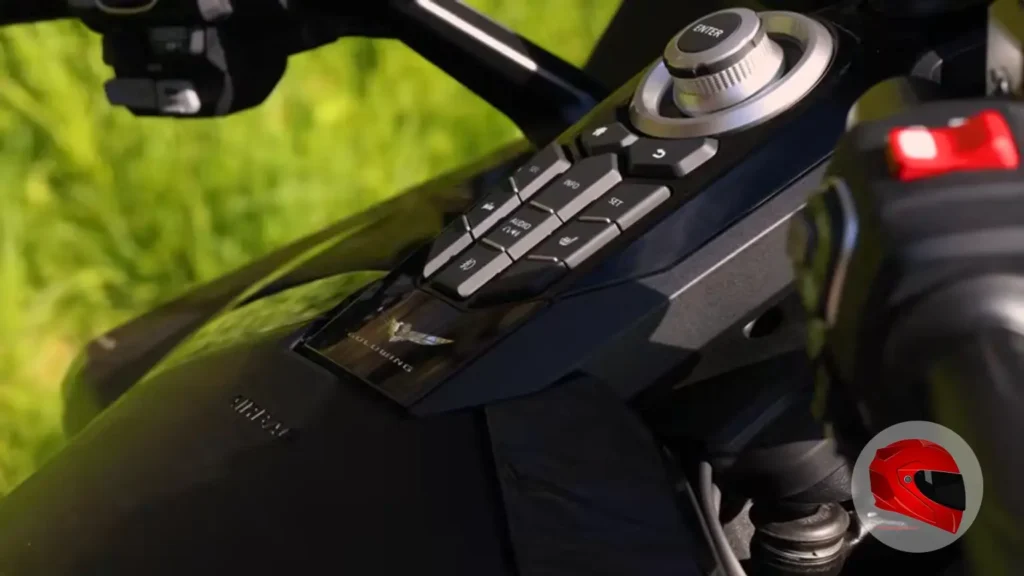
Core engine and chassis specifications
The Gold Wing’s current engine displaces 1,833 cc and uses a 73.0 mm bore and 73.0 mm stroke, a 10.5:1 compression ratio, Unicam SOHC valve gear, four valves per cylinder, and programmed fuel injection with a 50 mm throttle body. Its smooth, strong low-rev power suits a fully loaded touring motorcycle.
- Output: About 125 horsepower and 125 lb-ft of torque.
- Transmission: Six-speed manual or seven-speed DCT.
- Final drive: Shaft.
- Wheelbase: 66.9 inches.
- Seat height: 29.3 inches.
- Fuel capacity: 5.5 US gallons.
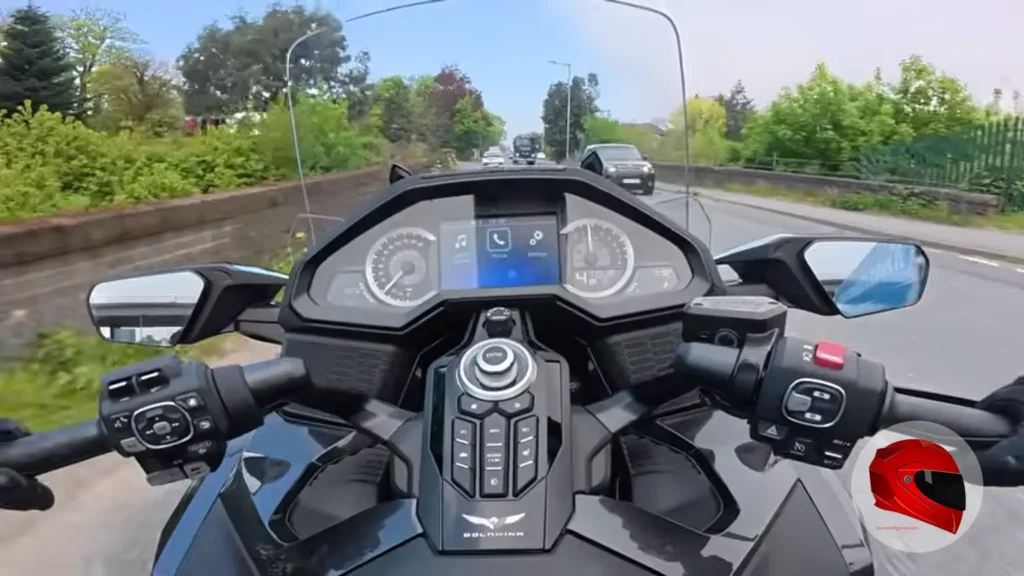
- Display: Seven-inch color TFT.
- Riding modes: Tour, Sport, Econ and Rain.
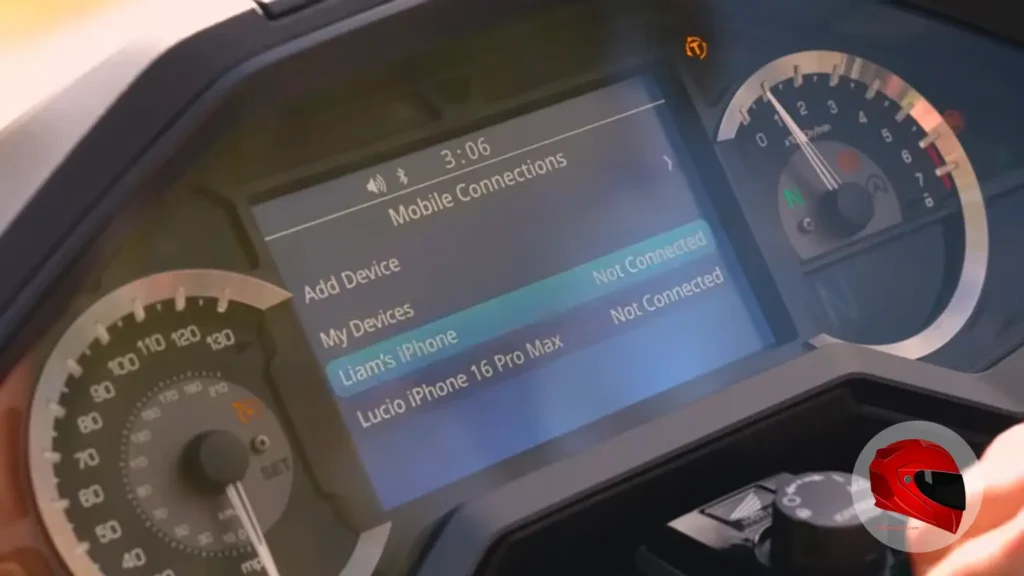
Combined ABS, Honda Selectable Torque Control, Hill Start Assist and Throttle By Wire are standard on the modern platform. Wireless Apple CarPlay and Android Auto add navigation, music and communication functions through a compatible phone.
What the Gold Wing is like to ride
At highway speed, the Gold Wing feels exceptionally composed. The flat-six engine is refined, the shaft drive needs little routine attention, and the fairing and windscreen provide the weather protection expected from a luxury touring motorcycle. The rider gets a supportive seat for long days, while Tour versions give the passenger a broad seat, substantial foot support and a backrest.
Low-speed maneuvering takes more planning. The low center of gravity helps, but the motorcycle remains wide and heavy when turning around, backing into a space or balancing on uneven ground. The manual model has electric reverse; the DCT adds reverse and walking mode, reducing the effort required during parking maneuvers.
Performance is strong rather than sport-bike sharp. A properly launched Gold Wing reaches 60 mph in roughly 3.4 seconds, with a top speed of about 125 mph. That is enough for quick highway passing, but the motorcycle’s real strengths are smooth acceleration, stability and long-distance comfort.
Gold Wing generations worth considering
The 2018-present GL1800 is the strongest used choice for buyers who want the current aluminum-frame platform, modern electronics, Apple CarPlay, selectable riding modes and the 1,833 cc six-cylinder engine. Early examples can offer substantial savings, but condition, service history, tires, battery health and previous accessories matter more than a small difference in model year.
The 2001-2017 GL1800 feels larger and heavier than the current generation but remains a capable long-distance motorcycle. It can be attractive on the used market because parts knowledge and touring accessories are widespread. Before buying, inspect the reverse system, suspension, brakes, cooling system, electrical accessories and timing-belt service history.
The 1988-2000 GL1500 delivers the classic Gold Wing experience with a 1,520 cc flat-six and substantial bodywork. It costs less to buy than a late-model GL1800, but age-related maintenance can be significant. A neglected GL1500 may need more mechanical work than its purchase price suggests, so incomplete records and deferred service warrant a conservative valuation.
There is no single universally bad Gold Wing year. The risky purchase is a motorcycle with unclear ownership, corrosion, accident damage, neglected fluids, worn suspension or electrical modifications. A documented motorcycle with careful maintenance is usually a better choice than a newer machine with an unknown history.
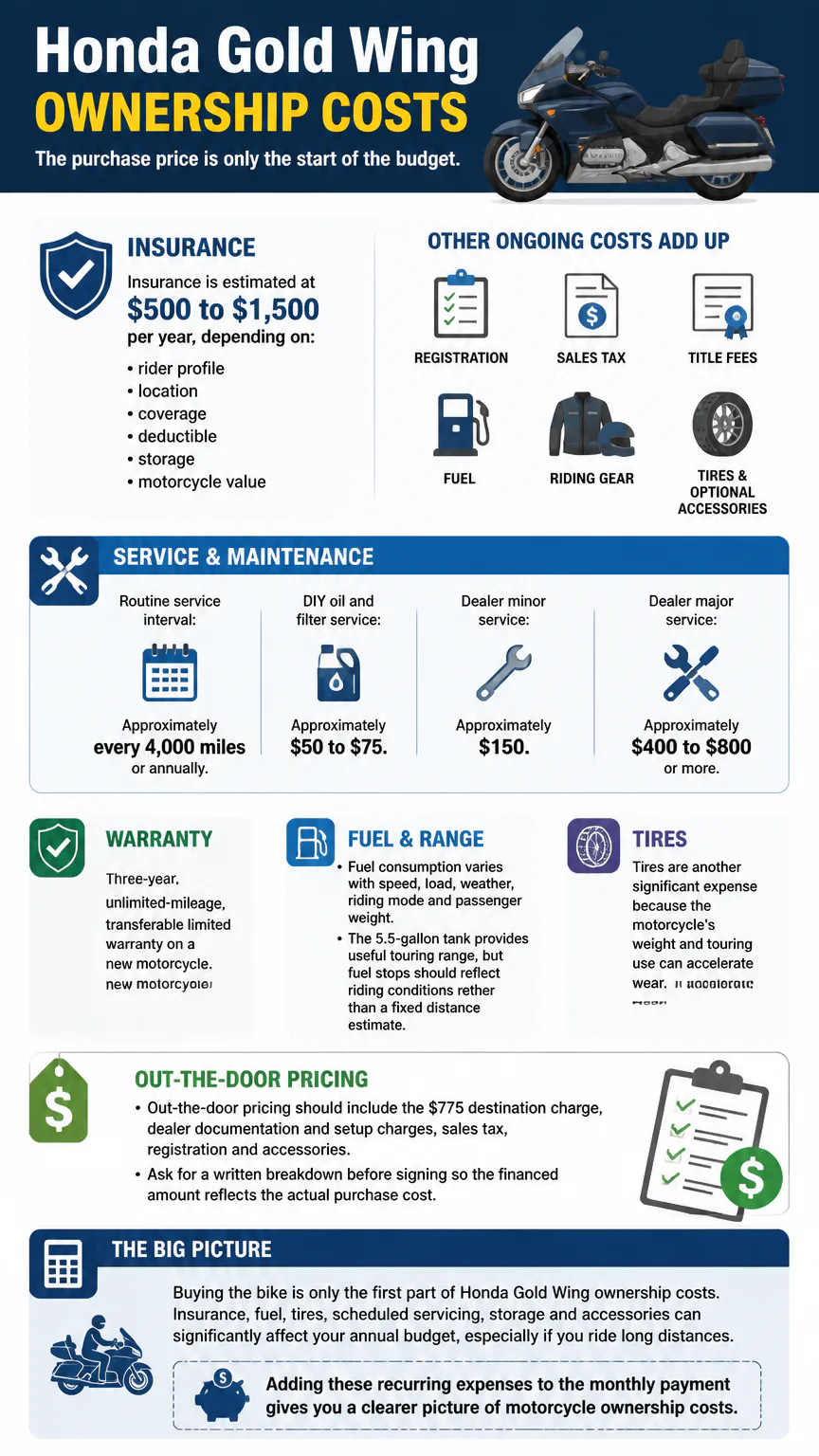
Honda Gold Wing ownership costs
The purchase price is only the start of the budget. Insurance is estimated at $500 to $1,500 per year, depending on rider profile, location, coverage, deductible, storage and motorcycle value. Registration, sales tax, title fees, fuel, riding gear, tires and optional accessories add to the total.
- Routine service interval: Approximately every 4,000 miles or annually.
- DIY oil and filter service: Approximately $50 to $75.
- Dealer minor service: Approximately $150.
- Dealer major service: Approximately $400 to $800 or more.
- Warranty: Three-year, unlimited-mileage, transferable limited warranty on a new motorcycle.
Fuel consumption varies with speed, load, weather, riding mode and passenger weight. The 5.5-gallon tank provides useful touring range, but fuel stops should reflect riding conditions rather than a fixed distance estimate. Tires are another significant expense because the motorcycle’s weight and touring use can accelerate wear.
Out-the-door pricing should include the $775 destination charge, dealer documentation and setup charges, sales tax, registration and accessories. Ask for a written breakdown before signing so the financed amount reflects the actual purchase cost.
Buying the bike is only the first part of Honda Gold Wing ownership costs. Insurance, fuel, tires, scheduled servicing, storage and accessories can significantly affect your annual budget, especially if you ride long distances. Adding these recurring expenses to the monthly payment gives you a clearer picture of motorcycle ownership costs.
How to choose the right Gold Wing
Start with how you plan to use the motorcycle. Someone who mostly rides alone and prefers a shorter rear profile may prefer the standard Gold Wing. Couples carrying luggage for several days will benefit from the Tour trunk, while riders who dislike clutch work or regularly deal with stop-and-go traffic may prefer the DCT.
- Choose the manual transmission if you want direct clutch and gear control.
- Choose the DCT if smooth automatic shifting and low-speed walking mode matter more than manual interaction.
- Choose the Tour if passenger comfort and luggage capacity are central to the purchase.
- Choose a used GL1800 if your budget favors modern equipment at a lower purchase price.
- Choose a GL1500 only after accounting for age-related repairs and a specialist inspection.
A useful test ride includes parking-lot turns, an incline stop, highway merging and passenger riding when available. Check the reach to the bars, windscreen, foot controls, reverse controls and infotainment functions before choosing an accessory package.
Honda Gold Wing history
Honda introduced the original GL1000 at the Cologne Motorcycle Show in October 1974. The 1974-1979 model used a 999 cc liquid-cooled SOHC flat-four and a five-speed manual transmission, establishing the engine layout and long-distance focus that later defined the family.
The GL1500 era ran from 1988 through 2000. Honda used the GL1800 designation from 2001 through 2017, then introduced the current generation in 2018. More than 640,000 Gold Wings have been sold. Production has included Japan and Marysville, Ohio, where US assembly ran from 1980 to 2010. Japanese production resumed in Kumamoto Prefecture in 2011.
This history matters to used buyers because the Gold Wing badge covers several substantially different motorcycles. Engine size, chassis design, electronics, luggage, suspension and maintenance needs vary widely between a GL1500, an early GL1800 and a current-generation Gold Wing.
FAQs
Why is the Honda Gold Wing so expensive?
The price reflects its large six-cylinder engine, extensive bodywork, integrated luggage, touring electronics, passenger equipment, advanced braking and control systems, and complex manufacturing. Dealer fees, destination charges, taxes and accessories raise the final amount above the advertised MSRP.
Can a Honda Gold Wing have a roof?
A factory 2026 Gold Wing is an open motorcycle and does not include a roof. Enclosed or roofed conversions are aftermarket projects that can change weight, handling, braking, aerodynamics, registration, insurance and warranty considerations.
Can a Honda Gold Wing be converted to a trike?
Yes, specialist conversion companies can convert some Gold Wing motorcycles to three-wheel configurations. The conversion adds cost and weight, changes handling and maintenance requirements, and should be assessed based on the kit, installer, title status, warranty and replacement-parts support.
What should I inspect on a used Honda Gold Wing?
Check the title, identification number, service records, cold start, fluid leaks, brakes, tires, suspension, steering-head feel, reverse operation, electrical accessories, body panels and luggage locks. A professional inspection is worthwhile when the motorcycle has high mileage, extensive modifications or incomplete records.
A clean appearance is no substitute for maintenance records on a used Honda Gold Wing. Check when the oil, filters, brake fluid, coolant, tires and other mileage-based items were last serviced, then compare those dates with the bike’s current odometer reading. Knowing how often to service a motorcycle can show whether an apparently affordable Gold Wing may soon need expensive catch-up work.
Is a Gold Wing suitable for a new motorcycle rider?
The low seat helps, but the Gold Wing’s size and weight make it demanding at walking pace and during parking maneuvers. New riders generally benefit from training and experience on a lighter motorcycle before moving to a fully loaded Gold Wing.
The Gold Wing is stable and its electronic aids make highway touring comfortable, but its size and weight can be challenging at stops and during parking-lot maneuvers. New riders should consider their strength, training, local roads and willingness to practice before choosing one, especially if the bike will handle both commuting and long-distance travel when you choose a first motorcycle.
Conclusion
The 2026 Honda Gold Wing is easiest to choose by use case: the standard model favors a cleaner bagger layout, the Tour favors two-up luggage capacity, and the DCT favors effortless shifting and low-speed control. For a used purchase, prioritize documented maintenance and a professional inspection over the lowest advertised price.