Highest Horsepower Motorcycles: The Most Powerful Bikes Ranked
Horsepower rankings are useful only when the figures are compared on equal terms. A track-only motorcycle can post a much higher number than a street-legal superbike, while crank horsepower, rear-wheel horsepower and metric PS ratings can make similar engines appear different. Road legality, track use, engine character, operating cost and the amount of performance you can use responsibly all matter when choosing among the highest horsepower motorcycles.
Highest-horsepower motorcycles compared
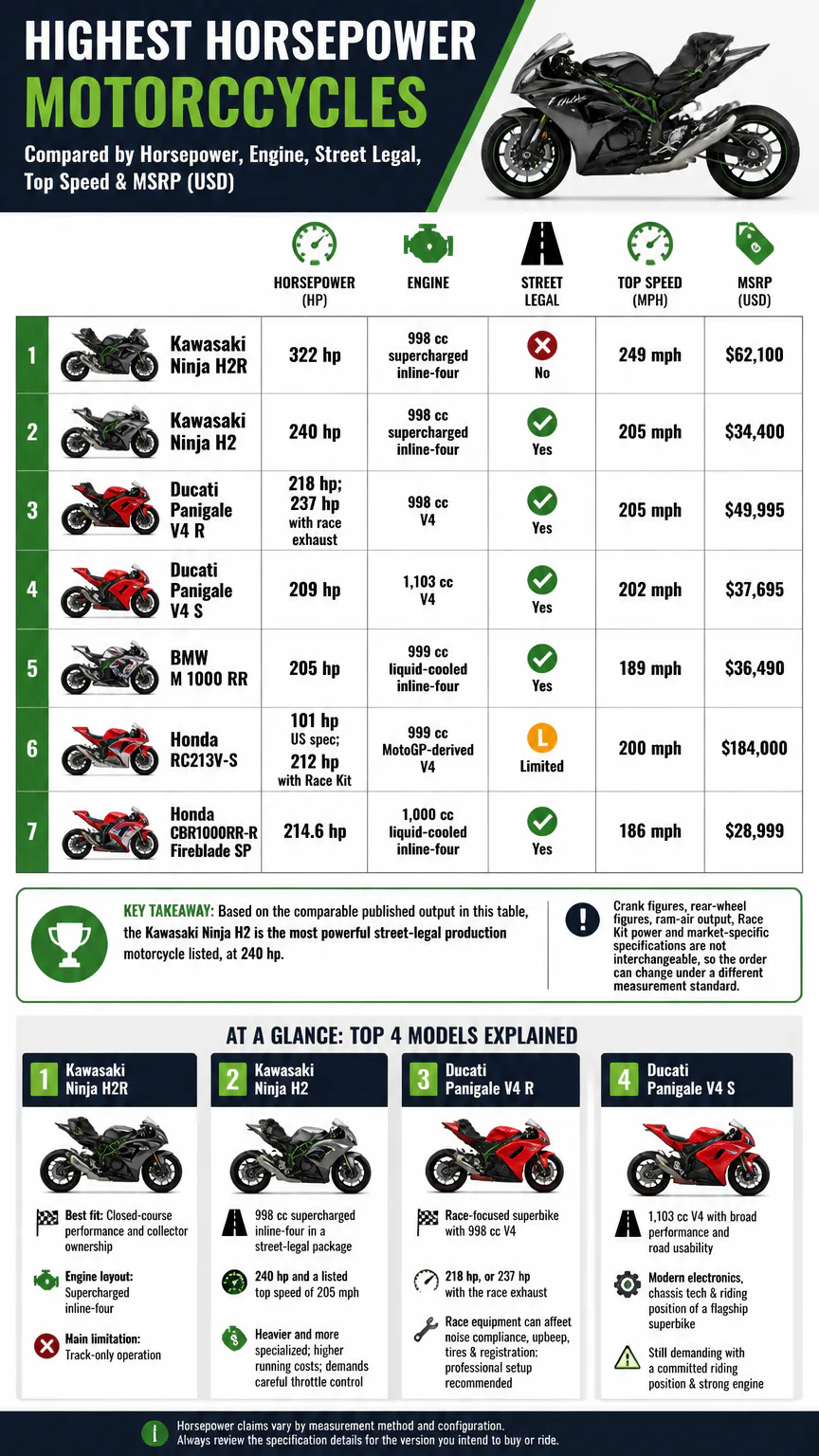
| Motorcycle | Horsepower | Engine | Street legal | Top speed | MSRP (USD) |
|---|---|---|---|---|---|
| Kawasaki Ninja H2R | 322 hp | 998 cc supercharged inline-four | No | 249 mph | $62,100 |
| Kawasaki Ninja H2 | 240 hp | 998 cc supercharged inline-four | Yes | 205 mph | $34,400 |
| Ducati Panigale V4 R | 218 hp; 237 hp with race exhaust | 998 cc V4 | Yes | 205 mph | $49,995 |
| Ducati Panigale V4 S | 209 hp | 1,103 cc V4 | Yes | 202 mph | $37,695 |
| BMW M 1000 RR | 205 hp | 999 cc liquid-cooled inline-four | Yes | 189 mph | $36,490 |
| Honda RC213V-S | 101 hp US spec; 212 hp with Race Kit | 999 cc MotoGP-derived V4 | Limited | 200 mph | $184,000 |
| Honda CBR1000RR-R Fireblade SP | 214.6 hp | 1,000 cc liquid-cooled inline-four | Yes | 186 mph | $28,999 |
Based on the comparable published output in this table, the Kawasaki Ninja H2 is the most powerful street-legal production motorcycle listed, at 240 hp. Crank figures, rear-wheel figures, ram-air output, Race Kit power and market-specific specifications are not interchangeable, so the order can change under a different measurement standard.
Kawasaki Ninja H2R
The Kawasaki Ninja H2R leads this group with 322 hp from a 998 cc supercharged inline-four. It is engineered for closed-course performance, where its extreme output and aerodynamic equipment can be used as intended.
The H2R lacks the equipment and approval required for ordinary public-road registration. Ownership therefore requires a track, transport arrangements, specialist maintenance and a realistic budget for tires and other consumables. Its headline output is not directly comparable with that of street motorcycles because the design is not constrained by road-equipment and emissions requirements.
- Best fit: Closed-course performance and collector ownership
- Engine layout: Supercharged inline-four
- Main limitation: Track-only operation
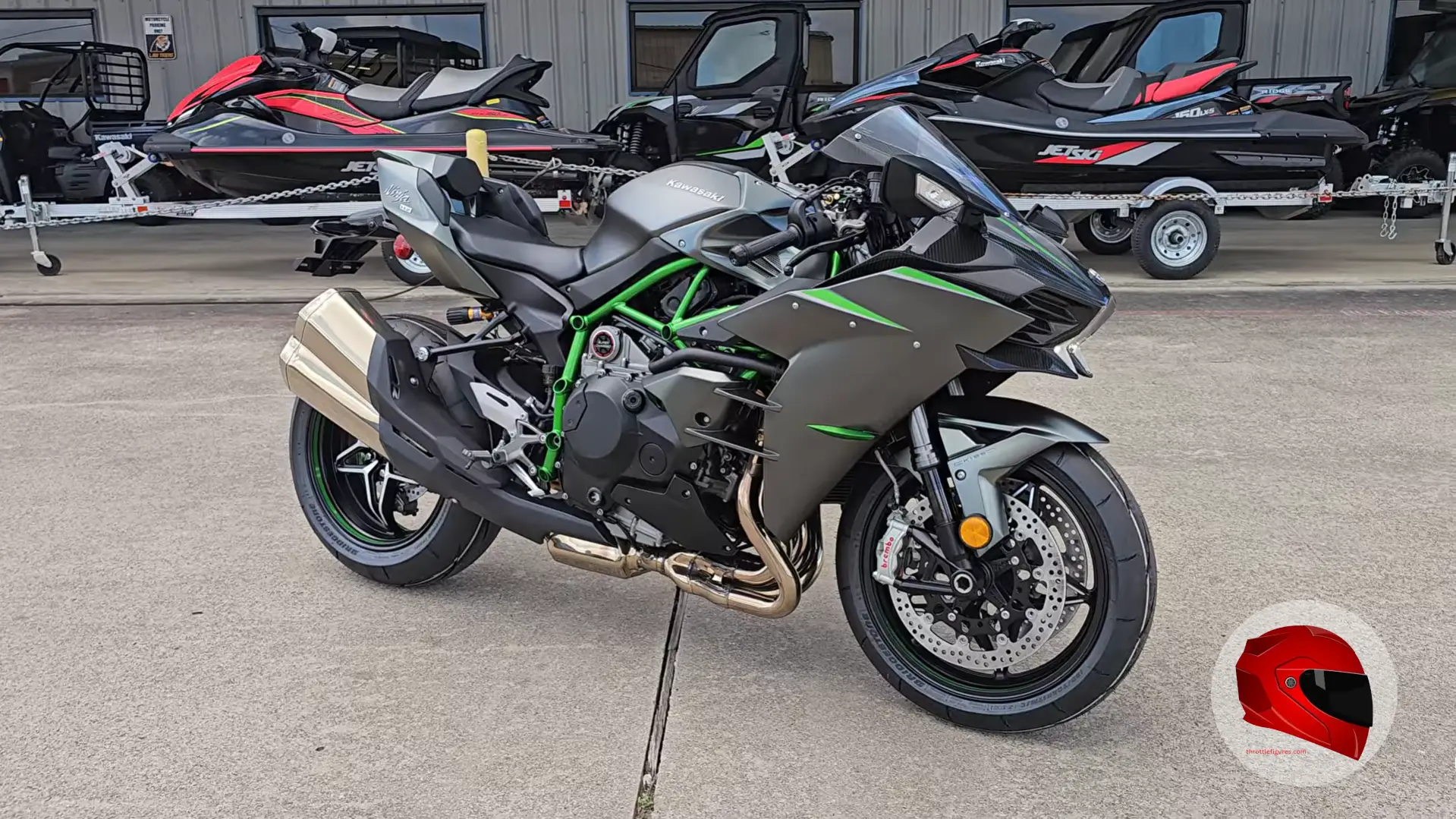
Kawasaki Ninja H2
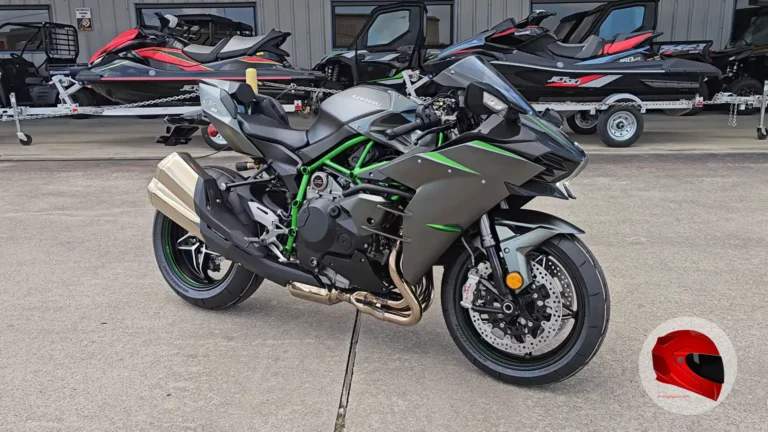
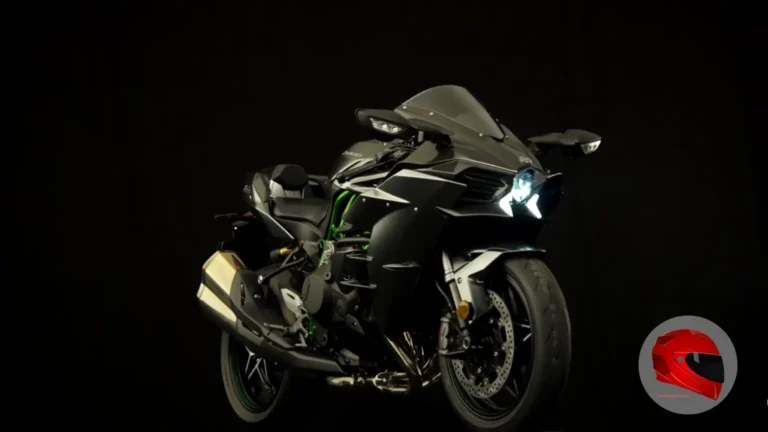
The Kawasaki Ninja H2 brings the same 998 cc supercharged inline-four concept to a street-legal package. It produces 240 hp and has a listed top speed of 205 mph, giving it strong acceleration throughout the rev range.
The H2 suits riders who want forced-induction performance without giving up registration and road equipment. It is heavier and more specialized than a conventional liter-bike, and insurance, tires, chain care and engine service can cost more than they do for less powerful motorcycles. Its power delivery also demands careful throttle control in traffic and on imperfect pavement.
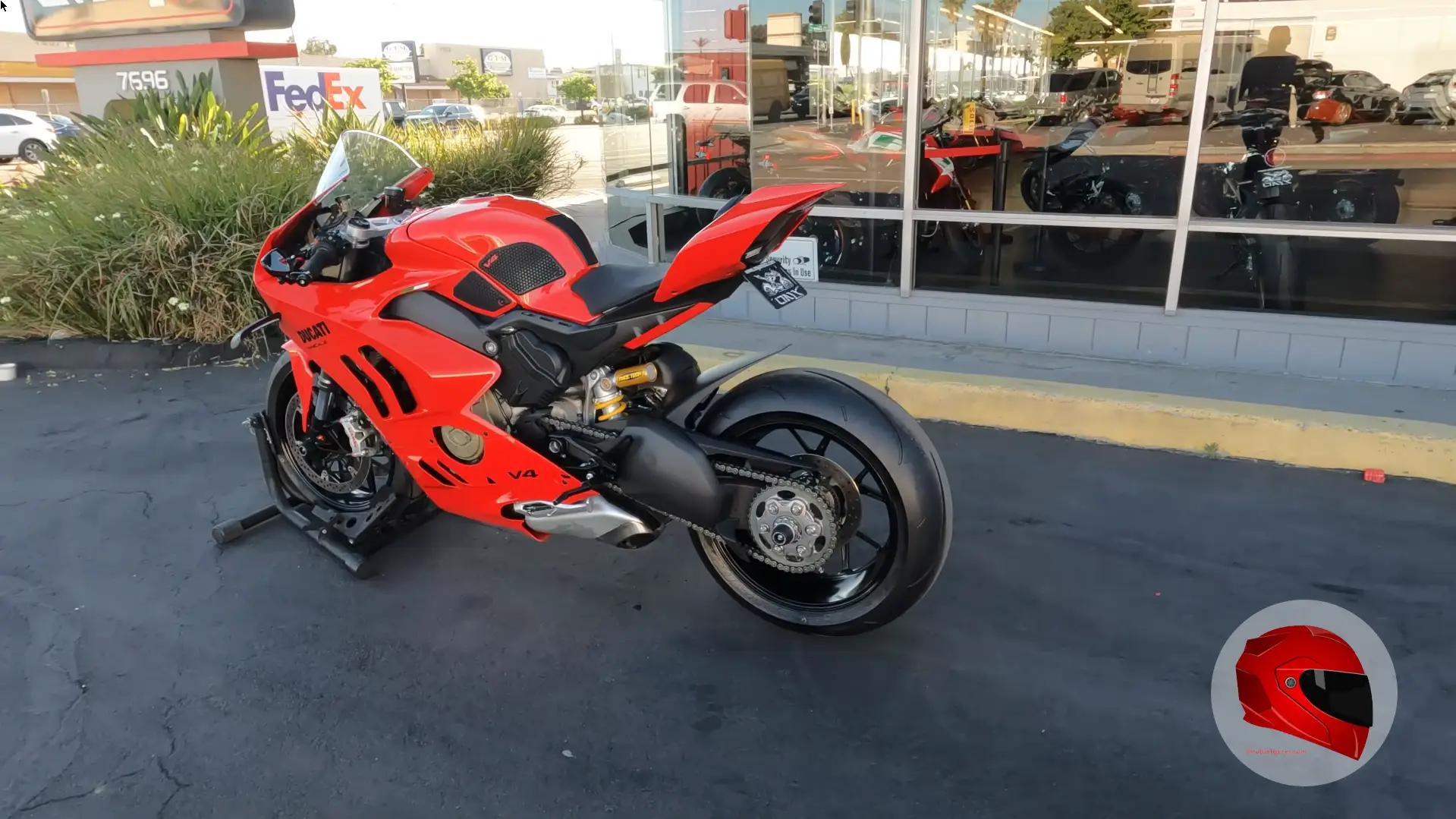
Ducati Panigale V4 R
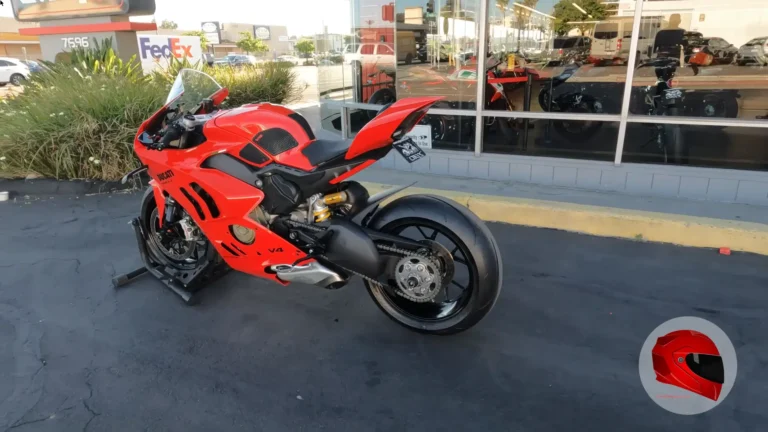
The Ducati Panigale V4 R is a race-focused superbike with a 998 cc V4 producing 218 hp, or 237 hp with the race exhaust. Its compact engine and aerodynamic bodywork target circuit performance, while the motorcycle is listed as street legal.
The V4 R is better suited to experienced track riders than to casual street mileage. Race equipment can affect noise compliance, maintenance intervals, tire choice and registration status, so the horsepower figure used for comparison may not match the specification delivered for ordinary road use. Its purchase and running costs also make professional setup worthwhile.
Ducati Panigale V4 S
The Ducati Panigale V4 S uses a 1,103 cc V4 producing 209 hp. Compared with the V4 R, its larger engine emphasizes broad performance and road usability while retaining the electronics, chassis technology and riding position expected from a modern flagship superbike.
This is the more road-oriented Ducati choice for a rider who wants extreme output with regular street equipment. It remains demanding: the riding position is committed, the engine generates substantial heat, and replacement tires and bodywork are expensive. Track riders can exploit its power and electronics, while experienced road riders should treat its acceleration as a serious operating constraint.
- Best fit: Street riding with occasional track use
- Engine: 1,103 cc V4
- Output: 209 hp
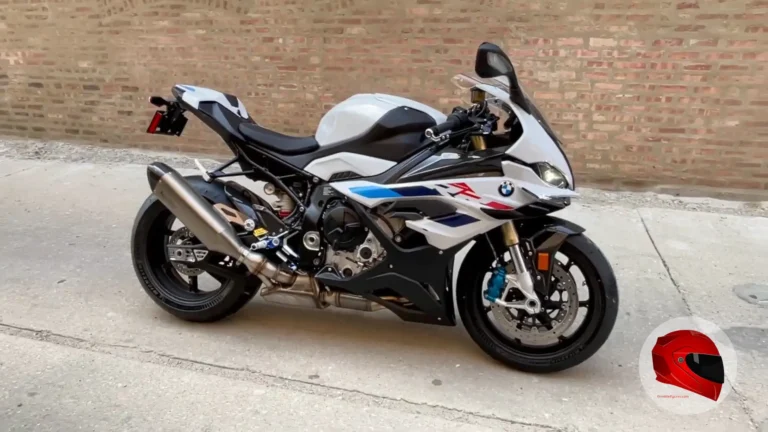
BMW M 1000 RR
The BMW M 1000 RR produces 205 hp from a 999 cc liquid-cooled inline-four. Its listed top speed is 189 mph. Aerodynamic winglets, high-specification brakes and advanced electronic rider aids support high-speed circuit work.
It suits riders who want a road-legal superbike that can move directly from public roads to track days. Performance depends heavily on tire temperature, suspension setup, rider position and electronic settings, so peak horsepower alone does not determine lap speed. Road use also limits how often the engine can operate near its performance ceiling.
Honda RC213V-S
The Honda RC213V-S uses a 999 cc MotoGP-derived V4 and produces 101 hp in US specification or 212 hp with the Race Kit. It occupies a rare, limited-street-legal position between a road motorcycle and a competition-focused prototype, with limited availability and highly specialized engineering.
This motorcycle suits collectors and experienced riders who value racing provenance as much as everyday usability. It is not a sensible choice for commuting, frequent touring or inexpensive track practice. Parts, servicing, riding position and the condition of an individual example matter greatly, especially with its listed MSRP of $184,000.
Honda CBR1000RR-R Fireblade SP
The Honda CBR1000RR-R Fireblade SP delivers 214.6 hp from a 1,000 cc liquid-cooled inline-four. The SP specification adds premium chassis and braking equipment to help the motorcycle manage its power during repeated acceleration and hard stops.
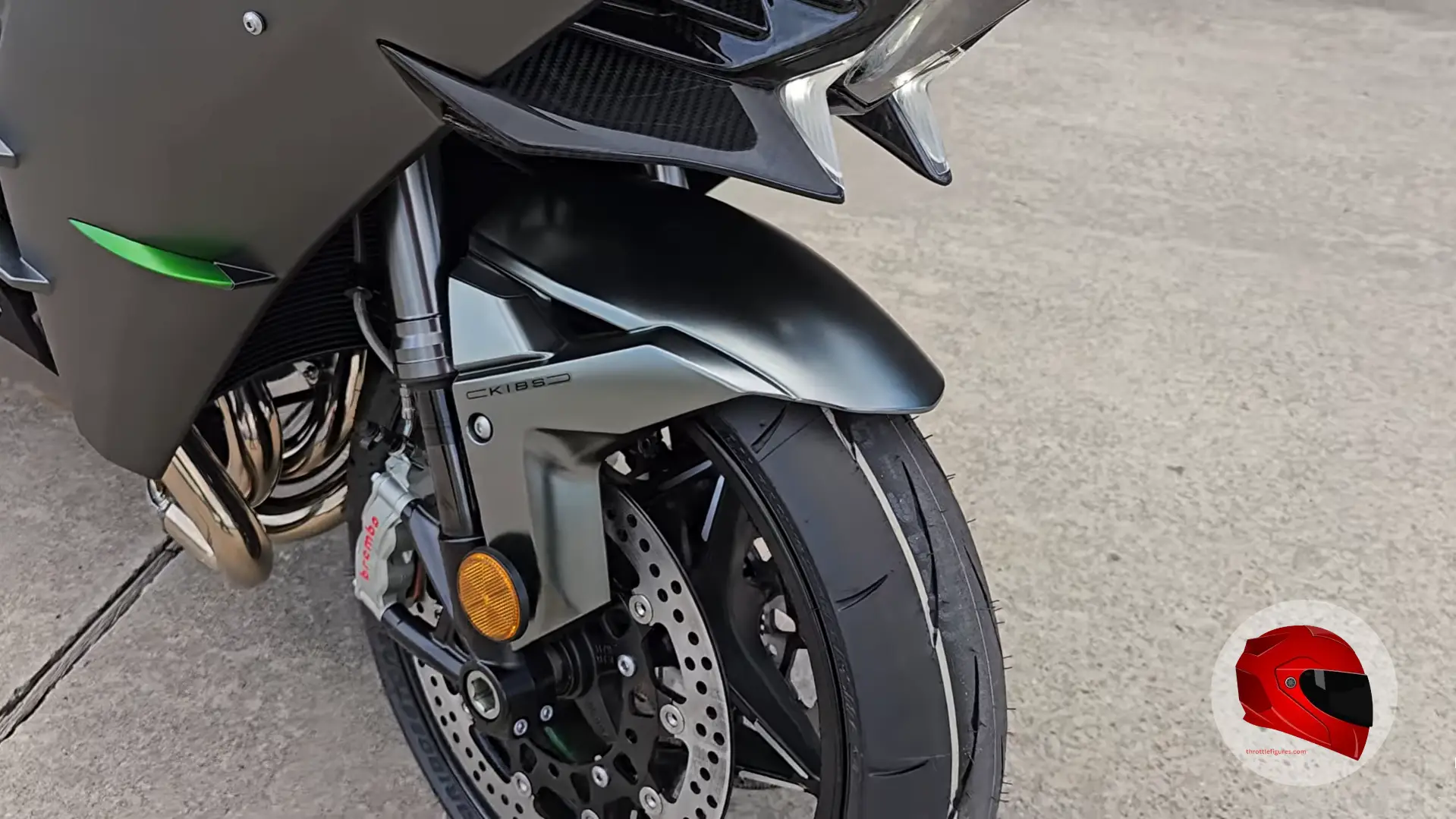
It suits riders who want a highly capable road-legal liter-bike with a clear track focus. Its naturally aspirated engine delivers power progressively, although its performance remains far beyond what public roads can safely use. Track preparation, tire selection, suspension adjustment and rider training have more practical value than chasing small differences in published horsepower.
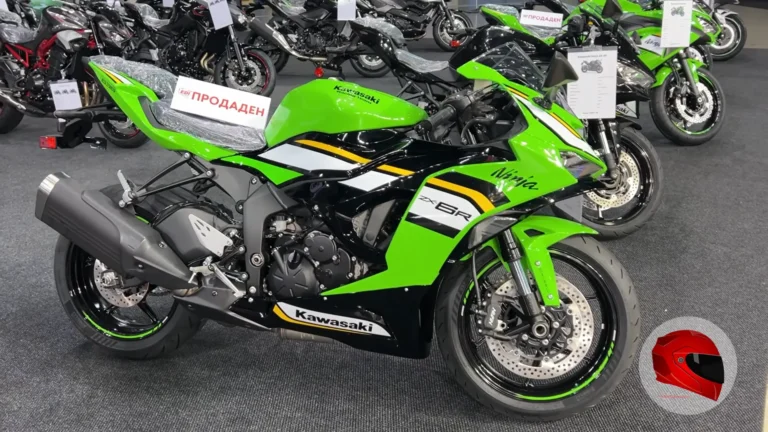
Kawasaki Ninja h2r: Track-only power leader
The Ninja H2R leads this comparison with 322 hp, well above the output of the street-legal motorcycles listed here. Its supercharged engine, aerodynamic equipment and operating assumptions are intended for closed-course performance rather than registered road use.
Street legality changes the comparison. A road motorcycle must meet requirements for lighting, mirrors, emissions, noise, equipment and registration. Those requirements add weight and restrict how the engine and exhaust system can be configured. The H2R is therefore the most powerful track motorcycle in this group, while the H2 is the relevant Kawasaki choice for public-road use.
The H2R’s headline horsepower comes with a track-focused chassis, aerodynamic equipment and no road-registration option, so its figures are not directly comparable with those of a street bike. Comparing it with the road-legal Kawasaki Ninja H2 versus H2R shows how much of its performance comes from the engine and how much comes from its race-oriented setup, electronics and operating restrictions.
How to read horsepower figures
Manufacturers do not always publish horsepower at the same point in the drivetrain. Crank horsepower is measured at the engine, while rear-wheel horsepower is measured after losses through the clutch, transmission, chain and tire. A rear-wheel figure is normally lower, so two numbers cannot be ranked fairly unless their measurement methods match.
- Horsepower: A measure of power output, often quoted at the crank.
- Rear-wheel horsepower: Power measured at the tire and affected by drivetrain loss.
- PS: Metric horsepower, which is slightly different from mechanical horsepower.
- Ram-air output: A speed-dependent figure that can exceed the static rating at high road speed.
Published numbers can also depend on intake pressure, exhaust equipment, engine mapping, fuel and optional race equipment. Use horsepower as a starting point, then compare torque, weight, electronics, chassis hardware, gearing and legal status.
Street legality and ownership requirements
A high-horsepower motorcycle intended for public roads needs a valid title, state registration, required safety equipment and insurance that covers the exact vehicle. Nearly every state requires a motorcycle endorsement or another license qualification. A standard driver’s license alone is not enough in jurisdictions that require a separate motorcycle credential.
- Motorcycle endorsement or license qualification
- Valid title and vehicle identification number
- State registration and required taxes
- Motorcycle insurance before road use
- Equipment that meets applicable lighting, mirror, exhaust and emissions rules
Price insurance before buying because liter-bikes and hyperbikes can carry substantially higher premiums than lower-powered motorcycles. A track-only model such as the Ninja H2R cannot be treated as an ordinary registered street vehicle. Transport, track access, storage and crash damage require separate planning.
How to buy a high-horsepower motorcycle
Cycle Trader can help you locate new and used inventory across the United States. A private-party purchase can provide access to older or limited-production models, but it requires careful title, inspection and payment checks.
- Choose a road, track or collector use case.
- Compare insurance quotes for the exact model and year.
- Inspect the title, vehicle identification number, service history and recalls.
- Arrange an independent inspection for a used motorcycle.
- Confirm financing, taxes, registration and delivery costs.
- Obtain insurance before taking a street-legal motorcycle onto public roads.
- Register the motorcycle in the state where it will be operated.
For a private sale, use a payment method with clear documentation and complete the title transfer according to state rules. A pre-purchase inspection should check crash damage, frame alignment, engine noise, fork seals, brake discs, electronics, tire age and evidence of track use.
Other high-power motorcycles worth considering
The highest published output is not limited to the models in the main comparison. The Kawasaki Ninja ZX-10RR produces approximately 198.25 bhp, while the MV Agusta Brutale 1000 RR produces approximately 205.1 bhp. The BMW M 1000 R produces approximately 207.1 bhp, reaches 174 mph and accelerates from 0 to 62 mph in 3.2 seconds.
Other notable figures include approximately 217 hp for the Aprilia RSV4 RF, 214 bhp for the Ducati Streetfighter V4 S and approximately 199 hp for both the Yamaha YZF-R1M and Suzuki GSX-R1000R. The 187-hp Suzuki Hayabusa uses a 1340cc inline-four and has an electronically limited top speed of approximately 186 mph.
Top 10 horsepower entries
The seven motorcycles in the main table are joined by three additional factory models to form a broader ten-entry horsepower comparison. The order below uses the documented peak figures available for each model, but the figures come from different specifications and measurement conventions. Treat the list as a screening guide rather than a single test-equivalent ranking.
| Additional rank | Motorcycle | Published horsepower |
|---|---|---|
| 8 | Aprilia RSV4 RF | 217 hp |
| 9 | Ducati Streetfighter V4 S | 214 bhp |
| 10 | BMW M 1000 R | 207.1 bhp |
Production status and model years
This comparison combines current production motorcycles, limited-production models and specifications from different model years. Horsepower rankings change when race kits, ram-air figures, discontinued models or track-only motorcycles are included.
It is not a year-by-year historical ranking. The figures represent the specified motorcycles and model-year configurations described here, so a ranking for a particular year requires matching that year’s engine map, equipment, market and measurement method.
For a specific model year, compare the manufacturer’s specification for that market with the same type of output figure for every other motorcycle. Keep standard road trim, optional race equipment, discontinued versions and track-only models in separate groups so the ranking remains meaningful.
Factory motorcycle scope
This ranking covers factory-built motorcycles and documented production or limited-production specifications. The Kawasaki Ninja H2R is the horsepower leader within this group. Custom turbo builds, land-speed machines and one-off motorcycles fall outside the comparison and should not be treated as equivalent worldwide production entries.
This distinction matters when comparing the “most powerful motorcycle.” A privately tuned Hayabusa or purpose-built streamliner may exceed factory output, but it cannot be compared with a normal showroom model. Limited models such as the Honda RC213V-S remain included when their specifications are documented.
Why horsepower is not the whole story
- Compare power with total mass: Acceleration depends on the motorcycle’s weight as well as its engine output, including the rider, fuel and riding gear.
- Look at how the chassis uses the power: Weight reduction, traction, braking, aerodynamics, suspension setup and rider position can matter as much as a higher peak rating.
- Match the bike to the riding environment: A lower-rated motorcycle can be quicker or easier to exploit if it puts power down effectively and carries speed through corners.
Peak horsepower is only part of the performance picture. A lighter motorcycle can accelerate harder than a heavier bike with a higher output figure, so comparing engine power with curb weight often produces motorcycle power-to-weight ratios that better show how quickly a bike launches, changes direction and drives out of corners.
FAQs
Is there a 1,000-horsepower motorcycle?
There is no mainstream factory-production motorcycle with 1,000 hp. That output requires heavily modified turbocharged or supercharged engines, specialized land-speed machines or non-production builds rather than an ordinary street motorcycle.
What are the five fastest motorcycles?
Top-speed contenders include the Kawasaki Ninja H2R at about 249 mph, the Lightning LS-218 at about 218 mph, the MTT Y2K Turbine Superbike at about 250 mph, the Dodge Tomahawk at a claimed 350 mph and the Suzuki Hayabusa at about 186 mph in electronically limited production form. These figures are not directly interchangeable because the motorcycles have different legal classifications and test conditions.
The motorcycles at the top of a speed ranking are not always the ones with the highest published horsepower. Aerodynamic drag rises sharply with speed, while gearing, frontal area, rider position, electronic limits and available test distance also affect the final figure. That is why horsepower determine top speed alone cannot determine which motorcycle is fastest.
What motorcycle can go 300 mph?
No ordinary mass-produced street motorcycle has a verified 300-mph production specification. Purpose-built streamliners and extensively modified turbocharged motorcycles have approached or exceeded that speed, but they belong to land-speed-record or special-build categories.
How much horsepower does a Harley-Davidson 1200 have?
A Harley-Davidson Sportster 1200 produces about 60 hp in typical factory configurations, although the exact figure changes by model year and test method. Its large-displacement V-twin emphasizes low-speed torque rather than liter-bike peak horsepower.
Which is the most powerful street-legal motorcycle?
In this comparison, the street-legal Kawasaki Ninja H2 is the most powerful fully road-legal model at 240 hp. The Ducati Panigale V4 R produces 218 hp, or 237 hp with its race exhaust. The Honda RC213V-S is listed as limited street legal and produces 101 hp in US specification or 212 hp with the Race Kit.
Does more horsepower make a motorcycle faster?
More horsepower can improve acceleration and top speed, but weight, gearing, aerodynamics, traction, rider position and electronic controls also determine performance. A motorcycle with slightly less power can be quicker on a circuit if it carries speed better and puts power down more effectively.
Conclusion
Among the highest horsepower motorcycles, the biggest number does not automatically make the best purchase.
The Kawasaki Ninja H2R is the clear horsepower leader, but its track-only status makes the street-legal Kawasaki Ninja H2, Ducati Panigale V4 models, BMW M 1000 RR and Honda superbikes more relevant for road ownership. Compare measurement method, legality, insurance, maintenance and intended use before treating a published horsepower figure as a buying decision.