Fastest Motorcycles: Top Speed, Power, and Price
Speed figures alone do not tell the whole story when you compare the fastest motorcycles. Test conditions, electronic limits, road legality, rider aids, weight and running costs all affect how a motorcycle performs and where you can use it. The comparison below separates measured, type-approved, homologated and manufacturer-claimed figures instead of treating them as directly equivalent.
Fastest Motorcycles Compared
| Motorcycle | Category | Top speed | 0-60 mph | Power | Engine or powertrain | Road legality | USA MSRP Price |
|---|---|---|---|---|---|---|---|
| BMW M 1000 RR | Production superbike | 195.15 mph | 3.0 sec | 212 bhp | 999 cc inline-four | Street legal | $33,495 |
| Aprilia RSV4 1100 Factory | Production superbike | 191 mph | 3.1 sec | 214 bhp | 1,078 cc V4 | Street legal | $26,500 |
| BMW S 1000 RR | Production superbike | 188.32 mph | 2.6 sec | 206.5 bhp | 999 cc inline-four | Street legal | $18,295 |
| Ducati Panigale V4 R | Production superbike | 199 mph | 3.03 sec | 218 bhp | 998 cc V4 | Street legal | $45,395 |
| Kawasaki Ninja H2R | Track-only superbike | 248 mph | 2.93 sec | 310 hp | 998 cc supercharged inline-four | Track only | $58,100 |
| Lightning LS-218 | Production electric motorcycle | 218 mph | 2.0 sec | 244 hp | Electric motor | Street legal | $79,000 |
| Suzuki Hayabusa | Production hyperbike | 194 mph | 2.47 sec | 187 bhp | 1,340 cc inline-four | Street legal | $19,099 |
BMW M 1000 RR
The BMW M 1000 RR reaches 195.15 mph by homologated top speed, making it the fastest road-legal motorcycle in this comparison under that measurement. Its 999 cc inline-four produces 212 bhp, and the listed 0-to-60 mph time is 3.0 seconds.
Its aerodynamic package, electronic rider aids and high-revving engine suit experienced riders who want a race-derived superbike with registration equipment. The riding position is demanding for daily use, while tire costs, servicing and the premium purchase price add to its ownership burden.
- Best fit: track days and high-speed sport riding
- Strength: highest homologated speed among the listed street motorcycles
- Tradeoff: limited comfort and high ownership costs
Aprilia RSV4 1100
The Aprilia RSV4 1100 combines a 1,078 cc V4 with 214 bhp. Its type-approved top speed is 191 mph, and its 0-to-60 mph time is 3.1 seconds, placing it near the front of the road-legal group.
The V4 gives the RSV4 distinctive power delivery and sound. Its chassis also suits riders who value cornering control as much as terminal speed. Experienced sport riders get strong track potential, although parts, insurance and specialist servicing can cost more than they do for a mainstream Japanese motorcycle.
BMW S 1000 RR
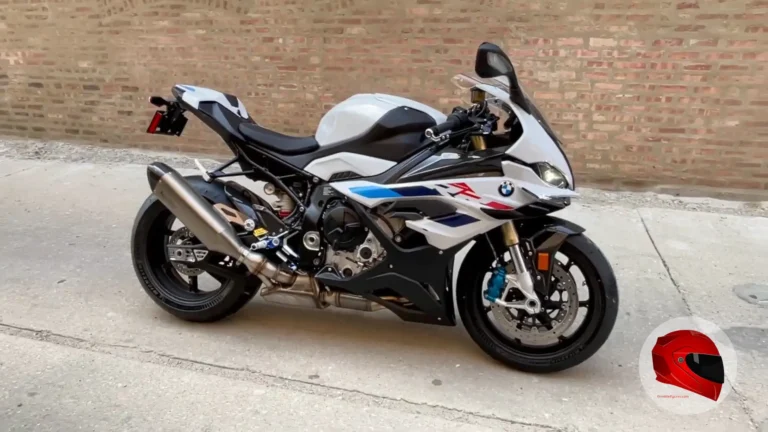
The BMW S 1000 RR reaches 188.32 mph in homologated form and produces 206.5 bhp from a 999 cc inline-four. Its tested 0-to-60 mph time of 2.6 seconds makes it one of the quickest accelerating motorcycles in this group, even though its top speed is below that of the M 1000 RR.
With a wet weight of 203 kg, the S 1000 RR combines superbike performance with a wide range of electronic settings and road equipment. It suits riders who want one motorcycle for occasional commuting, canyon roads and track days. Public roads cannot safely accommodate its full capability, so rider skill and electronic setup matter more than its maximum speed.
Ducati Panigale V4 and V4 R
The Ducati Panigale V4 and Panigale V4 R are street-legal production superbikes with a listed top speed of 199 mph and a 0-to-60 mph time of 3.03 seconds. The V4 R uses a 998 cc V4 that produces 218 bhp.
The V4 is the more approachable option for riders who want an exotic road and track motorcycle. The V4 R has a higher specification and a stronger focus on competition use, reflected in its much higher cost. Both motorcycles have aggressive ergonomics, so long highway trips can become tiring despite their street equipment.
Kawasaki Ninja H2R
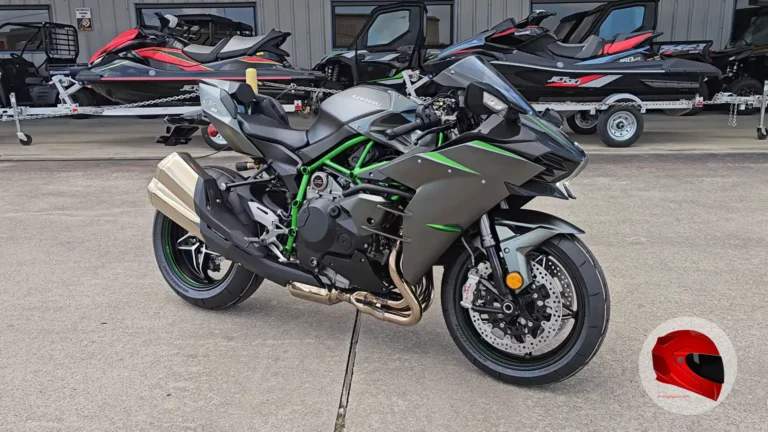
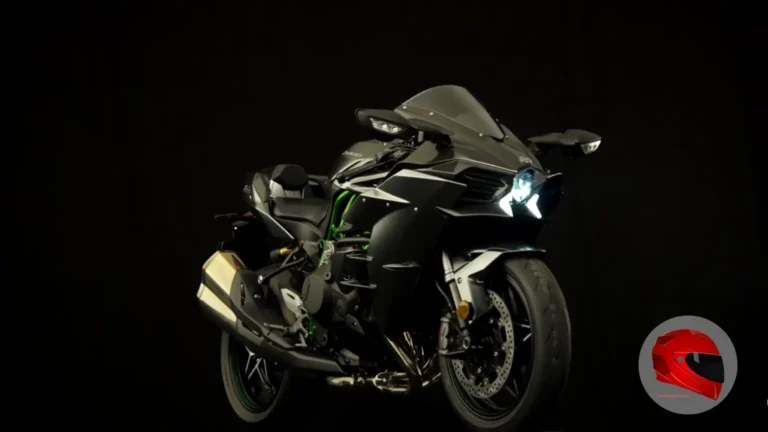
The Kawasaki Ninja H2R is the outright speed leader in this comparison, with a 248 mph top speed and 310 hp from a 998 cc supercharged inline-four. Its listed 0-to-60 mph time is 2.93 seconds, although launch settings, rider technique, surface grip and timing equipment all affect acceleration results.
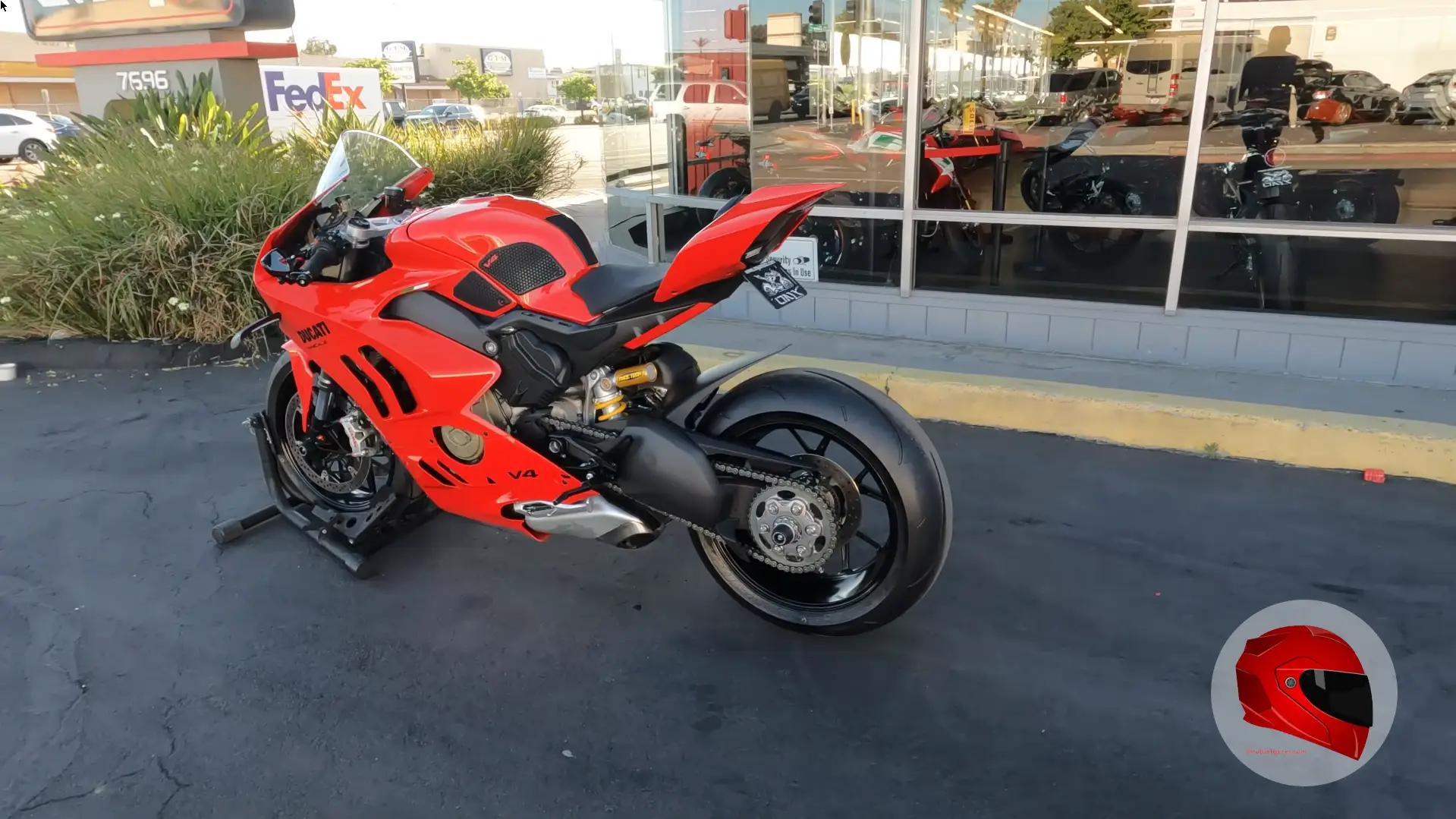
The H2R is a track-only machine. It does not have the complete lighting, emissions, noise-control and road-use configuration required for ordinary public-road registration. Its USA MSRP is $58,100, and ownership also requires a suitable track, transport arrangements, specialized tires and a rider capable of handling extreme performance.
Lightning LS-218
The Lightning LS-218 is a street-legal electric motorcycle with a 218 mph top speed and 244 hp from its electric motor. That figure puts it ahead of every street-legal combustion motorcycle in this comparison except the highest specialty or track-machine claims.
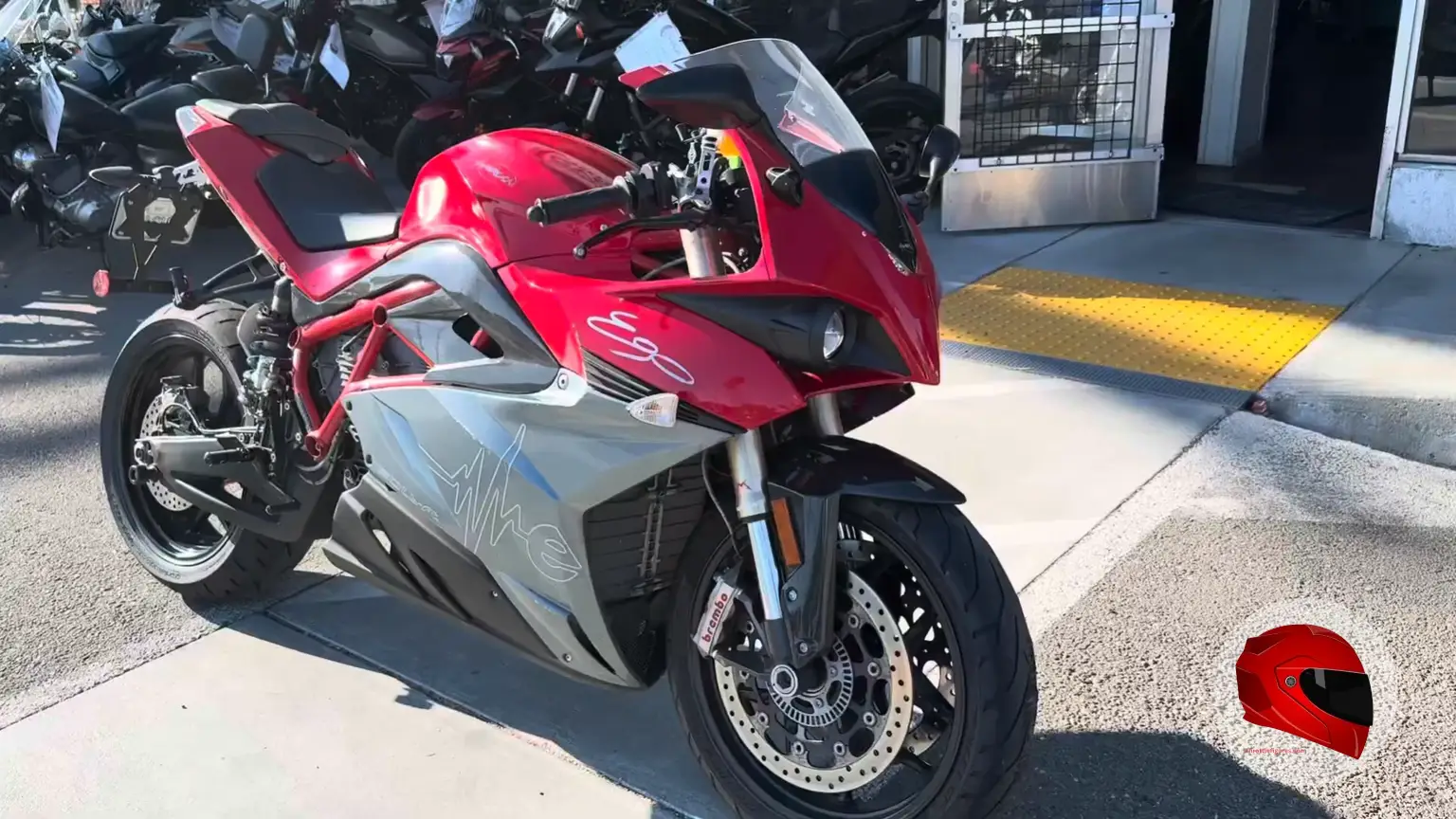
Its electric motor delivers immediate drive without a conventional multispeed engine. At high speed, however, range, charging time, battery temperature and charging access become important parts of the ownership routine. The LS-218 suits buyers who specifically want an electric superbike and accept the smaller support network associated with a limited-production performance motorcycle.
Suzuki Hayabusa
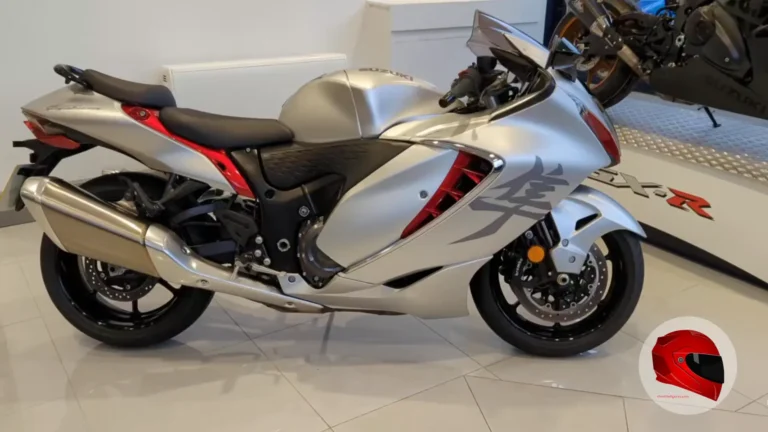
The Suzuki Hayabusa became famous for high-speed touring and aerodynamic stability. The production hyperbike has a listed top speed of 194 mph, uses a 1,340 cc inline-four rated at 187 bhp and has a listed 0-to-60 mph time of 2.47 seconds.
Its long, stable chassis and less extreme riding position make the Hayabusa more suitable for highway travel than a dedicated supersport. Current versions reflect the industry’s speed restrictions and electronic controls, so the early tested figure should not be treated as the specification of every modern model. It remains the strongest choice here for riders who want exceptional acceleration with more usable touring manners.
Engine output gives a motorcycle the power to push through aerodynamic drag, but horsepower alone does not determine top speed. Fairings, gearing, riding position, tires and electronic limiters all matter, which is why horsepower determines motorcycle top speed can vary in real-world testing.

Requirements and context
Top-speed figures are not directly interchangeable. A homologated number applies to an approved configuration, a tested result depends on the test environment and equipment, and a manufacturer claim may describe a target or a controlled demonstration. Wind, rider position, gearing, tire condition, altitude and electronic settings can all change the outcome.
For use on United States public roads, a motorcycle generally needs compliant equipment and documentation. Requirements vary by state, but a street-legal motorcycle normally includes:
- Compliant emissions and noise equipment
- Headlights, taillights, brake lights and turn signals
- Mirrors, a horn and functioning brakes
- Approved tires and a muffler
- License-plate equipment and registration
- A motorcycle license or endorsement
Every state requires a motorcycle license or endorsement for legal operation. A track-only model such as the Ninja H2R cannot become road legal simply by adding a plate because its underlying configuration does not meet the complete road-use standard.
Kawasaki Ninja H2R and specialty bikes
The H2R belongs in a discussion of the fastest motorcycles because its claimed performance exceeds that of ordinary showroom superbikes. It is not a substitute for a street motorcycle: the buyer cannot use it for public-road travel. The same distinction applies to machines whose figures come from highly specialized engineering rather than normal series production.
The MTT 420RR claims 273 mph and 420 hp from a Rolls-Royce M250-C20B gas turbine. The Dodge Tomahawk carries a manufacturer-claimed top speed of 613 km/h, a 500 hp 8.3-liter V10 and four twinned wheels. Both are notable specialty vehicles, but their design, availability, testing conditions and road-use status differ from those of a conventional two-wheeled production motorcycle.
For context, a MotoGP KTM RC16 has recorded 366.1 km/h, or 227.5 mph, at Mugello. A purpose-built race bike can therefore exceed many road motorcycles without being a product that a normal buyer can register, insure and ride to work.
The Ninja H2R shows what is possible without road-registration requirements, but its track-only status puts that speed out of reach for most riders. The street-legal H2 gives up some performance for lights, emissions equipment and everyday usability, making the Kawasaki Ninja H2 versus H2R comparison useful beyond the specification sheet.
How speed limits shape modern superbikes
Major motorcycle manufacturers broadly adopted an informal top-speed ceiling of about 300 km/h, or 186 mph, around the turn of the millennium. This Gentlemen’s Agreement helps explain why many powerful liter-class motorcycles cluster near the same indicated speed, even when their engines and aerodynamics could support more.
Electronic control systems manage wheel slip, engine output, launch behavior and maximum speed. Removing a limiter or changing its calibration can affect emissions compliance, warranty coverage, insurance and road legality. A track setup may improve lap performance while leaving the motorcycle unsuitable for public-road registration.
Ownership costs beyond the purchase price
Insurance is a major part of the decision. Comprehensive and collision coverage for a hyperbike can exceed $3,000 annually for a high-risk rider. Age, location, claims history, storage, riding record and selected coverage limits all affect the premium. A low purchase price does not guarantee low ownership costs once tires, brakes, scheduled service, transport and insurance are included.
Financing also deserves attention because specialty motorcycles may have higher rates, shorter lender lists and larger required down payments. Include insurance, registration, protective gear, scheduled maintenance, tires, brakes and transport in the budget. A motorcycle sold for public-road use must have a valid vehicle identification number and the equipment required for registration. Insurance premiums vary by rider, location, year and trim.
How to buy a fast motorcycle
First decide whether you want a new motorcycle from an authorized dealer or a used private-party purchase. A dealer sale provides a defined new-bike transaction. A private sale requires closer inspection of the motorcycle’s condition, ownership records and paperwork.
- Compare the BMW M 1000 RR, Aprilia RSV4 1100, BMW S 1000 RR, Ducati Panigale V4 and V4 R, Lightning LS-218 and Suzuki Hayabusa as street-legal options. Treat the Kawasaki Ninja H2R as a track-only purchase.
- Set the down payment and financing budget alongside the motorcycle price. Include the loan rate, term, insurance, registration, gear, tires, servicing and transport in the monthly ownership calculation.
- Arrange insurance before taking delivery. The insurer needs the exact motorcycle, model year, trim, riding use and coverage limits to provide a useful quote.
- For a used private-party motorcycle, inspect the VIN and title. Confirm that the VIN matches the documents and that the seller can transfer clear ownership.
- Arrange enclosed or suitable transport for the Kawasaki Ninja H2R because it cannot be ridden legally on United States public roads.
- Complete registration and obtain the motorcycle license or endorsement required in your state before riding a street-legal motorcycle on public roads.
How speed claims are tested
- Identify the type of figure first. A manufacturer claim, an independently tested result and a homologated or type-approved specification are different forms of evidence.
- Compare results recorded under similar conditions. Wind, rider position, gearing, tires, altitude, electronic settings, timing equipment and the test surface can change both top-speed and acceleration results.
- Keep track-only and specialty vehicles separate from ordinary street-bike rankings. The Kawasaki Ninja H2R, MTT 420RR and Dodge Tomahawk produce notable figures, but they are not equivalent to a conventional street motorcycle purchase.
Published top-speed figures are comparable only when the testing conditions match. GPS readings, rollout rules, gearing, wind and the number of runs can all affect the result, so knowing how motorcycle top speed measured works is just as important as the headline number.
Speed and category verdicts
The Kawasaki Ninja H2R has the highest claimed top speed in this comparison at 248 mph, but it is track-only. Among the listed street-legal motorcycles, the Ducati Panigale V4 R has the highest listed figure at 199 mph, while the BMW M 1000 RR leads by homologated speed at 195.15 mph. These are different winners because the figures come from different evidence categories.
The Lightning LS-218 is the fastest street-legal electric motorcycle listed, with a 218 mph top speed and a listed 2.0-second 0-to-60 time. The BMW S 1000 RR has the quickest explicitly tested acceleration result in the comparison at 2.6 seconds; the Lightning figure is not identified as an independently tested result here.
2026 availability scope
This comparison combines current listed MSRP figures with specifications and performance results from different model generations. The modern Suzuki Hayabusa remains current, but its 194 mph and 2.47-second figures refer to an early model. The Lightning LS-218 is treated as a limited-production electric option, while the Kawasaki Ninja H2R is a track-only purchase rather than an ordinary public-road dealer motorcycle.
For 2026, read the table as a performance comparison rather than a claim that every motorcycle is available new through a United States dealer. Production status, model year and new-bike availability differ by manufacturer and model.
Fastest Motorcycle FAQs
What motorcycle can hit 300 mph?
No motorcycle in this comparison has a verified 300 mph production specification. The MTT 420RR claims 273 mph, while the Dodge Tomahawk claims 613 km/h, but the Tomahawk is a four-wheeled specialty vehicle and the MTT 420RR is not comparable with an ordinary street motorcycle.
What motorcycle goes 180 mph?
Every street-legal superbike listed here exceeds 180 mph on its stated figure, including the Ducati Panigale V4 and V4 R at 199 mph. The BMW M 1000 RR, Aprilia RSV4 1100, BMW S 1000 RR and Suzuki Hayabusa also exceed 180 mph in the figures shown.
What is the fastest motorcycle in kilometers per hour?
The highest claim among the specialty motorcycles discussed here is the Dodge Tomahawk at 613 km/h. For a conventional production motorcycle, the MTT 420RR claims 439 km/h, while the Kawasaki Ninja H2R claims approximately 399 km/h.
What motorcycle has the fastest 0-to-60 time?
The Lightning LS-218 has the fastest 0-to-60 mph time in the table at 2.0 seconds, followed by the Suzuki Hayabusa at 2.47 seconds, the BMW S 1000 RR at 2.6 seconds and the Kawasaki Ninja H2R at 2.93 seconds. Launch control, surface grip, rider technique, tire temperature and test equipment can change the result.
Conclusion
Compared side by side, the fastest motorcycles separate into road-legal choices and track-only benchmarks.
The BMW M 1000 RR is the fastest road-legal choice by homologated top speed in this comparison, while the Kawasaki Ninja H2R is the track-only performance benchmark. Riders who want extreme acceleration with more usable road manners may find the Suzuki Hayabusa the most suitable option, provided insurance, licensing and state registration requirements fit the ownership plan.

One Comment
Comments are closed.