
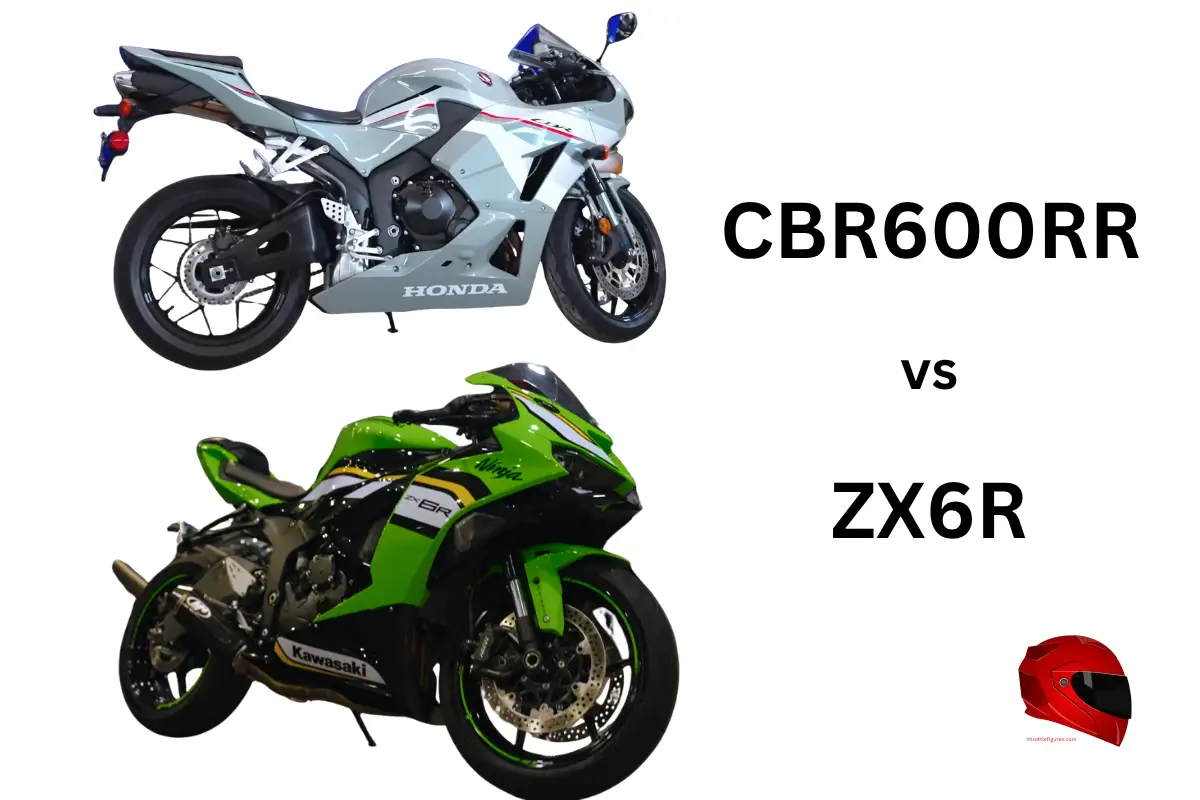
CBR600RR vs ZX6R: Which Japanese Supersport Fits Your Ride?
The 2026 Honda CBR600RR and Kawasaki Ninja ZX-6R are closely matched middleweight supersports, but their engines deliver power differently. The Kawasaki’s 636cc engine produces stronger midrange acceleration, while the Honda’s 599cc inline-four rewards riders who keep it high in the rev range. Street use, track performance, electronics and purchase cost all affect which bike makes more sense.
Engine Performance and Power Delivery
| Specification | 2026 Honda CBR600RR | 2026 Kawasaki Ninja ZX-6R |
|---|---|---|
| Engine displacement | 599cc | 636cc |
| Engine configuration | Liquid-cooled DOHC inline-four | Liquid-cooled 4-stroke DOHC inline-four |
| Claimed horsepower | 115–119 hp at 14,250 rpm | 127 hp at 13,000 rpm |
| Peak torque | 48.0 lb-ft | 52.1 lb-ft at 10,800 rpm |
| Estimated top speed | 160 mph | 162–164 mph |
| Destination charge | $600 | $685 |
The ZX-6R’s extra 37cc gives it stronger drive at low and middle engine speeds. That matters on public roads, where traffic, corners and short passing zones often prevent the rider from keeping the engine near its peak. The Kawasaki’s claimed 127 horsepower arrives at 13,000 rpm, earlier than the Honda’s claimed 115-119 hp at 14,250 rpm.
The CBR600RR has the sharper high-rpm character. Its power arrives at 14,250 rpm, so the engine feels most rewarding when the rider carries speed and uses the upper half of the tachometer. The Honda’s lower curb weight also helps during braking, direction changes and tight sections of track.
Neither motorcycle is slow, and the estimated top-speed difference is too small to determine a purchase. The more useful distinction is power delivery: the Kawasaki is more flexible on the street, while the Honda delivers a compact, high-revving supersport experience.
Handling, Suspension, and Brakes
The CBR600RR has a 53.9-inch wheelbase and 32.4-inch seat height, compared with 55.1 inches and 32.7 inches for the ZX-6R. The Honda’s shorter wheelbase and lower seat contribute to a compact, quick-changing feel. The Kawasaki’s longer chassis adds stability and feels more planted at speed.
Both motorcycles use fully adjustable 41mm Showa inverted forks. Honda uses a Showa Big Piston Fork, while Kawasaki uses a Showa Separate Function Fork-Big Piston design. Both rear systems are fully adjustable as well: the Honda uses a Pro-Link Showa shock, and the Kawasaki uses a Showa bottom-link Uni-Trak arrangement.
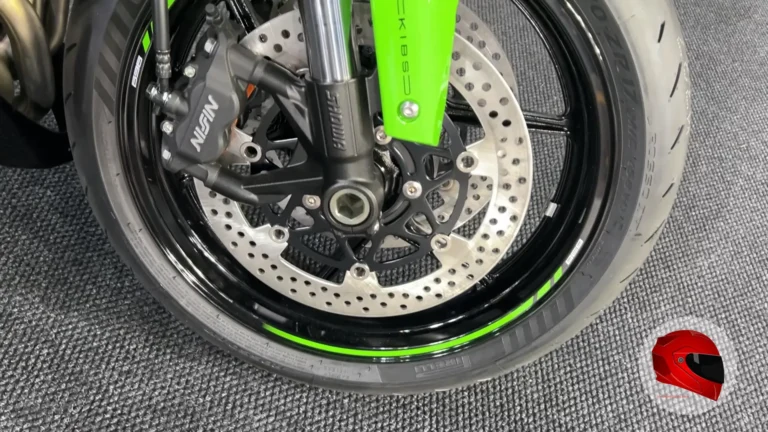
Both bikes have strong front braking hardware. Each uses dual 310mm discs and four-piston radial calipers, while the Kawasaki adds monobloc construction. The CBR600RR’s non-ABS curb weight is 419 pounds, giving it a meaningful advantage over the 432.2-pound non-ABS ZX-6R during repeated transitions.
ABS adds 15 pounds to the Honda and 4.4 pounds to the Kawasaki. For street riding, the ABS versions provide a wider safety margin on inconsistent pavement. Track riders who prefer the lighter setup may choose the non-ABS version where it is legal and suitable for their use.

Electronics and Rider Aids
The Honda and Kawasaki take different approaches to electronic assistance. The CBR600RR uses an IMU-based package that coordinates traction control, wheelie control, engine-braking control, riding modes and cornering ABS. Its quickshifter and throttle-by-wire system support hard acceleration and controlled track riding.
- Honda CBR600RR: IMU-based traction control, wheelie control, engine-braking management, riding modes, throttle by wire, quickshifter and cornering ABS.
- Kawasaki Ninja ZX-6R: Kawasaki traction control, selectable power modes, riding modes, quickshifter and Kawasaki Intelligent anti-lock Brake System on ABS-equipped versions.
The Honda’s IMU gives its rider-aid package a more integrated response during cornering, braking and acceleration. The Kawasaki keeps the controls more straightforward while still offering useful traction and power management for changing road conditions. Equipment can vary by trim, so compare the ABS and non-ABS prices with the exact feature list for the motorcycle being purchased.
Street Riding Versus Track Days
Both motorcycles are street-legal machines with aggressive ergonomics, high-revving engines and suspension settings intended for spirited riding. Their strengths become clearer when the intended use is separated.

- Daily street use: The ZX-6R’s 636cc engine gives it better flexibility in traffic and during short overtakes. Its 4.5-gallon tank is smaller than the Honda’s 4.8-gallon capacity, but its broader power delivery reduces the need for constant downshifting.
- Canyon roads: The CBR600RR’s lower non-ABS weight and shorter wheelbase suit rapid direction changes. The ZX-6R counters with stronger midrange drive when corners connect at different speeds.
- Spirited street riding: The Honda suits riders who enjoy precise gear selection and high-rpm acceleration. The Kawasaki is easier to use without keeping the engine at extreme speeds.
- Track days: Both have fully adjustable suspension, powerful radial brakes, quickshifters and supersport chassis geometry. The Honda’s lower weight favors agility, while the Kawasaki’s extra displacement can help on corner exits and longer straights.
Neither motorcycle is a relaxed commuter. The forward riding position puts weight on the wrists, the fairings provide little practical storage, and low-speed heat and clutch work can become tiring. The 0.3-inch seat-height difference does not show the full difference in reach, tank shape and handlebar position, so riders should consider those dimensions before choosing.

Price and Ownership Costs
The Honda starts $100 below the Kawasaki in non-ABS form and remains $100 lower in ABS trim. Honda’s destination charge is $600, compared with $685 for the Kawasaki, so the delivered price gap grows before sales tax, registration, setup, documentation fees, accessories and dealer markup.
- Honda CBR600RR non-ABS: $11,499 MSRP plus $600 destination.
- Honda CBR600RR ABS: $12,499 MSRP plus $600 destination.
- Kawasaki Ninja ZX-6R non-ABS: $11,599 MSRP plus $685 destination.
- Kawasaki Ninja ZX-6R ABS: $12,599 MSRP plus $685 destination.
Honda Financial Services offers promotional financing for Honda purchases, while Kawasaki Motors Finance Corp offers financing options for Kawasaki motorcycles. Compare the total amount financed, interest rate, term, required down payment and dealer fees instead of judging an offer by the monthly payment alone.
Insurance can outweigh the $100 MSRP difference. Progressive and GEICO price these supersport motorcycles according to factors such as age, riding history, location, coverage limits, theft exposure and deductible. The final premium can therefore vary substantially between riders and between the two models.
Budget for sport-touring or track-oriented tires, more frequent tire replacement under aggressive use, chain and sprocket wear, brake pads, fluids, scheduled valve inspection, registration and protective gear. Dealer setup charges and inventory pricing vary locally.
Ownership Cost Checklist
Separate the purchase bill from recurring ownership costs when comparing the CBR600RR and ZX-6R. Dealer setup, documentation, registration and taxes must be quoted locally, while insurance depends on the rider and motorcycle VIN.
- At purchase: MSRP, destination charge, sales tax, title and registration, dealer documentation, assembly or setup, accessories and financing interest.
- Annual fixed costs: Insurance, registration renewal, storage and roadside coverage. Progressive and GEICO premiums depend on the motorcycle, rider, coverage and location.
- Recurring maintenance: Engine oil and filter service, chain cleaning and adjustment, brake-fluid replacement, coolant service, air-filter service and scheduled valve inspection.
- Consumables: Sport tires, tire mounting and balancing, brake pads, chain-and-sprocket kits and replacement levers or controls after a tip-over.
- Track use: Faster tire and brake-pad wear, track fees, fuel, transport, suspension setup, crash protection and repairs after a fall.
Which Bike Should You Buy?
Choose the CBR600RR if you value low weight, compact handling, a high-rpm engine and a more integrated IMU-based electronic package. Choose the ZX-6R if you want stronger midrange acceleration, earlier peak horsepower and a motorcycle that feels more flexible on public roads.
The Honda suits riders who prioritize chassis lightness and high-revving response. The Kawasaki is more broadly usable for mixed street and track riding. Both require a realistic insurance quote, a proper riding-position assessment and enough budget for consumables beyond the advertised MSRP.
Is Either Bike Right for a Beginner?
Neither motorcycle is an ideal first street motorcycle. Both can accelerate rapidly, encourage a fast riding pace and reward accurate inputs from the rider rather than correcting poor technique.
Newer riders should complete formal training before operating either model. Advanced instruction is also recommended for supersport braking, corner entry, throttle control and aggressive power delivery. Electronic aids do not replace judgment, protective equipment or gradual skill development.
Riders with limited experience should also account for the cost of mistakes. A low-speed tip-over can damage fairings, levers, mirrors, rearsets and exhaust components, while a track crash can create much larger repair bills.
2022 CBR600RR versus ZX-6R
The 2022 comparison should be kept separate from the 2026 models. Both 2022 motorcycles used inline-four engines, with the CBR600RR at 599cc and the Ninja ZX-6R at 636cc. The Kawasaki therefore had the same displacement advantage that shapes the newer comparison.
| 2022 point | Honda CBR600RR | Kawasaki Ninja ZX-6R |
|---|---|---|
| Engine displacement | 599cc inline-four | 636cc inline-four |
| Model-year comparison | Do not apply 2026 pricing or equipment | Do not apply 2026 pricing or equipment |
| Purchase check | Confirm trim, ABS status, mileage, service history and asking price | Confirm trim, ABS status, mileage, service history and asking price |
Used-bike buyers should check the exact 2022 trim, ABS status, equipment, mileage, service history and asking price instead of applying 2026 specifications or MSRP to an older motorcycle. Verify the electronics and standard equipment on the specific bike.
CBR600RR, ZX-6R, or GSX-R600
| Bike | Best fit | Key distinction |
|---|---|---|
| Honda CBR600RR | Track-focused riders who value agility and electronics | 599cc engine, lower weight and IMU-based rider aids |
| Kawasaki Ninja ZX-6R | Riders mixing street use with track days | 636cc engine and stronger midrange drive |
| Suzuki GSX-R600 | Riders seeking a traditional high-revving supersport | Simpler rider-aid approach and 599cc engine character |
The GSX-R600 is closer in engine character to the CBR600RR than to the ZX-6R. Compare its exact model-year weight, equipment, price, ABS availability and service history before treating it as a direct alternative. The Honda emphasizes integrated electronics and compact handling, the Kawasaki favors street flexibility, and the Suzuki retains a more traditional supersport approach.
The GSX-R600 provides a useful third comparison, especially for riders who prefer its smooth power delivery and traditional chassis balance over headline specifications. Looking at all three also shows why throttle response, riding position and electronic aids can matter as much as peak horsepower. Those trade-offs stand out even more in Yamaha and Kawasaki comparison, where the R6 and ZX-6R take notably different approaches to high-rpm performance and track-focused handling.
Planning the first-year budget
| Cost area | Planning treatment |
|---|---|
| Motorcycle and destination | Use the listed MSRP and destination charge for the selected trim. |
| Taxes, title, registration and dealer fees | Set aside a separate local-quote allowance; these vary by state, county, dealer and transaction. |
| Insurance | Progressive and GEICO premiums depend on the exact VIN, coverage limits, deductible, age, location and riding history. |
| Maintenance | Budget for oil and filter service, chain care, brake fluid, coolant, scheduled inspection and model-specific valve service. |
| Consumables | Plan for tires, mounting and balancing, brake pads and chain-and-sprocket wear. Track use raises replacement frequency. |
| Track riding | Add entry fees, fuel, transport, suspension setup, protective parts and possible crash repairs. |
A realistic first-year budget combines the motorcycle’s delivered price with local purchase charges, rider-specific insurance, scheduled maintenance, consumables and intended track use. The ZX-6R starts $100 higher than the CBR600RR in each listed trim and carries the higher destination charge, but insurance and tire use can matter more than that initial difference.
FAQs
Which is better, the ZX-6R or CBR650R?
The ZX-6R is the stronger performance motorcycle, with a 636cc supersport engine, fully adjustable suspension and a track-focused chassis. The CBR650R suits riders who want a more practical, upright street motorcycle.
Is the ZX-6R the fastest 600cc motorcycle?
The ZX-6R is one of the quickest current middleweight supersports and benefits from its 636cc engine. Tested top speed and lap-time results vary with gearing, rider, circuit, conditions and model year.
Whether the ZX-6R is the fastest depends on more than its top-speed figure. Rider weight, wind, gearing, tire condition and whether the bike is stock all affect acceleration and terminal speed. Its wider powerband may also make it feel quicker on the street, even if another supersport reaches a similar top speed. Comparing the fastest 600cc motorcycles gives a better basis for seeing how the ZX-6R and CBR600RR stack up.
Is the CBR600RR faster than the Yamaha R6?
The answer depends on model year, gearing, rider and test conditions. Both are high-rpm 599cc supersports, and launch, shift points, aerodynamics and rider skill can change the result.
Peak horsepower alone does not decide which bike is quicker. Gearing, rider position, launch technique and how readily the engine builds revs can all affect the result, especially when comparing a roll-on with a well-timed launch. The CBR600RR versus YZF-R6 performance differences help explain why the CBR600RR and R6 can each feel faster at different points in the rev range.
What motorcycle can beat a ZX-6R?
There is no single answer because the result depends on the road or track, motorcycle and rider. The CBR600RR, Yamaha YZF-R6, Suzuki GSX-R600 and liter-class sportbikes all have different advantages.
Conclusion
The ZX-6R is the stronger all-around street and track compromise because its 636cc engine delivers more flexible performance. The CBR600RR suits riders who prioritize lighter handling, high-rpm character and integrated electronics. The final choice comes down to whether engine flexibility or a lighter, more focused response matters more.

One Comment