How Much Does It Really Cost to Own a Motorcycle?
Motorcycle ownership can cost much more than the advertised sale price once taxes, dealer charges, licensing, gear, insurance, maintenance and depreciation are included. A small used commuter may remain relatively inexpensive, while a premium sportbike can cost several thousand dollars a year to operate. Engine size, mileage, coverage, storage, financing and the purchase channel all affect the final amount.
Motorcycle Ownership Cost Breakdown
| Cost category | Typical cost (USD) | Timing | Main cost drivers |
|---|---|---|---|
| Motorcycle purchase | $1,500–$40,000 | Upfront | New versus used, brand, model, trim, engine size |
| Sales tax | 4%–10% of purchase price | Upfront | State and local tax rates, purchase price |
| Dealer fees | $500–$2,000 | Upfront | Freight, setup, documentation, accessories |
| Title and registration | $35–$350 | Upfront and annual | State fees, plate, renewal schedule |
| License or endorsement | $20–$150 | Upfront | State fee, testing requirements |
| Safety course | $100–$500 | Upfront | Provider, state subsidy, location |
| Riding gear | $500–$1,500 | Upfront | Helmet, jacket, gloves, pants, boots |
| Insurance | $200–$4,000 annually | Annual | Coverage, age, location, model, riding history |
| Fuel | $300–$1,200 annually | Annual | Mileage, fuel price, fuel economy |
| Routine maintenance | $300–$1,000 annually | Annual | Service schedule, labor, mileage, motorcycle type |
| Tires | $300–$700 per set | Every 3,000–11,000 miles | Tire compound, riding style, motorcycle weight |
| Repairs | $200–$1,500 annually | As needed | Age, wear, breakdowns, parts, labor |
| Storage | $0–$2,400 annually | Annual | Home storage, rented space, climate protection |
| Financing interest | 7%–15% APR | Monthly | APR, term, down payment, credit history |
| Depreciation | 10%–20% of value in year one | Over ownership period | Age, mileage, condition, brand, demand |
For a paid-off beginner motorcycle, budget about $1,000 to $3,500 per year before storage and major repairs. A financed or premium motorcycle can push the monthly cost well above $500 once the loan payment, insurance, fuel, tires and service are combined.
What Does the Motorcycle Itself Cost?
New motorcycle prices range from roughly $3,000 to $6,000 for some small-displacement models, $7,000 to $14,000 for many mid-range motorcycles, and $15,000 to $28,000 or more for premium models. High-end motorcycles can approach $40,000. Across the market, a new motorcycle averages approximately $10,000, while a used beginner motorcycle may cost $1,500 to $3,000.
| Motorcycle | Base price | Upfront fees and taxes | Annual insurance | Annual fuel and maintenance |
|---|---|---|---|---|
| Honda Rebel 300 | $5,349 | $1,050 | $250–$450 | $400–$600 |
| Kawasaki Ninja 400 | $5,500–$6,000 | $950 | $400–$900 | $500–$700 |
| Yamaha MT-07 | $8,700 | $1,300 | $600–$1,250 | $600–$800 |
| Suzuki V-Strom 650 | $9,300 | $1,350 | $500–$950 | $600–$900 |
| Harley-Davidson Sportster | $15,999 | $2,030 | $750–$1,500 | $800–$1,200 |
| Ducati Panigale | $35,595 | $3,295 | $1,800–$4,000+ | $1,500–$2,500+ |
The Honda Rebel 300 and Kawasaki Ninja 400 show what beginner-level pricing looks like, although the Ninja’s sportbike classification can increase insurance costs. The Yamaha MT-07 and Suzuki V-Strom 650 cost more and suit more demanding commuting, touring or utility use.
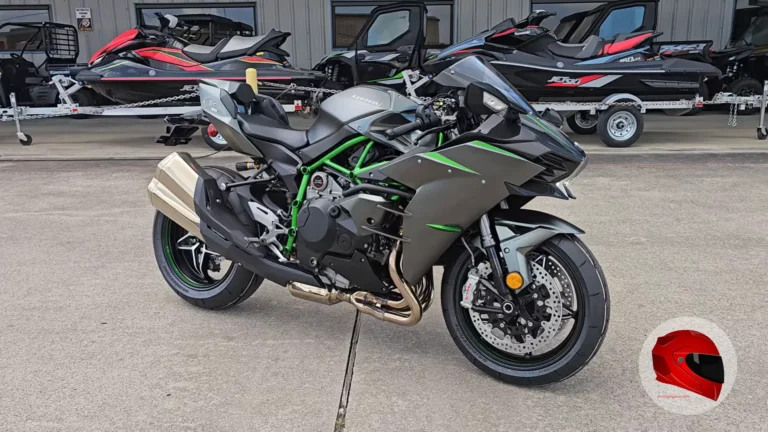
The Harley-Davidson Sportster has a higher purchase price, along with brand-dependent insurance and service costs. The Ducati Panigale sits at the expensive end of the range, with a $35,595 base MSRP before taxes and fees, insurance that can exceed $4,000 annually, and annual fuel and maintenance costs above $1,500.
Which Upfront Fees Should You Budget?
The out-the-door price is the figure to use when comparing motorcycles. An advertised dealer price may leave out freight, setup, documentation, tax, title, registration and accessories. Freight, setup and documentation commonly add $500 to $1,500, while total dealer or other fees can reach $500 to $2,000.
- Sales tax: Budget approximately 4% to 10% of the taxable purchase price.
- Title transfer: Expect $15 to $150.
- Registration: Plan on $20 to $200 annually.
- Inspection: Allow approximately $7 to $20 where required.
- License or endorsement: Budget $20 to $150, with an average fee near $35.
- Safety training: Set aside $100 to $500 for a qualifying motorcycle course.
Licensing rules differ by state in the United States. The MSF Basic RiderCourse costs $250 to $450 and satisfies a state training requirement in some locations. An approved course may also reduce insurance premiums, although the discount depends on the insurer and policy.
CycleTrader is a free marketplace for browsing and listing motorcycles. It can help you compare dealer and private-party asking prices, but the listed price does not automatically include transportation, taxes, title work, inspection or mechanical repairs.
How Much Do Gear and Safety Equipment Cost?
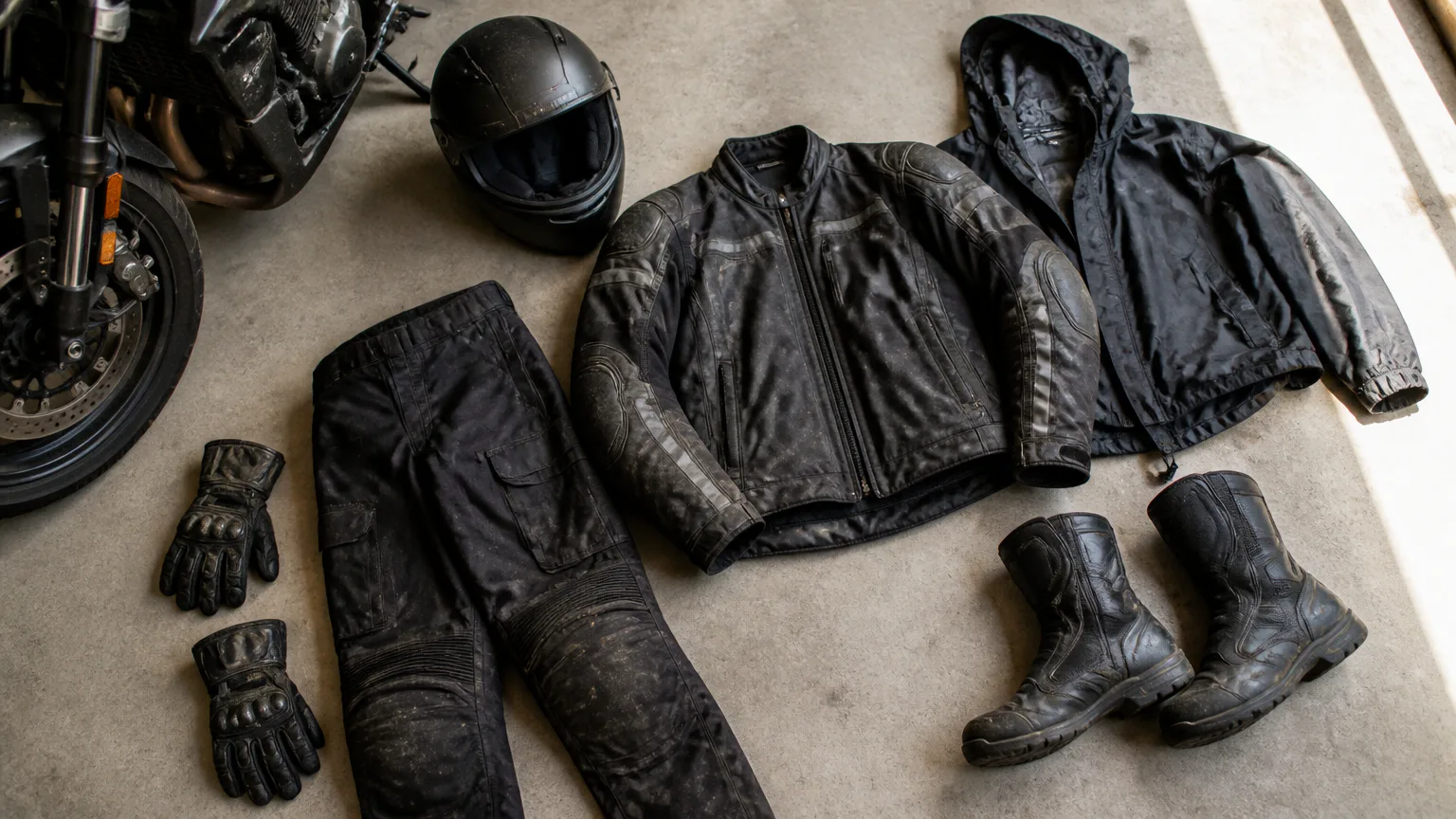
Initial riding gear generally costs $500 to $1,500. A complete setup averages approximately $1,300 to $1,500 when it includes a quality helmet, protective jacket, gloves, riding pants and motorcycle boots. If a passenger will regularly ride with you, add the cost of a second set of equipment.
- Helmet: $70, $600
- Protective jacket: $100, $500
- Gloves: $30, $200
- Riding pants: $100, $400
- Motorcycle boots: $100, $400
- Rain protection and cold-weather layers: $50, $300
- Passenger gear: $200, $1,000
Gear is an upfront ownership cost, but it also wears out. Replace a helmet after a serious impact and periodically as its materials age. Gloves, boots and textile gear may also need replacement because of abrasion, weather exposure, fit or regular use.
What Are the Annual Running Costs?
Insurance is often the largest recurring expense after financing. Liability-only coverage commonly costs $200 to $500 annually, while full coverage ranges from $400 to $1,500 or more. A Florida full-coverage policy can cost approximately $80 per month, but location, motorcycle type, age, claims history, coverage limits and deductible can change the quote substantially.
- Fuel: Divide annual miles by the motorcycle’s miles per gallon, then multiply the result by the local fuel price.
- Insurance: Price liability and full coverage separately before choosing the motorcycle.
- Maintenance: Reserve $300 to $800 for routine professional service, with approximately $1,000 as a broader annual estimate.
- Tires: A set costs $300 to $700 and lasts approximately 3,000 to 11,000 miles.
- Storage: Home storage may cost nothing, while rented or climate-controlled space can add hundreds or thousands of dollars per year.
- Repairs: Keep a separate emergency reserve because one electrical, cooling, suspension or fuel-system repair can exceed routine maintenance.
Sportbike tires can last only 3,000 to 8,000 miles, especially with aggressive riding. At 10,000 miles per year, a rider may need more than one tire set. A low-mileage commuter may use one set for several seasons.
Even if you ride only occasionally, a motorcycle still needs maintenance because some service items depend on time as well as mileage. Oil, brake fluid, coolant, batteries and tires can deteriorate while the bike is parked, so low-mileage owners should budget for more than fuel. Knowing how often to service a motorcycle helps you set aside a realistic monthly maintenance reserve.
How Much Does Motorcycle Maintenance Cost?
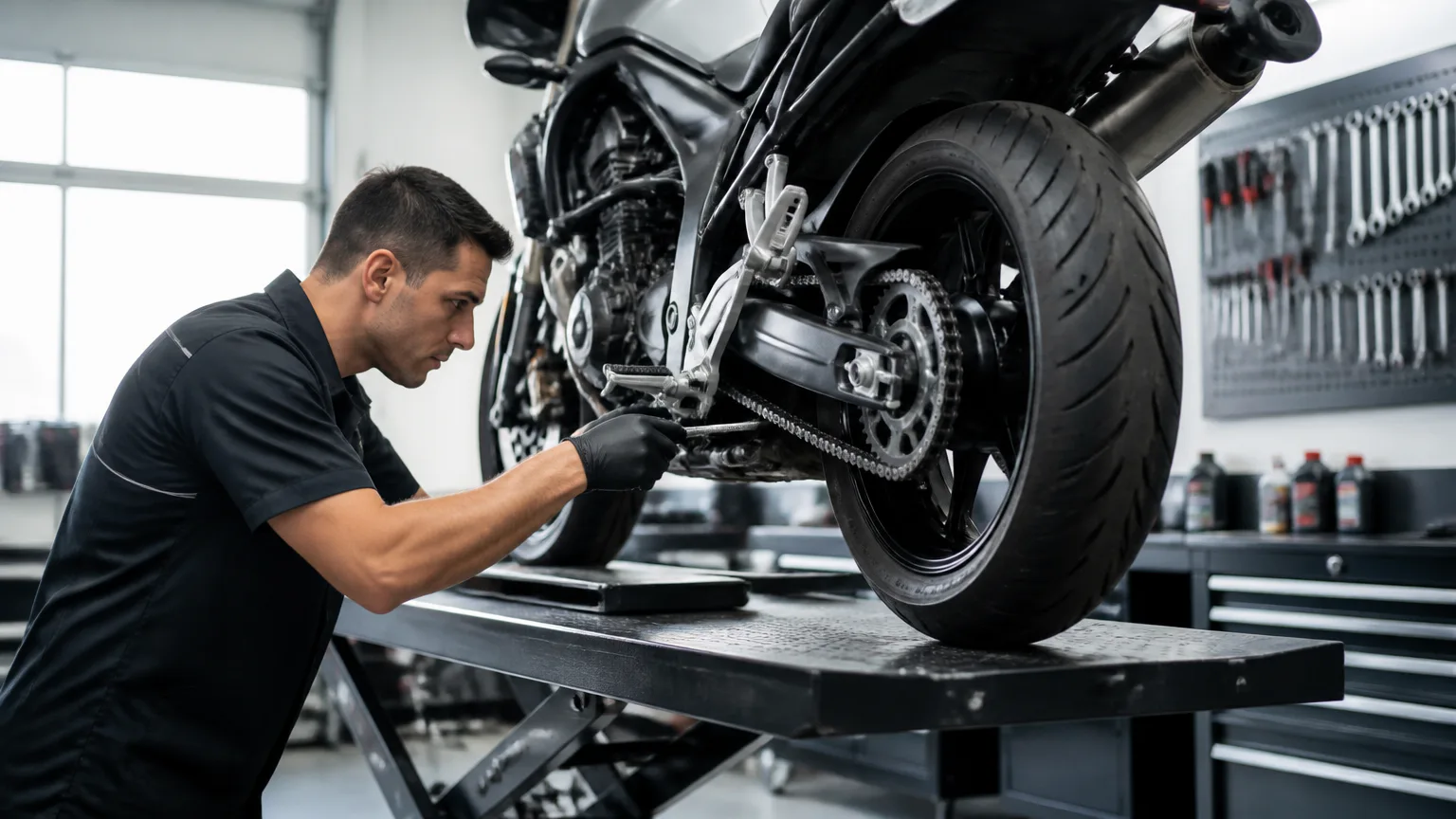
Many motorcycles need scheduled service approximately every 4,000 miles or six months. Oil changes generally occur every 3,000 to 5,000 miles or once a year. Follow the interval specified for the motorcycle’s engine and oil type.
- Check the owner’s service schedule before setting maintenance intervals.
- Change the oil and filter at the specified mileage or time limit.
- Inspect and lubricate the chain regularly on chain-driven motorcycles.
- Measure tire tread and pressure, and check for uneven wear before every extended ride.
- Replace brake pads and other wear components when inspections show they are needed.
- Schedule valve adjustment when the service interval calls for it.
- Record parts, labor, mileage and dates for warranty and resale documentation.
Routine professional maintenance costs $300 to $800 annually for many motorcycles. Valve adjustments can cost $800 to $1,500, while a tire set costs $300 to $700. Owners who handle oil changes, chain care, air filters and simple inspections themselves can reduce labor costs, but incorrect maintenance can cause safety and engine problems.
It is easier to estimate motorcycle maintenance costs by looking at routine tasks separately instead of treating them as one annual bill. Oil changes, brake inspections, tire checks, chain adjustments and fluid replacements all have different intervals, parts costs and labor requirements. A list of essential motorcycle maintenance tasks can help you decide which jobs to handle yourself and which to budget for at a shop.
How Do New and Used Bikes Compare?
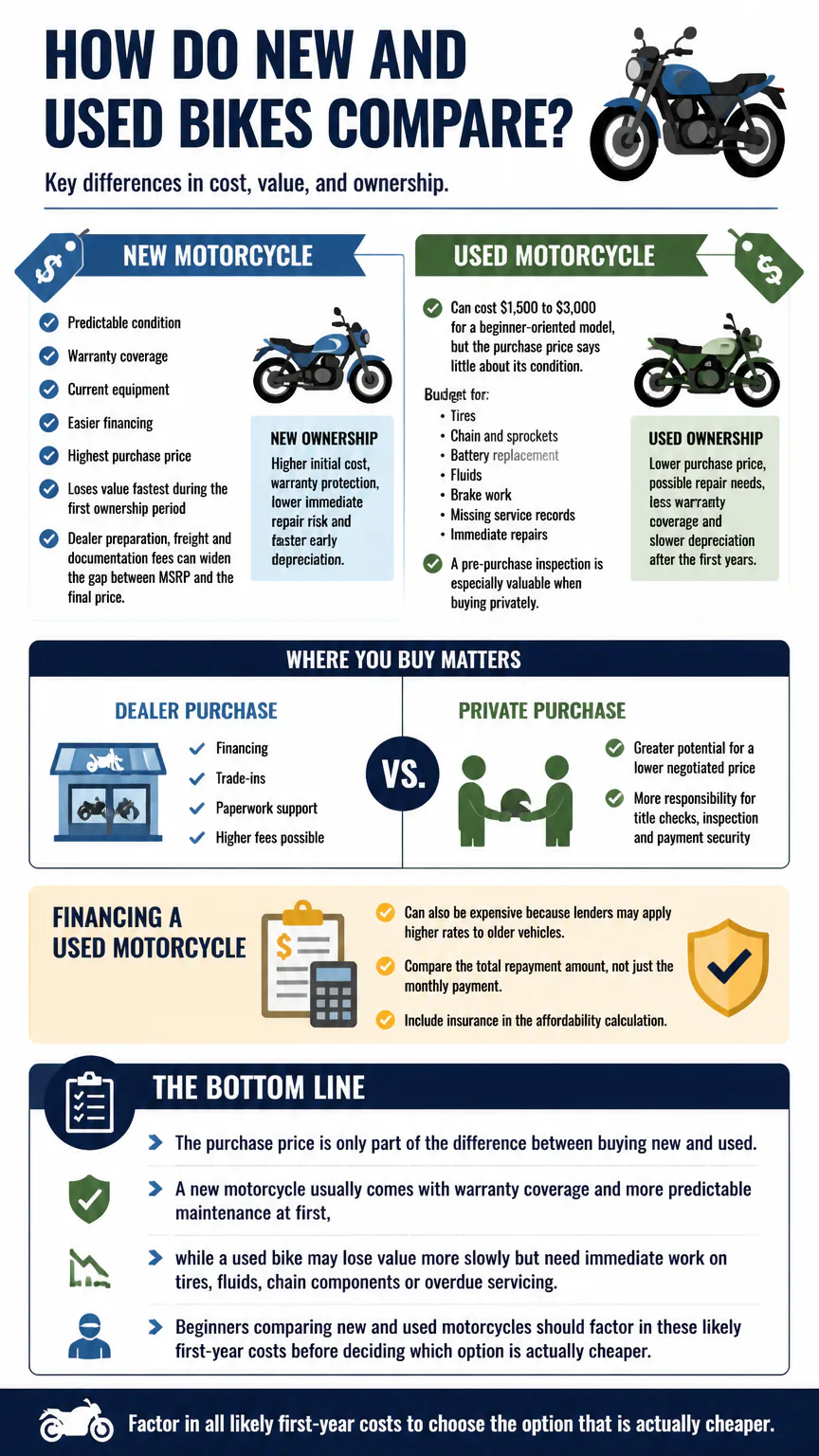
A new motorcycle usually comes with a predictable condition, warranty coverage, current equipment and easier financing. It also has the highest purchase price and usually loses value fastest during the first ownership period. Dealer preparation, freight and documentation fees can widen the gap between MSRP and the final price.
A used motorcycle can cost $1,500 to $3,000 for a beginner-oriented model, but the purchase price says little about its condition. Budget for tires, chain and sprockets, battery replacement, fluids, brake work, missing service records and immediate repairs. A pre-purchase inspection is especially valuable when buying privately.
- New ownership: Higher initial cost, warranty protection, lower immediate repair risk and faster early depreciation.
- Used ownership: Lower purchase price, possible repair needs, less warranty coverage and slower depreciation after the first years.
- Dealer purchase: Financing, trade-ins and paperwork support, with higher fees possible.
- Private purchase: Greater potential for a lower negotiated price, but more responsibility for title checks, inspection and payment security.
Financing a used motorcycle can also be expensive because lenders may apply higher rates to older vehicles. Compare the total repayment amount, not just the monthly payment, and include insurance in the affordability calculation.
The purchase price is only part of the difference between buying new and used. A new motorcycle usually comes with warranty coverage and more predictable maintenance at first, while a used bike may lose value more slowly but need immediate work on tires, fluids, chain components or overdue servicing. Beginners comparing new and used motorcycles should factor in these likely first-year costs before deciding which option is actually cheaper.
Is a Motorcycle Cheaper Than a Car?
A motorcycle may reduce fuel use, parking costs and the purchase price compared with many cars. It does not automatically reduce total transportation costs: insurance, tires, safety equipment, seasonal storage and maintenance can absorb much of the difference.
- Fuel: Motorcycles often use less fuel, but the savings depend on mileage and engine efficiency.
- Parking: A motorcycle may reduce paid parking expenses in some locations.
- Insurance: Liability can be inexpensive, while full coverage for sportbikes and premium models can be costly.
- Maintenance: Tires and chain components may wear faster than comparable car components.
- Practicality: Cargo, passenger capacity, weather protection and winter usability are limited.
- Risk exposure: Motorcycles provide less physical protection in a crash, so medical, disability and emergency transportation costs also deserve consideration.
A motorcycle works best as a low-cost commuter when it replaces enough car miles to offset its ownership expenses. If it becomes a second vehicle used only occasionally, insurance, registration, storage and depreciation continue even when fuel use is minimal.
How Can You Build a Motorcycle Budget?
Start with the out-the-door purchase cost, then separate one-time expenses from annual expenses. Divide predictable annual costs by 12, and keep a separate repair reserve so a breakdown does not affect rent, debt payments or other essential expenses.
- Budget commuter: A $3,000 used motorcycle, $800 for initial gear, $300 for title and registration, $300 for insurance, at least $600 for fuel and routine maintenance, and $600 for repairs and tires creates a first-year budget near $5,600 before financing.
- New beginner motorcycle: A $5,349 Honda Rebel 300, approximately $1,050 in taxes and fees, $1,300 in gear, $350 for training, $350 for insurance, and at least $600 for fuel and routine maintenance creates a first-year budget near $9,000 before financing.
- Higher-cost enthusiast bike: A $35,595 Ducati Panigale, approximately $3,295 in taxes and fees, $1,500 in gear, $2,900 in insurance, and $2,000 in fuel and maintenance creates a first-year budget above $45,000 before financing.
These budgets exclude the loan payment when the motorcycle is financed. Add the actual monthly payment, loan interest and any required full-coverage insurance before deciding whether the motorcycle fits the household budget.
What Costs Do Owners Commonly Miss?
The most common budgeting mistake is treating the motorcycle’s sticker price as the total purchase cost. Dealer charges, taxes, licensing, training, gear and immediate setup work can add several thousand dollars before the first full tank of fuel.
- Financing interest: A low monthly payment can conceal a long term and a high total repayment amount.
- Security: Disc locks, chains, alarms, covers and GPS equipment add upfront costs and may reduce theft exposure.
- Storage: Outdoor parking may require a weatherproof cover, while rented storage adds a recurring bill.
- Accessories: Saddlebags, luggage, windscreens, phone mounts, heated equipment and crash protection can quickly expand the budget.
- Emergency transportation: Rain, winter conditions, mechanical failures and injuries can require rideshare, rental cars or public transportation.
- Depreciation: Resale value depends on mileage, condition, service records, model demand and accident history.
- Unexpected repairs: Keep cash available for batteries, electrical faults, suspension work, cooling problems and damaged controls.
Buy accessories after you understand the motorcycle’s fit and intended use. Luggage, protection and electronic equipment can add more cost than expected when purchased before you know what you actually need.
FAQs
How much is a motorcycle license?
A motorcycle license or endorsement commonly costs $20 to $150, with an average fee near $35. A state-approved training course can add $100 to $500, including $250 to $450 for the MSF Basic RiderCourse.
How much does a motorcycle cost for a beginner?
A used beginner motorcycle can cost $1,500 to $3,000. New beginner motorcycles commonly cost $5,000 to $10,000 before taxes, fees, gear, insurance and training.
What is the monthly cost of owning a motorcycle?
A paid-off beginner motorcycle can cost about $85 to $300 per month for insurance, fuel, maintenance, tires, registration and repairs. Financing, premium insurance, storage and high mileage can raise the monthly total above $500.
Does motorcycle ownership include medical costs?
Medical bills, lost income, disability coverage and emergency transportation are not included in normal ownership estimates. Motorcycle riders face greater physical exposure in crashes, so health insurance, disability protection and appropriate liability limits belong in the broader financial plan.
How much does a motorcycle weigh?
In the United States, lightweight beginner motorcycles commonly weigh about 300-400 pounds, middleweight models 400-500 pounds, cruisers 450-800 pounds, touring motorcycles 700-1,000 pounds and premium sportbikes roughly 400-500 pounds. Wet weight includes fuel and operating fluids.
Conclusion
Calculate the motorcycle’s out-the-door price first, then add gear and training before estimating annual insurance, fuel, maintenance, tires, storage, repairs and financing. A modest used or beginner motorcycle can remain affordable, but premium models require a much larger reserve for insurance, service and depreciation.