BMW S1000RR vs Ducati Panigale V4: Price, Power and Practicality
Choosing between the BMW S1000RR and Ducati Panigale V4 comes down to more than peak horsepower. The BMW emphasizes usable speed, broad electronic support and a lower entry price. The Ducati delivers more displacement, stronger output and a sharper track-focused character. Price, riding position, service costs and dealer support all deserve attention before you decide.
BMW S1000RR vs Ducati Panigale V4 Specs
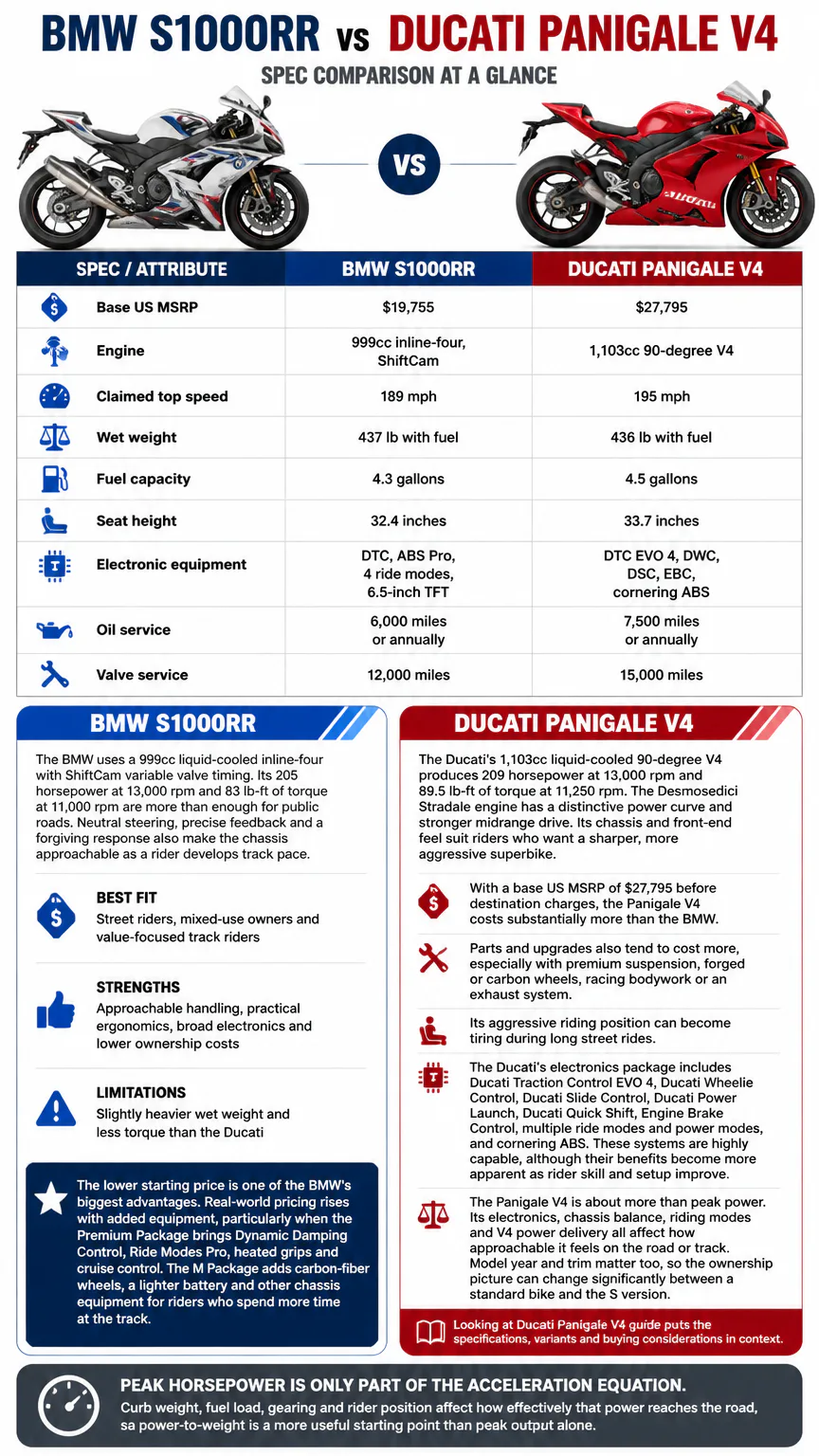
| Attribute | BMW S1000RR | Ducati Panigale V4 |
|---|---|---|
| Base US MSRP | $19,755 | $27,795 |
| Engine | 999cc inline-four, ShiftCam | 1,103cc 90-degree V4 |
| Claimed top speed | 189 mph | 195 mph |
| Wet weight | 437 lb with fuel | 436 lb with fuel |
| Fuel capacity | 4.3 gallons | 4.5 gallons |
| Seat height | 32.4 inches | 33.7 inches |
| Electronic equipment | DTC, ABS Pro, 4 ride modes, 6.5-inch TFT | DTC EVO 4, DWC, DSC, EBC, cornering ABS |
| Oil service | 6,000 miles or annually | 7,500 miles or annually |
| Valve service | 12,000 miles | 15,000 miles |
Peak horsepower is only part of the acceleration equation. Curb weight, fuel load, gearing and rider position affect how effectively that power reaches the road, so power-to-weight is a more useful starting point than peak output alone. Comparing the best motorcycle power-to-weight ratios also puts the BMW S1000RR and Ducati Panigale V4 in context with other high-performance motorcycles.
BMW S1000RR
The BMW uses a 999cc liquid-cooled inline-four with ShiftCam variable valve timing. Its 205 horsepower at 13,000 rpm and 83 lb-ft of torque at 11,000 rpm are more than enough for public roads. Neutral steering, precise feedback and a forgiving response also make the chassis approachable as a rider develops track pace.
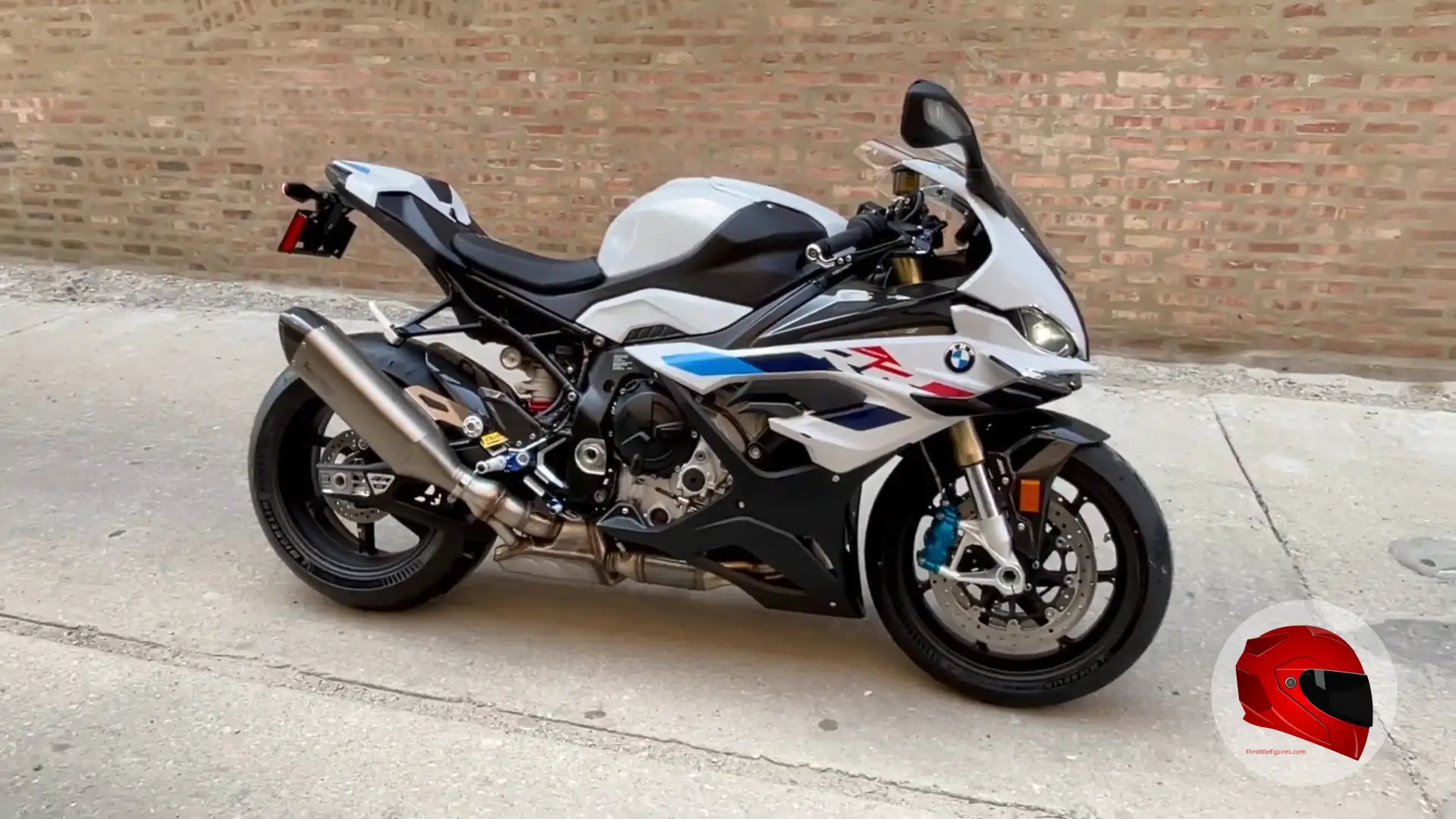
The lower starting price is one of the BMW’s biggest advantages. Real-world pricing rises with added equipment, particularly when the Premium Package brings Dynamic Damping Control, Ride Modes Pro, heated grips and cruise control. The M Package adds carbon-fiber wheels, a lighter battery and other chassis equipment for riders who spend more time at the track.
- Best fit: Street riders, mixed-use owners and value-focused track riders
- Strengths: Approachable handling, practical ergonomics, broad electronics and lower ownership costs
- Limitations: Slightly heavier wet weight and less torque than the Ducati
Ducati Panigale V4
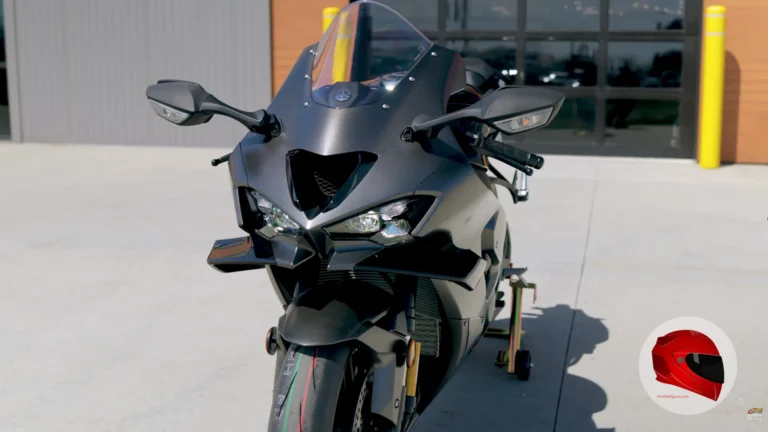
The Ducati’s 1,103cc liquid-cooled 90-degree V4 produces 209 hp at 12,750 rpm and 89.5 lb-ft of torque at 11,250 rpm. The Desmosedici Stradale engine has a distinctive power curve and stronger midrange drive. Its chassis and front-end feel suit riders who want a sharper, more aggressive superbike.
With a base US MSRP of $27,795 before destination charges, the Panigale V4 costs substantially more than the BMW. Parts and upgrades also tend to cost more, especially with premium suspension, forged or carbon wheels, racing bodywork or an exhaust system. Its aggressive riding position can become tiring during long street rides.
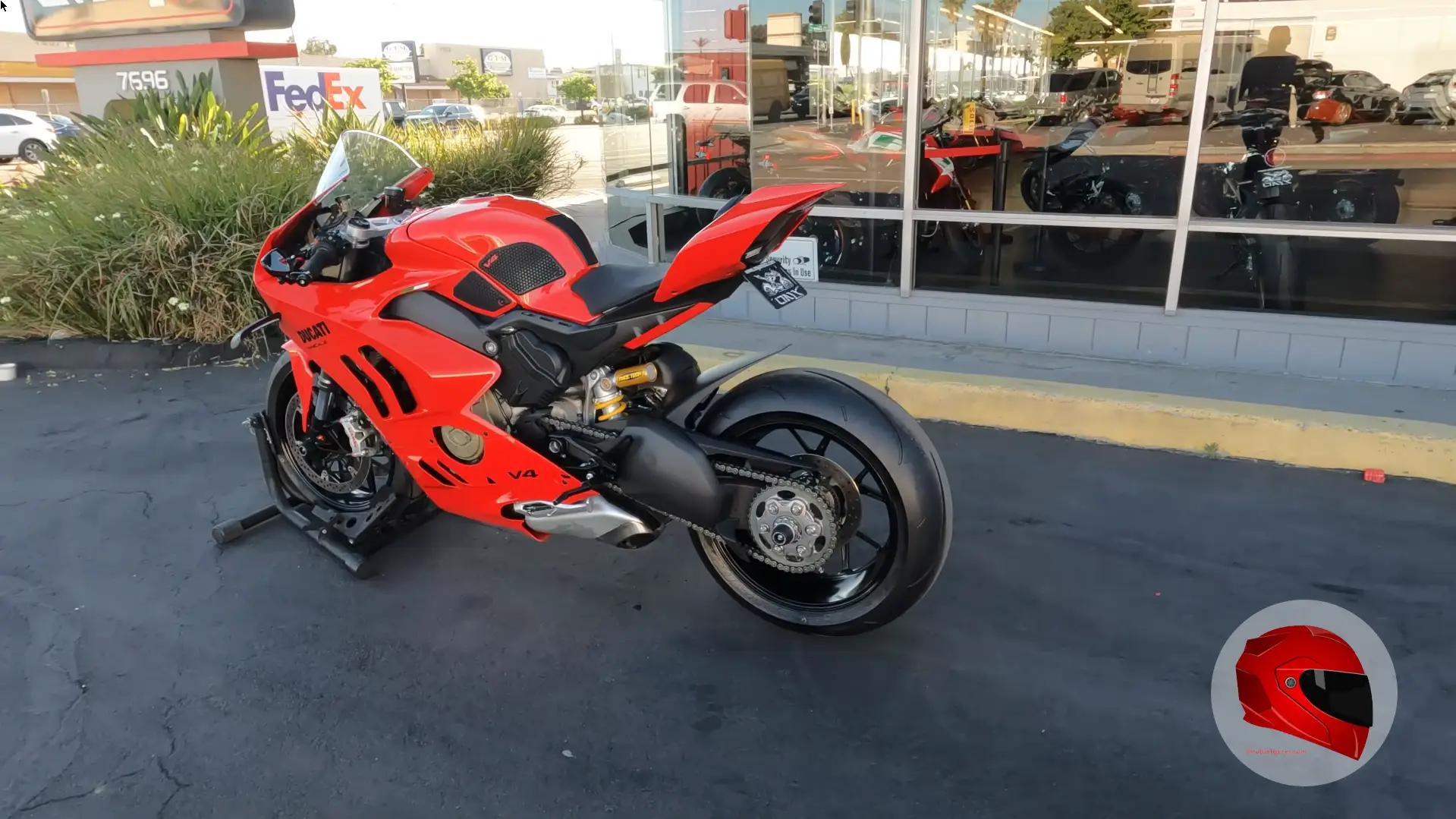
The Ducati’s electronics package includes Ducati Traction Control EVO 4, Ducati Wheelie Control, Ducati Slide Control, Ducati Power Launch, Ducati Quick Shift, Engine Brake Control, multiple ride modes and power modes, and cornering ABS. These systems are highly capable, although their benefits become more apparent as rider skill and setup improve.
The Panigale V4 is about more than peak power. Its electronics, chassis balance, riding modes and V4 power delivery all affect how approachable it feels on the road or track. Model year and trim matter too, so the ownership picture can change significantly between a standard bike and the S version. Looking at Ducati Panigale V4 guide puts the specifications, variants and buying considerations in context.
Requirements and context
Both motorcycles are street-legal superbikes with the equipment needed for normal road registration, including lighting, mirrors, turn signals and emissions hardware in stock form. Removing catalytic converters or installing track-only exhaust equipment can affect emissions compliance, noise levels, insurance coverage and registration legality.
The BMW S1000RR M Package is an equipment upgrade for buyers who want lower mass and more track-oriented hardware. It remains a package choice for the BMW rather than a separate motorcycle. Ducati buyers can choose the Panigale V4 S for premium chassis equipment, while the Panigale V4 R is a more specialized homologation-focused model with a different price and ownership case.
Dealer access matters because both motorcycles require brand-specific diagnostic tools and trained technicians. The BMW Motorrad Dealer Network handles warranty work, software updates and parts support. Ducati authorized dealers provide comparable support for the Panigale, including Desmo valve service and electronic calibration.
Test rides are not guaranteed. Dealers commonly require a valid motorcycle license, proof of insurance, protective riding gear and a signed waiver. Some also require a purchase agreement or cash deposit. Demonstration-bike availability and eligibility vary by dealership.
Which bike is faster?
The Ducati has the advantage on paper. Its 209 hp at 12,750 rpm, 89.5 lb-ft of torque at 11,250 rpm, 436-pound wet weight with fuel and claimed top speed of 195 mph give it the stronger specification sheet. The BMW remains close, with 205 horsepower at 13,000 rpm, 83 lb-ft of torque at 11,000 rpm, a 437-pound wet weight with fuel and a claimed top speed of 189 mph.
Acceleration depends on gearing, launch technique, tire condition, rider position, fuel load, surface quality and electronic settings. A drag race can produce a different result from a rolling acceleration test, and model-year equipment changes can affect the comparison. On public roads, both motorcycles reach illegal speeds quickly, so rider control matters more than the small specification gap.
On a circuit, the Ducati’s torque and front-end character can reward an experienced rider who brakes late and carries high corner speed. The BMW’s neutral handling and forgiving electronics make it easier to ride consistently, especially while learning lines, braking markers and throttle control.
Published top-speed figures tell only part of the story. Fairing design, rider position, gearing, wind, road gradient and electronic limits can all affect the result, so the BMW and Ducati may record different speeds in independent tests despite similar claims. Understanding the main motorcycle top-speed factors helps distinguish an advertised figure from what a rider can realistically achieve.
Street comfort and daily usability
The BMW is the more practical road motorcycle. Its ergonomics are generally less demanding on the wrists, while available cruise control and heated grips help with commuting, highway miles and cool-weather riding. Low-speed fueling is also more accommodating, which matters in traffic and tight urban streets.
The Ducati places the rider in a more aggressive, track-oriented position. Heat, vibration and the forward reach become more noticeable in slow traffic and during long rides. The engine is most rewarding when the bike is being ridden hard. The higher seat can also matter for shorter riders, although seat width and suspension setup affect reach as much as the published height.
Neither motorcycle is a relaxed standard or touring bike. Both require careful tire warm-up, smooth throttle control and disciplined speed management. The BMW usually demands less physical effort on canyon rides with occasional highway use. The Ducati has more appeal for short, intense rides where engine character and front-end feel take priority.
Track performance and rider skill
The Panigale V4 is the more exotic track-focused choice. Its V4 engine, stronger torque, lighter applicable configurations, aggressive chassis balance and extensive electronic controls suit riders who already understand body position, trail braking, tire temperature and suspension adjustments.
The S1000RR is easier to exploit across a wider range of skill levels. Dynamic Traction Control, ABS Pro, Shift Assistant Pro, four ride modes and optional Dynamic Damping Control give the rider a predictable baseline. That does not make the BMW slow; it makes its performance easier to access consistently.
Training can produce a larger lap-time improvement than a small power difference. California SuperBike School is one option for structured rider coaching, and either motorcycle benefits from professional instruction before electronic settings become more aggressive. Address track tires, suspension sag, brake fluid, brake pads and correct tire pressures before spending money on engine upgrades.
Maintenance, insurance and ownership costs
The BMW generally costs less to own. Its initial service is due at approximately 600 miles, oil service comes every 6,000 miles or annually, and valve inspection is scheduled at 12,000 miles. Parts, aftermarket upgrades and track consumables are also generally less expensive than comparable Ducati components.
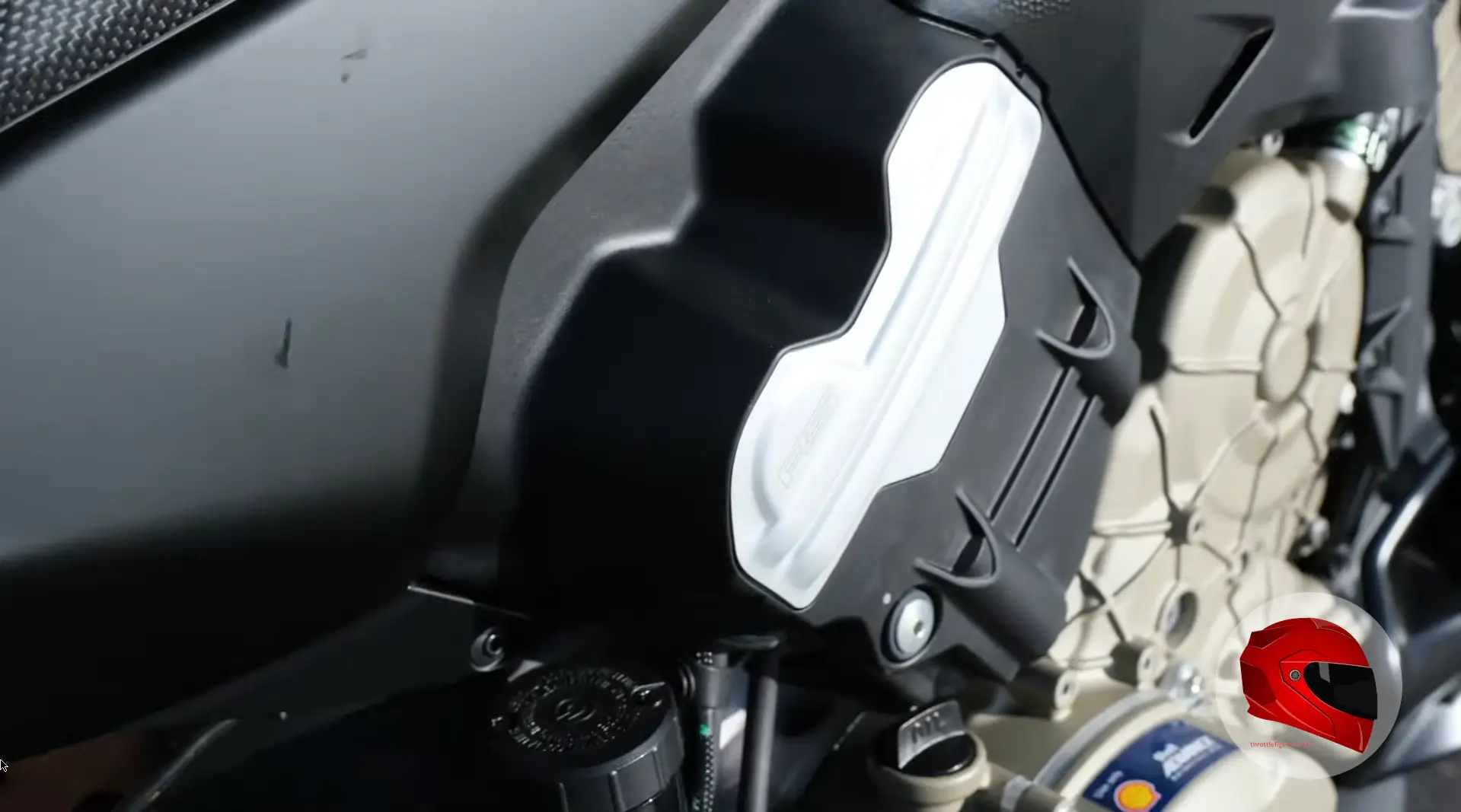
The Ducati has an initial service at approximately 600 miles, followed by oil service at approximately 7,500 miles or annually. Desmo valve service is scheduled at approximately 15,000 miles. That interval is not unusually short for a premium superbike, but labor and specialized procedures can make the bill higher when service is due.
Insurance costs depend on engine size, performance classification, rider age, location, claims history, coverage limits, storage and racetrack use. Track-day damage is usually excluded from ordinary motorcycle policies, so riders who plan frequent circuit use should price dedicated track coverage separately.
Budget for destination charges, taxes, registration, riding gear, tires, brake components, fluids, stands and insurance in addition to the motorcycle’s MSRP. The Ducati also deserves a larger reserve for premium parts and exhaust upgrades. Dealer distance adds another ownership cost, particularly when maintenance or warranty work requires a long trip.
Which superbike should you buy?
- Choose the BMW S1000RR if you want stronger value, more manageable street ergonomics, useful touring equipment and an easier path into track riding.
- Choose the Ducati Panigale V4 if you prioritize V4 character, stronger torque, sharper track behavior and premium component appeal over purchase and service costs.
- Choose the BMW with the M Package if you want to reduce weight and add track-oriented equipment without moving to a different motorcycle.
- Choose the Ducati V4 S if upgraded suspension and premium chassis equipment matter more than the base model’s lower price.
For owners who will ride mainly on public roads and visit a track occasionally, the BMW is the more rational purchase. The Ducati earns its extra cost for riders who specifically value its V4 engine character, styling, chassis response and focused riding experience.
FAQs
Which is better, the BMW M 1000 RR or the Ducati V4 S?
The BMW M 1000 RR and Ducati Panigale V4 S are more specialized and more expensive than the base models discussed here. The choice depends on whether you prefer BMW’s electronics and inline-four delivery or Ducati’s V4 character and aggressive chassis balance.
Is BMW better than Ducati for street riding?
The BMW S1000RR is generally better suited to street use because of its more accommodating ergonomics, smoother low-speed behavior and available cruise control and heated grips. The Panigale V4 is road legal, but its riding position and heat are more demanding during everyday use.
Can either motorcycle be a first sportbike?
Neither is an appropriate first motorcycle for most riders. Their power, speed, braking performance and sensitive throttle response call for prior experience, formal training and gradual progression before advanced electronic settings or track riding.
Which bike can beat the Ducati Panigale V4?
The result depends on the motorcycle, rider, gearing, surface and conditions. A BMW S1000RR can remain competitive in acceleration and lap times, but no street comparison can guarantee a winner in every test.
Conclusion
The BMW S1000RR is the better all-round buy for most US riders because it costs less, works better on the street and remains highly capable on a racetrack. Choose the Ducati Panigale V4 when its V4 engine, sharper character and premium track focus justify the higher purchase and ownership costs.