Does Horsepower Determine Motorcycle Top Speed? The Real Factors
Horsepower strongly influences a motorcycle’s possible top speed, but it does not determine the final number on its own. Aerodynamic drag, gearing, engine speed, drivetrain losses, rolling resistance, rider position, weight and tire limitations all affect the result. More power raises top speed only when the motorcycle can transmit and use that power at the relevant speed.
What controls motorcycle top speed
| Factor | Primary effect | Top-speed limitation |
|---|---|---|
| Horsepower | Provides power to overcome resistance at speed | Insufficient usable power prevents further acceleration against aerodynamic drag |
| Aerodynamics | Determines how much air resistance the motorcycle creates | Drag rises rapidly with speed and can consume nearly all available power |
| Gearing and RPM | Converts engine speed into road speed | Short gearing can hit the rev limiter; tall gearing can leave the engine below its useful power range |
| Torque | Produces twisting force and supports acceleration | Torque alone does not establish top-speed potential without its RPM context and gearing |
| Weight | Affects acceleration, tire loading and rolling resistance | Usually has a smaller effect on level-ground top speed than aerodynamic drag |
| Tires and traction | Transmit engine power to the road and affect rolling losses | Wheelspin, tire speed ratings, condition or insufficient traction can limit usable speed |
The short answer
- Horsepower determines how much power the engine has available to overcome aerodynamic drag at high speed.
- Aerodynamics usually become the main limit on a motorcycle’s top speed.
- Gearing and the rev limiter determine whether the engine can reach its power peak in top gear.
- Weight has a large effect on acceleration but a smaller effect on maximum speed on level pavement.
- Adding horsepower does not guarantee a higher top speed if gearing, traction or airflow remains the limiting factor.
How horsepower affects top speed
At high speed, a motorcycle uses most of its available power to push through the air. Aerodynamic drag rises rapidly with speed, and the power needed to overcome it rises approximately with the cube of speed. If the motorcycle’s shape and frontal area stay the same, doubling its speed requires roughly eight times as much aerodynamic power.
This is why a modest power increase produces a relatively small top-speed gain. In a drag-limited situation, top speed is approximately proportional to the cube root of available wheel horsepower. A 10% increase in usable power produces about a 3.2% theoretical increase in speed, assuming the motorcycle’s aerodynamics, gearing, tires and conditions remain unchanged.
For example, increasing usable power from 100 horsepower to 120 horsepower produces a theoretical speed ratio equal to the cube root of 1.2, or about 1.062. A motorcycle reaching 150 mph under the original conditions would therefore have a theoretical result near 159 mph, not 180 mph. The real result may be lower if the extra power arrives outside the usable RPM range or causes wheelspin.
Worked example: dyno power vs GPS top speed
Use a controlled comparison rather than a dashboard reading. Suppose a fully faired sport bike records 112 rear-wheel horsepower on a chassis dyno and reaches a two-way average of 148 mph GPS on a closed course with the rider tucked. After an exhaust and ECU revision, the same bike records 124 rear-wheel horsepower at a similar RPM.
- Power ratio: 124 ÷ 112 = 1.107
- Theoretical speed ratio (cube root of 1.107) ≈ 1.034
- Predicted GPS top speed: 148 × 1.034 ≈ 153 mph
If GPS then shows only 149–150 mph in both directions, the motorcycle is likely still gearing- or RPM-limited, or the extra power is arriving outside the RPM used at terminal speed. If GPS reaches about 153 mph and engine RPM remains below the limiter, the upgrade was power-limited before. Pair every dyno session with GPS runs in both directions before claiming a new top speed. For launch and short-burst testing methods, see how motorcycle 0–60 times are measured.
What else controls maximum speed
Horsepower describes how quickly the engine can do work, but the motorcycle must deliver that power to the road at the right speed. Several physical and mechanical limits can stop the engine’s peak output from producing a higher maximum speed.
Aerodynamic drag
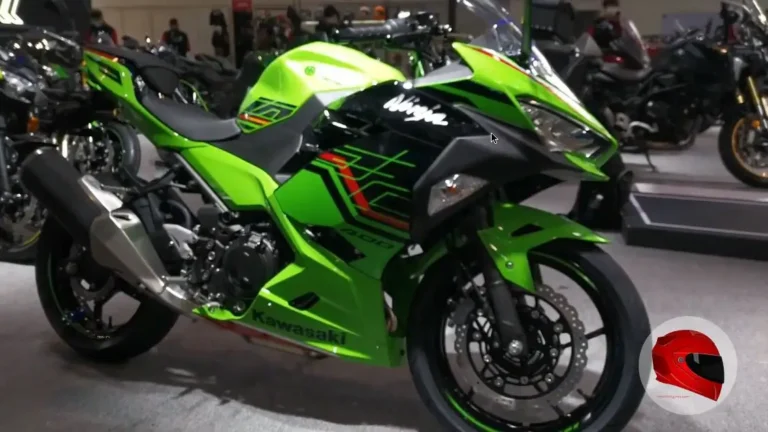
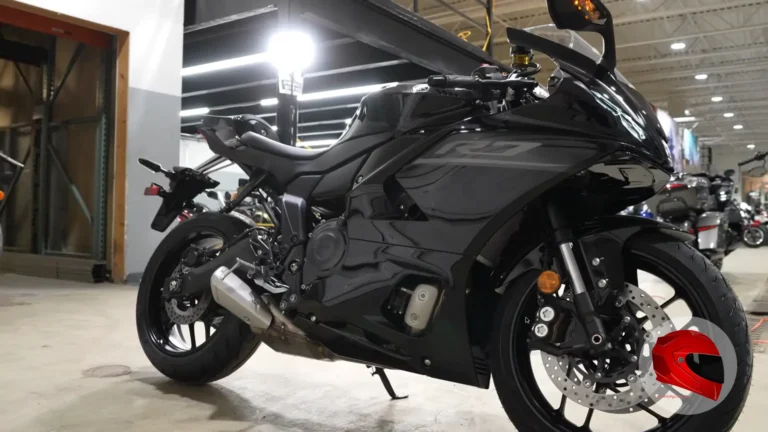
The motorcycle’s drag coefficient and frontal area determine how much air resistance it creates. A fully faired sport bike with a tucked rider generally needs less power at a given speed than a naked motorcycle with an upright rider. Windscreen shape, mirrors, luggage, riding gear and helmet position also affect airflow.
Rider posture can make a noticeable difference because the rider often contributes more frontal area than the motorcycle. An upright position may limit top speed even when the engine could pull a higher speed with the rider tucked in.
Gearing and engine RPM
Gearing converts engine speed into road speed. Very short gearing can take the motorcycle to its rev limiter before aerodynamic drag becomes the limiting factor. Very tall gearing can leave the engine below its useful power range before it reaches redline in top gear.
- Short gearing: stronger wheel acceleration and a lower RPM-limited top speed.
- Tall gearing: lower engine RPM at a given road speed and a possible inability to pull top gear.
- Correct gearing: engine RPM stays within the strongest part of the power curve at maximum speed.
- Final-drive changes: a smaller front sprocket or larger rear sprocket lowers speed per RPM; the reverse raises it.
The useful question is not simply how much horsepower the engine makes. It is whether the highest gear keeps the engine at an effective RPM when aerodynamic resistance is greatest.
Drivetrain losses
Published horsepower may refer to crankshaft output, while a dynamometer reading often measures power at the rear wheel. The chain, transmission, bearings, clutch and other components consume some engine output before it reaches the tire.
Top-speed calculations should use the same type of power measurement throughout. Rear-wheel horsepower is more useful for estimating real acceleration and terminal speed because it already accounts for drivetrain losses. Peak horsepower alone is still incomplete; the full power curve shows how much output is available at each RPM.
Rolling resistance and tires
Tire deformation, wheel bearings, chain condition and the road surface create rolling resistance. These losses exist at every speed, although aerodynamic drag usually becomes much larger near the top of a motorcycle’s performance range. A worn or underinflated tire can also increase heat and instability.
Tires impose a separate practical limit. Their speed rating, condition, temperature, load and construction must suit the intended speed. A theoretical calculation does not override the tire manufacturer’s rating or the motorcycle manufacturer’s operating limits.
Weight and riding conditions
Weight strongly affects acceleration because more mass requires more force to gain speed. Its effect on steady top speed is smaller on level ground because weight does not create the same rapidly increasing resistance as aerodynamic drag.
Weight still affects tire loading, rolling resistance, suspension behavior and the power needed to climb even a slight grade. Wind direction and air density also matter. A headwind increases the air speed seen by the motorcycle, while altitude and temperature change the density of the air being pushed aside.
Horsepower is only one part of a motorcycle’s top-speed equation. Aerodynamic drag, gearing, drivetrain efficiency, tire condition, rider position, wind and road gradient all affect how much power reaches the road and how long the bike continues to accelerate. Together, these interacting motorcycle top speed factors explain why two motorcycles with similar horsepower can reach noticeably different terminal speeds.
Horsepower versus torque
Torque is twisting force at the crankshaft or rear wheel. Horsepower combines torque with engine speed. In U.S. units, the relationship is:
horsepower = torque × RPM ÷ 5,252
Torque helps produce acceleration at a particular engine speed, while gearing multiplies wheel torque. A lower-revving engine with high crankshaft torque can deliver similar wheel force to a higher-revving engine with less crankshaft torque once the gear ratios are taken into account.
Horsepower becomes especially important as speed rises because the motorcycle must continuously supply power to overcome drag. Torque remains part of the calculation, but a torque figure without its RPM context does not show the motorcycle’s top-speed potential.
For acceleration, the complete power curve is more useful than either peak torque or peak horsepower alone. It shows how strongly the motorcycle can continue gaining speed through each gear and whether the engine stays in its useful range after an upshift. When comparing bikes of different mass, combine that curve with a realistic motorcycle power-to-weight ratio that includes fuel, rider and gear.
How to estimate motorcycle top speed
A useful estimate combines measured power with aerodynamic and gearing data. A calculator based only on horsepower and weight can provide a rough comparison, but it cannot produce a reliable speed without an aerodynamic assumption and a way to determine engine RPM at that speed.
Gather the necessary inputs
- Rear-wheel horsepower and the RPM at which it occurs.
- The full dyno power curve, if available.
- Engine redline and rev-limiter speed.
- Primary, transmission and final-drive ratios.
- Rear-tire circumference under load.
- Estimated drag coefficient and frontal area.
- Air density, road grade, wind and total operating weight.
Run the estimate
- Calculate road speed at each engine RPM using the total gear ratio and tire circumference.
- Convert the engine’s available power into wheel power.
- Estimate aerodynamic power with P = 0.5 × air density × CdA × speed³.
- Add rolling resistance and any power required to overcome the road grade.
- Find the speed at which available wheel power equals total resistance power.
- Check that engine RPM at that speed remains below the rev limiter and within the usable power curve.
Gearing Commander can help check gear-to-speed relationships, sprocket changes and RPM ranges. It does not replace an aerodynamic power calculation or a real-world measurement. Gearing data alone cannot show whether the engine has enough power to pull the selected gear.
Why a horsepower upgrade may not raise top speed
An engine modification increases top speed only when the motorcycle was power-limited at its previous maximum. If the bike already reaches the rev limiter in top gear, adding power without taller gearing cannot add speed. If the engine cannot reach peak power because the gearing is too tall, changing the final drive may produce a larger improvement than adding peak horsepower.
- Rev-limiter limited: the engine reaches maximum RPM before aerodynamic resistance is overcome.
- Power limited: the engine cannot produce enough wheel power to continue accelerating.
- Traction limited: the tire cannot transmit the available drive force without slipping.
- Aero limited: drag consumes nearly all available power at the motorcycle’s maximum speed.
- Stability limited: wind, suspension movement or tire condition makes further speed unsafe.
Removing a speed limiter, fitting taller gearing or increasing engine output can change the theoretical result. Those changes also affect heat, engine stress, braking distance, chain load, tire speed and chassis stability. High-speed testing belongs on a suitable closed course with properly rated equipment.
How to verify the real top speed
Manufacturer claims, speedometer readings and gearing calculations may differ from actual road speed. Motorcycle speedometers commonly read higher than true speed, while wind, road slope, rider position, tire size and fuel load can change the result from one run to another.
- Use a closed course or controlled test facility suited to the motorcycle’s speed.
- Record true speed with a quality GPS device or verified data logger.
- Make runs in both directions to reduce the effects of wind and grade.
- Use the same rider position, tire pressures, fuel load and mechanical setup.
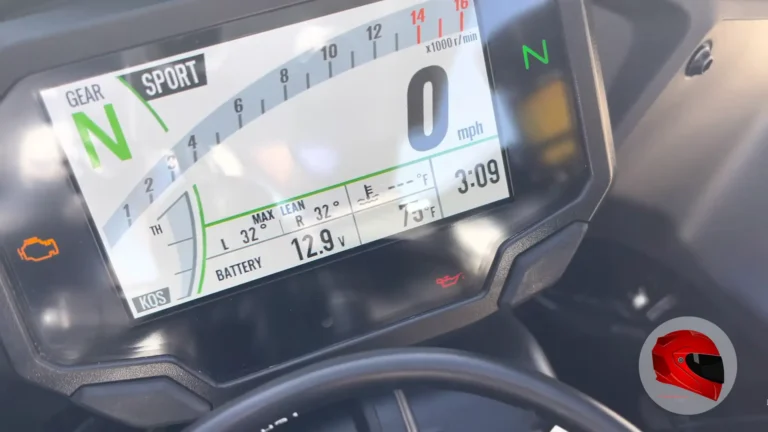
- Compare GPS speed with engine RPM to identify gearing or rev-limiter limits.
- Keep the engine, tires and brakes within their specified operating limits.
A dyno session can show whether an upgrade increased rear-wheel power and where that power occurs in the rev range. GPS testing then shows whether the motorcycle can convert that additional output into speed under controlled conditions.
A speedometer reading alone does not confirm a motorcycle’s true top speed. GPS accuracy, wind, road slope, tire size and testing in both directions can affect the result, while electronic limiters may stop the engine before it reaches its theoretical maximum. Knowing how motorcycle top speed is measured helps distinguish a repeatable performance figure from an optimistic dashboard reading.
FAQs
Does more horsepower mean faster acceleration?
More usable horsepower generally improves acceleration, especially at higher speeds, because it gives the motorcycle more ability to overcome resistance. Launch and low-speed performance also depend on gearing, torque delivery, traction, wheelbase, rider technique and electronic controls.
Does more horsepower mean higher fuel consumption?
More horsepower does not automatically increase fuel consumption when the engine is operated gently, but producing more power requires burning more fuel during that period. Engine tuning, throttle use, gearing, displacement, riding speed and aerodynamic drag all affect total fuel economy.
Why doesn’t doubling horsepower double top speed?
Because aerodynamic drag rises roughly with the cube of speed. In a drag-limited case, top speed scales with the cube root of usable wheel horsepower. Doubling power multiplies theoretical top speed by only about 1.26 (a 26% gain), not 2.0, if gearing, aerodynamics and conditions stay the same.
Can a lighter motorcycle have a higher top speed?
Lower weight usually improves acceleration and can reduce rolling resistance. At high speed, aerodynamic drag is normally the larger factor, so a heavier motorcycle with more power or better aerodynamics can still have the higher top speed.
Is a horsepower-to-speed calculator accurate?
It is accurate only when its assumptions match the motorcycle. A useful estimate needs wheel horsepower, aerodynamic drag, gearing, tire circumference, engine RPM limits, air conditions and road grade. Horsepower and weight alone cannot determine true top speed.
Conclusion
Horsepower is a major factor in motorcycle top speed because it determines how much energy is available to overcome aerodynamic drag. The most reliable prediction combines rear-wheel power, the full power curve, gearing, RPM limits, aerodynamics and controlled GPS measurement. Add power only after identifying whether the motorcycle is actually power-limited. For context on how peak output interacts with mass in straight-line runs, compare related fastest quarter-mile motorcycle