BMW R1200GS: Generations, Specs and Used-buying Tips
The BMW R1200GS is now a used-bike purchase. BMW’s 1,170 cc adventure-tourer was succeeded by the R1250GS and then the R1300GS, and the R1200GS changed significantly during its production run. The earlier air/oil-cooled boxer gave way to a more powerful liquid-cooled version, so compare generations as well as condition, service history and how you plan to ride.
BMW R1200GS: Key Facts and Specifications
| R1200GS specification | BMW R1200GS | Standard tank reserve |
|---|---|---|
| Manufacturer | BMW Motorrad | |
| Production | 2004–2019 globally; U.S. model years 2005–2018 | |
| Generations | Hexhead, Camhead, liquid-cooled | |
| Predecessor | BMW R1150GS | |
| Successor | BMW R1250GS | |
| Engine | 1,170 cc four-valve boxer twin | |
| Engine cooling | Air/oil-cooled or liquid-cooled by generation | |
| Power | About 100 hp early; 110 hp Camhead; 125 hp liquid-cooled | |
| Liquid-cooled torque | 125 Nm at 6,500 rpm | |
| Transmission and final drive | 6-speed manual; shaft drive | |
| Suspension | Telelever front; Paralever rear | |
| Top speed | About 130.8 mph | |
| Fuel economy | About 40–45 mpg | |
| Standard fuel capacity | 20 L (5.3 US gal) | About 4 L (1.06 US gal) |
| Adventure fuel capacity | 33 L (8.7 US gal) air/oil-cooled; 30 L (7.9 US gal) liquid-cooled | |
| Seat height | Standard: about 33.5 in; Adventure: about 35.2 in | |
| Indicative used price | $4,900–$13,000 |
How the R1200GS generations differ
The Hexhead introduced the 1,170 cc boxer, producing about 100 hp. These air/oil-cooled bikes have a direct, mechanical feel, though early examples may have older braking and electronic systems. A low odometer reading alone tells you little: service records and the bike’s condition matter more.
The Camhead brought revised cylinder heads and about 110 hp while retaining air/oil cooling. The liquid-cooled generation arrived for the 2013 model year, with 125 hp at 7,750 rpm and 125 Nm of torque at 6,500 rpm. It also received chassis and electronic updates. U.S. listings commonly run through the 2018 model year, while production continued into 2019 in some markets.
The R1200GS Adventure is the long-range version, with a larger tank, taller seat and equipment for extended trips. Air/oil-cooled models ran from 2005 to 2013, followed by liquid-cooled versions from 2014 to 2019. The larger tank adds range, but the Adventure also sits taller and carries more bulk. Check that its seat height and loaded weight suit you.
Each R1200GS generation brings changes to performance, equipment and rider aids, all of which can affect the value of a newer bike. When comparing a late R1200GS with its successor, weigh those trade-offs against the BMW R1300GS specs and price.
What riding the R1200GS is like
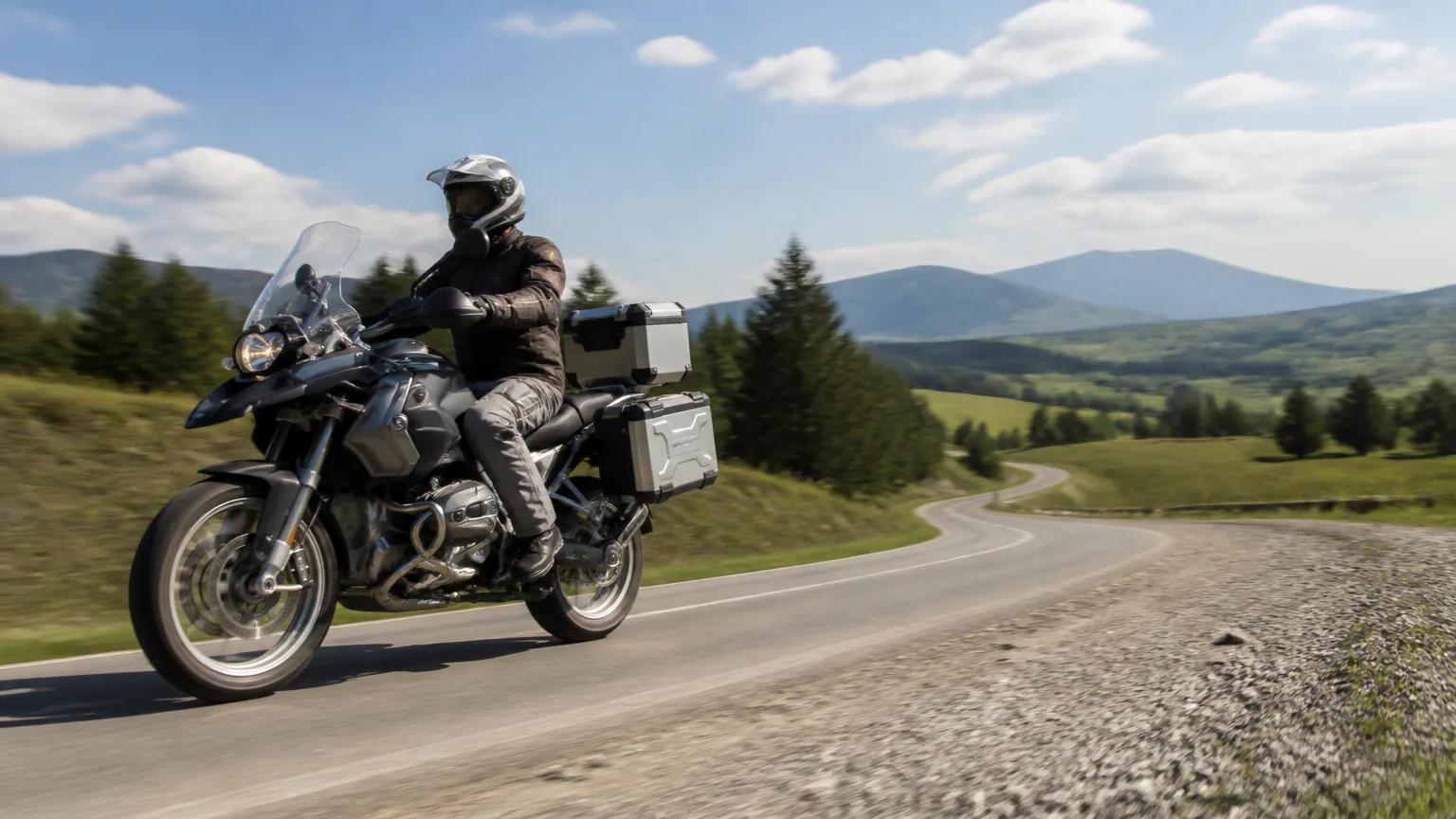
The upright riding position, boxer torque and shaft drive suit long highway days and touring on mixed surfaces. The liquid-cooled version has the most power, though earlier models have enough performance for touring and everyday road use. Fuel economy is about 40-45 mpg; speed, load and riding conditions affect the range.
The R1200GS’s size and weight are more noticeable at low speeds and on technical trails than on paved roads. It can handle maintained dirt roads, but its mass, broad bodywork and road-oriented tires on many used examples limit confidence in deep sand, rocks and tight terrain. If you plan to ride off-road regularly, inspect the wheels, suspension and bodywork, and budget for suitable tires and protection.
The R1200GS’s upright riding position, wind protection and luggage options suit long-distance rides. Comfort still depends on balancing the load and preparing properly. Before a multi-day ride, use motorcycle long-trip preparation to check tire pressures, secure your luggage and plan for changing weather and roadside stops.
What to check before buying a used R1200GS
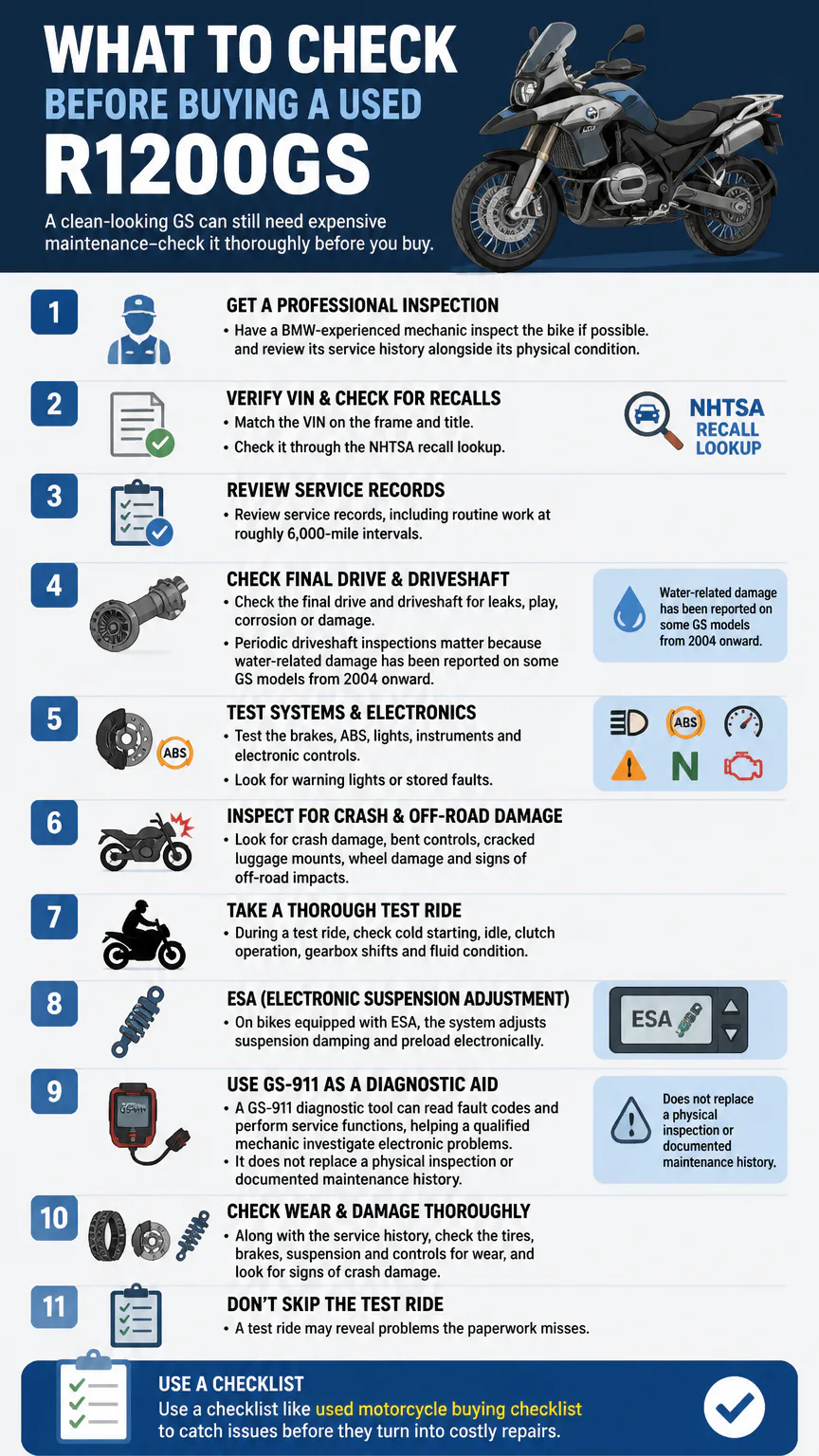
A clean-looking GS can still need expensive maintenance, especially after water crossings, hard off-road use or long gaps between services. Have a BMW-experienced mechanic inspect the bike if possible, and review its service history alongside its physical condition.
- Match the VIN on the frame and title, then check it through the NHTSA recall lookup.
- Review service records, including routine work at roughly 6,000-mile intervals.
- Check the final drive and driveshaft for leaks, play, corrosion or damage. Periodic driveshaft inspections matter because water-related damage has been reported on some GS models from 2004 onward.
- Test the brakes, ABS, lights, instruments and electronic controls. Look for warning lights or stored faults.
- Look for crash damage, bent controls, cracked luggage mounts, wheel damage and signs of off-road impacts.
- During a test ride, check cold starting, idle, clutch operation, gearbox shifts and fluid condition.
On bikes equipped with ESA, the system adjusts suspension damping and preload electronically. A GS-911 diagnostic tool can read fault codes and perform service functions, helping a qualified mechanic investigate electronic problems. It does not replace a physical inspection or documented maintenance history.
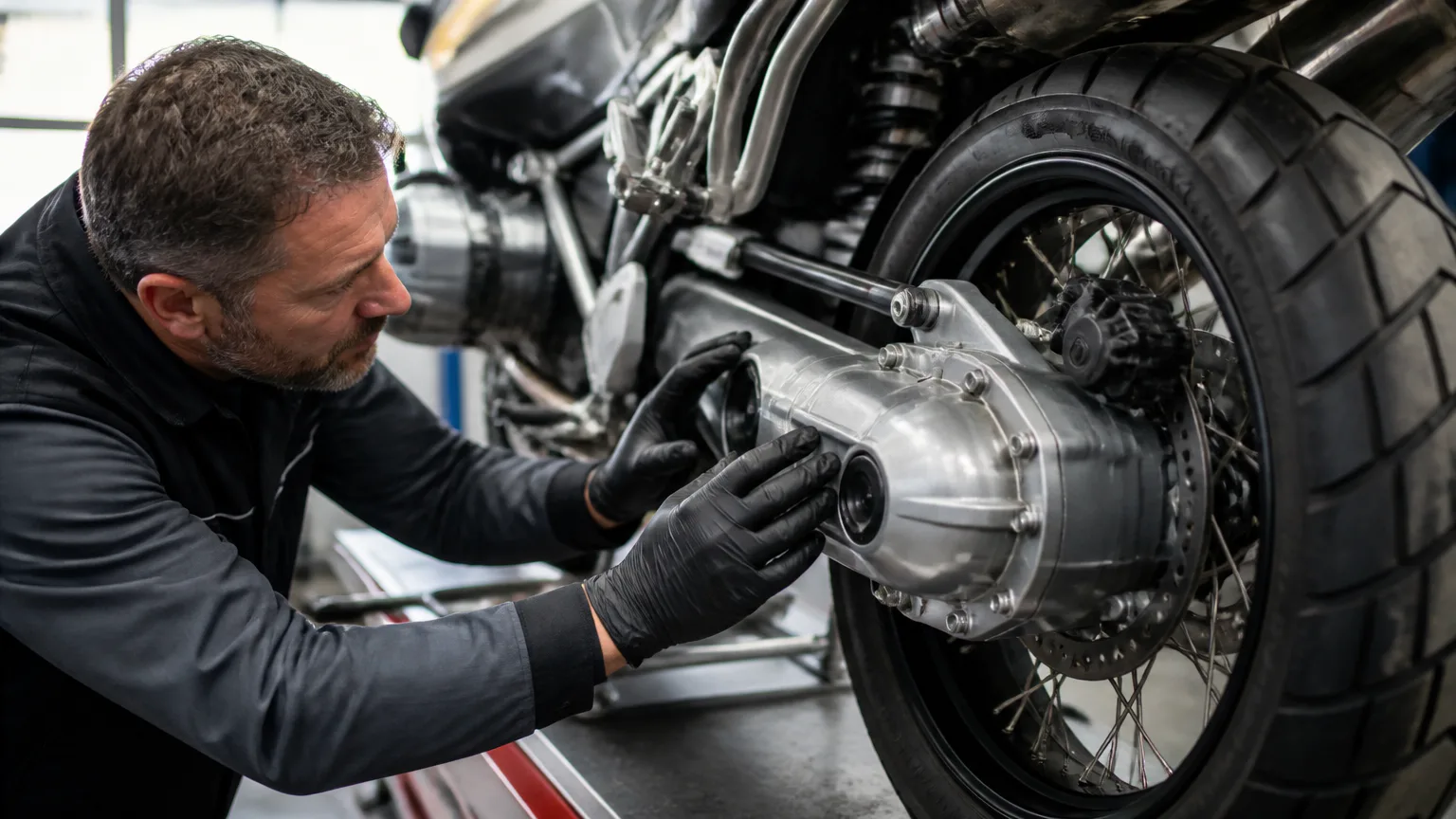
Along with the service history, check the tires, brakes, suspension and controls for wear, and look for signs of crash damage. A test ride may reveal problems the paperwork misses. Use a checklist like used motorcycle buying checklist to catch issues before they turn into costly repairs.
R1200GS used prices and availability
BMW no longer sells the R1200GS as a new model. Indicative U.S. used prices run from about $4,900 for older examples to around $13,000 for later ones. Mileage, condition, equipment, location and maintenance records can push an individual asking price outside these ranges.
| Model-year range | Indicative used price |
|---|---|
| 2005–2009 | $4,900–$7,500 |
| 2010–2013 | $7,000–$9,500 |
| 2013–2018 | $8,500–$13,000 |
Authorized BMW Motorrad dealerships may have inspected pre-owned motorcycles, service records, factory diagnostic checks, recall-history checks and financing. Private sellers may ask less, but check the title, matching VINs, maintenance records and mechanical condition before buying.
The R1250GS succeeded the R1200GS, and the R1300GS is the current-generation alternative. The R1300GS has a 1,300 cc ShiftCam boxer producing 145 hp and 110 lb-ft of torque. The R 12 G/S is a separate retro-styled model, not another R1200GS generation. It has a 1,170 cc air/oil-cooled boxer rated at 109 hp and 85 lb-ft, plus a 21-inch front wheel.
Is the BMW R1200GS right for you?
The R1200GS suits riders looking for a touring motorcycle with upright ergonomics, shaft drive and the ability to handle paved roads and moderate dirt routes. The later liquid-cooled generation brings more power and newer electronics; older air/oil-cooled bikes may cost less to buy. Let the bike’s condition and service records guide your choice of year.
Consider another motorcycle if you spend most of your time on tight trails, make frequent low-speed maneuvers or commute where the GS’s size is a drawback. The R1200GS Adventure has greater range and expedition equipment, but its larger tank and taller seat can make it harder to manage. Include slow turns and stops in your test ride, not just highway miles.
FAQs
Which year of the R1200GS is considered the best?
There is no single best year for every buyer. A later liquid-cooled model delivers 125 hp and newer chassis and electronic features, while a well-maintained earlier Camhead can be a strong choice at a lower price.
What are common problems with the BMW R1200GS?
Check the driveshaft and final drive, ABS and other electronics, and look for neglected servicing or off-road damage. Water-related driveshaft damage has been reported on some GS models from 2004 onward, so inspect the shaft and review its maintenance history.
Which R1200GS years should you avoid?
No model year is categorically one to avoid based on the concerns covered here. Water exposure has been linked to driveshaft damage on some GS models from 2004 onward, so check the individual bike’s exposure, shaft condition, service history and VIN-specific recall status before buying.
Conclusion
The BMW R1200GS remains a versatile used adventure-tourer, with meaningful differences between its air/oil-cooled and liquid-cooled generations. Choose a bike that fits your riding and make a review of its service history, VIN and recall checks, and a thorough mechanical inspection conditions of purchase.