Fastest Quarter-mile Motorcycles: Times, Power and Street Legality
The fastest quarter-mile motorcycles combine high power with traction, gearing, launch control and a rider who can manage wheel lift without giving up momentum. A quarter mile covers 1,320 feet, but a difference of a few tenths can come from track temperature, air density, tire choice, rider technique or timing equipment. Street legality matters too: the quickest track motorcycle is not always the most useful road bike.
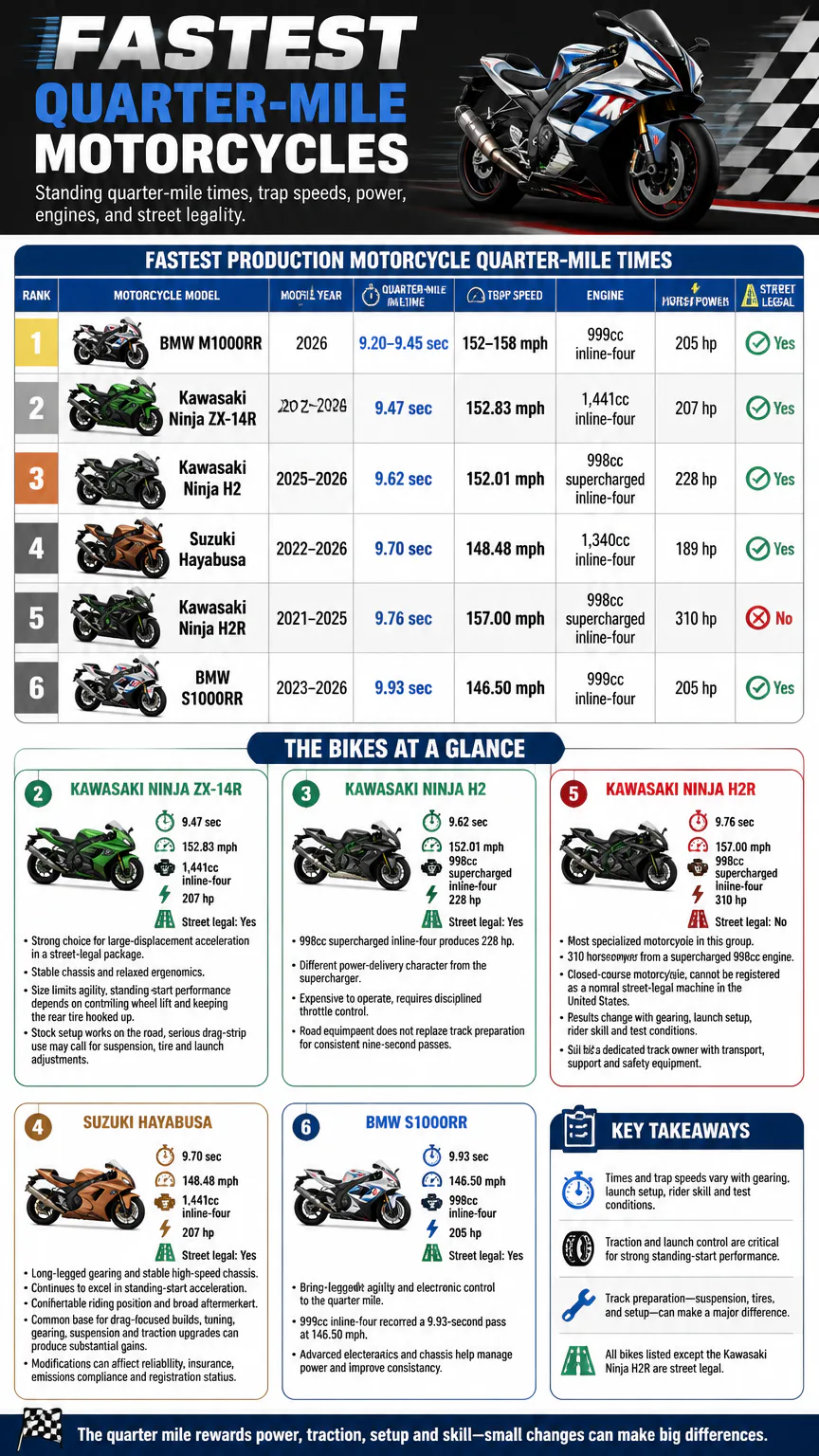
Fastest Production Motorcycle Quarter-Mile Times
| Motorcycle | Model year | Quarter-mile time | Trap speed | Engine | Horsepower | Street legal |
|---|---|---|---|---|---|---|
| BMW M1000RR | 2026 | 9.20–9.45 sec | 152–158 mph | 999cc inline-four | 205 hp | Yes |
| Kawasaki Ninja ZX-14R | 2012–2024 | 9.47 sec | 152.83 mph | 1,441cc inline-four | 207 hp | Yes |
| Kawasaki Ninja H2 | 2025–2026 | 9.62 sec | 152.01 mph | 998cc supercharged inline-four | 228 hp | Yes |
| Suzuki Hayabusa | 2022–2026 | 9.70 sec | 148.48 mph | 1,340cc inline-four | 189 hp | Yes |
| Kawasaki Ninja H2R | 2021–2025 | 9.76 sec | 157.00 mph | 998cc supercharged inline-four | 310 hp | No |
| BMW S1000RR | 2023–2026 | 9.93 sec | 146.50 mph | 999cc inline-four | 205 hp | Yes |
Kawasaki Ninja ZX-14R
The Kawasaki Ninja ZX-14R remains a strong choice for riders who want large-displacement acceleration in a street-legal package. Its 1,441cc engine produces the low- and midrange power needed to launch a heavy hyperbike. With a 9.47-second run and a 152.83-mph trap speed, it sits near the top of this comparison.
The ZX-14R has a stable chassis and relaxed ergonomics, making it easier to live with than many focused superbikes. Its size limits agility, and strong standing-start performance still depends on controlling wheel lift and keeping the rear tire hooked up. The stock setup works on the road, while serious drag-strip use may call for suspension, tire and launch adjustments.
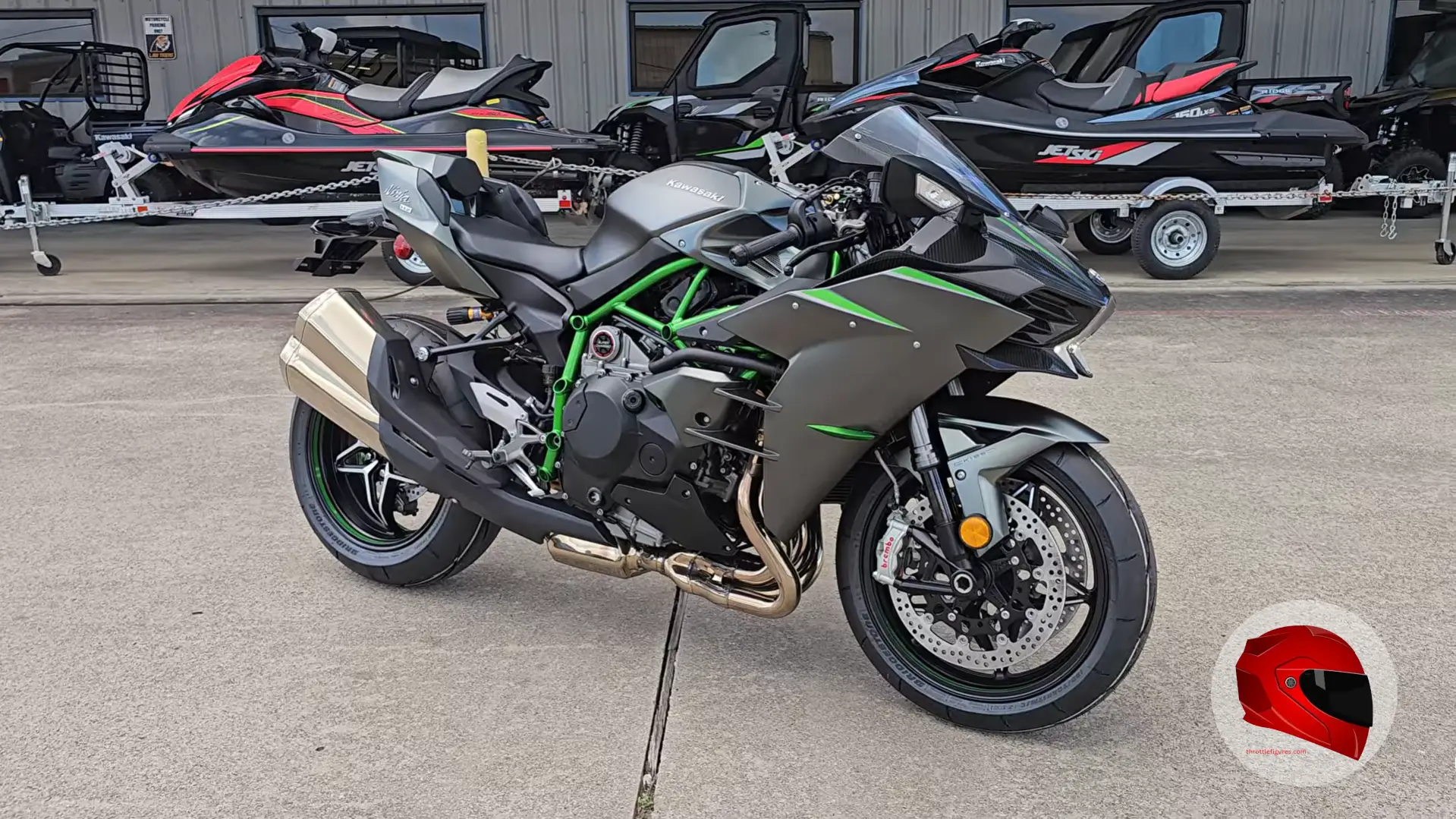
Kawasaki Ninja H2
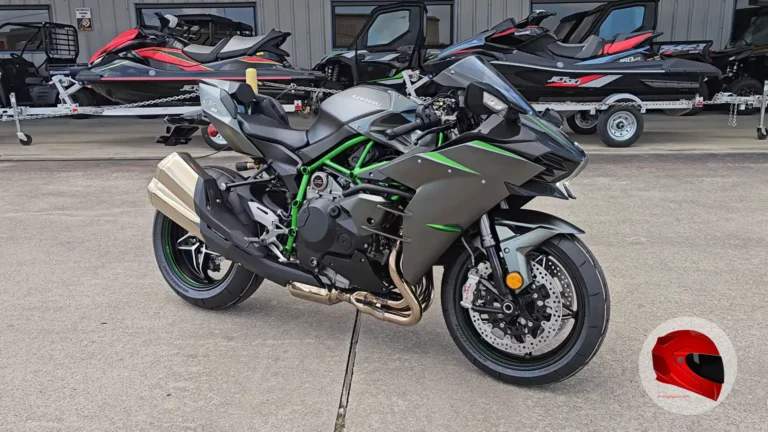
The Kawasaki Ninja H2 uses a 998cc supercharged inline-four that produces 228 hp. Its 9.62-second quarter-mile time and 152.01-mph trap speed put it close to the ZX-14R and Hayabusa, but the supercharger gives the H2 a different power-delivery character.
Because the H2 is street legal, owners can ride it to the track under its own power. The bike is expensive to operate, requires disciplined throttle control and can overwhelm ordinary street tires during hard launches. Its road equipment does not replace track preparation when the goal is a series of consistent nine-second passes.
Kawasaki Ninja H2R
The Kawasaki Ninja H2R is the most specialized motorcycle in this group. Its supercharged 998cc engine produces approximately 310 horsepower, but the H2R is a closed-course motorcycle and cannot be registered as a normal street-legal machine in the United States.
The H2R has recorded a 9.76-second quarter mile, although the result changes with gearing, launch setup, rider skill and test conditions. It suits a dedicated track owner who already has suitable transport, maintenance support and safety equipment. It is not a practical choice for commuting, public-road touring or riders who need one motorcycle for several roles.
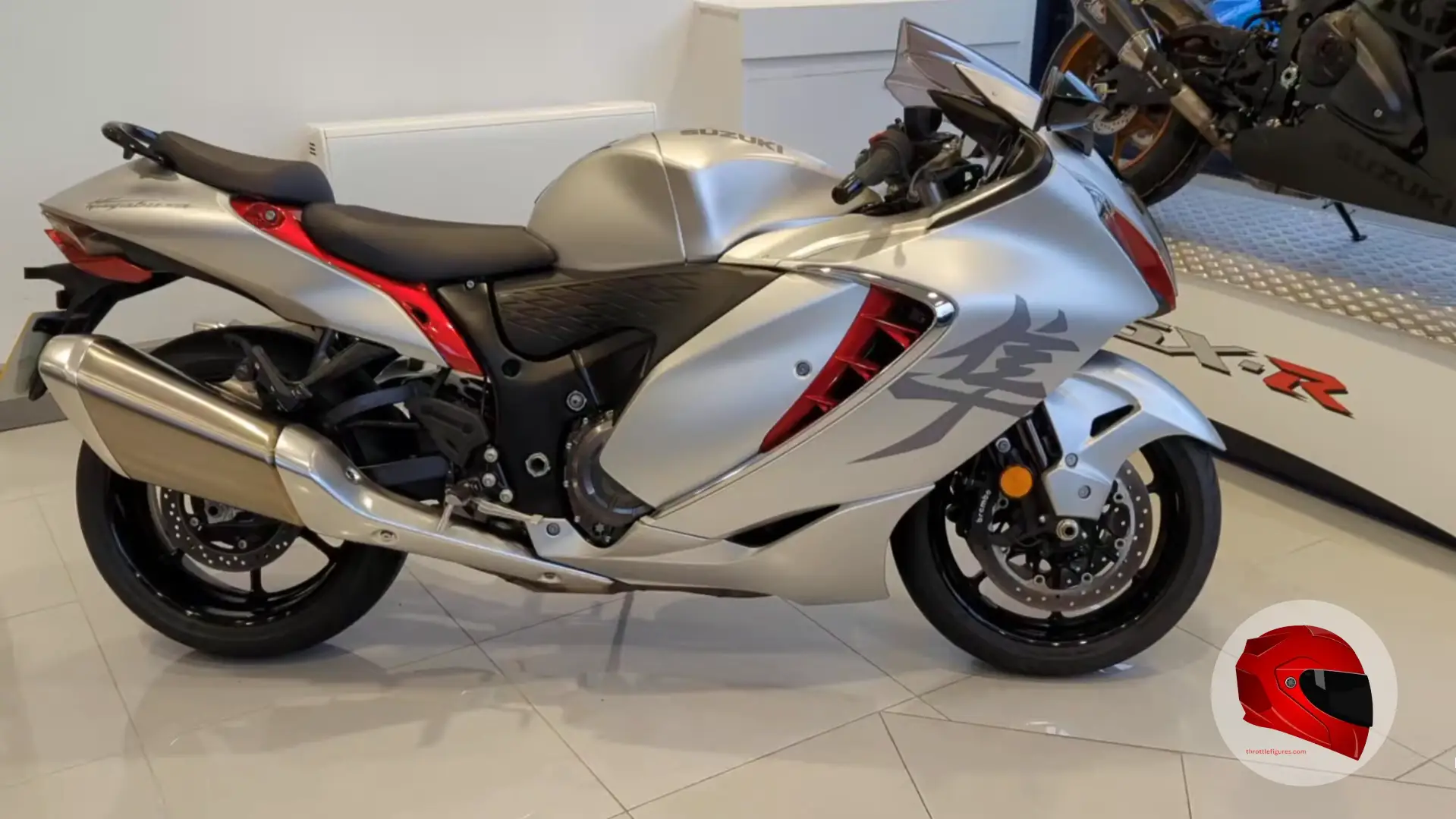
Suzuki Hayabusa
The Suzuki Hayabusa combines a 1,340cc inline-four with long-legged gearing and a stable high-speed chassis. Its 9.70-second quarter-mile time and 148.48-mph trap speed explain its continued appeal for standing-start acceleration, even though its terminal speed here is below that of the ZX-14R and H2.
The Hayabusa suits riders who want a street-legal hyperbike with a comfortable riding position and a broad aftermarket. It is also a common base for drag-focused builds because gearing, engine tuning, suspension work and traction upgrades can produce substantial gains. A modified Hayabusa may be much quicker than the stock figure, but modifications can affect reliability, insurance, emissions compliance and registration status.
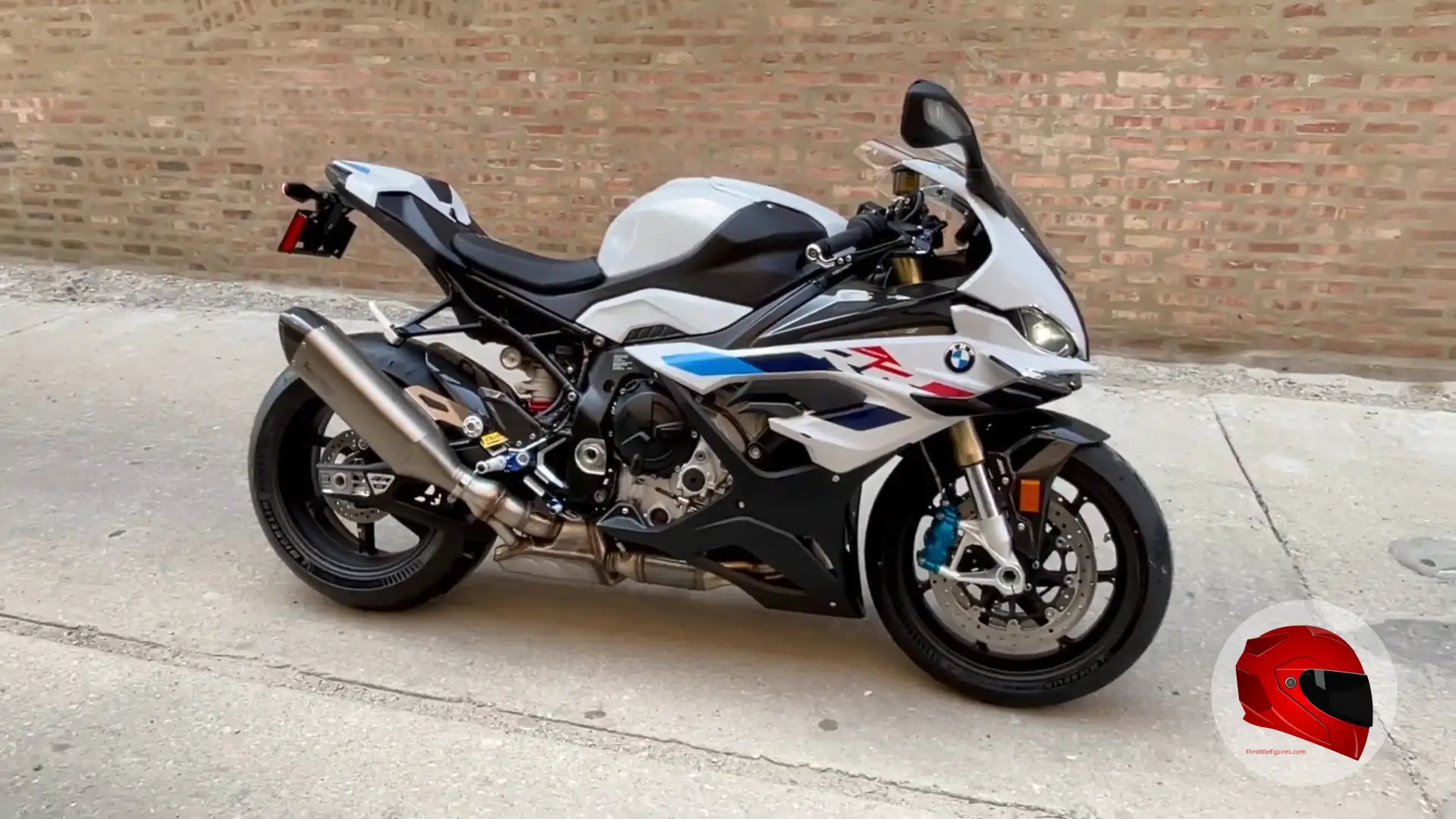
BMW S1000RR
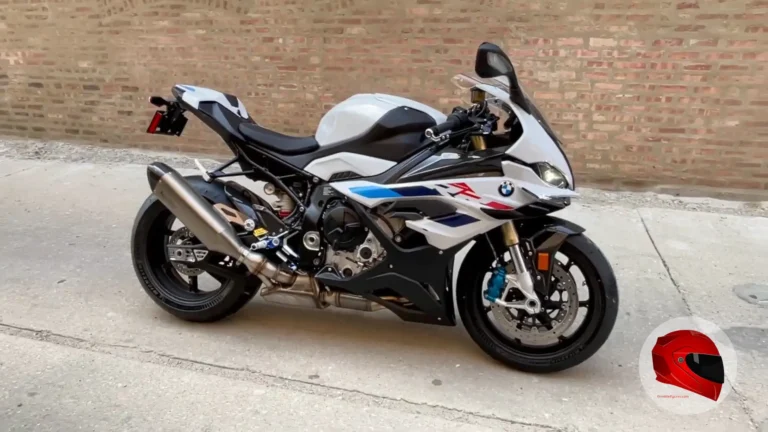
The BMW S1000RR brings liter-bike agility and electronic control to the quarter mile. Its 999cc inline-four has recorded a 9.93-second pass at 146.50 mph, placing it just outside the nine-and-a-half-second range occupied by the larger hyperbikes and the M model.
The S1000RR suits an owner who splits riding time between public roads, circuit work and occasional drag-strip sessions. Its lighter superbike format rewards a skilled rider, but a strong launch requires precise use of launch control, clutch release, throttle and body position. The lower displacement does not prevent quick times, although it leaves less room for a poor launch than the ZX-14R or Hayabusa.
BMW M1000RR
The BMW M1000RR is the quickest motorcycle in the listed range when it achieves a 9.20- to 9.45-second pass. Its 999cc inline-four produces 205 horsepower in US specification, while trap speeds of 152 to 158 mph show that its performance is not limited to the launch.
The M1000RR combines that speed with superbike ergonomics, high operating costs and a greater dependence on rider execution than a long-wheelbase hyperbike. It is street legal and aimed at owners who prioritize advanced track performance, but it is not automatically the easiest motorcycle to launch. A ZX-14R or Hayabusa can feel more forgiving in a straight line because of its longer, heavier layout.
Requirements and context
A quarter-mile time is useful only when the testing conditions are clear. The distance is 1,320 feet, but the result also depends on elevation, temperature, wind, track preparation, tire pressure, gearing, fuel load, rider weight and whether the motorcycle is genuinely stock.
- Stock status: A stock comparison includes the factory engine calibration, exhaust, gearing, wheelbase and bodywork. List modifications separately because they change the result.
- Timing method: Compare runs measured with the same type of timing equipment whenever possible.
- Launch setup: Use the manufacturer’s launch-control and traction-control settings as a starting point. Make further adjustments only in a controlled track environment.
- Rider protection: Wear a certified helmet, motorcycle leathers, gloves, boots and any other equipment required by the facility.
- Technical inspection: Check the brakes, throttle return, chain, fluid leaks and control security before making a pass.
An NHRA drag strip may apply formal inspection and class rules that determine whether a motorcycle is accepted, what safety equipment it needs and whether the rider requires additional credentials. Local facilities can have different requirements for a general track-day session, so street-legal registration does not guarantee permission to make a pass. Transporting the motorcycle in a trailer also protects its road tires and avoids turning a mechanical problem into a roadside emergency.
DOT-approved performance tires can improve launch consistency, but road legality depends on the exact tire. The Shinko Hook-Up 180/55-17 uses a very soft compound and flexible carcass for drag applications and is not intended for public-road use. A track-focused tire should not be treated as suitable for ordinary road mileage simply because it carries a DOT marking.
Quarter-mile times depend on more than engine power. Rider experience, tire condition and launch technique all matter, as does the motorcycle’s intended use. A Kawasaki Ninja 300 offers a useful point of comparison, showing how a lighter, less intimidating bike can prioritize control and accessibility over outright acceleration. That context helps explain the dramatic times posted by hyperbikes without treating every motorcycle like a drag-strip machine.
Choosing between hyperbikes and superbikes
Choose according to how the motorcycle will be used away from the drag strip. Hyperbikes such as the ZX-14R and Hayabusa emphasize stability, torque and high-speed composure. The H2 adds supercharged power, while the H2R removes the street-use requirement. The BMW models use a lighter superbike format with sharper handling and greater circuit flexibility.
- Best stock quarter-mile priority: BMW M1000RR, provided the rider can use its electronic aids and launch technique effectively.
- Best large-displacement street platform: Kawasaki Ninja ZX-14R, with its combination of elapsed time, trap speed and road legality.
- Best supercharged street choice: Kawasaki Ninja H2, which combines factory forced induction with registration capability.
- Best established hyperbike platform: Suzuki Hayabusa, thanks to its road comfort and support for controlled performance modifications.
- Best closed-course choice: Kawasaki Ninja H2R for an owner prepared to transport and operate a track-only motorcycle.
- Best road-and-circuit superbike: BMW S1000RR, with a lighter, more agile format and credible quarter-mile performance.
Elapsed time is only one part of the comparison. A professional rider may produce a faster pass on a motorcycle that an owner finds difficult to launch consistently. A bike with a lower trap speed can still post a competitive time through gearing and traction. Ownership cost, parts availability, insurance, riding position and street equipment matter once the motorcycle leaves the starting line.
A hyperbike may post the quickest time, but a lighter superbike can feel more responsive on everyday roads and cost less to run, insure and outfit with tires. The Yamaha R9 is a useful middleweight comparison: its performance comes from manageable weight and modern electronics rather than four-digit horsepower. Comparing its Yamaha R9 specs and price with flagship machines helps clarify whether you want the absolute quickest pass or a motorcycle you can use consistently.
Related on ThrottleFigures
- Highest torque motorcycles
- Best power-to-weight ratios
- BMW S1000RR vs Panigale V4
- Performance rankings hub
Kawasaki Ninja H2 and H2R
The Kawasaki Ninja H2 is the street-legal model, while the Kawasaki Ninja H2R is a closed-course motorcycle with approximately 310 horsepower. Choose the H2 for road use, and consider the H2R only when transport, track access and dedicated maintenance are already available.
The difference affects more than registration. The H2 can be insured for road use and ridden to a track within the limits of its riding position and running costs. The H2R requires suitable transport, track access, specialized maintenance and confirmation that it meets the facility’s inspection requirements. Treating the two models as interchangeable creates an avoidable legal and practical problem.
BMW and Ducati superbikes
The BMW S1000RR and M1000RR show how liter-class motorcycles can approach or exceed the quarter-mile performance of larger hyperbikes. The earlier 2010 S1000RR has also been recorded at 9.6 seconds, demonstrating how model year, test conditions, rider execution and launch preparation can change the result.
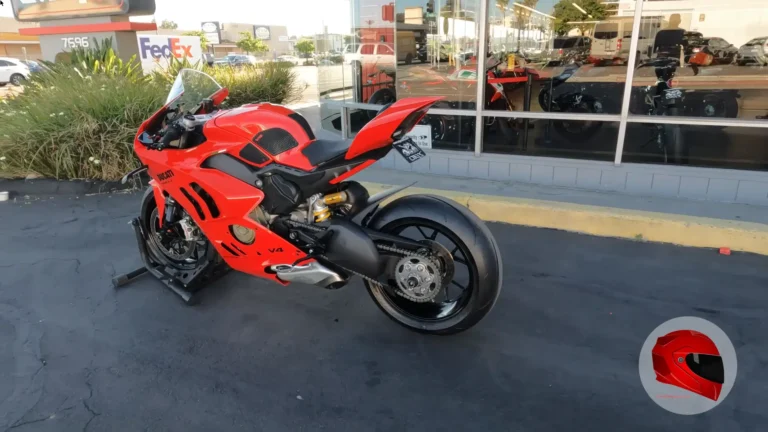
Ducati has produced several near-10-second motorcycles, including the Desmosedici RR at 9.49 seconds, the 1199 Panigale S at 9.9 seconds and the Panigale V4 R at 10.0 seconds. These bikes show why engine displacement alone does not determine quarter-mile performance. Aerodynamics, gearing, electronic controls, rider position and traction all affect the pass.
Peak horsepower is only part of a superbike’s quarter-mile performance. Launch control, wheelie control and torque delivery determine how much power reaches the pavement. Ducati’s Panigale V4 pairs a high-revving V4 with sophisticated electronics, while its gearing and riding position also affect real-world acceleration. These factors matter when comparing a claimed trap speed with a time an average rider can repeat.
Fastest on Paper vs. Fastest to Repeat
Use published quarter-mile figures to identify potential, then judge each motorcycle by how consistently it delivers that performance in comparable conditions. Identical motorcycles can produce different results because rider skill, launch technique, timing equipment, track surface, weather and air conditions all affect the pass.
- Start with the rider: Choose a motorcycle whose weight, wheelbase, ergonomics and power delivery match the rider’s ability to control wheel lift and release the clutch consistently.
- Use the electronic aids: Launch control and traction control can reduce wheel spin and manage engine power at the start. Treat their settings as a controlled starting point and change one setting at a time.
- Control the conditions: Make comparisons on the same track surface with consistent tire pressure, fuel load, gearing and timing equipment. Record rider weight and weather because both affect elapsed time.
- Prioritize legal repeatability: A street rider should use DOT-approved performance tires and retain the equipment required for road use. The H2R belongs only in a closed-course plan with suitable transport and facility approval.
The fastest motorcycle on one timing slip is not necessarily the quickest choice for an owner who wants repeatable passes. A slightly slower motorcycle that launches cleanly and legally may produce the stronger record across several runs.
Quarter-mile record categories
“Fastest quarter mile ever” has no single answer because production motorcycles, modified drag bikes and streamliners compete under different rules. The six-bike table above compares production motorcycles; it is not a universal record list for purpose-built racing machines or aerodynamic streamliners.
Production benchmarks consider street equipment, stock configuration and availability as a production model. Motorcycle records can include race-only machines with extensive engine, chassis, tire and aerodynamic modifications. Their elapsed times are not directly comparable with the BMW M1000RR, Kawasaki Ninja ZX-14R or other motorcycles in the production table.
0-100 mph acceleration
0-100 mph rankings require a different timing method from quarter-mile testing. Every motorcycle in this comparison has enough power to reach 100 mph quickly, but a reliable ranking requires the same rider, surface, timing equipment, launch settings and stock specification for each run.
The comparable figures provided here are quarter-mile elapsed time and trap speed. A motorcycle can reach 100 mph quickly but post a slower quarter mile because of gearing, wheel spin or a weak launch. Its 0-100 mph performance should not be inferred from the quarter-mile order alone.
FAQs
Is 0 to 60 mph in four seconds fast for a motorcycle?
Yes. Four seconds is quick for a motorcycle, although modern high-performance street bikes can accelerate considerably faster in controlled conditions. Surface, tire temperature, rider technique and electronic settings determine whether the figure is repeatable.
What motorcycle was called the widowmaker?
The Kawasaki H2 two-stroke is widely associated with the “widowmaker” nickname because of its abrupt power delivery and demanding period chassis. The nickname refers to the 1970s two-stroke model, not the modern supercharged Ninja H2.
What is the fastest quarter mile ever?
There is no single universal record across every motorcycle class because modified drag bikes, streamliners, race-only machines and production motorcycles follow different rules. Production times also depend on whether the comparison allows track-only models, professional riders and nonstandard launch equipment.
What is the fastest stock street-legal motorcycle?
The BMW M1000RR has the quickest stock quarter-mile range here at 9.20 to 9.45 seconds and is street legal. The Kawasaki Ninja ZX-14R, Kawasaki Ninja H2 and Suzuki Hayabusa are also street-legal motorcycles with nine-second quarter-mile times.
Can a street motorcycle be used at an NHRA drag strip?
A street-legal motorcycle may be admitted if it passes the facility’s inspection and meets the applicable class and safety rules. Registration alone does not guarantee admission, particularly as elapsed times become quicker and additional rider or motorcycle equipment is required.
Conclusion
Among the fastest quarter-mile motorcycles, the best choice depends on whether you ride on the street or only at the strip.
Choose the BMW M1000RR for the strongest listed stock performance, the Kawasaki Ninja ZX-14R for a street-legal straight-line platform with substantial displacement, or the Kawasaki Ninja H2R only when closed-course riding is the main purpose. Treat every quoted time as a controlled result, then prioritize a sanctioned track, proper protective equipment and a setup the rider can manage consistently.

One Comment
Comments are closed.