KTM Duke 390 vs KTM RC 390: Which Bike Fits Your Riding Style?
Choosing between the KTM Duke 390 and KTM RC 390 depends on where and how you ride. Traffic, fast cornering, highway speed and riding position all matter more than the small difference in engine output. Both are lightweight, single-cylinder motorcycles with similar running costs, but the Duke’s upright layout and the RC’s fairing create very different daily experiences. Price, insurance, licensing and intended use should all factor into the decision.
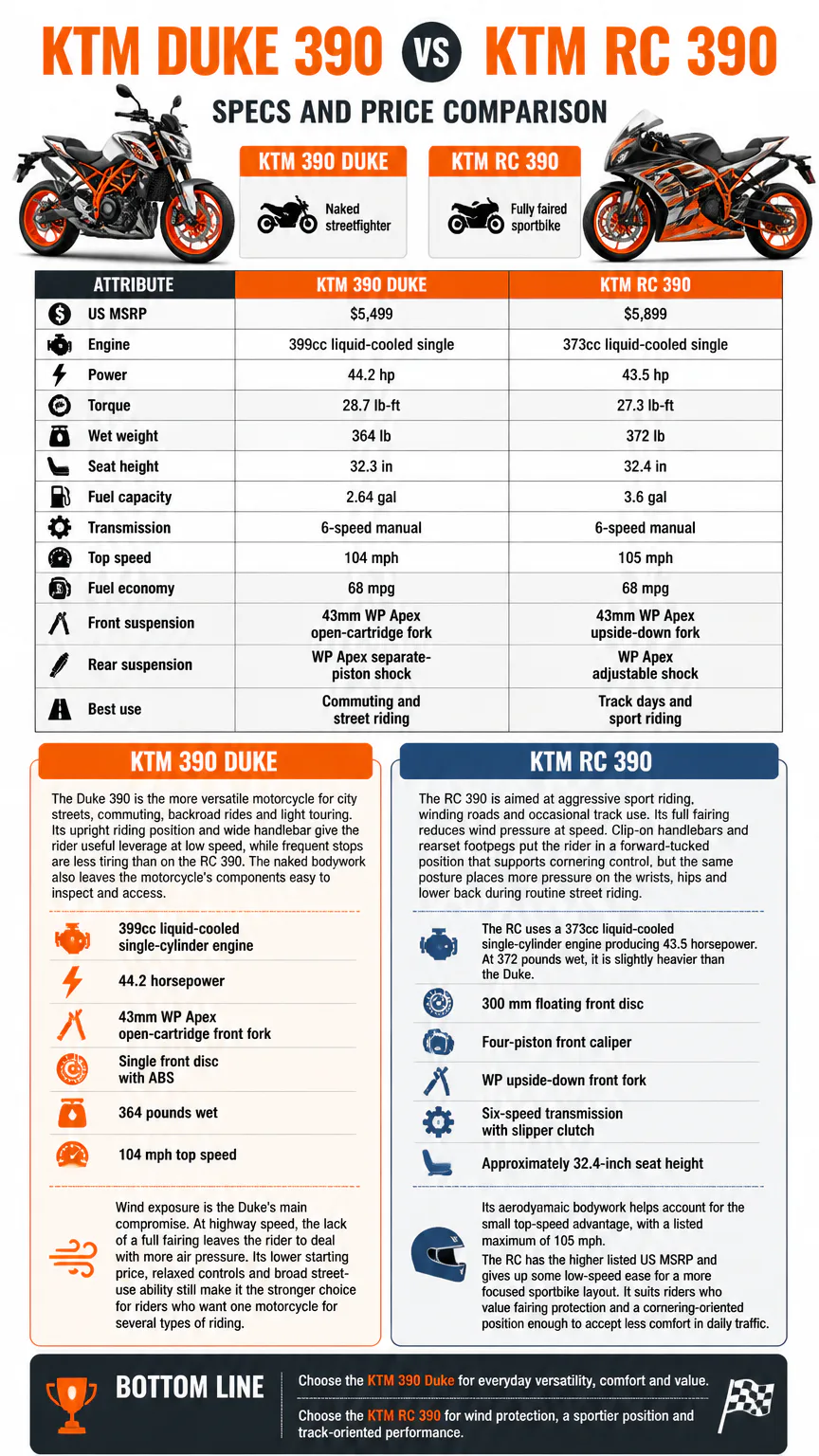
KTM 390 Duke vs RC 390 specs and price
| Attribute | KTM 390 Duke | KTM RC 390 |
|---|---|---|
| Type | Naked streetfighter | Fully faired sportbike |
| US MSRP | $5,499 | $5,899 |
| Engine | 399cc liquid-cooled single | 373cc liquid-cooled single |
| Power | 44.2 hp | 43.5 hp |
| Torque | 28.7 lb-ft | 27.3 lb-ft |
| Wet weight | 364 lb | 372 lb |
| Seat height | 32.3 in | 32.4 in |
| Fuel capacity | 2.64 gal | 3.6 gal |
| Transmission | 6-speed manual | 6-speed manual |
| Top speed | 104 mph | 105 mph |
| Fuel economy | 68 mpg | 68 mpg |
| Front suspension | 43mm WP Apex open-cartridge fork | 43mm WP Apex upside-down fork |
| Rear suspension | WP Apex separate-piston shock | WP Apex adjustable shock |
| Best use | Commuting and street riding | Track days and sport riding |
KTM 390 Duke
The Duke 390 is the more versatile motorcycle for city streets, commuting, backroad rides and light touring. Its upright riding position and wide handlebar give the rider useful leverage at low speed, while frequent stops are less tiring than on the RC 390. The naked bodywork also leaves the motorcycle’s components easy to inspect and access.
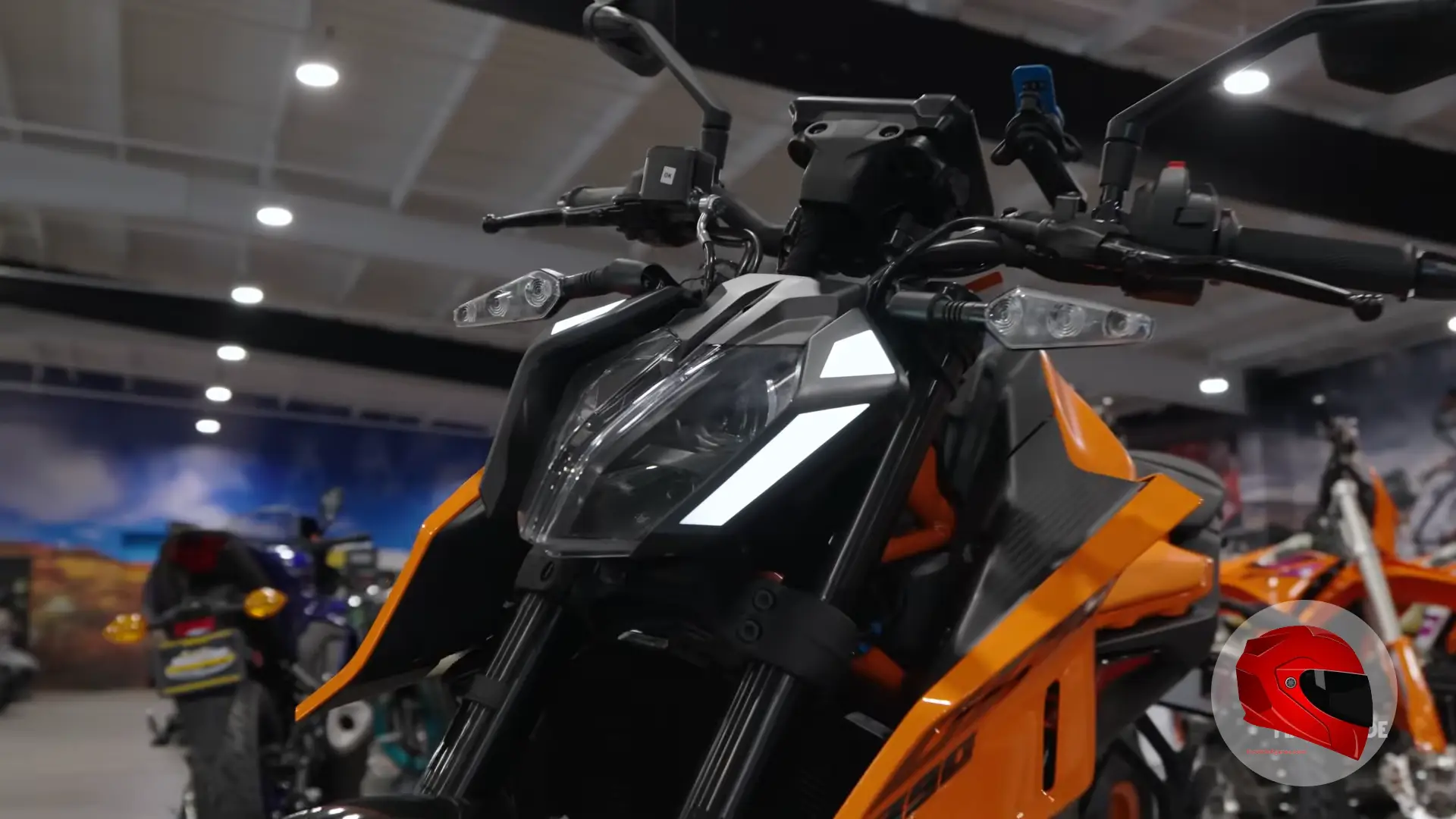
- 399cc liquid-cooled single-cylinder engine
- 44.2 horsepower
- 43mm WP Apex open-cartridge front fork
- Single front disc with ABS
- 364 pounds wet
- 104 mph top speed
Wind exposure is the Duke’s main compromise. At highway speed, the lack of a full fairing leaves the rider to deal with more air pressure. Its lower starting price, relaxed controls and broad street-use ability still make it the stronger choice for riders who want one motorcycle for several types of riding.
KTM RC 390
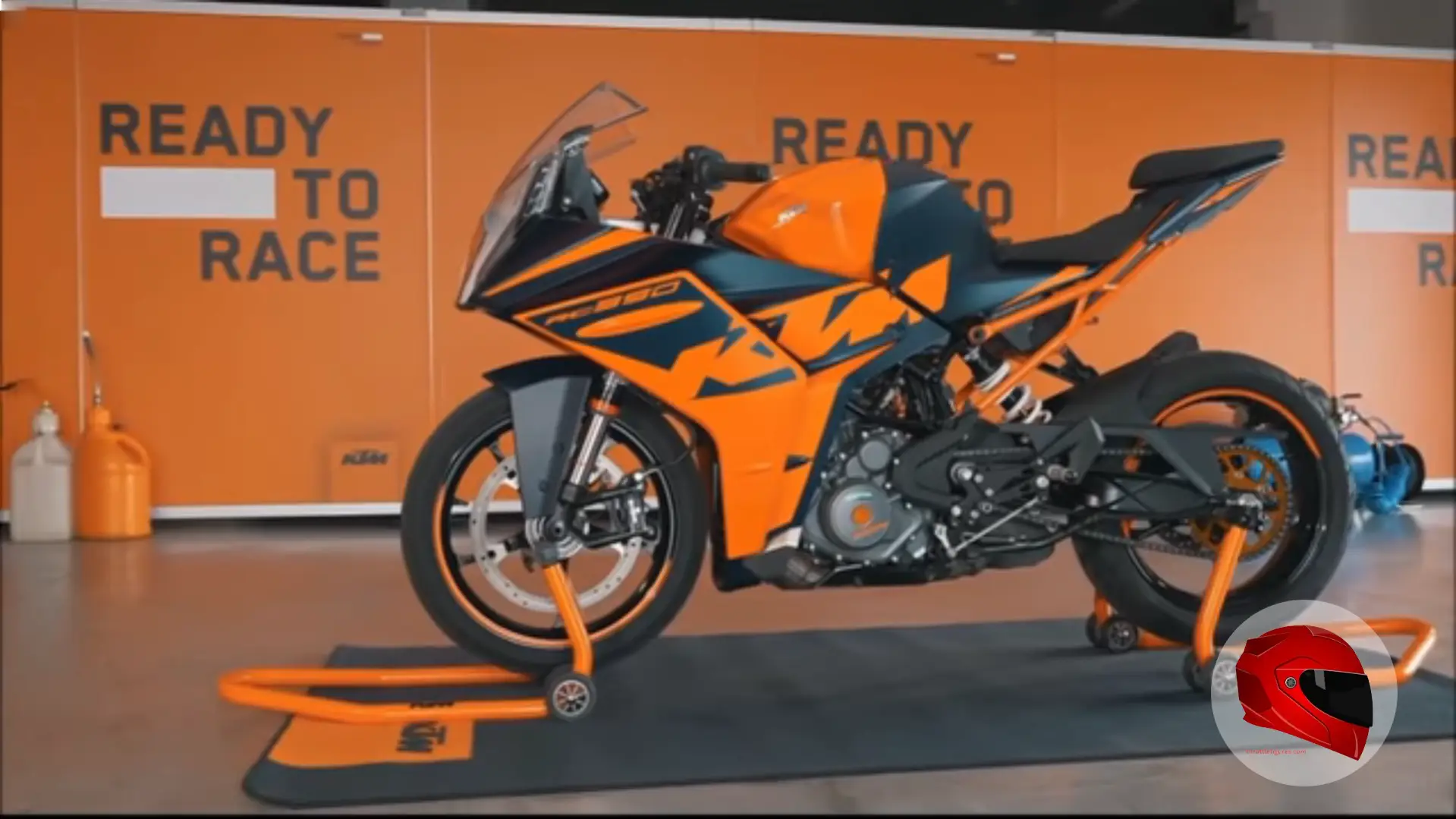
The RC 390 is aimed at aggressive sport riding, winding roads and occasional track use. Its full fairing reduces wind pressure at speed. Clip-on handlebars and rearset footpegs put the rider in a forward-tucked position that supports cornering control, but the same posture places more pressure on the wrists, hips and lower back during routine street riding.
The RC uses a 373cc liquid-cooled single-cylinder engine producing 43.5 horsepower. At 372 pounds wet, it is slightly heavier than the Duke. Its aerodynamic bodywork helps account for the small top-speed advantage, with a listed maximum of 105 mph.
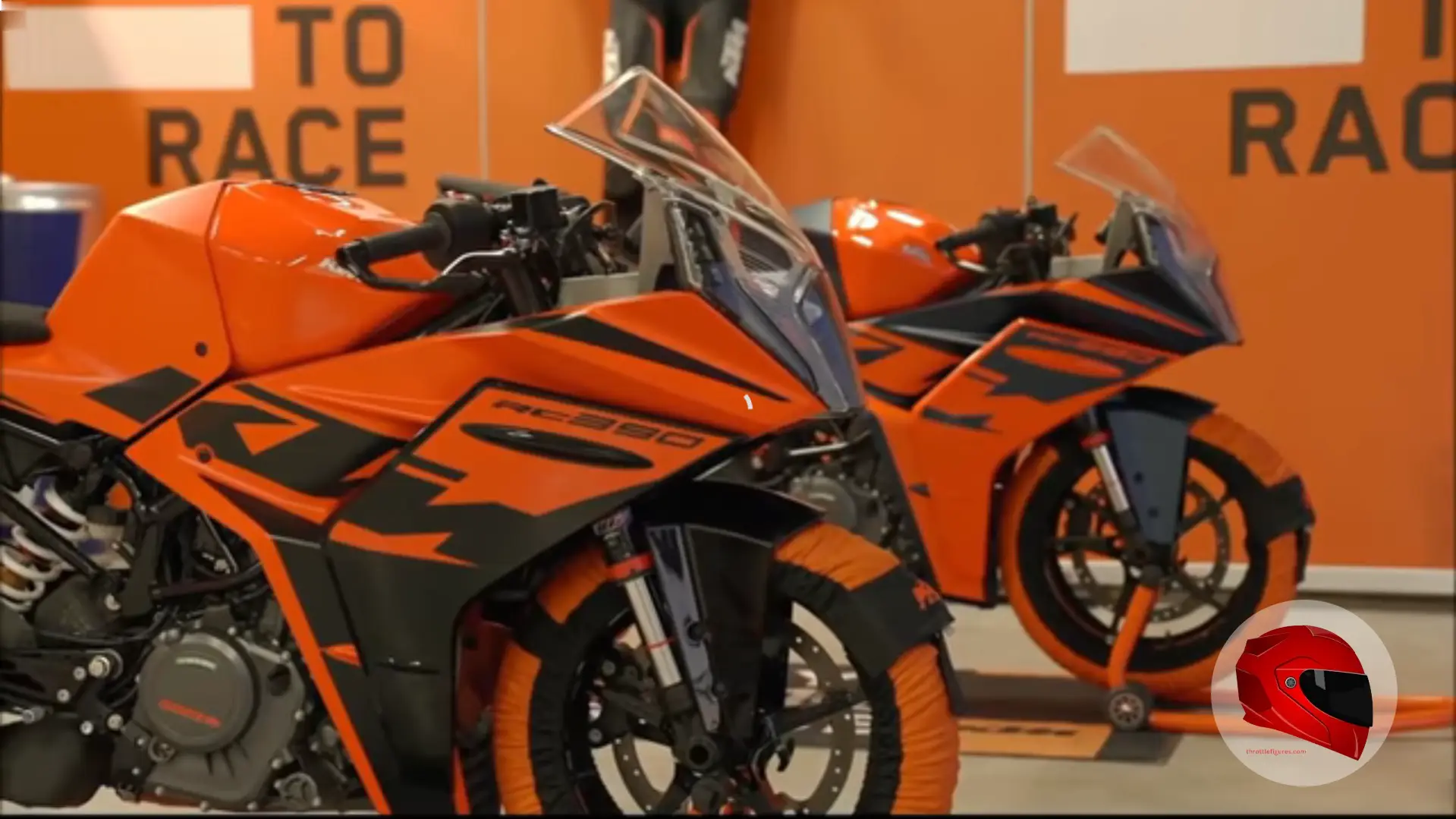
- 300 mm floating front disc
- Four-piston front caliper
- WP upside-down front fork
- Six-speed transmission with slipper clutch
- Approximately 32.4-inch seat height
The RC has the higher listed US MSRP and gives up some low-speed ease for a more focused sportbike layout. It suits riders who value fairing protection and a cornering-oriented position enough to accept less comfort in daily traffic.
Requirements and context
Both motorcycles require a Class M motorcycle license or a motorcycle endorsement in almost every US state. Their displacement and performance place them outside ordinary passenger-car licensing, although their relatively low weight can make them approachable for newer riders.
- Obtain the motorcycle license or endorsement required by your state.
- Complete any required knowledge test, skills test or rider-training course.
- Register the motorcycle with the state after purchase.
- Carry motorcycle insurance before riding on public roads.
- Use a certified helmet and appropriate protective riding gear.
Insurance commonly falls within an estimated $350, $800 per year, although age, riding history, location, coverage limits, motorcycle classification and claims history affect the premium. The RC 390’s sportbike classification can raise its rate even though its engine output is close to the Duke’s.
When choosing between the Duke and RC, consider whether you want the everyday usability of a naked bike, the wind protection of a full fairing, or an easier learning curve, not just the KTM badge. Comparable lightweight bikes such as the Kawasaki Ninja 400 also show how engine character, riding position and value can shape the choice, even among beginner-friendly models.
Buying and ownership costs
An authorized KTM dealer is the usual route for a new motorcycle. The dealer handles factory warranty paperwork, title documents, setup and state registration requirements. Freight, destination charges, documentation fees, taxes and registration can raise the final price above the advertised MSRP, so compare the complete out-the-door figure.
The KTM United States dealer network matters if local service access is a deciding factor. Cycle Trader lets buyers compare new and used inventory across multiple locations, which can help when a nearby dealer does not have the preferred color or model year. Online listings still require a close look at mileage, title status, service records, freight charges and delivery arrangements.
- Decide whether a new or used motorcycle fits the budget.
- Compare the complete out-the-door price, including financing costs.
- Check service records and title status on used motorcycles.
- Arrange insurance before collecting the motorcycle.
- Complete state registration and title transfer.
Typical two- to three-year-old KTM 390 models fall within an approximately $3,800, $4,500 resale range, depending on condition, mileage, equipment and local demand. Used RC bodywork can make cosmetic damage more expensive after a tip-over. The Duke’s exposed components are easier to inspect before purchase.
Service intervals and routine maintenance
Both motorcycles have an approximately 6,200-mile (10,000-km) service interval. The RC 390’s fairing can add access time and cosmetic-repair labor during maintenance, while the Duke’s exposed components are easier to inspect and reach.
KTM 390 Duke review
The Duke’s upright layout is easier to live with every day. Its wide handlebar provides steering leverage in parking lots and congested streets, and the neutral relationship between the seat, bars and footpegs suits rides lasting 30 minutes or longer. The compact dimensions and 364-pound wet weight also help during low-speed maneuvers.
Its 399cc single produces enough performance for urban roads, backroads and highway travel without making the motorcycle difficult to manage. Fuel economy is 68 mpg, and the 2.64-gallon tank is adequate for ordinary commuting. Wind protection is minimal, so frequent highway riders may prefer an added windscreen or the RC’s factory fairing.
Newer riders can use the Duke to develop braking, cornering and throttle-control skills on a wide range of roads. Its streetfighter design is less specialized than the RC’s, reducing the chance that the riding position will become a daily inconvenience.
KTM RC 390 review
The RC 390 prioritizes sporting control over relaxed commuting. Clip-on handlebars, rearset footpegs and a forward-tucked torso create a position that feels natural when braking into corners and shifting body weight. In traffic, during repeated stops or on longer rides, that position can become tiring because there is less opportunity to move around.
The full fairing gives the RC a clear advantage on fast roads by reducing direct wind pressure. It also gives the motorcycle a more focused sportbike character on smooth, winding pavement. The approximately 300 mm floating front disc and four-piston caliper provide a stronger front-brake specification than the Duke’s listed single-disc setup.
Track-day riders should budget for consumables, protective equipment and possible bodywork damage. The RC is capable of spirited riding straight from the showroom, but its track-oriented ergonomics do not make it the better choice for every rider or every road.
Performance and handling differences
The two motorcycles share a liquid-cooled single-cylinder engine layout, six-speed manual transmission, WP front suspension and 68 mpg fuel economy. The Duke’s 399cc engine is listed slightly above the RC’s 373cc unit, with outputs of 44.2 hp and 43.5 hp, respectively.
The RC’s fairing improves rider protection and stability as speed rises. Its tucked riding position also supports a committed cornering posture. The Duke’s wide handlebar gives quicker steering input and more leverage in tight urban turns. The Duke feels open and immediate, while the RC feels more deliberate on fast, curving roads.
Both motorcycles use ABS for braking safety. Supermoto ABS disables rear-wheel ABS while retaining front-wheel ABS, allowing an intentional rear-wheel slide. Bosch cornering ABS and WP APEX suspension are separate rider-aid and suspension components, not alternative motorcycles. Their availability should be checked as equipment on the specific model and year.
The Duke 390 and RC 390 use the same basic engine platform, but differences in weight, riding position and aerodynamics change how that power feels on the road. Horsepower alone does not explain why one may feel sharper out of corners or easier to tip into a turn; a motorcycle power-to-weight ratio helps put the engine’s output in context.
Comfort, ergonomics, and commuting
The Duke is the stronger commuter because its upright bars and neutral footpeg position reduce the physical demands of stop-and-go riding. Its seat is firm, as is common on compact performance motorcycles, but the open cockpit makes it easier to change posture or stand slightly over rough pavement.
The RC’s seat height is close to the Duke’s at approximately 32.4 inches, so inseam reach is not the main difference. The larger factor is the relationship among the seat, clip-ons and rearset pegs. Riders who spend an hour or more in one position may experience more wrist and back strain, particularly on rough roads or in heavy traffic.
Fairing protection can decide the issue for highway commuters. The RC exposes the rider to less wind, while the Duke offers better low-speed control and more relaxed street manners. Comfort depends more on the relationship among the seat, bars and footpegs than on seat height alone.
FAQs
Which is faster, the KTM RC 390 or Duke 390?
The RC 390 has the higher listed top speed at 105 mph, compared with 104 mph for the Duke 390. Its fairing and tucked riding position contribute to the difference, while real-world acceleration depends on rider weight, gearing, conditions and launch technique.
A small gap in reported 0-to-60 times does not necessarily mean one KTM is much faster. Launch technique, tire grip, road surface and shift timing can all affect the result, so a consistent motorcycle 0-60 measurement gives a fairer comparison when the bikes use closely related engines.
Which is better, the KTM RC or Duke?
The Duke 390 is better for commuting, city riding, mixed street use and riders who want an upright position. The RC 390 is better for track days, aggressive cornering and riders who specifically want a fully faired sportbike.
Is the KTM RC 390 engine the same as a Duke 390?
They use closely related liquid-cooled single-cylinder engines, but the listed displacements are 373cc for the RC 390 and 399cc for the Duke 390. Output is similar at 43.5 hp for the RC and 44.2 hp for the Duke, while tuning, gearing, intake and exhaust specifications and model-year details can differ.
Why was the RC 390 discontinued?
RC 390 availability has varied by market and model year, and some regions have stopped offering particular versions. The change relates to product strategy, emissions requirements and market availability rather than a universal mechanical problem with the motorcycle.
Are the Duke 390 and RC 390 suitable for beginners?
Both can suit a properly trained beginner because they are relatively light and produce manageable single-cylinder power. The Duke is generally easier for early street practice because its upright ergonomics improve low-speed control and reduce fatigue.
Conclusion
Choose the KTM 390 Duke if commuting comfort, versatility and lower entry cost matter most. Choose the KTM RC 390 if wind protection, aggressive cornering and track-oriented ergonomics matter more than relaxed daily use. For most street-focused riders, the Duke 390 is the more versatile first choice.

One Comment
Comments are closed.