Yamaha R7 vs Kawasaki Ninja 650: Which Sportbike Fits You?
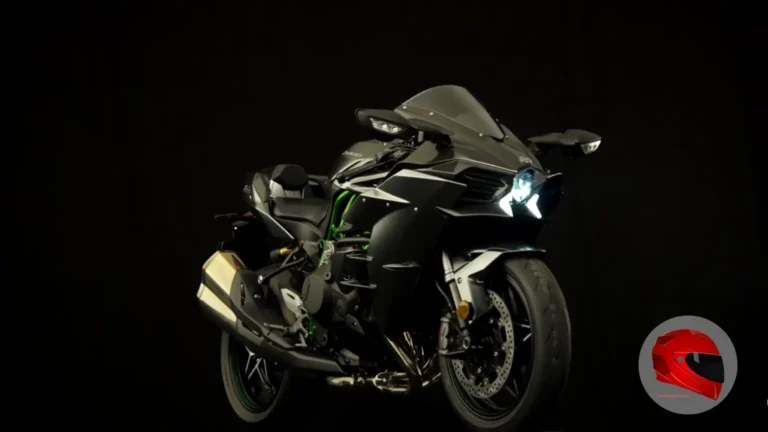
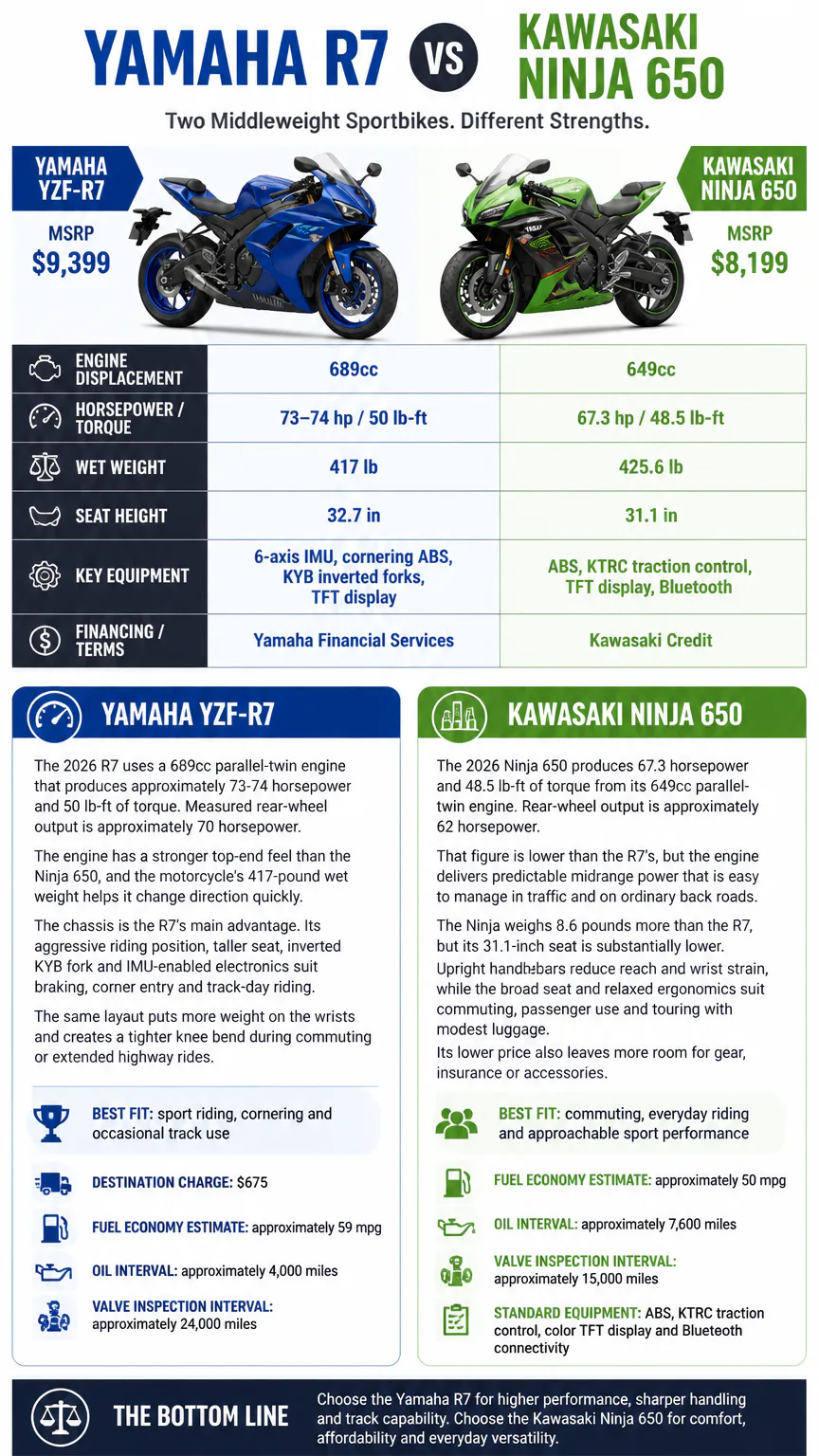
The Yamaha YZF-R7 and Kawasaki Ninja 650 occupy the same middleweight sport-bike class, but they suit different kinds of riding. The R7 favors aggressive cornering and track practice. The Ninja 650 is easier to live with during commuting, low-speed riding and longer trips. Price, seat height, insurance, service intervals and riding position matter just as much as acceleration.
Yamaha R7 vs Ninja 650 Specs
| Model | MSRP | Engine displacement | Horsepower / torque | Wet weight | Seat height | Key equipment | Financing / terms |
|---|---|---|---|---|---|---|---|
| Yamaha YZF-R7 | $9,399 | 689cc | 73–74 hp / 50 lb-ft | 417 lb | 32.7 in | 6-axis IMU, cornering ABS, KYB inverted forks, TFT display | Yamaha Financial Services |
| Kawasaki Ninja 650 | $8,199 | 649cc | 67.3 hp / 48.5 lb-ft | 425.6 lb | 31.1 in | ABS, KTRC traction control, TFT display, Bluetooth | Kawasaki Credit |
Yamaha YZF-R7
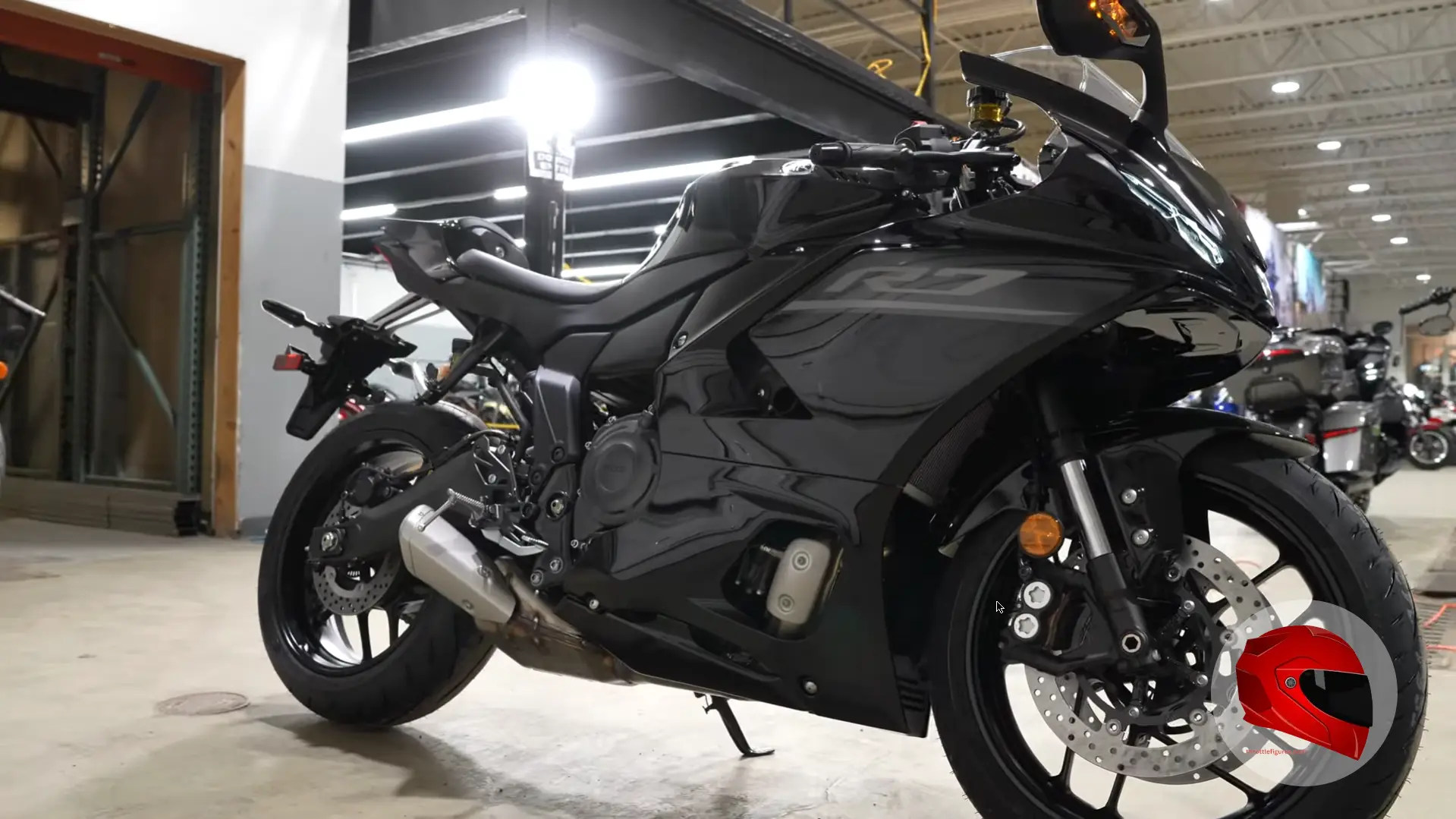
The 2026 R7 uses a 689cc parallel-twin engine that produces approximately 73-74 horsepower and 50 lb-ft of torque. Measured rear-wheel output is approximately 70 horsepower. The engine has a stronger top-end feel than the Ninja 650, and the motorcycle’s 417-pound wet weight helps it change direction quickly.
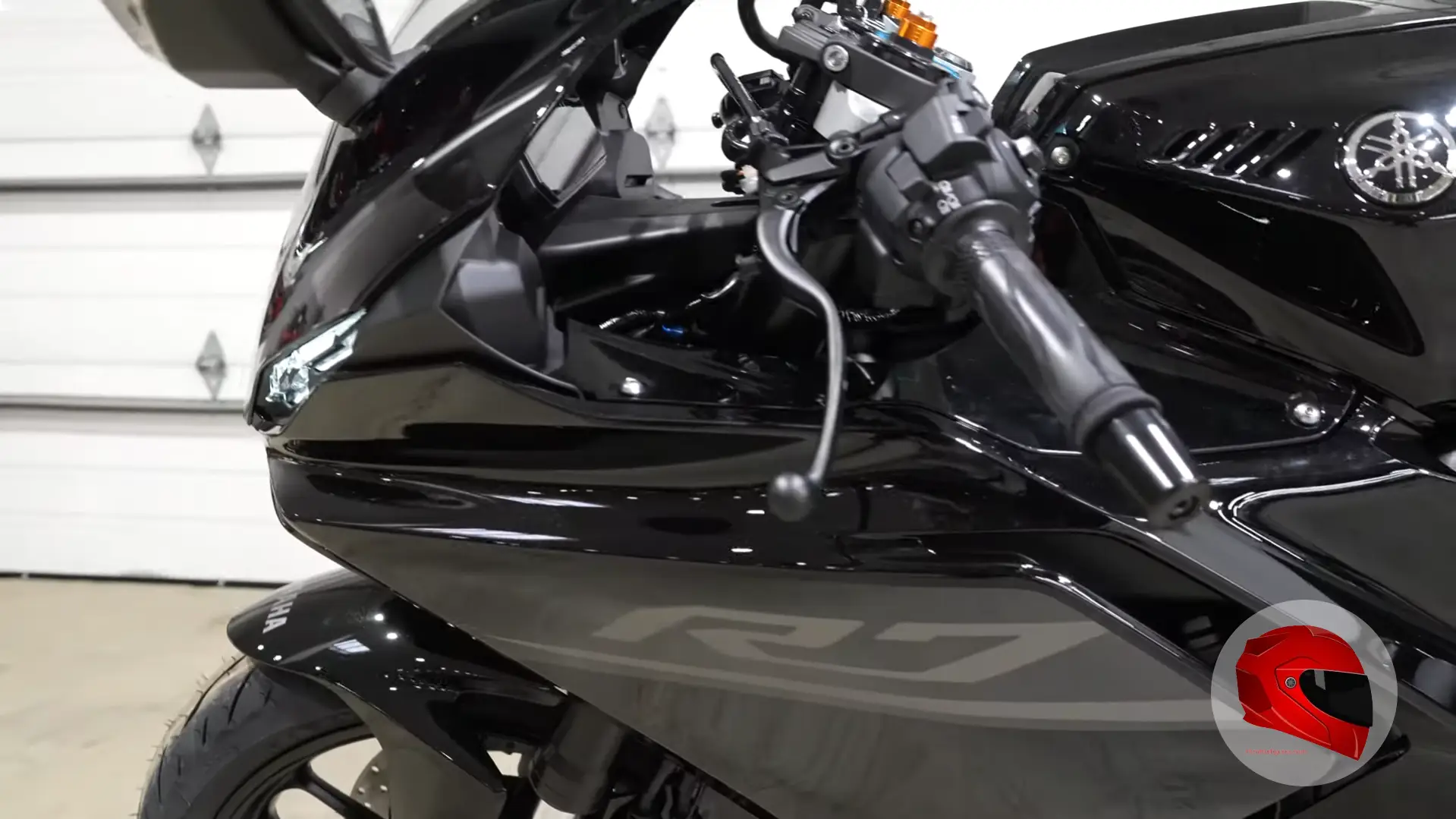
The chassis is the R7’s main advantage. Its aggressive riding position, taller seat, inverted KYB fork and IMU-enabled electronics suit braking, corner entry and track-day riding. The same layout puts more weight on the wrists and creates a tighter knee bend during commuting or extended highway rides.
- Best fit: sport riding, cornering and occasional track use
- Destination charge: $675
- Fuel economy estimate: approximately 59 mpg
- Oil interval: approximately 4,000 miles
- Valve inspection interval: approximately 24,000 miles
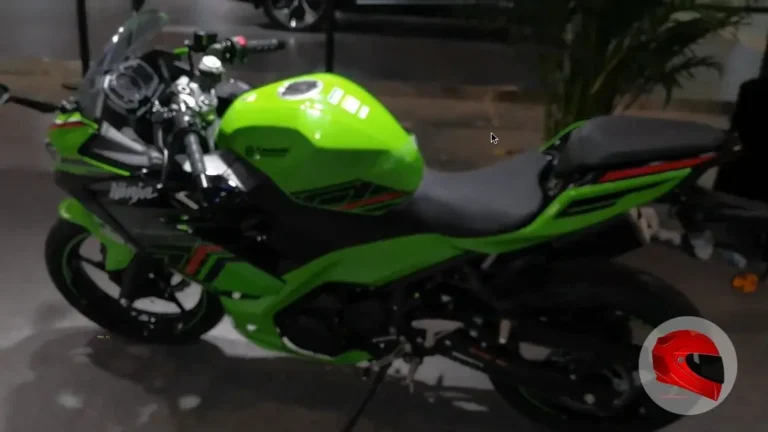
Kawasaki Ninja 650
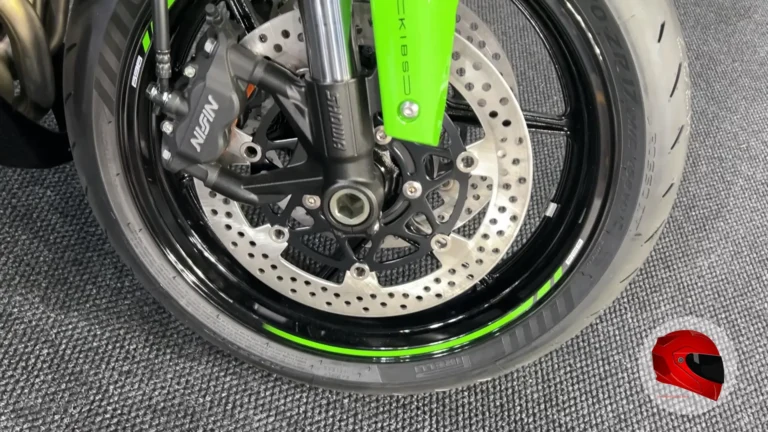
The 2026 Ninja 650 produces 67.3 horsepower and 48.5 lb-ft of torque from its 649cc parallel-twin engine. Rear-wheel output is approximately 62 horsepower. That figure is lower than the R7’s, but the engine delivers predictable midrange power that is easy to manage in traffic and on ordinary back roads.
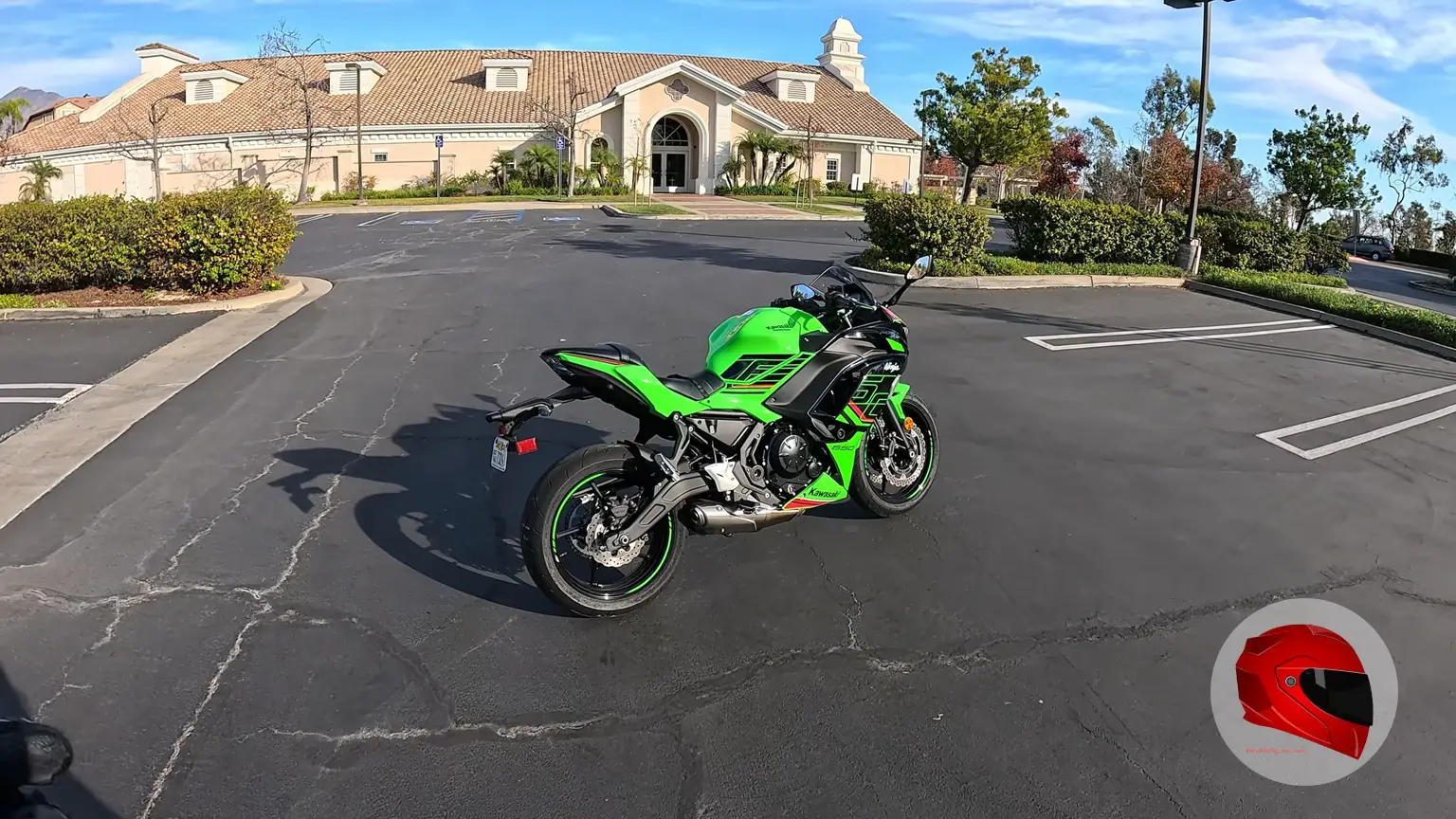
The Ninja weighs 8.6 pounds more than the R7, but its 31.1-inch seat is substantially lower. Upright handlebars reduce reach and wrist strain, while the broad seat and relaxed ergonomics suit commuting, passenger use and touring with modest luggage. Its lower price also leaves more room for gear, insurance or accessories.
- Best fit: commuting, everyday riding and approachable sport performance
- Fuel economy estimate: approximately 50 mpg
- Oil interval: approximately 7,600 miles
- Valve inspection interval: approximately 15,000 miles
- Standard equipment: ABS, KTRC traction control, color TFT display and Bluetooth connectivity
Requirements and context
Both motorcycles require a valid motorcycle endorsement or license authorization under state law. A standard driver’s license alone is not enough for legal on-road operation in most states. The process for earning an endorsement varies by state motor vehicle agency.
The MSF Basic RiderCourse combines classroom instruction with practical motorcycle training. In states that accept an approved course for skills-test credit or endorsement eligibility, completing it can support the licensing process. It does not replace every licensing requirement, so riders still need to meet state rules for age, permits, written tests and endorsements.
- Carry the required motorcycle license or endorsement before riding on public roads.
- Complete approved rider training if you are new to motorcycles or your state accepts it as part of licensing.
- Budget for a helmet, eye protection, gloves, motorcycle jacket, riding pants and over-the-ankle boots.
- Get insurance quotes using the exact model and coverage limits before committing to a purchase.
- Include sales tax, registration, dealer fees, freight, assembly and required safety equipment in the purchase budget.
The R7’s taller seat and more committed ergonomics also deserve attention during a first-bike decision. Neither motorcycle replaces proper training. The R7’s quicker acceleration can require more restraint while a new rider develops consistent braking and cornering habits.
Where to buy
Yamaha Financial Services handles financing for new Yamaha purchases made through participating dealers. Kawasaki Credit serves the same role for new Kawasaki purchases through participating dealers.
APR, loan term, approval, down payment, taxes, registration, freight, assembly, documentation fees and accessories all affect the final financed amount. Compare the amount financed and total of payments instead of looking only at the monthly payment.
Yamaha YZF-R7 Review
The R7’s 689cc engine is not an extreme supersport motor, but Yamaha places it in a sportier package than the Ninja 650. It responds cleanly to throttle inputs and continues building speed as the revs rise. The approximately 40cc displacement advantage is modest on paper; the output and gearing differences are more noticeable during acceleration and high-speed riding.
Handling is the stronger reason to choose the R7. Its 417-pound wet weight, sport-focused chassis, inverted KYB fork and IMU-enabled electronics create a serious platform for repeated braking and cornering. The rider sits higher and leans farther forward, which improves control during aggressive riding but increases fatigue at low speeds and on long highway stretches.
The R7 has a longer valve-inspection interval than the Ninja, at approximately 24,000 miles. Its standard oil interval is shorter, however, at about 4,000 miles. Sport-bike insurance can also cost more than Ninja 650 coverage, although the actual premium depends on location, age, riding history, coverage and motorcycle use.
Kawasaki Ninja 650 Review
The Ninja 650 puts its power in an easier-to-use range. Its 67.3-horsepower output and 48.5 lb-ft of torque cover highway travel and spirited back-road riding, while the parallel twin’s accessible delivery makes starts, passing and low-speed transitions straightforward. It does not match the R7’s acceleration or top speed, but it has enough performance for everyday road riding.
Comfort is central to the Ninja’s appeal. Its 31.1-inch seat helps shorter riders reach the ground, and the more upright controls reduce the forward lean that defines the R7. The Ninja weighs 425.6 pounds wet, but its lower seat and relaxed rider triangle can make parking, urban riding and routine commuting less demanding.
Ownership costs favor the Kawasaki in several areas. Its $8,199 starting MSRP is lower, its insurance classification is generally less aggressive than the R7’s, and its approximately 7,600-mile oil interval reduces routine service frequency. The valve inspection interval is approximately 15,000 miles, so the Ninja does not match the R7 on that maintenance item.
Riders who want an even more upright motorcycle can also consider the Yamaha MT-07 or Kawasaki Z650. Both remove the full sport-bike fairing and use a more open riding position. They are alternatives in a different motorcycle format, not direct R7-versus-Ninja 650 substitutes.
Which bike is faster?
The R7 is faster in both acceleration and maximum speed. It reaches 60 mph in 3.27 seconds, compared with 3.53 seconds for the Ninja 650. The 0-to-100-km/h figures are 3.43 seconds for the Yamaha and 3.93 seconds for the Kawasaki.
Top speed is approximately 135-140 mph for the R7 and approximately 130 mph for the Ninja 650. The Yamaha’s higher rear-wheel output and stronger high-rpm performance give it the clearest advantage as speeds rise. In ordinary traffic, the Ninja stays close enough that the difference matters less during commuting.
Gearing also favors the R7 at the listed 5,000-rpm points. In sixth gear, it travels about 75.7 mph compared with 66.7 mph for the Ninja. The difference is smaller in second and third gears: the Yamaha reaches 34.3 and 44.7 mph, while the Kawasaki reaches 33.2 and 42.6 mph.
Choose the R7 for faster acceleration, greater high-speed reserve and sharper track performance. Choose the Ninja 650 when usable road speed matters more than winning a straight-line comparison.
The R7’s higher peak output is only part of the story. Acceleration also depends on the weight that engine has to move, so a lighter bike can feel quicker out of corners and through the middle gears even when two motorcycles make similar horsepower. That makes motorcycle power-to-weight ratio a better comparison than engine output alone.
Which motorcycle is more comfortable?
The Ninja 650 is more comfortable for commuting and longer road trips. Its 31.1-inch seat is 1.6 inches lower than the R7’s 32.7-inch seat, and its upright handlebars place less weight on the rider’s hands. The lower seat and relaxed controls also make frequent stops and low-speed maneuvering easier.
The R7’s riding position is built around sport riding. The rider sits forward over the front of the motorcycle, with rearward foot controls and a taller seat. That layout helps experienced riders move around the bike while cornering, but it can create more wrist, shoulder, hip and knee fatigue during an extended ride.
Passenger and touring use generally favor the Ninja because its seating position is less demanding and its engine remains relaxed at everyday speeds. The R7 can handle road trips, but wind protection, luggage choices and the rider’s tolerance for a committed posture become more important. A test ride should include stop-and-go traffic rather than only a short dealership loop.
Buying and test-riding requirements
Before buying from a dealer, arrange insurance, confirm the out-the-door price and seek preapproval through Yamaha Financial Services or Kawasaki Credit. A private-party buyer should inspect the motorcycle, verify the vehicle identification number and title, check for liens and use a bill of sale that records the agreed price and condition.
- Confirm the motorcycle endorsement, permit or other licensing requirement in your state.
- Ask the dealer or private seller what is required for a test ride. Bring the required motorcycle license or endorsement, proof of insurance and protective gear.
- Inspect the tires, chain, brakes, controls, lights, service records, title and vehicle identification number before agreeing to buy.
- Compare the loan APR, term, down payment, amount financed, taxes, freight, assembly, documentation fees and total of payments.
- Complete the bill of sale, title transfer, lien paperwork, taxes and registration with the state motor vehicle agency before riding the motorcycle on public roads.
Dealer staff usually submit title and registration paperwork for new motorcycles. Private-party buyers generally complete those steps themselves. Requirements, taxes, temporary permits and deadlines vary by state.
Ownership costs and consumables
- Purchase charges: The R7 starts at $9,399 and has a $675 destination charge. The Ninja 650 starts at $8,199. Sales tax, freight, assembly, documentation, registration and accessories raise either motorcycle’s out-the-door price.
- Fuel: The R7 is estimated at approximately 59 mpg, compared with approximately 50 mpg for the Ninja 650. Annual mileage and local fuel prices determine the difference in fuel spending.
- Service: The R7 has an approximately 4,000-mile oil interval and approximately 24,000-mile valve inspection interval. The Ninja’s corresponding intervals are approximately 7,600 miles and 15,000 miles.
- Consumables: Both motorcycles require periodic replacement of tires, chain lubricant, chain-and-sprocket components, brake pads, engine oil and filters. Replacement frequency depends on mileage, riding style, load, road conditions and maintenance.
- Insurance: The R7’s sport-bike classification can produce higher premiums than the Ninja 650. Obtain quotes for the exact model, location, rider profile, coverage limits and annual mileage.
Which one should you buy?
- Newer riders: Choose the Ninja 650 for its lower seat, predictable power delivery and relaxed ergonomics. Complete the MSF Basic RiderCourse or another approved training program first.
- Commuters: Choose the Ninja 650 for its upright riding position, lower seat, fuel economy and easier low-speed use.
- Touring users: Choose the Ninja 650 for its more comfortable rider triangle, passenger usability and calmer highway posture.
- Enthusiastic street riders: Choose the R7 for stronger acceleration, sharper chassis responses and sport-focused equipment.
- Track-day riders: Choose the R7 for its lighter wet weight, inverted KYB fork, IMU-enabled electronics and aggressive riding position.
Used model-year considerations
Used 2022 motorcycles and other earlier-year examples can differ from current models in equipment, pricing and warranty coverage. With a used R7 or Ninja 650, condition and documented service history can matter more than the specification gap between new versions.
Before buying, match the vehicle identification number to the title and service records, check for open recalls and confirm whether the motorcycle has been dropped or modified. Inspect fork seals, steering-head bearings, brake discs, chain and sprockets, tires, fairings and bar ends for signs of crashes or neglect. Ask for proof of oil services and any completed valve inspection.
Verify model-year equipment instead of assuming that a current specification sheet applies. Displays, rider aids, colors and available ABS can vary by year and market. A private-party bargain may also have no remaining factory coverage, so price likely wear items and arrange an independent pre-purchase inspection before committing.
FAQs
Is a R7 too fast for a beginner?
The R7 is manageable for a disciplined beginner who has completed motorcycle training and follows a controlled skill-building plan. Its aggressive ergonomics, faster acceleration and sport-focused chassis leave less room for poor throttle, braking or corner-entry habits than the Ninja 650.
For a beginner, the right bike is the one that leaves room to build confidence, not simply the one with the most performance. A smaller twin such as the Ninja 300 can make it easier to learn clutch control, cornering and emergency braking before stepping up to the R7 or Ninja 650. If you buy used, check the service history, look for crash damage and inspect consumables. These checks are central to a Kawasaki Ninja 300 buying guide.
How fast can a Ninja 650 go?
The 2026 Ninja 650 reaches approximately 130 mph in favorable conditions. Actual speed varies with rider weight, wind, elevation, maintenance, tires and testing conditions.
Top-speed results for the Ninja 650 and R7 vary with wind, rider size, tire condition, gearing and the accuracy of the speed reading. The R7’s fairing and tucked-in riding position may help it hold speed, while the Ninja’s upright stance creates more drag at the limit. These motorcycle top speed factors explain why magazine figures are useful benchmarks, not guarantees.
Is a CBR650R faster than an R7?
The Honda CBR650R uses a higher-revving four-cylinder engine and can exceed the R7’s top-end performance in a straight line. The comparison depends on model year, gearing, rider and conditions, while the R7 generally emphasizes lighter-weight handling and accessible twin-cylinder torque.
Which bike costs less to own?
The Ninja 650 starts $1,200 below the R7 before the Yamaha’s $675 destination charge. It also generally carries lower insurance costs, although individual premiums and dealer fees can change the total substantially.
Which motorcycle is better for highway commuting?
The Ninja 650 is the better choice for highway commuting because of its lower seat, upright ergonomics and relaxed power delivery. The R7 offers stronger passing performance but places more physical demands on the rider.
Conclusion
Choose the Yamaha R7 for sharper handling, faster acceleration and track-oriented riding. Choose the Kawasaki Ninja 650 for its lower price, easier ergonomics, approachable performance and stronger everyday practicality.